Biman Bangladesh Airlines (BG) is set to finalize a $3.7 billion agreement with Boeing for 14 aircraft, marking the airline’s largest fleet modernization effort in recent years, the Economic Times reported. The deal, expected to be formally signed in Dhaka, is closely tied to a broader trade arrangement between Bangladesh and the United States aimed at easing tariff pressures and rebalancing bilateral trade.
At the heart of this acquisition that includes a mix of widebody and narrowbody aircraft expected to be delivered over the next decade is a mix of strategic fleet expansion plan and a geopolitical alignment.
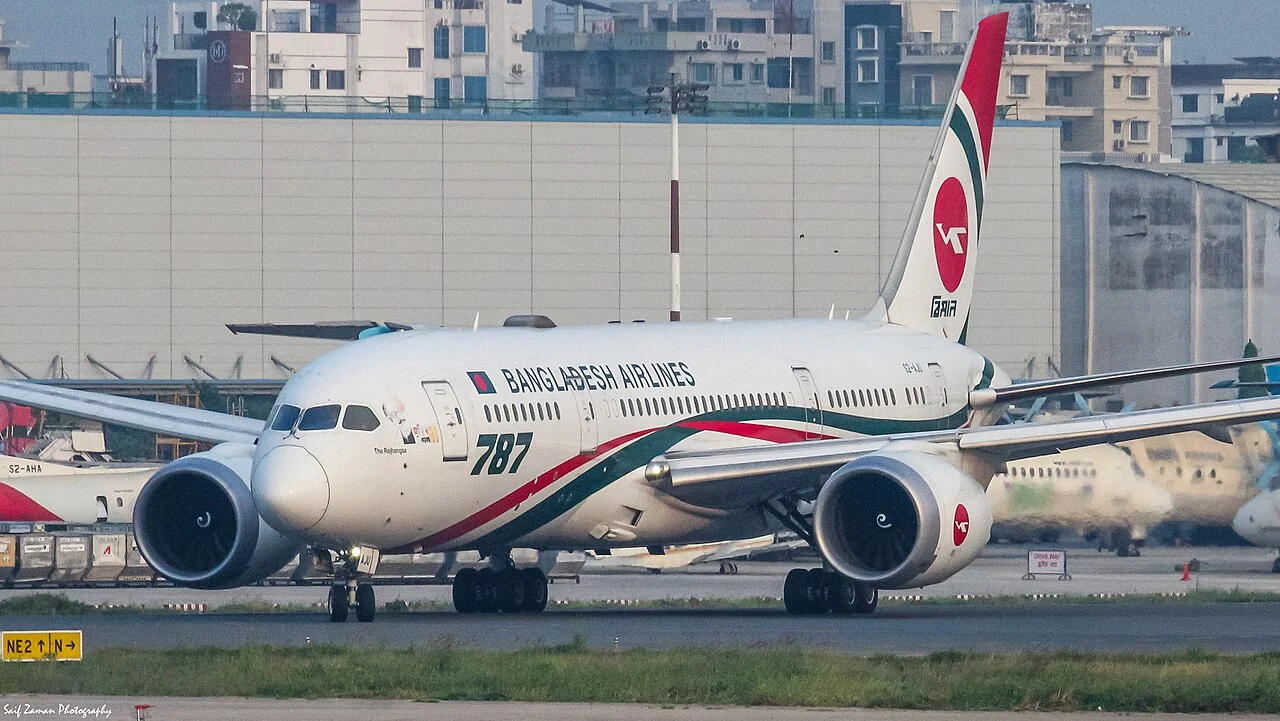
Biman Bangladesh Fleet Expansion
Biman Bangladesh Airlines will procure a total of 14 aircraft, comprising:
- Eight Boeing 787-10 Dreamliners
- Two 787-9 Dreamliners
- Four 737-8 MAX jets
This combination allows the airline to simultaneously expand intercontinental operations and reinforce regional connectivity. The airline currently operates a relatively modest fleet, as highlighted in the table below:
| Aircraft Type | In Service | Parked | Total (Current) | Avg. Age |
|---|---|---|---|---|
| Boeing 737 | 4 | — | 4 | 17.6 Years |
| Boeing 777 | 4 | — | 4 | 13.4 Years |
| Boeing 787 Dreamliner | 6 | — | 6 | 7.0 Years |
| Dash 8 Q400 | 3 | 2 | 5 | 9.8 Years |
| Total | 17 | 2 | 19 | 11.3 Years |
Data: Planespotters.net
This already gives us a cue that a significant portion of the carrier’s fleet is already sourced from Boeing. The new order consolidates that relationship and positions the carrier to improve operational efficiency through fleet commonality.
The 787-10, in particular, offers higher seating capacity and improved fuel efficiency, making it well-suited for high-density routes. Currently, the carrier has four Boeing 787-8 Dreamliner aircraft that have an average age of approximately 7.2 years, while its two Boeing 787-9 Dreamliner aircraft average 6.7 years. The carrier expects its 737 MAX aircraft will provide flexibility on shorter sectors across Asia and the Middle East.
Impact of the US Trade Agreement
The aircraft purchase forms part of a wider economic understanding between Bangladesh and the United States. The deal was initially negotiated in 2025 as Dhaka faced the prospect of increased tariffs on its key exports, particularly ready-made garments.
A report from Reuters highlighted that shows that during the tenure of former Prime Minister Sheikh Hasina, Bangladesh had cleared a proposal to acquire 10 aircraft from Airbus, though a final deal was never concluded. After her government was ousted in the 2024 mass uprising, the interim administration redirected its approach, opting instead to move forward with Boeing.
The United States accounts for roughly one-fifth of Bangladesh’s garment exports, making it a critical market. In response to tariff threats, Bangladesh proposed increasing imports of American goods, including aircraft, agricultural commodities, and energy products.
According to multiple reports, an earlier plan to acquire up to 25 aircraft was scaled back to 14 during negotiations. This adjustment reflects a compromise between fiscal prudence and strategic necessity.
The Deal Cuts Across Aviation and Geopolitics
The Boeing agreement has also drawn attention from European aerospace stakeholders. Airbus had reportedly been in discussions with Bangladesh regarding potential aircraft sales, but the final agreement favored Boeing.
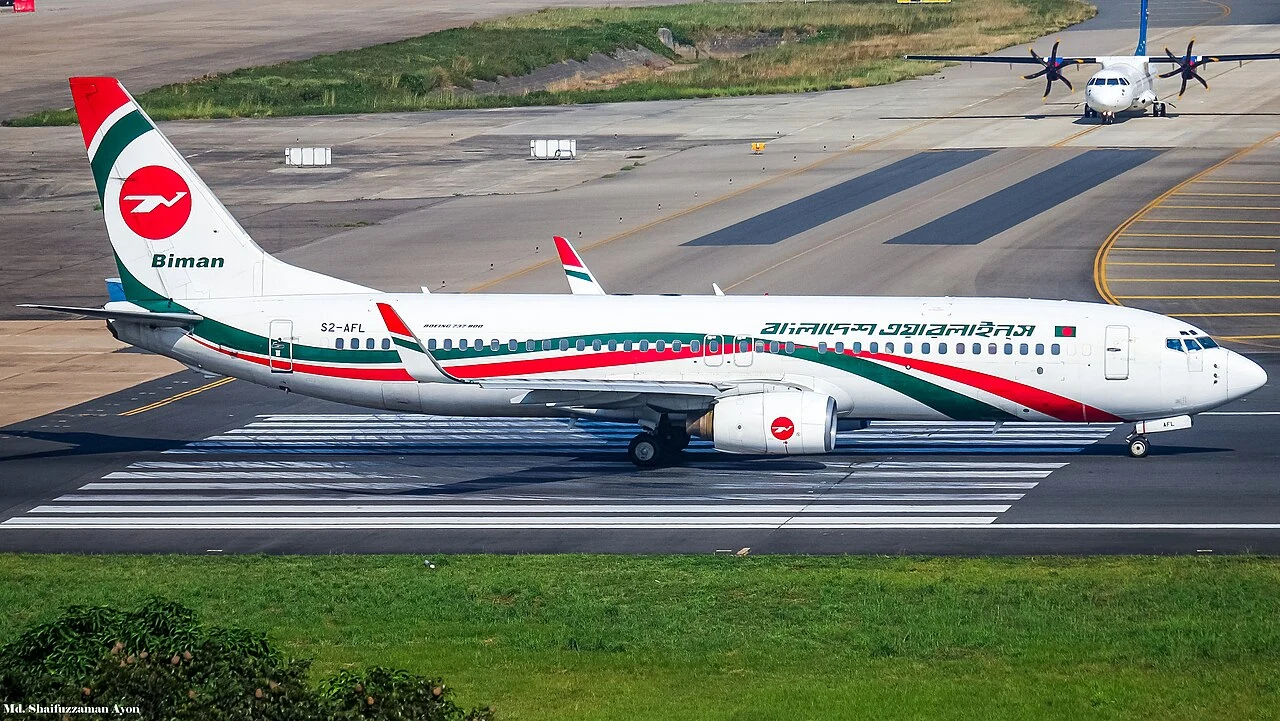
Aviation in Dhaka is Undergoing Transformation
The phased delivery of the aircraft over the next decade provides Biman Bangladesh Airlines with a structured growth trajectory. It allows the airline to gradually expand capacity while aligning with market demand and infrastructure development.
Dhaka’s aviation sector is also undergoing transformation, with airport expansion projects and rising passenger traffic shaping future growth. Nepal Airlines (RA), the flag carrier of Nepal is eyeing for operations in and out of Dhaka. Etihad also introduced its 777 flights to Dhaka recently, as it looked to focus on the “export-driven industries, particularly in sectors such as textiles“.
Biman Bangladesh’s fleet upgrade is expected to complement these developments and enhance the airline’s ability to compete with regional peers.
All in All
The news of Biman Bangladesh’s plans to procure Boeing aircraft come across the backdrop of the Bangladesh restructuring the board of Biman Bangladesh Airlines, as it appointedRumee A Hossain as the new chairman. The decision was formalized through a gazette notification issued by the Ministry of Civil Aviation and Tourism on April 25, in accordance with the Companies Act 1994.
The new board includes senior government officials, military representatives, and corporate leaders, reflecting a mix of public and private sector expertise. Authorities expect the reconstitution to strengthen governance and support Biman’s plans to improve efficiency, expand its fleet, and enhance service quality.
Coupled the change in the board membership of the airline with the acquisition of new aircraft rings a positive bell.