IndiGo (6E), India’s largest carrier, is reportedly evaluating a non-stop service between Kempegowda International Airport (BLR) and Perth Airport (PER) using its newly inducted Airbus A321XLR aircraft, marking a potential entry into the Oceania market. The proposed route, expected to span roughly 3,482 nautical miles, would represent one of the longest narrowbody operations globally.
While the airline has not formally confirmed the launch timeline, industry discussions suggest the service could materialize once sufficient A321XLR fleet depth is achieved. The move appears driven by IndiGo’s broader long-haul strategy, leveraging the aircraft’s extended range to unlock thinner intercontinental routes with lower operating costs.
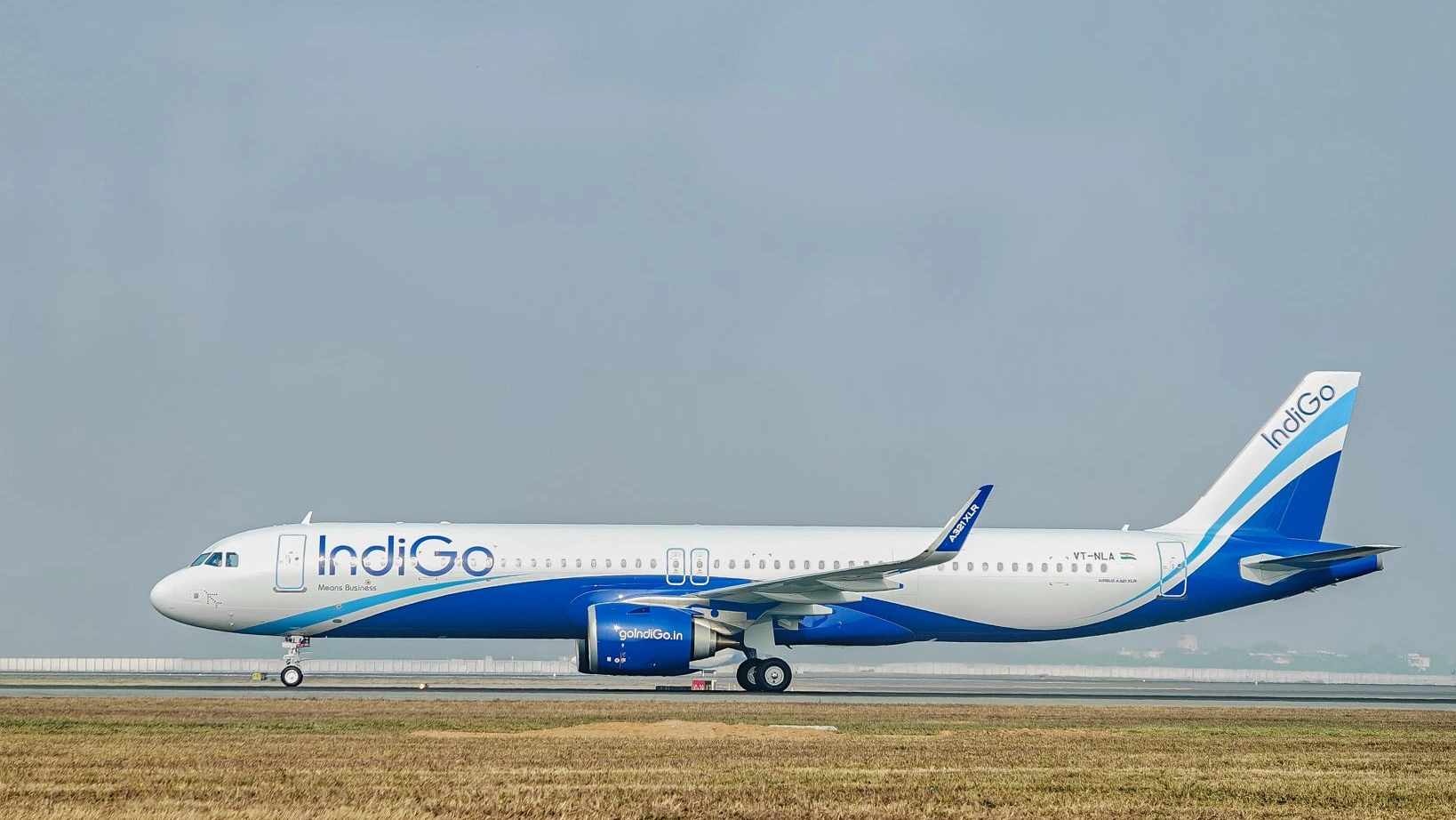
Indigo A321XLR Bengaluru-Perth Route Feasibility
The Bengaluru–Perth sector sits near the operational edge of the Airbus A321XLR’s advertised 4,700-nautical-mile range, particularly under real-world payload and weather constraints. Airlines rarely operate at brochure limits, and sector performance often depends on wind patterns, fuel reserves, and payload trade-offs.
IndiGo has already demonstrated the aircraft’s long-range capability on routes such as Indira Gandhi International Airport (DEL), Delhi to Istanbul Airport (IST), covering over 3,000 nautical miles. The proposed Perth service would extend this envelope further, making it one of the most demanding missions for a single-aisle aircraft.
Industry analysts note that westbound sectors from Australia typically face stronger headwinds, potentially necessitating payload restrictions. However, eastbound flights from India benefit from more favourable jet stream conditions, partially mitigating operational challenges.
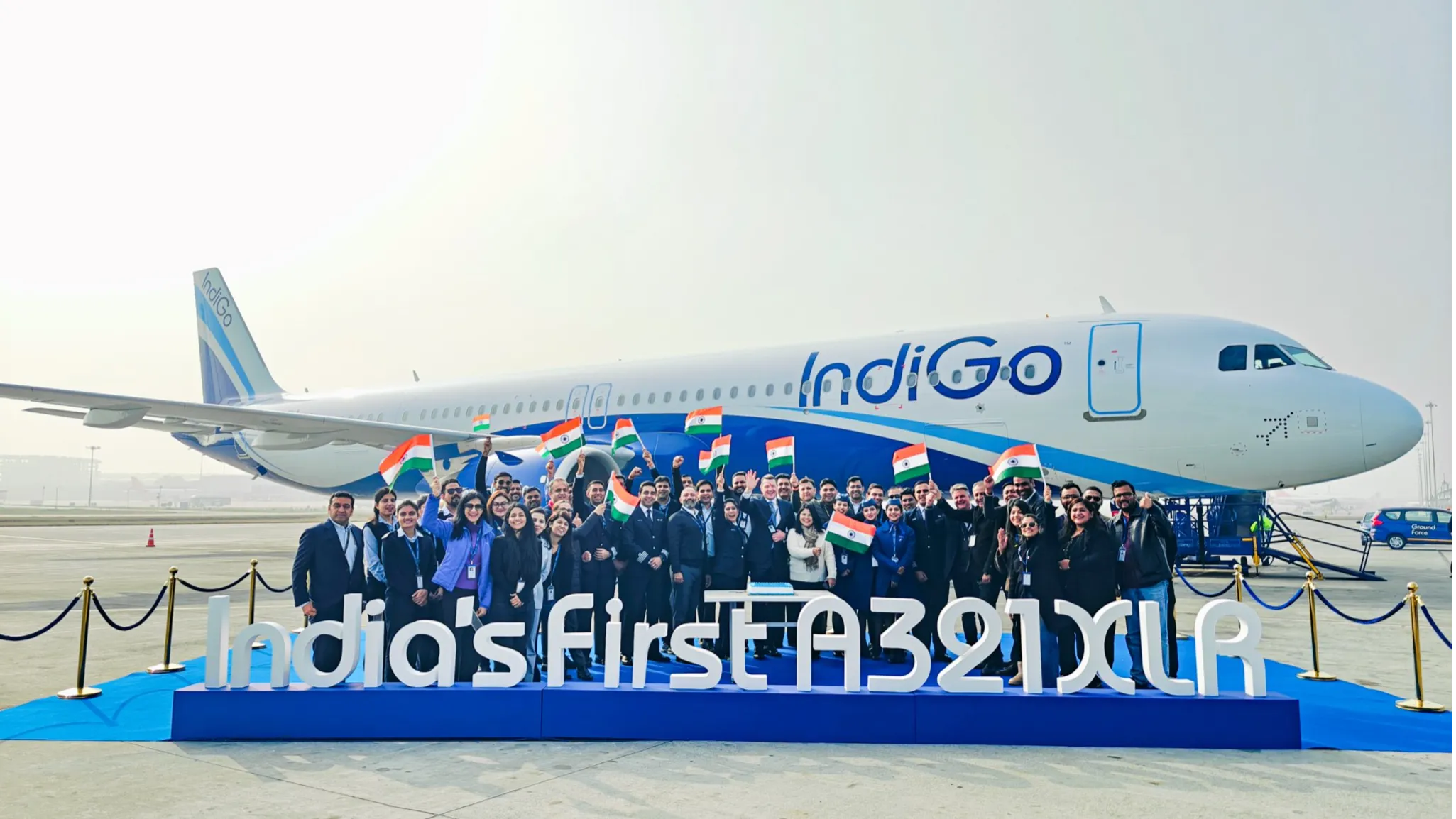
IndiGo Fleet Expansion: The A321XLR Strategy
IndiGo received its first Airbus A321XLR in January 2026 and has since deployed the aircraft on medium-to-long-haul international routes, including services to Athens. The airline holds firm orders for approximately 40 A321XLR aircraft, with multiple deliveries scheduled through 2026.
According to statements published on the airline’s official channels, IndiGo views the A321XLR as one that is set to “redefine long-haul travel for India“:
Pieter Elbers, Chief Executive Officer, IndiGo, was quoted in The Economic Times, to have said:
” The advanced capabilities of this aircraft enable us to reach newer regions across the globe and further strengthen India’s position as a key player in international aviation. This reinforces our commitment to giving wings to the nation by connecting it to the world.”
The aircraft’s additional Rear Centre Tank enables extended range while maintaining narrowbody economics, a critical factor for routes with limited premium demand.
The carrier has also adopted a dual-class configuration, balancing capacity and weight considerations. By reducing seat density compared to its A321neo fleet, IndiGo improves range performance, a necessary adjustment for ultra-long narrowbody sectors.
Qantas Competition on the Perth Bengaluru Route
Qantas (QF) has also identified Perth–Bengaluru as a potential future route, though its A321XLR aircraft—configured with lie-flat business class—are not expected before 2028. This creates a window during which IndiGo could establish an early presence in the market.
Qantas currently operates non-stop flights between Sydney and Bengaluru using widebody Airbus A330 aircraft, supported by a codeshare partnership with IndiGo.
Market data suggests that the Perth–India segment remains relatively small compared to other international corridors, though it is steadily growing. The success of a non-stop service would likely depend on stimulating demand rather than relying solely on existing traffic.
Passenger Experience on IndiGo’s A321XLR and Operational Tradeoffs
The introduction of an eight-hour narrowbody service raises questions about passenger comfort, particularly in economy class. Unlike widebody aircraft, the A321XLR features a single-aisle cabin, which can influence perceptions of space and inflight experience on longer journeys.
IndiGo has attempted to mitigate these concerns by introducing enhanced onboard features, including wireless streaming, in-seat power, and a premium “Stretch” cabin with increased seat pitch. Here’s how the carrier configures its A321XLR:
| Category | IndiGo Stretch (Business Class) | Economy Class |
|---|---|---|
| Cabin Type | Premium / Business | Standard Economy |
| Total Seats | 12 | 183 |
| Cabin Location | First 3 rows | Remaining cabin |
| Seat Layout | 2-2 configuration | 3-3 configuration |
| Seat Type | Recaro R5 recliner | Standard slimline seats |
| Seat Pitch | 44 inches | 31 inches |
| Seat Width | 21 inches | Not specified (narrower than business) |
| Recline | 6 inches | 5 inches |
| Comfort Features | Privacy wings, 6-way adjustable headrest, device holder | Basic headrest, standard comfort |
| Space & Privacy | Enhanced personal space and partial privacy | Limited personal space, no privacy features |
| Target Passenger | Premium / business travelers | Budget / leisure travelers |
| Overall Experience | More spacious, comfortable, semi-premium | Functional, value-focused |
Data: Simple Flying
Nevertheless, the airline’s long-haul model will continue to face scrutiny, especially as competitors introduce more premium-heavy configurations on similar routes.
All in All
The potential Bengaluru–Perth service reflects a broader shift in India–Australia aviation dynamics, where airlines are exploring direct connectivity beyond traditional gateways. Secondary city pairs are becoming increasingly viable due to advancements in aircraft technology.
For IndiGo, the route represents both an operational challenge and a strategic opportunity to expand beyond its traditional short- and medium-haul network. For the broader market, it signals a gradual evolution toward more point-to-point connectivity between India and Australia.