From 106th To 2nd: Qantas Becomes The World’s Second-Most Reliable Major Airline

Qantas Airways (QF) has ranked as the world’s second-most punctual major airline for April 2026, according to monthly on-time performance (OTP) data published on 7 May 2026 by aviation analytics firm OAG. The Australian flag carrier achieved an OTP rate of 87.8 percent in the major airline category — defined by OAG as carriers operating more than 20,000 flights in a single month — placing it behind only SAS Scandinavian Airlines (SK), which led the major airline rankings with an OTP of 89.1 percent across 23,053 flights.
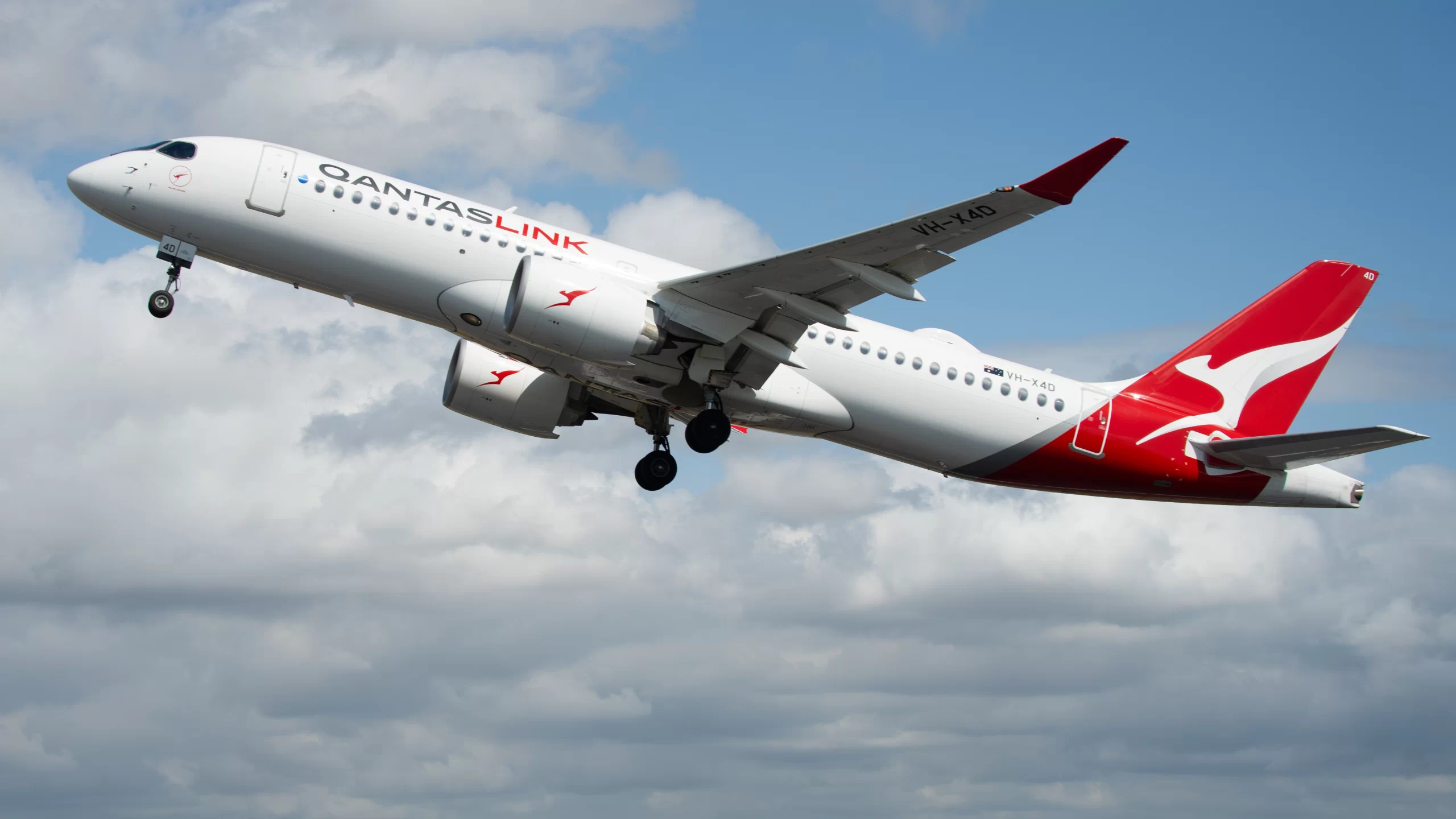
The result represents a significant jump from Qantas’s ninth-place finish in the same OAG major airline index in March 2026, when it recorded 83.7 percent. This repositioning is particularly striking given that as recently as 2022, at the height of post-pandemic operational disarray, Qantas ranked 106th globally in OAG’s full airline universe.

Photo: Qantas

Qantas OAG April 2026 Ranking

According to OAG’s April 2026 OTP report, the top three major airline positions were claimed by SAS Scandinavian Airlines (89.1%), Qantas (87.8%), and British Airways (BA) at 85.8 percent, with British Airways also recording a notably low cancellation rate of just 0.6 percent for the month. Alaska Airlines (AS) placed fourth among major carriers with 85.2 percent OTP and a cancellation rate of just 0.5 percent, while All Nippon Airways (NH) completed the top five at 84.5 percent.

Rounding out the major airline top 10 for April were KLM Royal Dutch Airlines (KL) [which is a carrier where the king of the nation also piloted the Boeing 737], easyJet (U2) — which placed as the highest-ranked low-cost carrier in the category — Azul Brazilian Airlines (AD), Delta Air Lines (DL) in ninth with 83.6 percent, and Avianca (AV).

Middle Eastern carriers were excluded from the April rankings owing to ongoing regional disruptions, a caveat OAG noted explicitly in its report. Deutsche Lufthansa AG (LH) occupied the opposite end of the major carrier spectrum, recording a deeply substandard OTP of just 71.1 percent and a cancellation rate of 18.6 percent, as the carrier continued to absorb the operational fallout of multiple labour-related strikes during April.

Within the separate large airline category — covering carriers operating between 10,000 and 20,000 flights per month — Virgin Australia (VA) ranked 12th with an OTP of 84.2 percent, while Jetstar (JQ) placed 24th at 75.84 percent. Air New Zealand (NZ) finished among the top 15 large airlines with 82.3 percent OTP.

The following table give us the rankings in its entirety:

Rank Airline On-Time Performance Canceled Flights Total Flights
25 Shenzhen Airlines (ZH) 68.85% 2.92% 20,955
24 Lufthansa (LH) 71.13% 18.56% 31,962
23 Air Canada (AC) 74.58% 2.39% 30,585
22 Southwest Airlines (WN) 76.59% 0.23% 120,557
21 China Eastern Airlines (MU) 77.15% 3.03% 67,650
20 JetBlue Airways (B6) 78.02% 0.12% 27,568
19 American Airlines (AA) 79.12% 1.08% 195,325
18 United Airlines (UA) 80.03% 1.28% 150,805
17 LATAM Airlines Group (LA) 81.39% 1.19% 47,891
16 China Southern Airlines (CZ) 81.41% 0.93% 64,539
15 Japan Airlines (JL) 81.46% 1.52% 25,361
14 IndiGo (6E) 82.16% 0.36% 65,332
13 Hainan Airlines (HU) 82.22% 1.53% 21,766
12 Ryanair (FR) 82.72% 0.20% 105,874
11 Air France (AF) 82.78% 0.41% 22,514
10 Avianca (AV) 83.17% 1.55% 22,443
9 Delta Air Lines (DL) 83.58% 0.80% 154,550
8 Azul Airlines (AD) 83.62% 1.37% 23,009
7 easyJet (U2) 83.68% 0.50% 50,585
6 KLM-Royal Dutch Airlines (KL) 83.74% 0.98% 22,652
5 All Nippon Airways (NH) 84.53% 0.96% 35,448
4 Alaska Airlines (AS) 85.22% 0.51% 38,970
3 British Airways (BA) 85.82% 0.55% 24,865
2 Qantas Airways (QF) 87.77% 1.75% 23,496
1 SAS Scandinavian Airlines (SK) 89.09% 1.67% 23,053
Data: OAG
Photo: Qantas
How OAG Measures Punctuality, And Why the Major Airline Category Demands Attention

OAG’s OTP methodology defines an on-time arrival as any flight that reaches its gate within 15 minutes of its scheduled arrival time. Cancellations are incorporated into the data and treated as not on time. To qualify for OAG’s rankings, airlines must operate a minimum of 1,500 flights in the month in question and meet a coverage qualification threshold.

The major airline category — more than 20,000 flights per month — is the most operationally demanding tier in OAG’s segmentation, because the sheer volume of daily departures across varied route types, aircraft fleets, and network geographies amplifies every operational variable.

According to OAG’s own published explanation of OTP:

“Achieving a high level of on-time performance is a complex task with a myriad of variables, not all of which lie within the control of an airline. Conversely, poor OTP is often a sign of inefficiencies and weak management control of operations.”

OAG also notes that an OTP rate of 80 percent or above is generally considered strong within the industry, and that achieving 90 percent consistently places a carrier in an exceptional category. Qantas’s April figure of 87.8 percent therefore positions it comfortably within the upper tier of global operational reliability.

Qantas is the only Australian carrier of sufficient scale to qualify for the major airline category, which — based on OAG’s minimum threshold — requires operating upwards of roughly 670 flights per day throughout the month.

Photo: Qantas

Qantas’s Domestic Performance: BITRE Data And The Australia-Wide Picture

According to BITRE data available at the time of writing, the Qantas Group (Qantas and QantasLink) recorded 80.1% on-time domestic arrivals and 81.9% on-time domestic departures, outperforming the Virgin Australia network and reclaiming the top spot among Australia’s major airline groups.

The Virgin Australia network — comprising Virgin Australia and Virgin Australia Regional Airlines — recorded a 77.7 percent on-time arrival rate and a 78.7 percent on-time departure rate for March.

The March result was achieved despite the operational impact of Tropical Cyclone Narelle, which disrupted Qantas services across three states and territories during the month. A Qantas spokesperson was quoted by Australian Aviation as saying:

“We know how much punctuality means for customers and thanks to the dedication of our people, we’ve again finished the month as the most on-time major domestic airline. For the year to date we’ve delivered results in-line with the long-term average or better, despite some challenging weather at times in March, including Tropical Cyclone Narelle which affected operations across three states and territories.”

Among individual Australian carriers in the March BITRE data, Hinterland Aviation led with an OTP of 84.3 percent, followed by QantasLink at 82 percent, Virgin Australia at 77.8 percent, Qantas mainline at 76.5 percent, Virgin Australia Regional Airlines at 73.2 percent, Jetstar at 72.7 percent, and Skytrans Australia at 69.8 percent, with Rex Airlines recording the lowest on-time arrival rate at 66.9 percent.
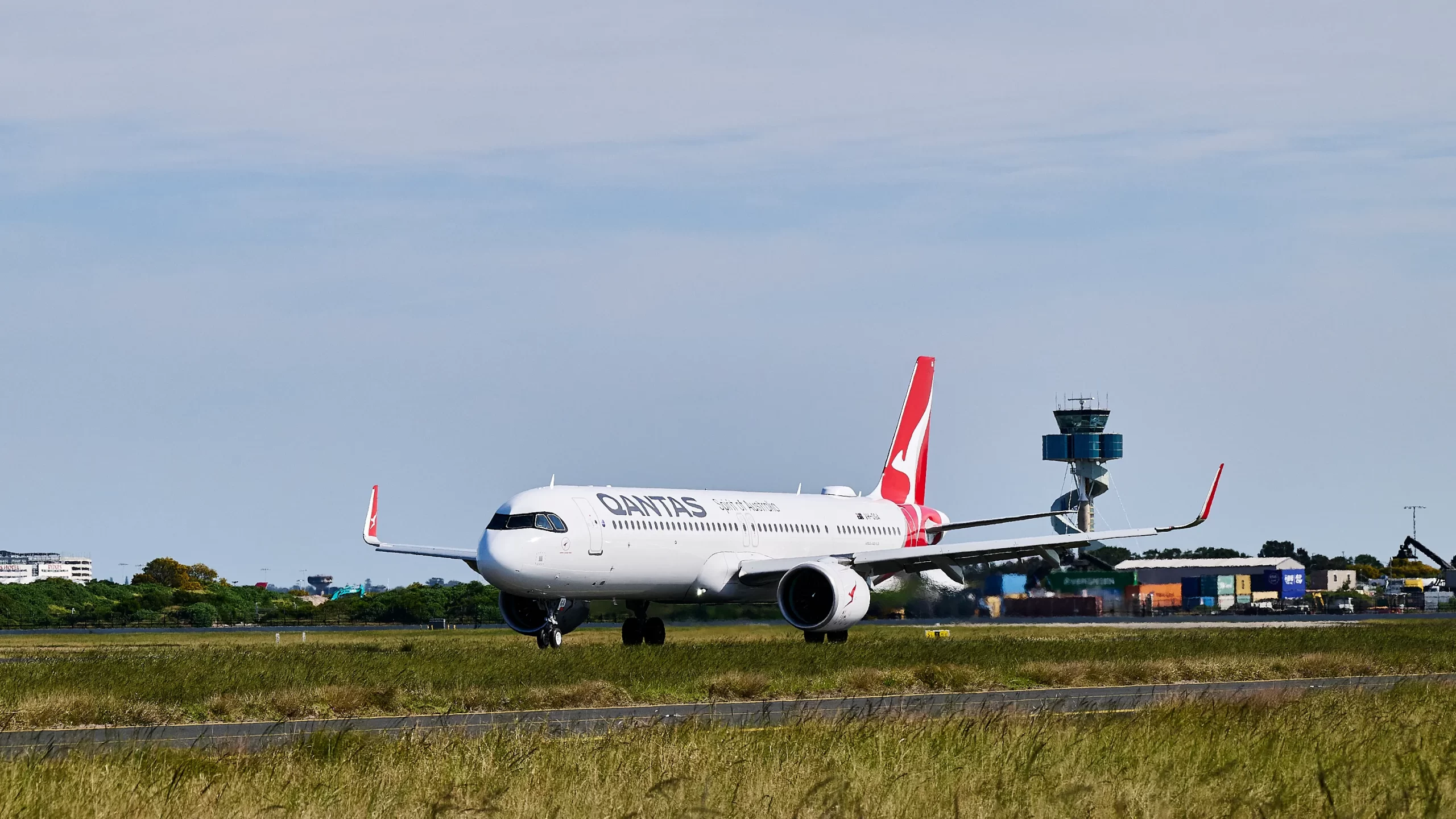
Photo: Qantas

What Drove Qantas’s Punctuality Recovery from 106th Place to the Second?

The scale of Qantas’s punctuality improvement since 2022 deserves contextualisation. Australian Aviation reported in February 2026 that Qantas Domestic chief executive Markus Svensson described the turnaround as a consequence of sustained operational investment, stating:

“It’s a credit to all of our team members who have been working hard to deliver more reliable services. The feedback we’re getting from customers is that they’re noticing the difference when they fly with us and we’re continuing to invest across our operations.”

Several structural drivers underpin the improvement. Qantas’s own FY25 annual report confirms the airline achieved its best domestic on-time performance since 2019 in the second half of FY25, with 82 percent of flights departing on time — a benchmark the carrier has since surpassed in individual months.

The Qantas Group’s fleet renewal programme, which encompasses 214 new aircraft on order at an investment of approximately A$20 billion, is accelerating the retirement of older, less reliable aircraft and replacing them with more operationally predictable types. The A321XLR, of which Qantas has 48 on order, entered service in September 2025, making Qantas the first Asia-Pacific carrier to operate the type; the A220-300 has been entering QantasLink service on regional routes; and the A350-1000 ULR, intended for Project Sunrise ultra-long-haul operations, is progressing toward delivery.

Qantas has also invested in AI-driven turnaround monitoring at Brisbane Airport (BNE), deploying camera systems and machine learning tools to track the approximately 50 sequential tasks required to prepare an aircraft for its next rotation, identifying root causes of delays in real time, as confirmed in a January 2026 interview with CEO Vanessa Hudson. The airline announced plans for a new Product Innovation Centre in Adelaide — formally Adelaide Airport (ADL) — to further develop digital systems and AI tools aimed at reducing operational disruptions.
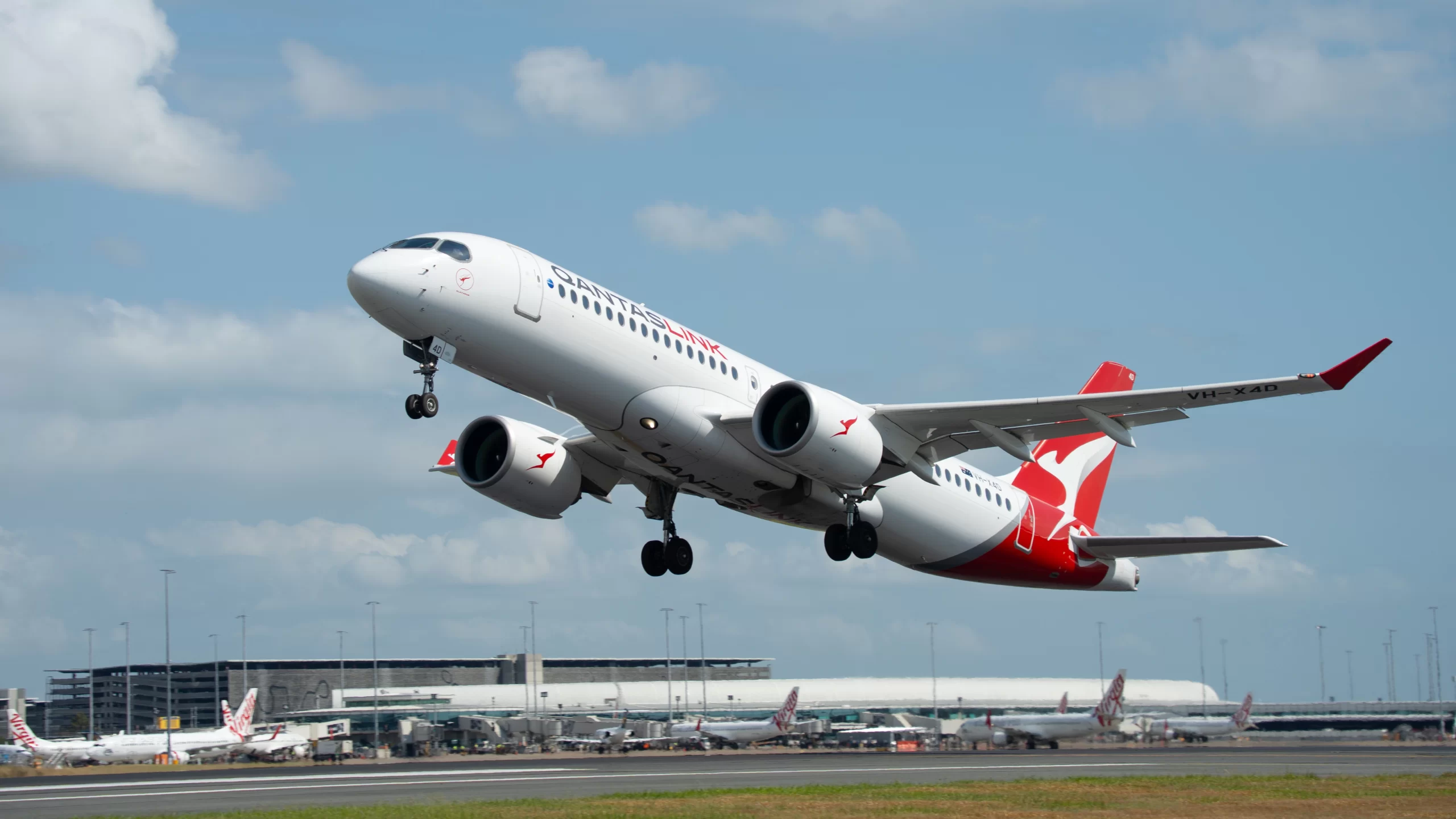
Photo: Qantas

Comparing Qantas’s Global Ranking Against Peer Carriers

The April 2026 major airline top 10 is instructive not merely for what it shows about Qantas, but for the contrasts it illuminates across global carriers. SAS — the table’s leader — has itself undergone a transformation almost as dramatic as Qantas’s, having ranked as low as 15th globally in 2023 before surging to number one.

Aviation24.be reported that SAS achieved an on-time arrival rate of 89.53 percent in Cirium’s parallel April 2026 rankings (a separate methodology to OAG’s), attributing the result to improvements in operational reliability including tighter turnaround procedures, improved planning, and stronger coordination across departments. The SAS press release for March 2026 quoted CEO Anko van der Werff: “Being recognized as the world’s most punctual airline in March, whilst there is so much going on in the world, is all the more rewarding.

Lufthansa’s April figure of 71.1 percent — with an 18.6 percent cancellation rate — represents the starkest contrast on the table, and illustrates how labour disputes can inflict prolonged, measurable damage on OTP metrics at scale. The airline was affected by multiple strikes during April, making its data for the month an outlier rather than an indicator of baseline performance.

Delta Air Lines, the only US major to appear in the top 10, maintained its reputation for operational reliability with 83.6 percent OTP and a cancellation rate of just 0.8 percent, consistent with its sustained performance in punctuality rankings across multiple data providers.

By the annual Cirium benchmark — a separate but comparably respected OTP data source — Qantas finished ninth globally in 2025.

Photo: Qantas

Comparing Qantas with Other Major Players in the Region

Within the Southwest Pacific region, Qantas Airways was the highest-ranked airline in the April 2026 “Global Airlines Ranked by On-time Performance“. Qantas placed 16th worldwide with an on-time performance (OTP) score of 87.77%, operating 23,496 flights during the month. No other Southwest Pacific carrier ranked above it in the data provided.

The Australian flag carrier also outperformed several major international airlines, including Finnair, Malaysia Airlines, and Cebu Pacific.

However, Qantas still trailed a number of leading Asian and European carriers in the global standings. Garuda Indonesia topped the rankings with a 97.98% OTP score, while SAS Scandinavian Airlines ranked 11th globally at 89.09%.

Among airlines operating more than 20,000 monthly flights in the dataset, Qantas was one of the strongest performers, combining a relatively high OTP score with a large operational scale.

Within the Southwest Pacific region, Virgin Australia emerged as the top-performing large airline in the April 2026 on-time performance rankings for the ” Top 25 Large Airlines Ranked by On-Time Performance“. Qantas, however, did not make the cut.

Virgin Australia International ranked 12th globally among large airlines with an OTP score of 84.23%, ahead of regional rival Air New Zealand, which placed 14th at 82.34%, and Jetstar Airways, which ranked 24th with a 75.84% OTP score.

Virgin also recorded the lowest cancellation rate among the Southwest Pacific carriers in the ranking at 0.69%, compared to 3.09% for Air New Zealand and 2.00% for Jetstar.

Among the three Oceania airlines listed, Virgin Australia additionally operated the highest number of flights during the month with 13,933 services, slightly ahead of Air New Zealand’s 13,668 and Jetstar’s 12,898.


Leave a Comment

Your email address will not be published. Required fields are marked *

Scroll to Top