A week ago, AeroRoutes revealed that Etihad Airways (EY), the national airline of the United Arab Emirates, abandoned plans to launch direct flights between Abu Dhabi and Algiers, Algeria’s capital. The service, slated to commence in November 2025 using Airbus A321LR aircraft (the same aircraft it used to launch Abu Dhabi – Kolkata flights), has been removed from the carrier’s schedules after months of postponement, and there’s no clear reason as to why.
Speculations about traffic-rights disputes and administrative impasses are there but why the proposed four-times-weekly link between Zayed International Airport (AUH), Abu Dhabi, and Houari Boumediene Airport (ALG), Algiers, which promised expanded connectivity between the UAE and North Africa, complementing Etihad’s broader African expansion strategy, has been axed is something we will only find out once the carrier clarifies its stance.
Etihad’s Cancelled Algeria route: Background and Key Details
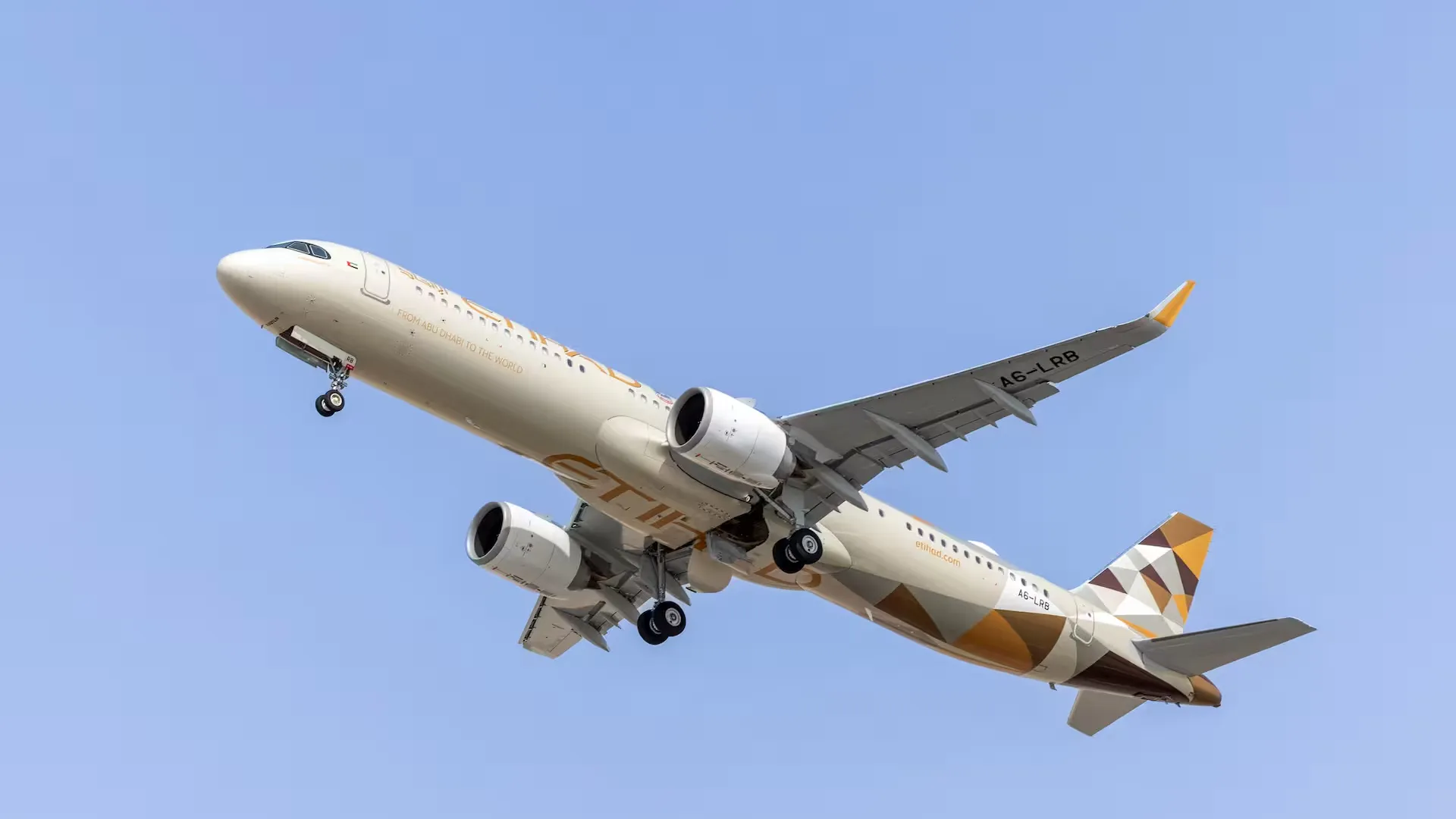
Etihad had announced the Abu Dhabi–Algiers route with four weekly flights on the Airbus A321LR, commencing on 7 November 2025. After an initial postponement to 2 February 2026, the service was removed from schedules entirely as of 11 December 2025, with no reservations available.
Route specifics (planned)
-
EY737: AUH → ALG
-
EY738: ALG → AUH
-
Aircraft type: Airbus A321LR (long-range narrow-body).
Etihad’s operations on the AUH-ALG route would have meant each weekly 640 seats per round trip. The route would have been one of the few direct connections between the UAE and Algeria, especially serving unserved African markets from Abu Dhabi. Currently, there are no carriers that offer a nonstop flight on this route.
Cause of Cancellation of the AUH-ALG route
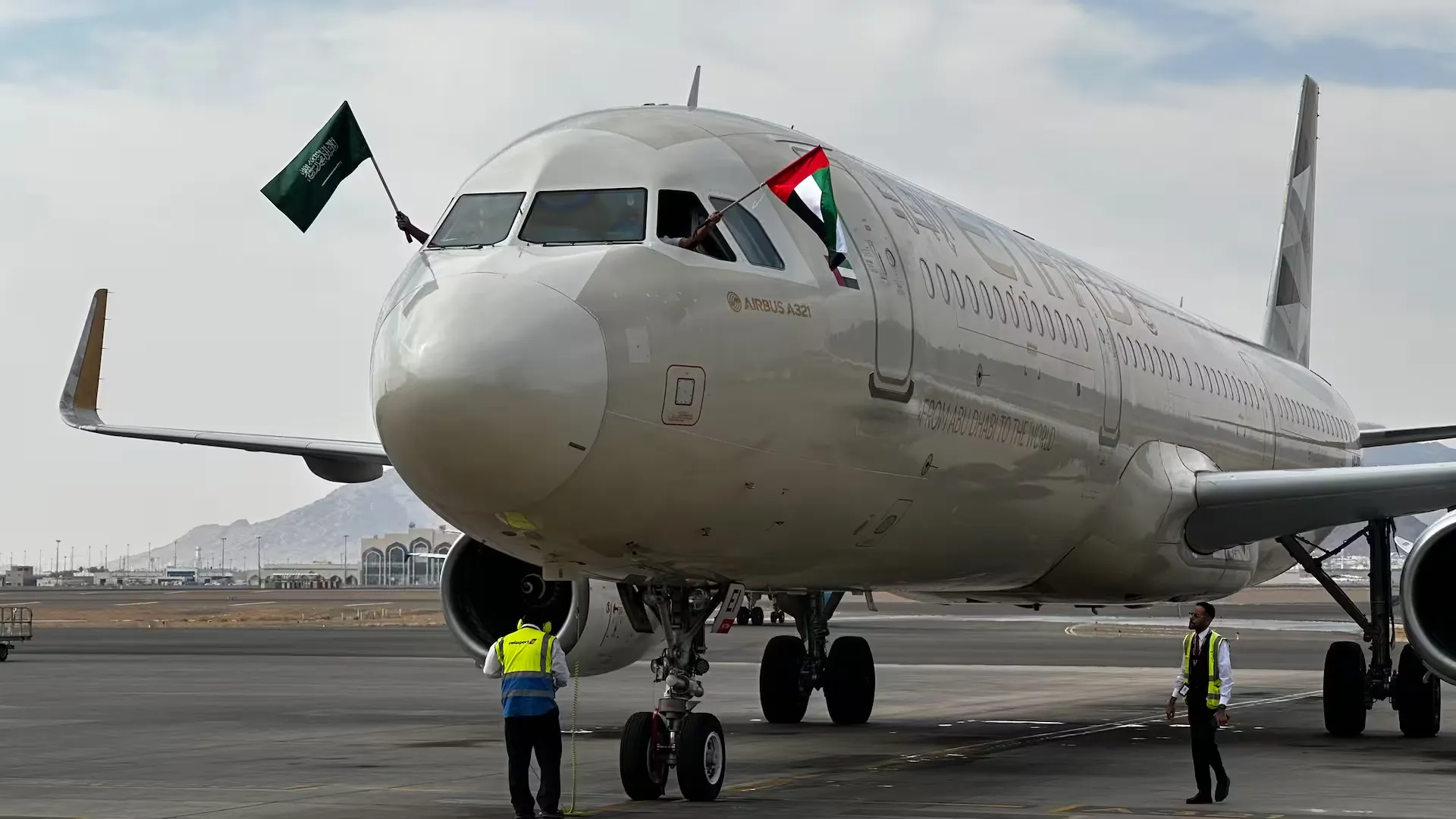
On 7 November, Etihad Airways announced that its planned Abu Dhabi–Algiers service had been temporarily postponed, citing reasons beyond the airline’s control. The statement did not specify what had caused the delay, leaving the exact circumstances surrounding the postponement unclear. Etihad said affected passengers would either be reaccommodated on alternative flights where possible or offered a full refund, while reiterating its commitment to launching the route as soon as possible.
Analysis from Algerian sources suggests that the Algerian authorities’ decision not to grant requisite traffic rights and prevailing Anglo-Emirati–Algerian diplomatic tensions contributed to the denial, Air Journal reported:
“….. several Algerian sources explain it by administrative and diplomatic obstacles. According to journalist Abdou Semmar of the online media Algérie Part, “the Algerian authorities have decided to ban the Emirati company Etihad Airways in Algeria because of its links with the Al Nahyan dynasty in Abu Dhabi, with which the Tebboune regime has execrable relations.” According to Algerian sources, this was an indirect instruction from the Algerian government to prevent the opening of the line.”
According to Voyages D’Affaires, Algeria “continues to allocate traffic rights on a strict 50/50 basis between Algerian and foreign airlines“:
“On the Algeria-UAE route, Emirates and Air Algérie each operate 7 flights a week. A priori, therefore, there is no room for Etihad.”
Aviation publication Simple Flying, Algiers “was the largest unserved African market from Abu Dhabi“; after all, the route had 11,000 round-trip point-to-point passengers. This is how the schedule looked like:
| Route | Departure Time | Arrival Time | Block Time | Notes |
|---|---|---|---|---|
| Abu Dhabi → Algiers | 02:30 | 07:15 | 7h 45m | Some flights timed at 7h 50m; February schedule; local times |
| Algiers → Abu Dhabi | 10:05 | 19:20 | 6h 15m | February schedule; local times |

All in All
Etihad’s decision to abandon the Abu Dhabi–Algiers route highlights the challenges airlines can face when expanding into markets governed by tightly controlled traffic rights. While the carrier has not disclosed a definitive reason for the cancellation, the combination of regulatory constraints and existing bilateral capacity appears to have complicated the planned launch. Whether Etihad eventually revisits Algeria will depend on how those constraints evolve.