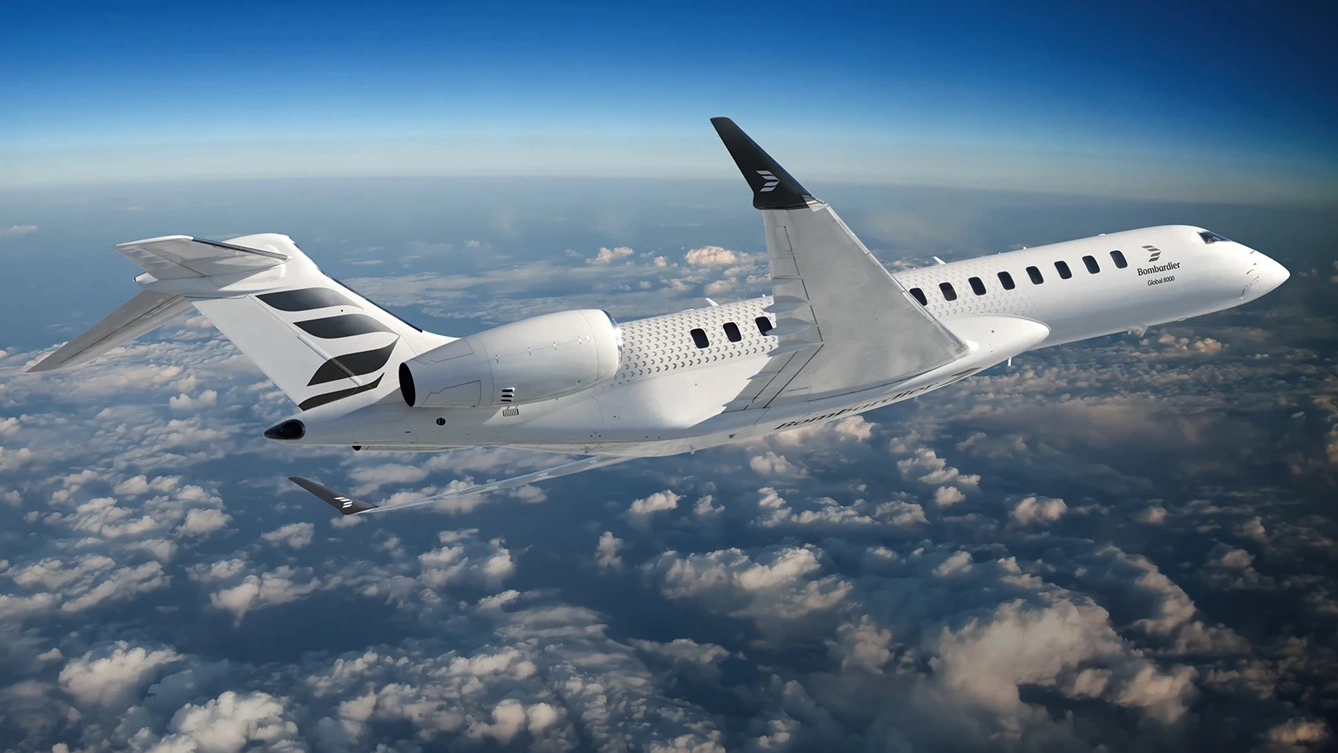
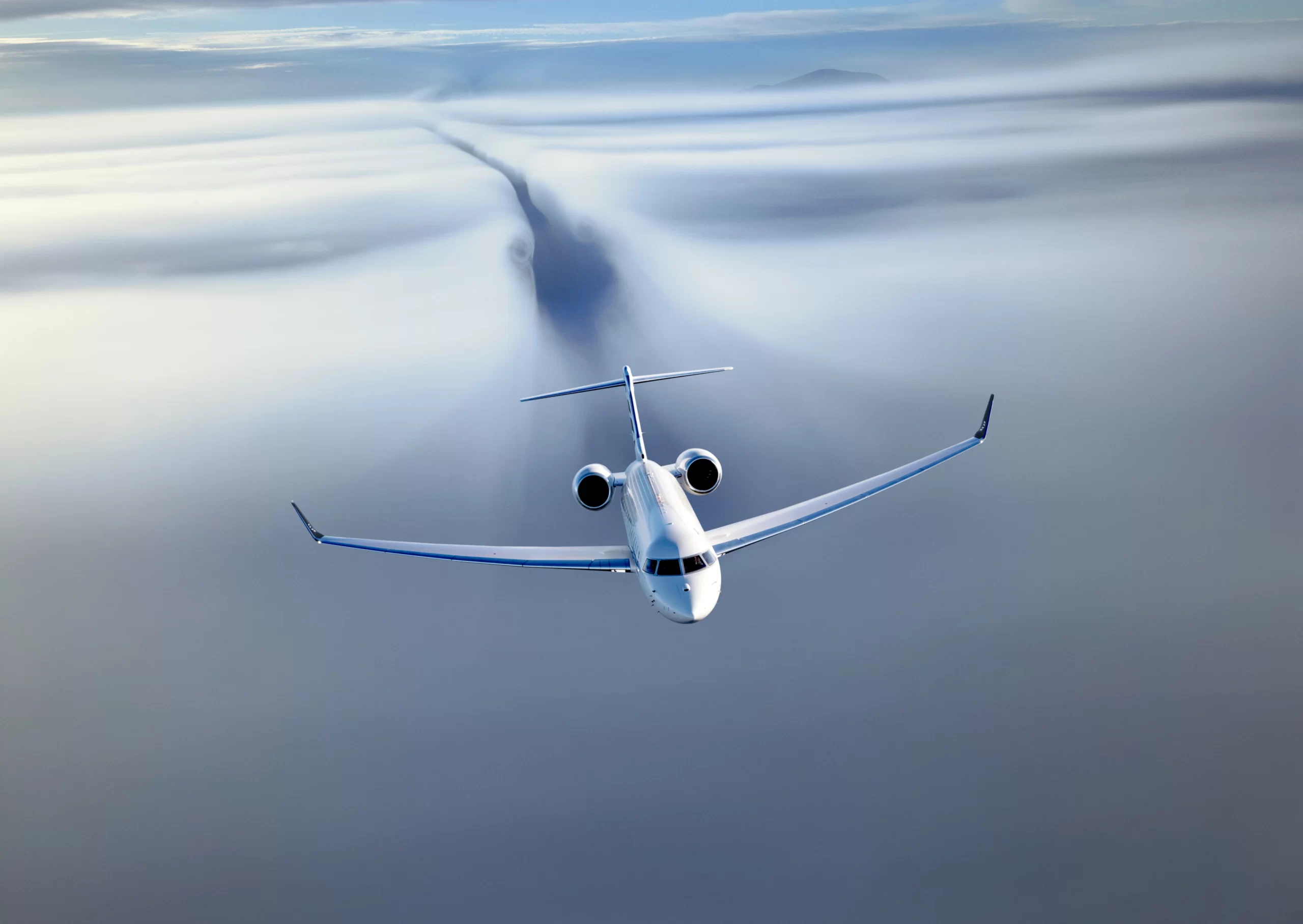
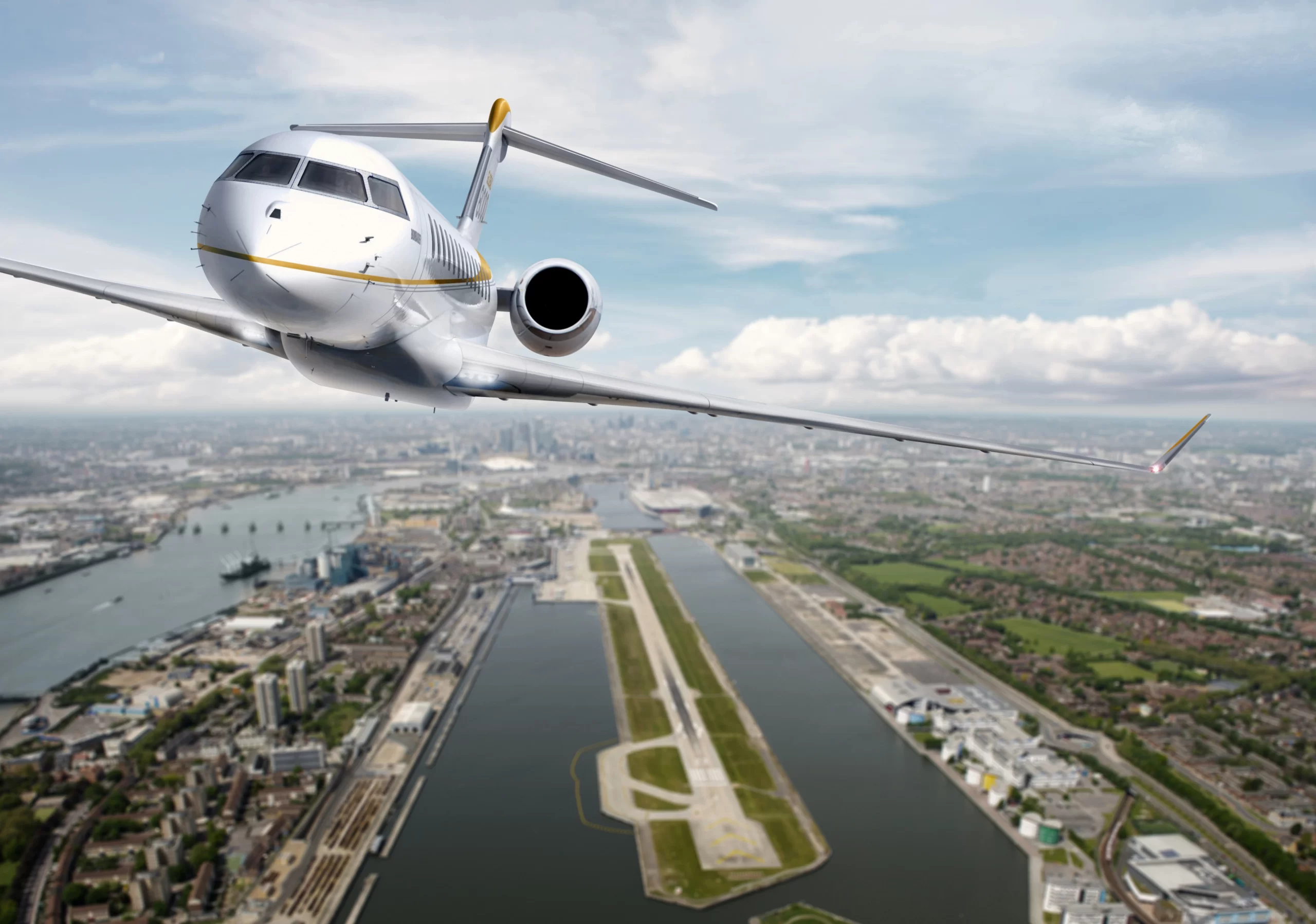
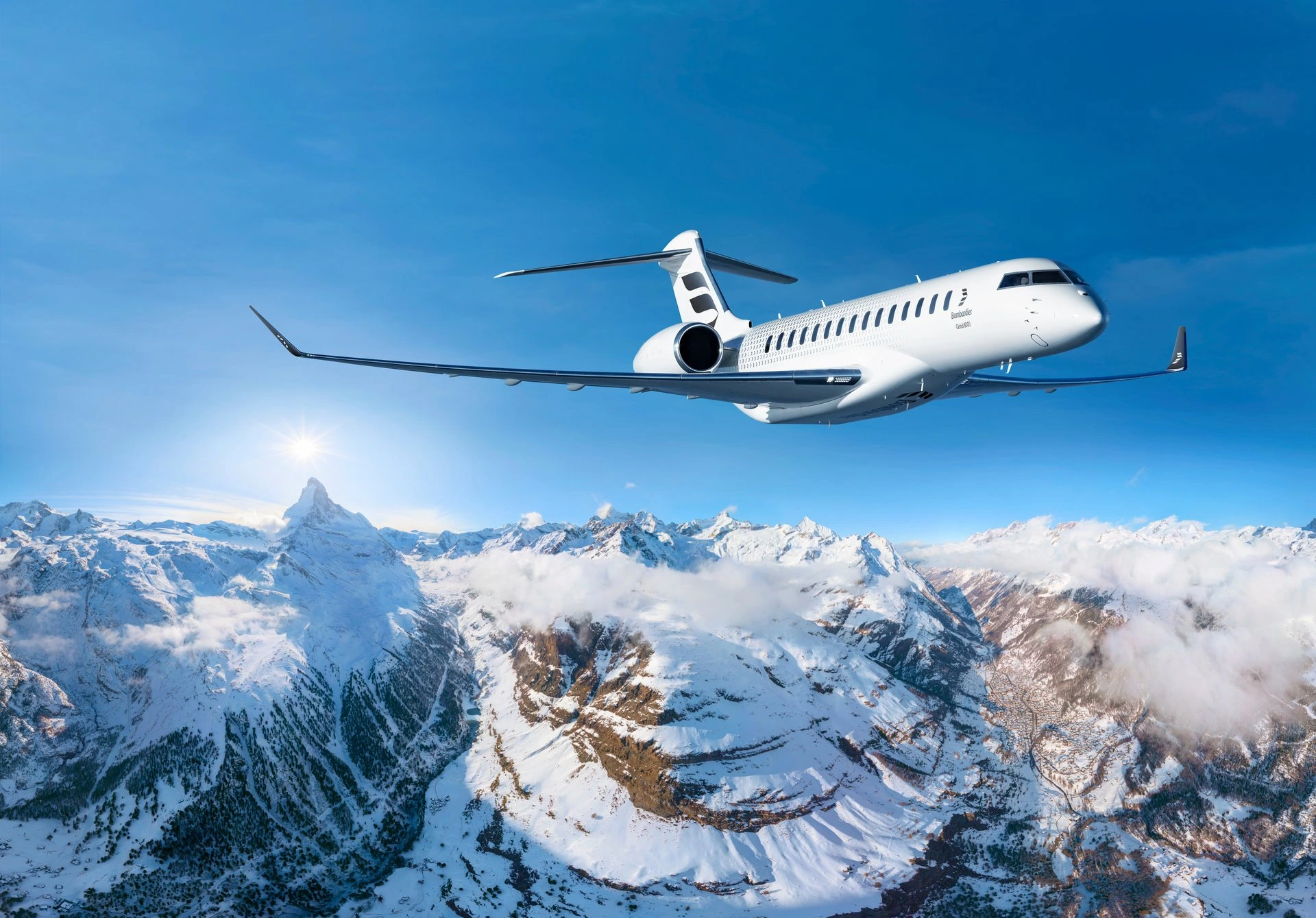
Bombardier 8000 was certified by Transport Canada in late 2025. Bombardier and industry experts highlight a confluence of advanced aerodynamics, next‑generation propulsion, and cutting‑edge cabin systems as the factors solidify “the Global 8000’s position as the unrivaled leader setting a new standard“.
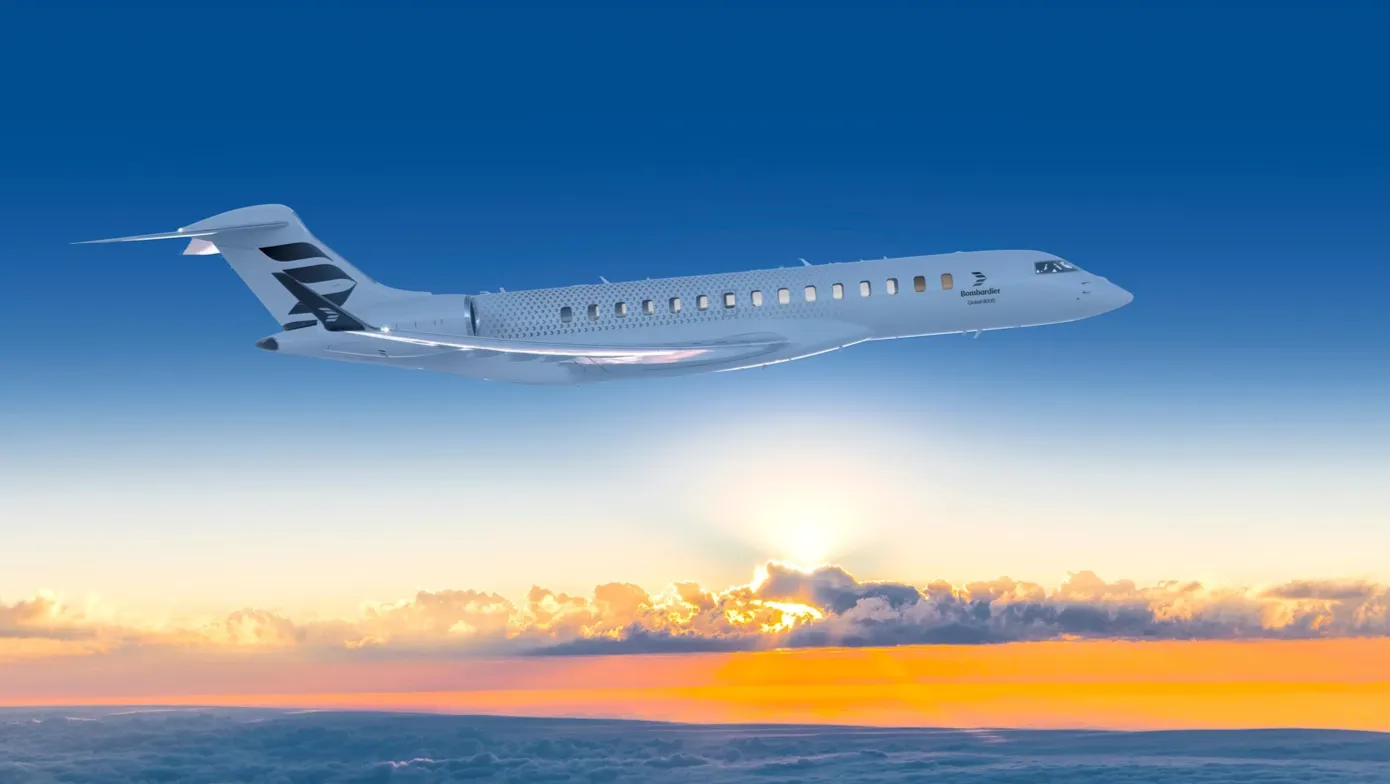
On December 8, 2025, Bombardier’s Global 8000 business jet officially entered service as the fastest civilian aircraft since the Concorde, achieving a certified maximum speed of Mach 0.95 (≈729 mph) and an intercontinental range of 8,000 nautical miles (NM). [Note that Concorde was more than two times faster and achieved a speed of 2.35] But what are the factors that make this jet the fastest civilian jet in service since Concorde? Let’s find out.
https://bombardier.com/sites/default/files/styles/retina_2700x860/public/2024-04/reBrandGL8000-1440×978.jpg.webp?itok=yFvfmkI6
Aircraft Overview: Bombardier Global 8000 Key Specifications
| Attribute | Detail |
|---|---|
| Manufacturer | Bombardier Inc. (Canada) |
| Model | Global 8000 |
| First entered service | December 2025 |
| Maximum certified cruise speed | Mach 0.95 (~729 mph) |
| Range | 8,000 NM (~14,816 km) |
| Maximum operating altitude | 51,000 ft |
| Cabin altitude | 2,691 ft at FL410 |
| Passenger capacity | Up to 19 |
| Engines | Twin General Electric Passport series |
Tupolev Tu-144 – The Soviet Concorde: Why the Supersonic Jet Failed?
https://bombardier.com/sites/default/files/styles/retina_1400x1240/public/2024-10/DDBA0561_Global8000_SoleilLightingSystemMoneyShot_2024_V1-1400×1240.jpg.webp?itok=6q0P_Pat
Aerodynamics that Allows Global 8000 to Outpace its Peers in Civilian Aviation
The Global 8000 has a blend of aerodynamic refinement and propulsion advances. According to manofmany.com, a great proportion of Bombardier’s performance comes down to its Smooth Flex Wing, which is:
“………engineered to behave like two wings in one. At low speeds, it delivers high lift for shorter take-offs and landings. At altitude, it flexes to improve efficiency and speed while actively dampening turbulence. The result is what Bombardier claims is the smoothest ride in business aviation, with fewer jolts, less vibration and a noticeably calmer cabin at 41,000 feet”.
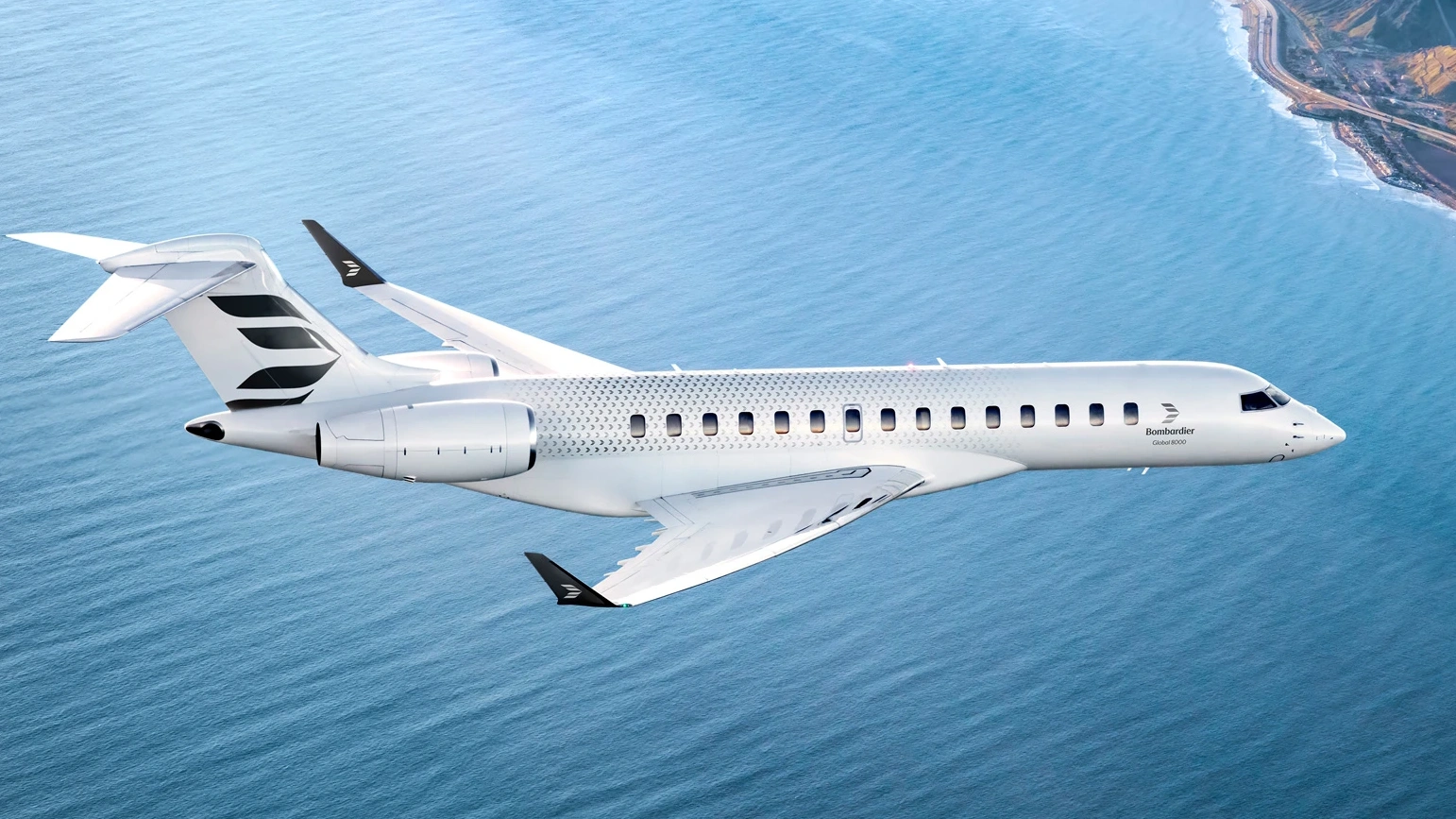
One of the central pieces of engineering of Global 8000 is its transonic optimized wing, which, according to a report in Simple Flying, is “specifically designed to delay and control shockwave formation as airflow approaches Mach 1“:
“In this regime, even small increases in speed can trigger a rapid rise in wave drag, traditionally imposing a hard practical limit on civilian aircraft. Bombardier’s wing design mitigates this effect through a combination of optimized sweep, refined airfoil geometry, and advanced high-lift devices.”
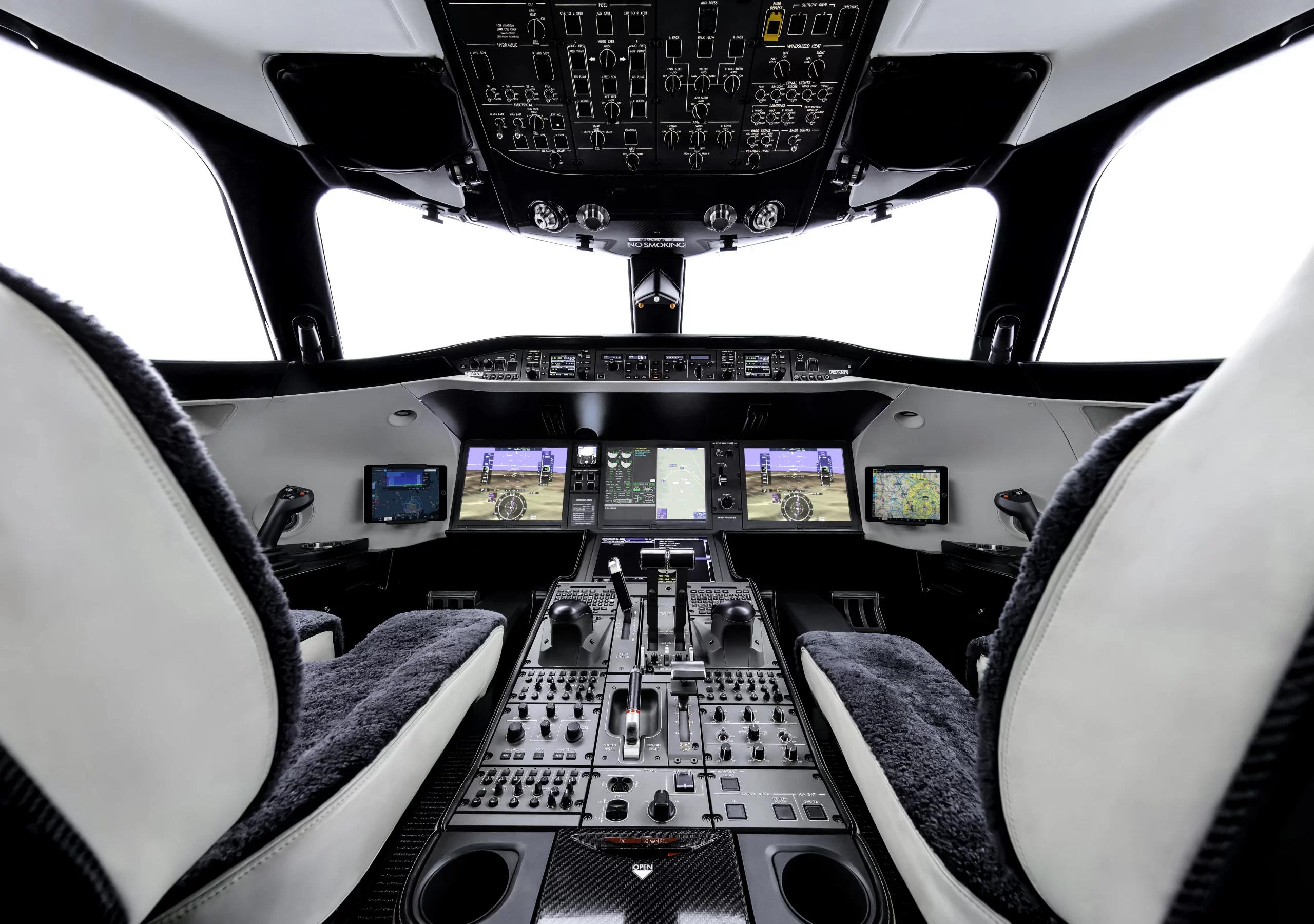
Bombardier also engineered the aircraft to maintain very low cabin altitude (2,691 ft) even at 41,000 ft cruise, setting an industry benchmark in passenger comfort and physiological wellbeing. Here are some other aspects of the aircraft:
| Aspect | Description |
|---|---|
| Aerodynamic efficiency | Advanced aerodynamic features allow the aircraft to retain a strong lift-to-drag ratio at very high subsonic speeds, where less refined designs would suffer major efficiency losses. |
| High-speed handling | The Global 8000 maintains stable and predictable handling at Mach numbers that typically challenge controllability in conventional business jets. |
| Cruise capability | This refinement enables sustained cruising above Mach 0.90, rather than limiting such speeds to brief, fuel-intensive bursts. |
| Engine type | The aircraft is powered by two General Electric Passport turbofan engines, purpose-built for Bombardier’s Global series. |
| High-altitude performance | The Passport engines are optimized for high-thrust output in thin air, ensuring strong performance near the aircraft’s maximum operating altitudes. |
| Environmental compliance | Despite their performance focus, the engines meet contemporary noise and emissions regulations—standards that were not a factor during the Concorde’s development. |
https://bombardier.com/sites/default/files/styles/retina_2700x900/public/2024-10/16A0029_2024_V2-copy-Global-8000-2085×932.jpg.webp?itok=cnBsGzgO
Comparison with Other Business Jets and Legacy Supersonic Designs
As Global 8000 being the fastest civil aircraft since the Concorde wasn’t something that was achieved today. During its flight test campaign in 2021, “accompanied by a NASA F/A-18 fighter aircraft, the Global 8000 repeatedly achieved top Mach numbers in excess of Mach 1.015“.
Stephen McCullough, Senior Vice President, Engineering and Product Development, said that the accomplishment was:
“a direct result of the commitment to excellence and dedicated work of our highly skilled employees, suppliers, Transport Canada and the FAA for a collaborative, effective process…….Attaining the Global 8000 certification from the FAA sets new performance standards in the industry and marks one of the final chapters in our very successful development program for this groundbreaking business jet.”
| Aircraft | Range (nm) | Published Cruise Mach | High-Speed Cruise Mach | Maximum Operating Mach (Mmo) |
|---|---|---|---|---|
| Bombardier Global 8000 | ~8,000 | 0.92 | 0.92 | 0.95 |
| Gulfstream G700 | ~7,750 | 0.85 | 0.90 | 0.925 |
| Dassault Falcon 10X | ~7,500 | 0.85 | 0.90 | 0.925 |
| Bombardier Global 7500 | ~7,700 | 0.85 | 0.90 | 0.925 |
| Cessna Citation X+ | ~3,460 | 0.90 | 0.90 | 0.935 |
While Concorde once held unmatched operator speeds exceeding Mach 2, the Global 8000’s Mach 0.95 represents the closest subsonic civilian counterpart in modern times. However, the speeds are substantially lower than the hypersonic research program such the North American X-15, as shown in the table below:
| Rank | Aircraft | Country / Program | Aircraft Type | Maximum Speed | Approx. Speed (km/h) | First Flight |
|---|---|---|---|---|---|---|
| 1 | NASA X-43A (Hyper-X) | United States (NASA) | Uncrewed experimental hypersonic | Mach 9.6 | ~11,855 km/h | 2001 |
| 2 | North American X-15 | United States (NASA / USAF) | Crewed experimental hypersonic | Mach 6.7 | ~7,270 km/h | 1959 |
| 3 | Lockheed SR-71 Blackbird | United States | Strategic reconnaissance | Mach 3.4 | ~3,540 km/h | 1964 |
| 4 | Lockheed YF-12 | United States | Interceptor (A-12 derivative) | Mach 3.2 | ~3,660 km/h | 1963 |
| 5 | Mikoyan MiG-25 Foxbat | Soviet Union / Russia | Interceptor / reconnaissance | Mach 3.2 | ~3,000 km/h | 1964 |
| 6 | Bell X-2 Starbuster | United States | Rocket-powered research aircraft | Mach 3.2 | ~3,370 km/h | 1952 |
| 7 | XB-70 Valkyrie | United States | Experimental strategic bomber | Mach 3.02 | ~3,310 km/h | 1964 |
| 8 | Mikoyan MiG-31 Foxhound | Russia | Supersonic interceptor | Mach 2.83 | ~3,000 km/h | 1975 |
| 9 | McDonnell Douglas F-15 Eagle | United States | Air superiority fighter | Mach 2.5 | ~2,655 km/h | 1972 |
| 10 | General Dynamics F-111 Aardvark | United States | Supersonic strike aircraft | Mach 2.5 | ~2,650 km/h | 1964 |
The Innovation Underlying Global 8000’s Performance
The Global 8000’s airframe is a result of iterative enhancements over the successful Global 7500 platform. In addition to the fact that engineers employed carefully tuned wing geometry and structural composites designed to reduce wave drag near the speed of sound and maximize lift efficiency, the aircraft supports four true living zones:
Entrance Area
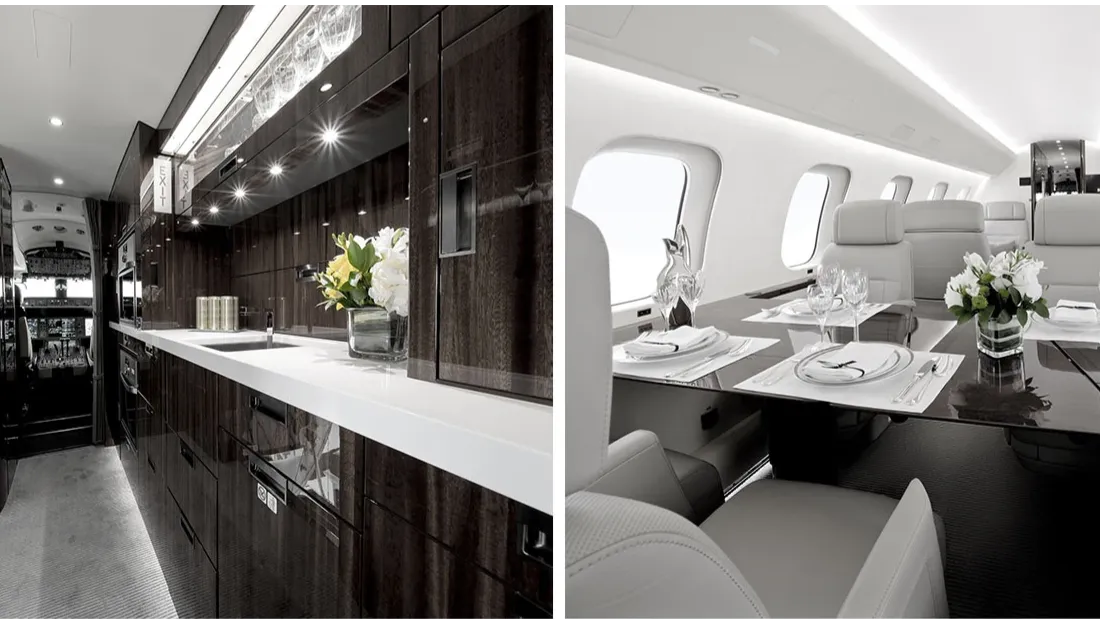
The entrance area sets the tone for the cabin, anchored by the largest galley in the segment, equipped with dual convection-microwave ovens, chilled storage, and a full sink and faucet arrangement. A well-appointed lavatory with window and vanity is located forward, while the dedicated Crew Suite includes a Nuage seat, power outlets, and personal storage. Additional wardrobes accommodate both passenger and crew belongings, ensuring an uncluttered cabin throughout long missions.
Conference Suite
-
Configured as a refined six-seat environment for meetings or dining at altitude
-
Central table features a removable leaf, allowing the layout to adapt between work and meal service
-
Additional side tables can be stowed away to maximize floor space
-
Six ultra-large windows enhance brightness and reduce the sense of enclosure
https://bombardier.com/sites/default/files/styles/retina_1400x1240/public/2024-10/Wellness-4-images-2024-1400×1240.jpg.webp?itok=QGHE4aZ4
Club Suite
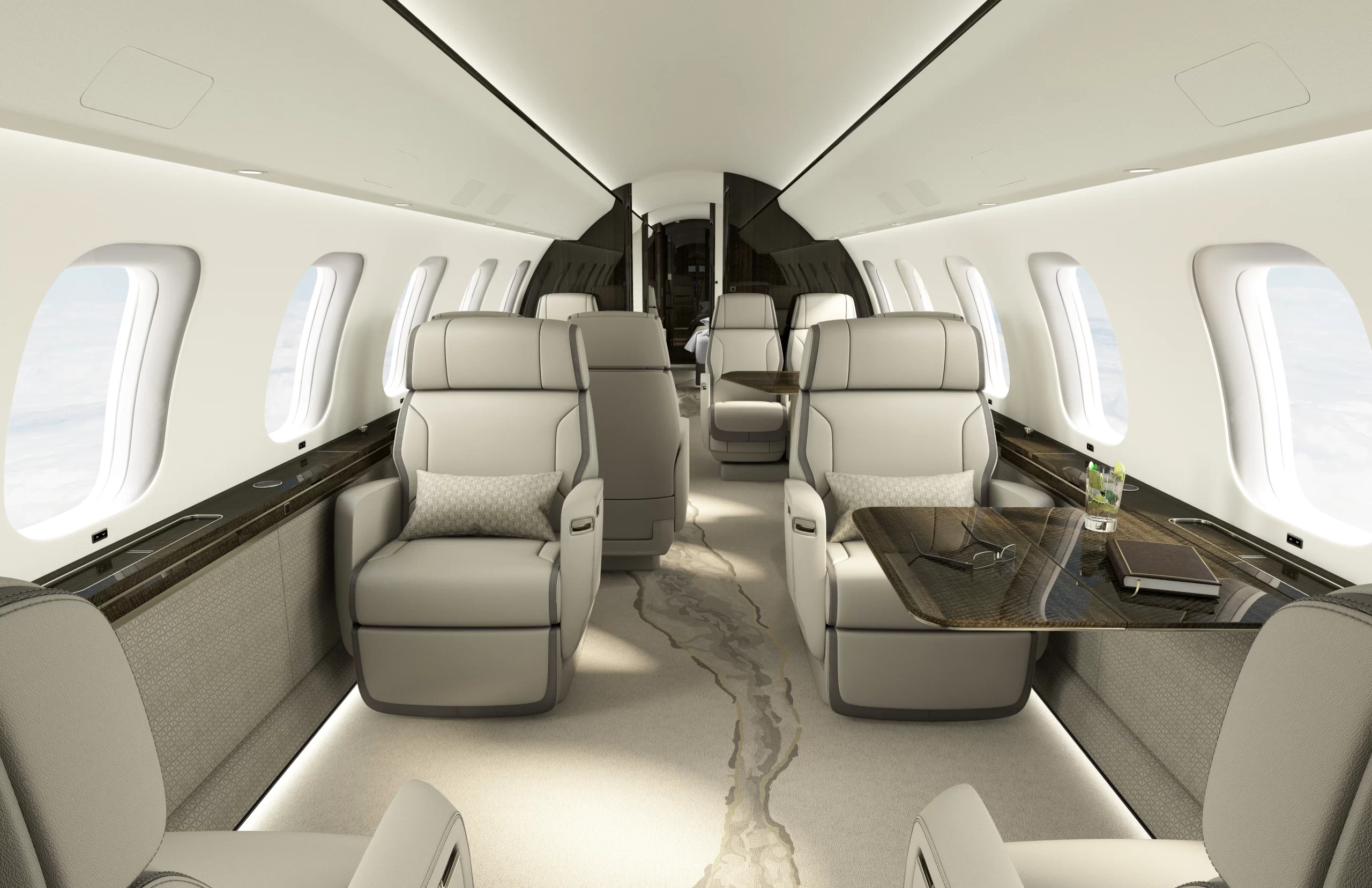
The Club Suite is designed as a relaxed social zone anchored by four Bombardier Nuage seats, each offering a signature zero-gravity recline to reduce fatigue on long sectors. Discreetly integrated side ledges house Bombardier Touch controls, while side tables can be concealed when not in use to preserve a clean, open feel. A large 24-inch high-definition display mounted on the forward bulkhead supports shared viewing, and six oversized windows flood the space with natural light.
Entertainment Suite
| Feature | Description |
|---|---|
| Seating | Three-place Nuage divan that converts into a berth for rest or overnight flights |
| Media setup | Dedicated entertainment cabinet with integrated media storage |
| Display | Large, freestanding television optimized for immersive viewing |
| Audio | Bombardier’s high-fidelity l’Opéra sound system |
| Natural light | Six oversized windows provide consistent daylight throughout the cabin |
Principal Suite
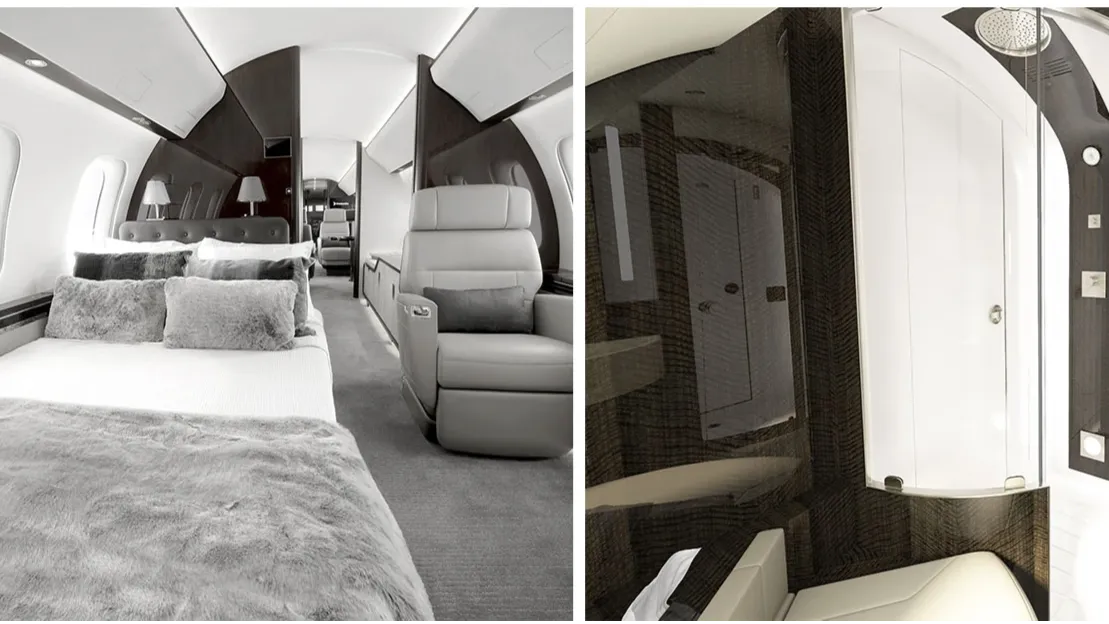
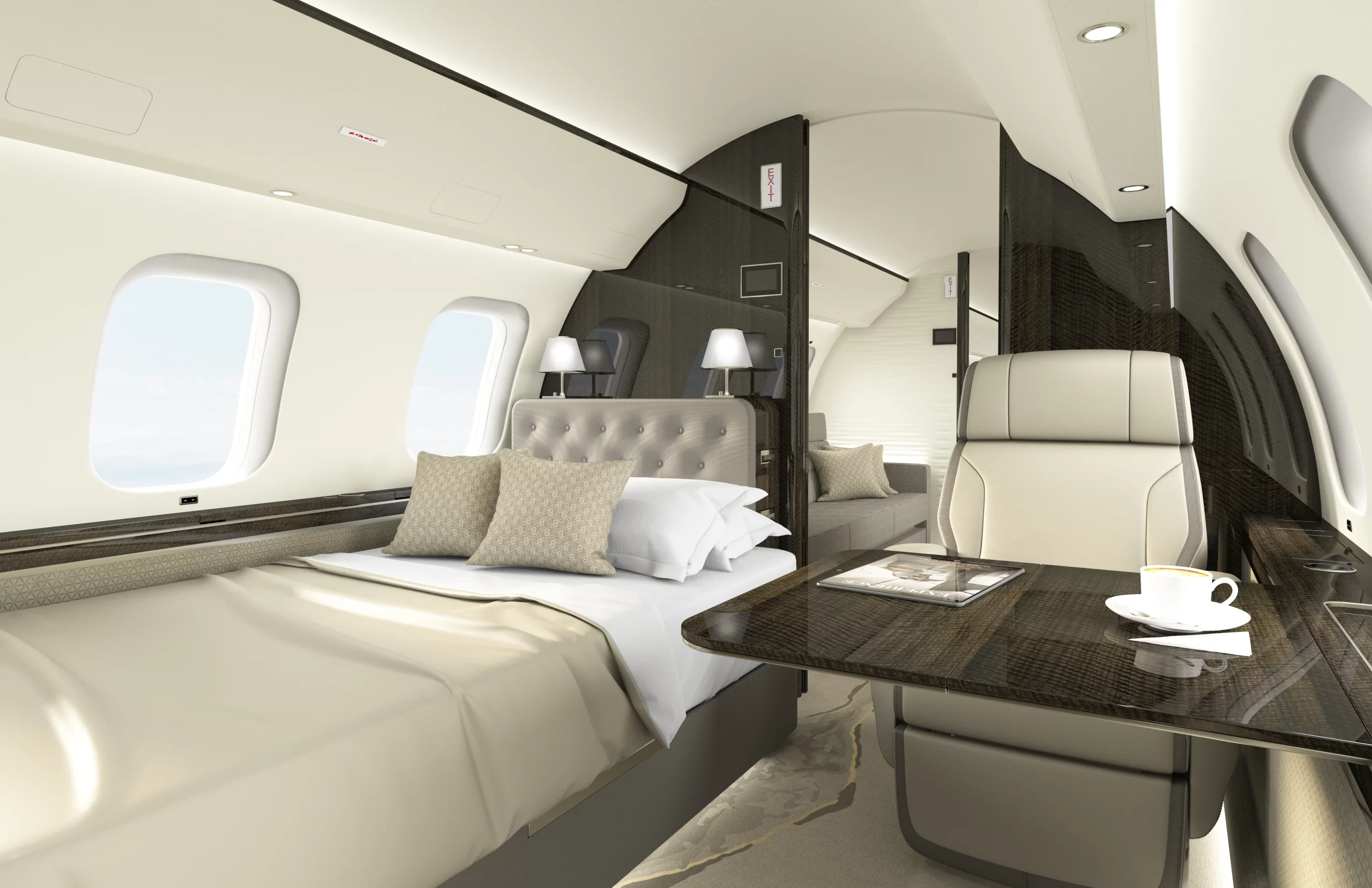
The Principal Suite functions as a private retreat, blending residential comfort with long-range practicality. It combines a Nuage seat with a zero-gravity recline and a full-size bed featuring a customizable headboard, allowing passengers to transition seamlessly between work, relaxation, and sleep. Dual reading lamps, a spacious wardrobe, and a 32-inch high-definition display reinforce the room’s hotel-like character, while six large windows maintain a strong connection to the outside world.
En Suite
-
Fully private lavatory with window, vanity, and optional stand-up shower
-
Large wardrobe space integrated into the suite
-
Secure, unrestricted access to the baggage compartment during flight
https://bombardier.com/sites/default/files/styles/retina_1400x1240/public/2024-10/Wellness-4-images-2024-1400×1240.jpg.webp?itok=QGHE4aZ4
Cabin Environment and Passenger Wellbeing
Bombardier’s Pũr Air System and advanced pressurization contribute to the aircraft’s industry‑low cabin altitude, a critical factor in long‑haul passenger comfort. Further, bespoke lighting and filtration systems minimize the physiological impacts of extended high‑altitude travel, setting new standards in business aviation comfort.
| Feature Area | Bombardier Pũr Air Capability | Description |
|---|---|---|
| Air filtration efficiency | Up to 99.99% particle capture | Uses a hospital-grade HEPA filter to remove up to 99.99% of airborne particles, including viruses, allergens, and bacteria—capability not typically found in 100% fresh-air-only systems. |
| Gas and odor removal | Activated carbon filtration | An integrated carbon filter eliminates volatile organic compounds (VOCs), odors, and gaseous contaminants from the cabin air. |
| Ventilation performance | Fastest fresh-air replacement | Delivers fresh air up to 25% faster than competing systems and can fully refresh the cabin with 100% fresh air in as little as 90 seconds, reducing stagnant air zones. |
| Cabin humidity | Improved moisture retention | Filtered air recirculation maintains higher humidity levels than fresh-air-only systems, supporting respiratory comfort, reducing nasal dryness, and improving skin hydration. |
| Thermal response | Rapid heating and cooling | Heats or cools the cabin up to twice as fast as systems operating exclusively on fresh air, reaching target temperatures in roughly half the time during testing. |
The aircraft also introduces the industry’s first zero-gravity seating position, designed to enhance comfort by reducing physical strain during flight. Some of the other features of the Nuage seats that offer “zero-gravity comfort that’s out of this world” are as follows:
-
Incorporates a knee-level pivot point that gently supports the body, helping to relieve pressure on the lower back.
-
Uses a patented tilt-link mechanism to promote a neutral posture and more even weight distribution across the seat.
-
Supports improved blood circulation, reducing muscle fatigue and discomfort, particularly on long-haul missions.
-
Features an adjustable headrest that enhances neck support and minimizes strain in a wide range of seating positions.
-
Enables side-by-side comparison with conventional seats, highlighting how the zero-gravity design delivers superior comfort.
Regulatory and safety framework governing the Global 8000
The operational certification of any civilian jet requires compliance with both International Air Transport Association (IATA) guidance and national aviation standards.
IATA standards demand rigorous adherence to aircraft design, safety, environmental, and operational protocols accepted by member states worldwide. IATA’s recommended practices influence everything from flight crew resource management to environmental reporting.
In Canada, Transport Canada Civil Aviation (TCCA) certified the Global 8000 on November 5, 2025 following exhaustive test campaigns assessing structural integrity, flight performance, and systems reliability. During the occassion, Stephen McCullough, Senior Vice President, Engineering and Product Development at Bombardier remarked:
“Bombardier has worked rigorously and collaboratively with Transport Canada toward certification for the Global 8000. This marks a pivotal milestone for Bombardier, our customers and the entire business aviation industry – solidifying the Global 8000’s position as the unrivaled leader setting a new standard……..This milestone is a powerful testament to the exceptional talent and dedication of our engineering, test and production teams. It showcases their deep expertise and unwavering commitment – qualities that are embedded in Bombardier’s DNA and are the heartbeat that drives everything we do for our valued clients.”
Subsequently, the U.S. FAA certified the type on December 19, 2025, enabling broader international use in U.S. airspace under strict safety oversight. European Union Aviation Safety Agency (EASA) certification remains in progress, a typical final step in global type approval.
A new paradigm in civilian aviation performance
Bombardier’s Global 8000 redefines speed and long‑range capability in the realm of business aviation, blending record‑setting performance with state‑of‑the‑art comfort and efficiency. Its avionics include the following:
-
Controller–Pilot Data Link Communication (CPDLC)
-
Bombardier Vision flight deck featuring four large-format avionics displays
-
MultiScan™ weather radar with integrated windshear detection
-
Advanced fly-by-wire architecture paired with side-stick flight controls
-
Graphical flight planning capability
-
Head-Up Display (HUD) with Enhanced Vision System (EVS) and Synthetic Vision System (SVS)
-
Latest Performance-Based Navigation (PBN) capabilities, including:
-
WAAS / SBAS
-
LPV approaches
-
RNAV, en-route RNP, and RNP AR operations
-
Rounding up, let’s take a look at this aircraft’s specifications in greater detail:
| Category | Parameter | Value |
|---|---|---|
| Speed (Mach) | Maximum speed | 0.95 |
| Ultra-high-speed cruise | 0.92 | |
| High-speed cruise | 0.90 | |
| Typical cruise speed | 0.85 | |
| Airfield performance | Takeoff distance (SL, ISA, MTOW) | 5,760 ft |
| Landing distance (SL, ISA, typical) | 2,220 ft | |
| Operating altitude | Maximum operating altitude | 51,000 ft |
| Initial cruise altitude (MTOW) | 43,000 ft | |
| Engines | Engine model | GE Passport |
| Thrust rating | 18,920 lbf (84.16 kN) | |
| Flat rating | ISA +15°C | |
| Interior dimensions | Cabin height | 6 ft 2 in |
| Cabin width | 8 ft 0 in | |
| Cabin length¹ | 54 ft 5 in | |
| Exterior dimensions | Overall length | 111 ft |
| Wingspan | 104 ft 0 in | |
| Height | 27 ft 0 in |