A business class passenger flying with American Airlines (AA) was reportedly offered accommodation at a budget Motel 6 following an overnight disruption at Dallas Fort Worth International Airport (DFW), raising questions about airline duty-of-care standards.
The incident occurred after a controllable delay, where airlines are generally expected to provide hotel stays, yet without any mandated quality benchmarks under current U.S. regulations, View From the Wing reported.
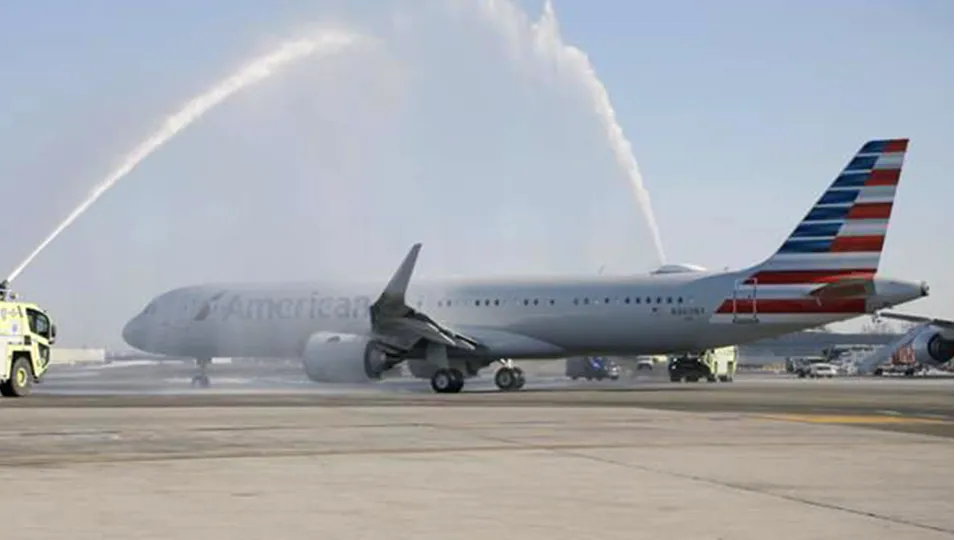
American Airlines DFW Disruption Response
The disruption, reportedly caused by operational factors within the airline’s control, left passengers stranded overnight at DFW.
While American Airlines, which recently rejected the proposal to merge with Untied Airlines, arranged accommodation as per its obligations, the quality of the assigned lodging drew scrutiny, particularly given the passenger’s premium cabin status on an international itinerary.
Industry observers note that U.S. carriers typically prioritize cost control when arranging distressed passenger accommodation, often contracting lower-cost hotel chains near airports.
US Airline Hotel Policy Gaps
The case highlights a structural gap in U.S. aviation consumer protection rules, which require airlines to provide overnight accommodation in certain scenarios but do not define minimum standards.
Following policy pressure in recent years, major airlines committed to offering hotel stays during controllable disruptions, yet specifics regarding hotel class, location, or amenities remain undefined.
As a result, passengers may receive accommodations that vary significantly in quality, regardless of fare class or loyalty status.
Passenger Options and Industry Practice
Aviation analysts emphasize that travelers often retain alternatives when faced with such situations.
Passengers may independently book hotels and seek reimbursement through credit card trip delay coverage, travel insurance, or airline compensation frameworks, although outcomes depend on documentation and policy terms.
In addition, some airport hotels offer distressed passenger rates, while loyalty program points can provide access to higher-quality accommodation during irregular operations.
The following table gives us a cue as to what one can do:
| Option | How It Works | Key Benefits | Considerations |
|---|---|---|---|
| Credit card coverage | Book your own hotel using a credit card with trip delay insurance; keep receipts for hotel, meals, and transport | Better hotel choice, no waiting in airline queues, flexibility to stay farther from airport | Requires upfront payment; reimbursement depends on claim approval |
| Distressed passenger rate | Request discounted hotel rates via airline baggage desk or even another airline’s counter | Lower out-of-pocket cost, faster than waiting in long lines | Availability not guaranteed; requires initiative and negotiation |
| Use loyalty points | Redeem hotel or travel points for accommodation during disruption | Quick booking, potentially higher-quality stay at low cost | Requires sufficient points balance; availability may vary |
| Airline-provided hotel | Accept hotel arranged by airline after delay/cancellation | No upfront cost, arranged directly by airline | Often lower-quality hotels; long wait times; limited choice |
All in All
The incident underscores a persistent disconnect between premium cabin expectations and ground handling realities during disruptions.
While airlines invest heavily in onboard product differentiation, irregular operations often expose standardized cost-driven processes that do not distinguish between passenger segments.
For frequent flyers, the episode reinforces the importance of contingency planning, particularly during peak travel periods when disruptions can cascade across networks.