On October 2025, Airbus announced that it had inaugurated its second Final Assembly Line (FAL) for the A320 Family jets in Tianjin, China. This new facility, established under a 2023 agreement with the Aviation Industry Corporation of China (AVIC) and the Tianjin Free Trade Zone Investment Company Ltd., aims to support Airbus’ global target of assembling 75 A320 Family aircraft per month by 2027.
The news comes only weeks after Airbus inaugurated its plans to open a facility that will help manufacture the helicopter that can fly to the top of Everest in India.
Helicopter that can fly to the top of Everest to be manufactured in India
Airbus’ second FAL in Tianjin, China, will:
- Complement the existing Tianjin plant (originally launched in 2008)
- Integrate renewable-energy infrastructure
- Deepen Airbus’ strategic industrial footprint in China’s civil aviation market
The news regarding the addition of the second FAL comes after a meeting between Airbus CEO Guillaume Faury and China’s Commerce Minister Wang Wentao held in Beijing on 21 October 2025.
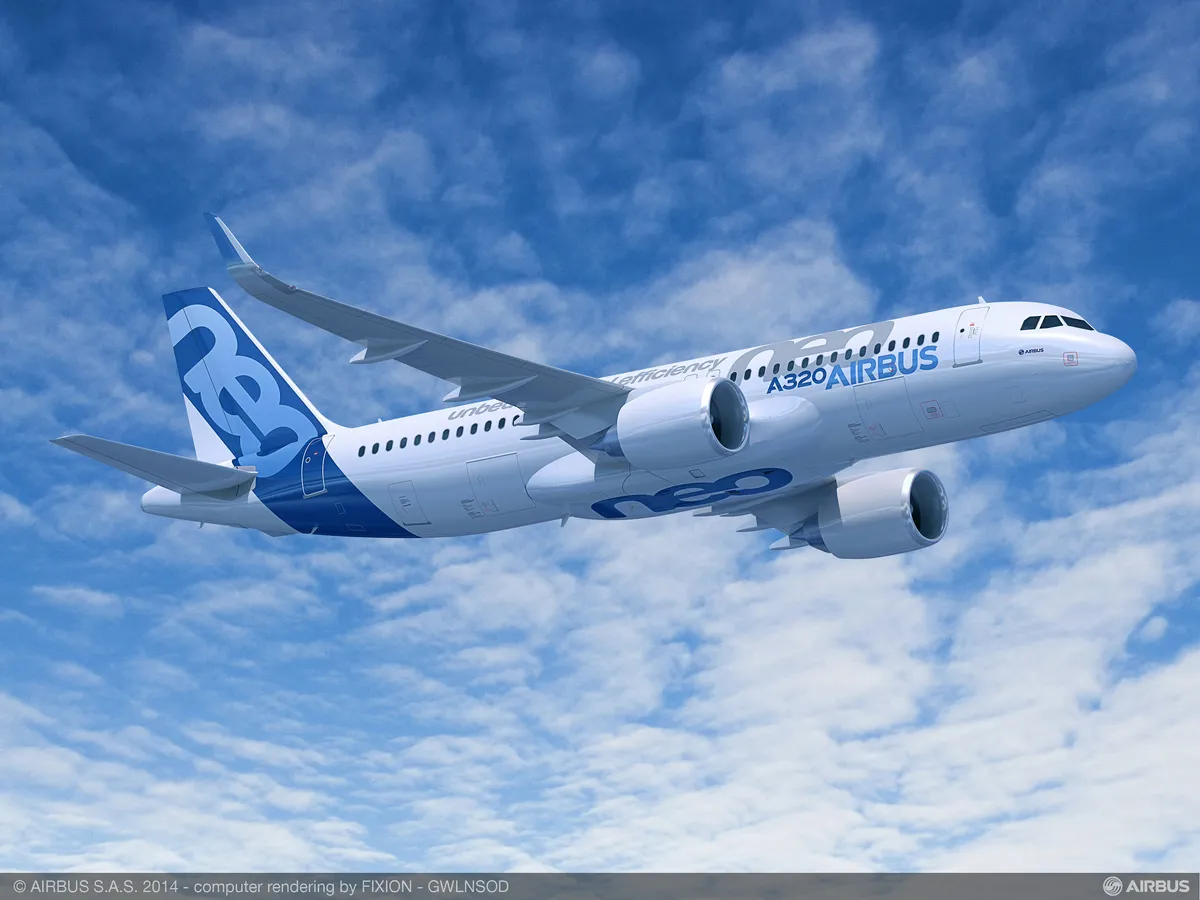
The newly inaugurated FAL in Tianjin is designed to enhance Airbus’ responsiveness to demand in the Asia-Pacific region. After all, China and some of the closest neighbors already have a booming fleet of aircraft of the A320 family:.
Photo: Airbus
According to the press release, the facility will be fully operational by early 2026 and forms part of Airbus’ global production network of ten final-assembly lines:
- Four in Hamburg (Germany)
- Two in Toulouse (France)
- Two in Mobile (USA)
- Two in Tianjin (China)
Airbus CEO Guillaume Faury emphasized that the addition of the second FLA in China “provides us with the necessary flexibility and capacity to deliver on our plan to assemble 75 A320 Family aircraft per month in 2027”. According to XinhuaNet, the introduction of a second line in Tianjin, China also will have a projected 20 per cent share of Airbus’ global A320 Family production.
Industrial and Sustainability Features of The New Line
Here’s a look into the construction facility:
| Facility Component | Area (sq. meters) | Description / Notes |
|---|---|---|
| Total site area | 300,000 | Overall facility coverage |
| Total floor area | 130,000 | Comprises 13 buildings |
| Final assembly hall | 42,000 | Core building; accounts for nearly one-third of total floor area |
The facility boasts advanced production technologies and a strong sustainability ethos. According to Airbus, the new line “features Airbus’ latest technologies and processes … and takes advantage of electricity from renewable sources, reclaimed water and geothermal energy” to support the company’s environmental roadmap.
Wang Guipu, chief engineer of the project at China Railway Construction Bridge Engineering Bureau Group Co., Ltd., said the construction work presented a major logistical challenge because the 13 buildings were distributed across an operating aviation facility.
The project had to be carried out without interrupting either flight operations or ongoing production activities. This required construction teams to carefully coordinate their work around the functioning facility while maintaining normal aviation activity.
Around 80% of the materials used in the project were sourced domestically, according to Xinhua. Key components, including self-leveling epoxy flooring and hangar doors, were manufactured in China. Greater reliance on locally sourced materials helped reduce procurement times and supported efforts to accelerate construction.
Airbus first established its FAL for the A320 Family in Tianjin in 2008 — the company’s first commercial aircraft assembly line outside Europe. Since then, the site has assembled and delivered over 780 A320-Family aircraft.
The 2025 inauguration coincides with the 40th anniversary of Airbus’ cooperation with China’s civil aviation sector (the first Airbus aircraft, an A310, was delivered in 1985) and underscores Airbus’ long-term commitment to the Chinese aviation market.
In addition, localization of parts production (for example wings produced by AVIC Xi’an) has allowed significant time-savings compared to shipping from Europe.
Market implications and strategic context of Airbus’ new FAL in Tianjin
China’s civil aviation sector continues to expand rapidly, and the following numbers (for between January and September 2025) reflect it:
- 580 million passengers, up 5.2 per cent
- nearly 7.4 million tonnes of cargo, up per cent year-on-year respectively.
According to People’s Daily Online, China’s annual average air passenger volume growth rate “will reach 5.3 percent over the next 20 years, outpacing the global average of 3.6 percent. By 2042, more than 9,000 of the over 40,000 new aircraft needed globally will be delivered to China“.
- There are two advantages to Airbus’ new FAL in Tianjin:
The expansion intensifies Airbus’ capacity advantage in the narrow-body segment (A320 Family) against rivals like Boeing’s 737 MAX and China’s COMAC C919. - The geographical diversification of the assembly line helps Airbus mitigate geopolitical and supply-chain risk, particularly amid trade tensions between China and the U.S.
All in All
The first aircraft built on the new Tianjin line are expected to enter assembly in early 2026, with ramp-up proceeding toward full-line capacity well before Airbus’ 2027 target.
According to China Daily, since 2008 Airbus Tianjin has delivered more than:
- 750 A320 Family aircraft
- 16 A330 aircraft
- 24 A350 aircraft
The announcement of the second FAL in Tianjin also act as a catalyst for Chinese carriers, leasing companies and parts suppliers who stand to benefit from proximity to assembly: already around 200 Chinese suppliers now support Airbus’ commercial aircraft production. George Xu, Airbus executive vice president and Airbus China CEO, said that the second production facility at Tianjin will greatly enhance Airbus’ cooperation “with China in the areas of wings and fuselage equipping“, adding:
“Airbus will continue to become an outstanding multinational enterprise in China, contribute to the high-quality development of China’s aviation industry, and make positive contributions to the global aviation industry.”
Things look bright for China, as well as Airbus.