One year after unveiling the concept that rearranges the entire front of the A350-1000 to enable a 1-1-1 configuration including a centre-section Master Suite accommodating two passengers, Airbus has formally ceased its studies and entered the development phase to deliver the First Class Experience, according to Ingo Wuggetzer, Vice President of Cabin Marketing at Airbus, as reported in Runway Girl Network. Wuggetzer confirmed the development phase commitment at this year’s Aircraft Interiors Expo in Hamburg, adding that the manufacturer envisions availability in the 2030 timeframe. The announcement marks a decisive pivot for the European airframer, transforming what had been a design proposition into an engineering programme with commercial intent.
At least five airlines, including Air India (AI), are presently honing new first-class designs for their forthcoming A350s, and elements of Airbus’ design could be adopted, with the first of these expected to enter service in 2030 and beyond. Other operators are in the pre-sales phase, Airbus confirmed.
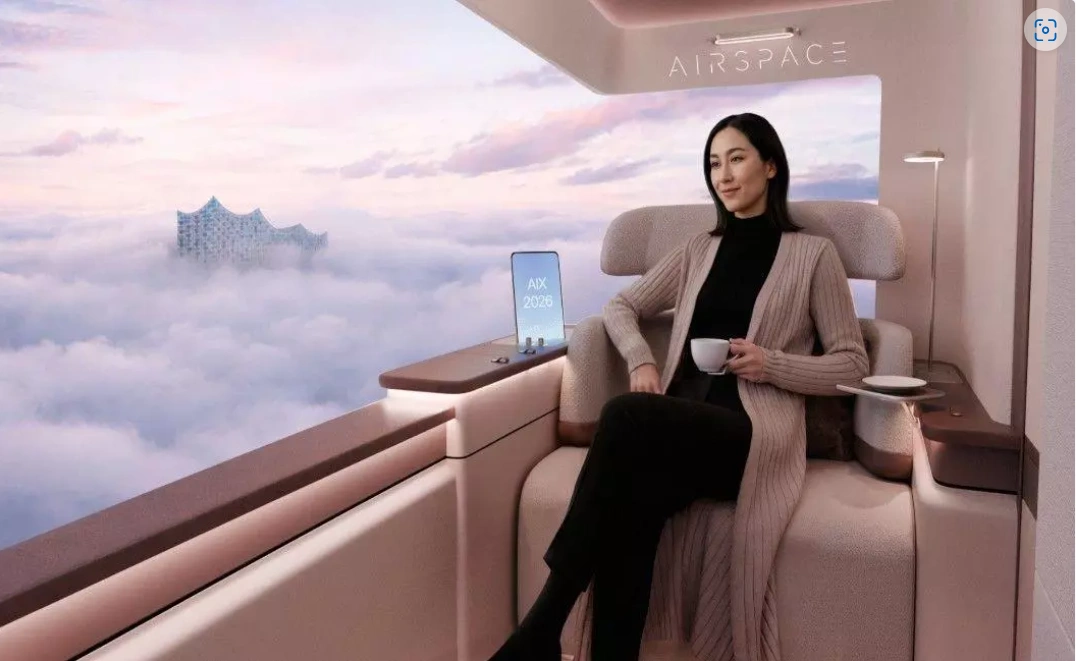
What Airbus Is Actually Building in its First-Class Experience
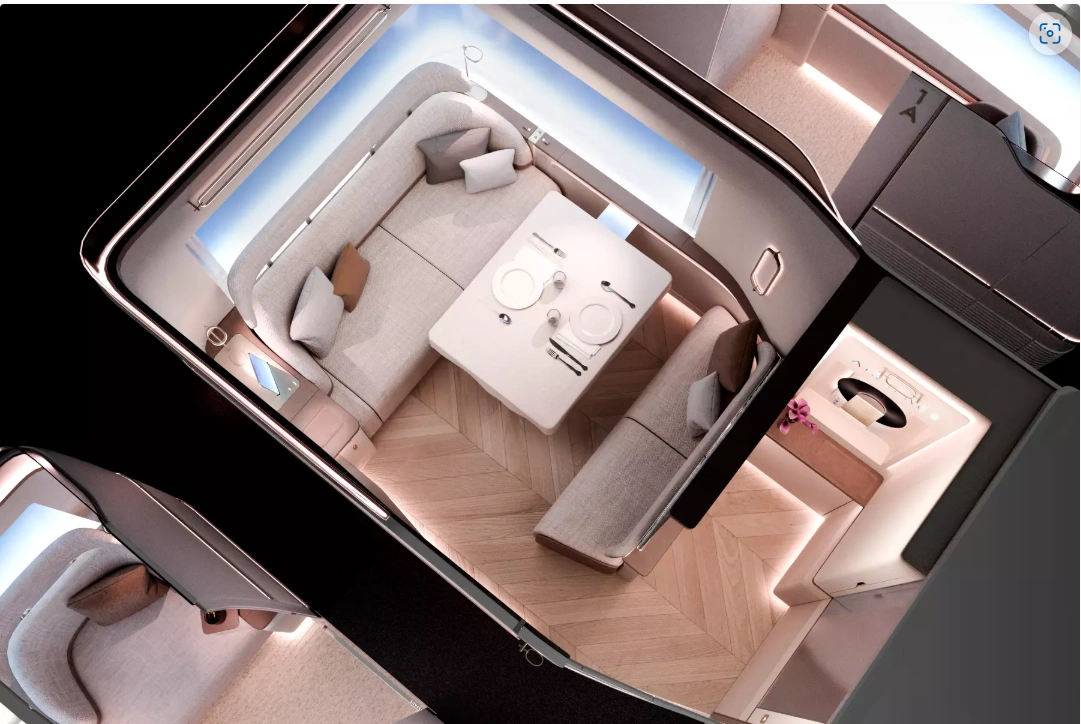
The highlight of the experience is the display of Airbus‘ First-Class Master Suite, conceived by its in-house design team. This Master Suite, located in the center between the two aisles, accommodates two passengers, offering them exclusive access to a dedicated lavatory, changing area, bar and a double bed. The suite represents a fundamental reconceptualization of what a first-class cabin can be, prioritizing spatial exclusivity over raw seat count.
To enable the new “1-1-1” layout in the A350-1000, the floor area between Doors 1 and 2 is fully maximized to dedicate as much space as possible to the new First-Class section. Floorspace previously occupied by various monuments such as lavatories or stowages is freed up by relocating them outside of the main revenue area into a new Centre Module just behind Doors 1, opposite the cockpit door. Additional privacy for passengers is provided by also relocating the access stairs to the Forward Crew Rest Compartment in the new Centre Module, reducing disturbance from the flight crew.
The cabin’s key design elements include:
- A center-section Master Suite accommodating two passengers with access to a dedicated double bed
- A private lavatory and changing area exclusively reserved for the suite’s occupants
- A private bar within the suite
- A “1-1-1” layout placing three suites abreast across the A350-1000’s 5.61-metre-wide cabin
- New fascia and sculptured ceiling panels providing an enhanced sense of space, along with an integrated welcome lighting panel at Doors 1 for ambience
- Virtual panoramic windows to create the impression of an unobstructed exterior view
- Strategically positioned suites in the center section between the two aisles, designed for total privacy
Rather than simply refining existing premium seating, the manufacturer is rethinking the entire forward cabin as a luxury living space, emphasizing openness, privacy, and comfort on ultra-long-haul routes. Wuggetzer articulated the philosophy succinctly, as reported by Runway Girl Network:
“What do you want? Space. I think space is one of the big things that always represents first class. This space is big, yes, but it’s exclusive.”
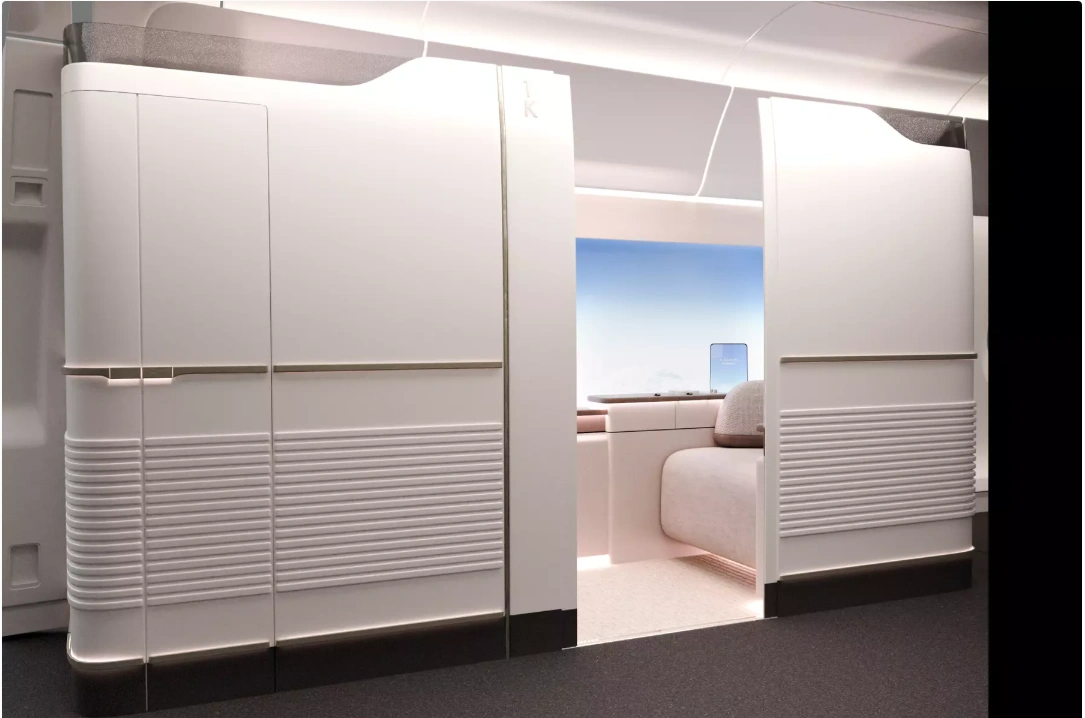
The Market Rationale for A350’s First Class
The market size for first class is stable, Wuggetzer said. But while there are generally fewer first-class seats on board aircraft than pre-2021, with the average number having dropped from eight to five according to Airbus, the seats are becoming more exclusive. There is now a “really hard” push in the market to differentiate first class from business-plus and regular business class products.
To date, a total of 10 customers have decided to feature first class cabins in their ordered A350s, some of which are already in service. While the existing products are not utilising the next-generation concepts proposed by the First Class Experience concept, such as the new lavatory, sidewall panels, or the enhanced welcome area, around five airlines are currently in the customisation phase and these are the ones who could be considering implementing elements included in the concept.
According to Airbus forecasts, the first units equipped with these innovations could enter service starting in 2030. Additionally, the manufacturer confirmed it is in ongoing talks with several airlines in the pre-sale stage to integrate them into the programme.
Air India’s Participation is a Transformative Shift
One of the most significant developments surrounding the First-Class Experience is Air India’s (AI) decision to anchor its forthcoming premium product on Airbus’ concept.
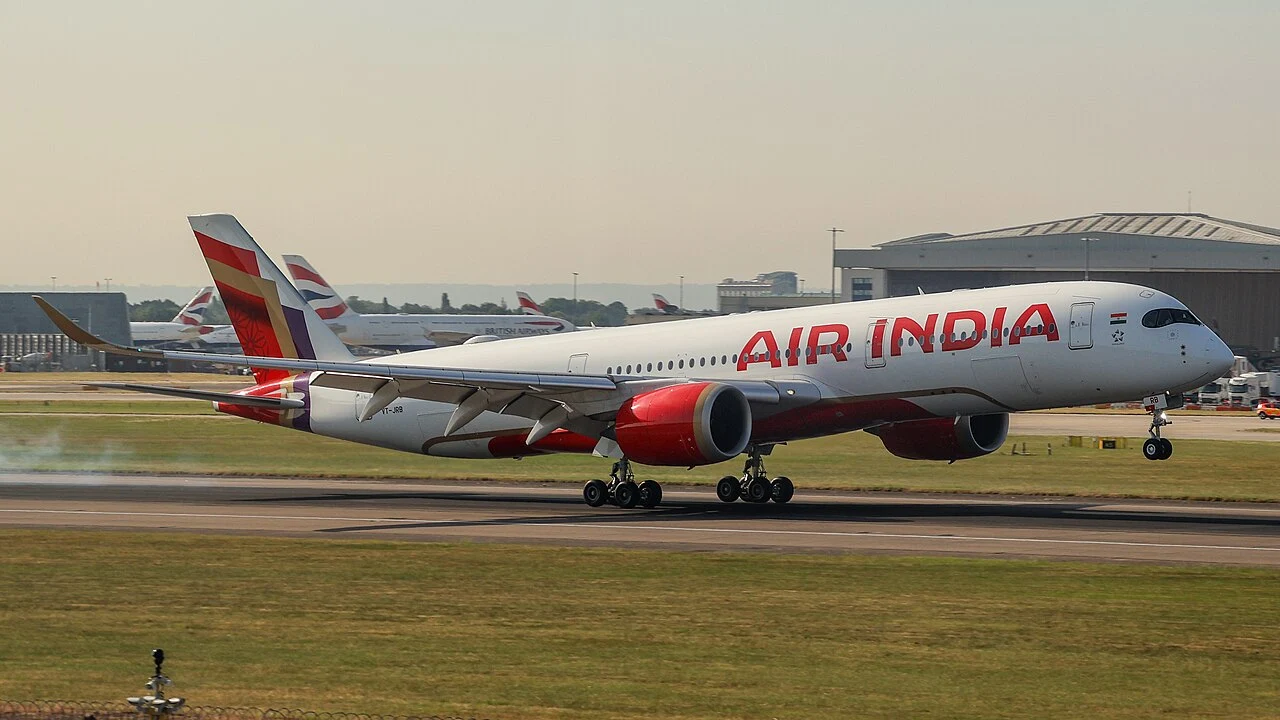
Air India will introduce a customised version of Airbus’ first class suite on its upcoming Airbus A350-1000 aircraft. The Tata Group-owned carrier has moved away from the originally planned Safran Unity seating platform due to supply chain constraints and will now partner directly with Airbus on its premium cabin product. This strategic shift represents a considerable enhancement over Air India’s previous approach, which treated first class as a modest extension of business class rather than a distinct and luxurious product.
Industry observers expect the cabin to feature a 1-1-1 layout, placing it in the same category as Japan Airlines’ (JL) A350-1000 first class and Lufthansa’s (LH) A350-900 first class product. The Airbus concept also includes the Master Suite option, whereby one suite within the cabin offers significantly more space than the others. Air India intends to induct aircraft featuring the new First Class from 2030 onwards.
The new first class suites will be introduced on A350-1000s forming part of a 20-aircraft order placed in 2023, with deliveries expected to commence in 2026. Air India’s A350-1000 fleet is slated to serve high-demand routes between Indira Gandhi International Airport (DEL), Delhi and Chhatrapati Shivaji Maharaj International Airport (BOM), Mumbai to destinations including London Heathrow Airport (LHR) and John F. Kennedy International Airport (JFK), New York.
Air India is reportedly set to be one of the key pioneers for the Master Suite, or a customised version of it, with an expected entry into service around 2030.
Why The A350-1000 Is the Right Aircraft for Airbus’ New First Class
The large size and high ceilings of the A350-1000 make it the ideal choice for airlines to install their most premium product. Its unique interior proportions can be further enhanced, beyond today’s in-service A350s, by new fascia and sculptured ceiling panels providing an even greater sense of space, as well as an integrated welcome lighting panel at Doors 1 for additional ambience. The suite’s virtual panoramic windows create the ultimate premium travel experience.
The A350-1000’s 5.61-metre-wide cabin between the two aisles is designed to accommodate a larger, exclusive first class cabin, which Airbus describes as fitting for a flagship product. The aircraft is already being used by several airlines globally for ultra-long-haul flights of over 15 hours in duration.
The aircraft’s structural characteristics thus align naturally with the product philosophy underpinning the First Class Experience: the notion that space itself is the premier luxury on long-haul operations. At the Airbus booth at AIX 2026, mock-ups were on display not only for the A350 but also for the A330, the A320 Family, and the A220, which will introduce the new Airspace cabin specification in 2026.

_Air_India_Airbus_A350-941_VT-JRB_@_EGLL_2025-06-18.jpg)