An Airbus A350-900 operated by China Airlines (CI) has been grounded at Melbourne Airport (MEL) after its forward left-hand door was severely damaged in a jetbridge collision following arrival from Taipei. The aircraft, which was empty at the time of the incident and no passengers or crew were injured, had completed an overnight service as flight CI-57 from Taipei and arrived at Melbourne on Tuesday morning, FL360aero reported.
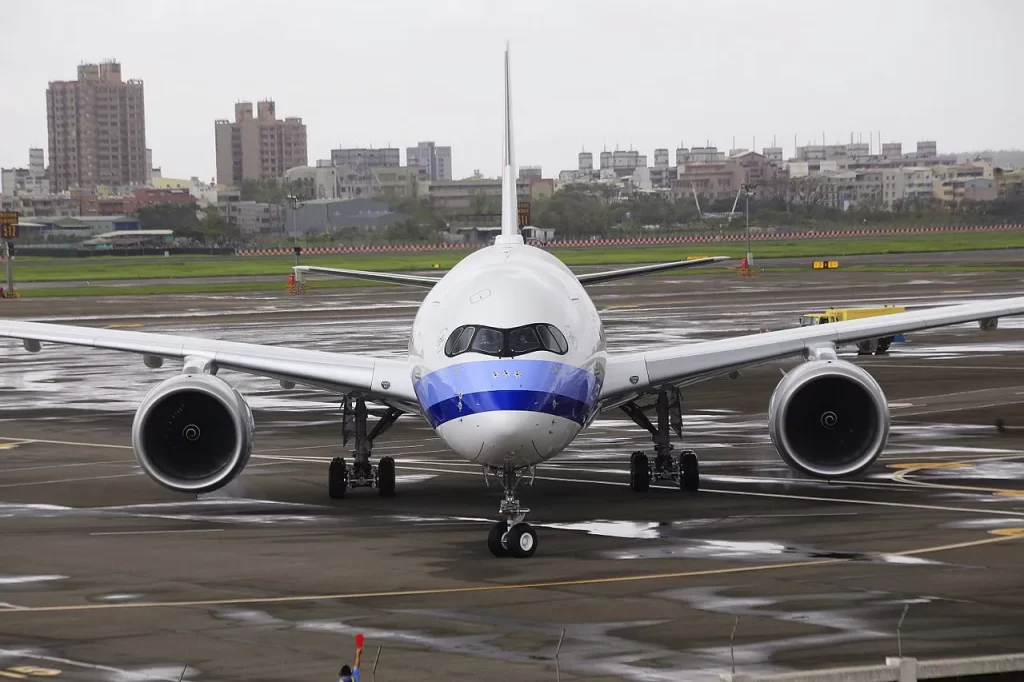
Jetbridge Collision Follows Unexpected Aircraft Movement
According to initial accounts of the ground handling sequence, passengers and crew had already disembarked when the aircraft remained parked at the gate with the forward left door open and the jetbridge still connected.
It was at this point that the aircraft reportedly rolled backward unexpectedly. With the jetbridge still attached, the movement caused the open door to strike the structure of the bridge, resulting in significant impact damage.
According to data from planespotters.net, the Airbus A350-900 involved in the incident is registered B-18902 and was delivered in November 2016 after being ferried from Toulouse (TLS) to Taipei (TPE) between 21–22 November 2016, before entering commercial service on 27 November 2016.
Configured in a three-class layout of C32W31Y243 and powered by two Rolls-Royce engines, the aircraft has accumulated approximately 8,990 flight hours. The force of the contact partially tore the door from its hinges, raising immediate concerns over both door integrity and potential structural implications for the fuselage.
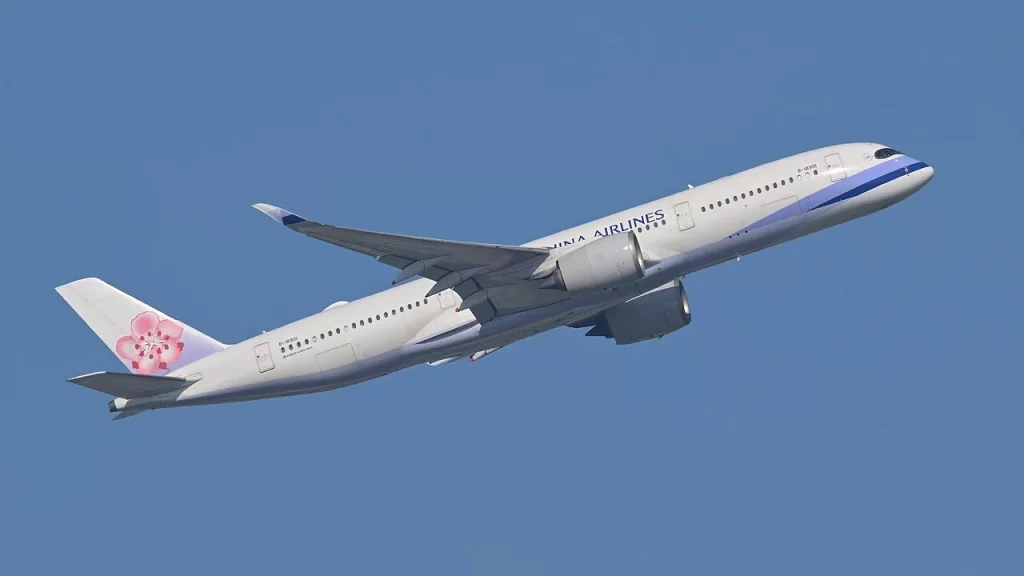
Air China’s Possible Failure in Securing Procedures Under Investigation
While the exact cause has not yet been officially confirmed, early indications point toward a potential lapse in ground handling procedures, particularly the possible absence or incorrect placement of wheel chocks.
In standard airport operations, wheel chocks are used to prevent unintended aircraft movement during turnaround procedures. Their incorrect deployment can allow an aircraft to shift even when it is otherwise stationary at the gate.
Nontheless, the following table gives us a cue into the benefits of wheel chocks:
| Benefit Area | Explanation |
|---|---|
| Enhanced Ground Safety | Wheel chocks prevent unintended aircraft movement caused by wind, slope, or ground equipment vibration, providing a physical barrier that reduces roll-away risk and improves safety for personnel and nearby equipment. |
| Reduced Brake System Wear | By physically securing the aircraft, wheel chocks reduce reliance on braking systems to hold stationary weight, lowering brake wear and extending component lifespan, especially during long maintenance or turnaround periods. |
| Operational Efficiency | Chocked aircraft remain stable during servicing such as refueling, inspections, or maintenance, allowing ground crews to work more safely and efficiently while reducing delays and operational disruptions. |
| Improved Cost Control | Preventing unintended aircraft movement helps avoid expensive ground damage, operational delays, and repair costs, making wheel chocks a low-cost but high-impact safety investment. |
| Simplified Training and Safety Compliance | Their simple, standardized use helps ground crews follow safety procedures consistently, improving compliance with operational protocols and reducing the likelihood of human error. |
Data: Pilot John
Investigators are also expected to examine other contributing factors, including communication between cockpit and ramp teams, jetbridge positioning accuracy, and whether any mechanical fault contributed to the rollback event.
Industry reporting has noted that strict adherence to post-arrival safety protocols is critical during this phase of ground operations, where aircraft systems are powered down and external restraints are the primary safeguard against movement.
Flight Cancellation and Engineering Inspection Underway
The damage to the aircraft was significant enough for the scheduled return service to Taipei to be cancelled immediately.
Maintenance teams are now assessing whether the impact was limited solely to the door assembly or whether it extended into surrounding fuselage structure.
The distinction is critical: while door replacement alone can be completed relatively quickly, structural involvement can substantially extend repair timelines and grounding duration.
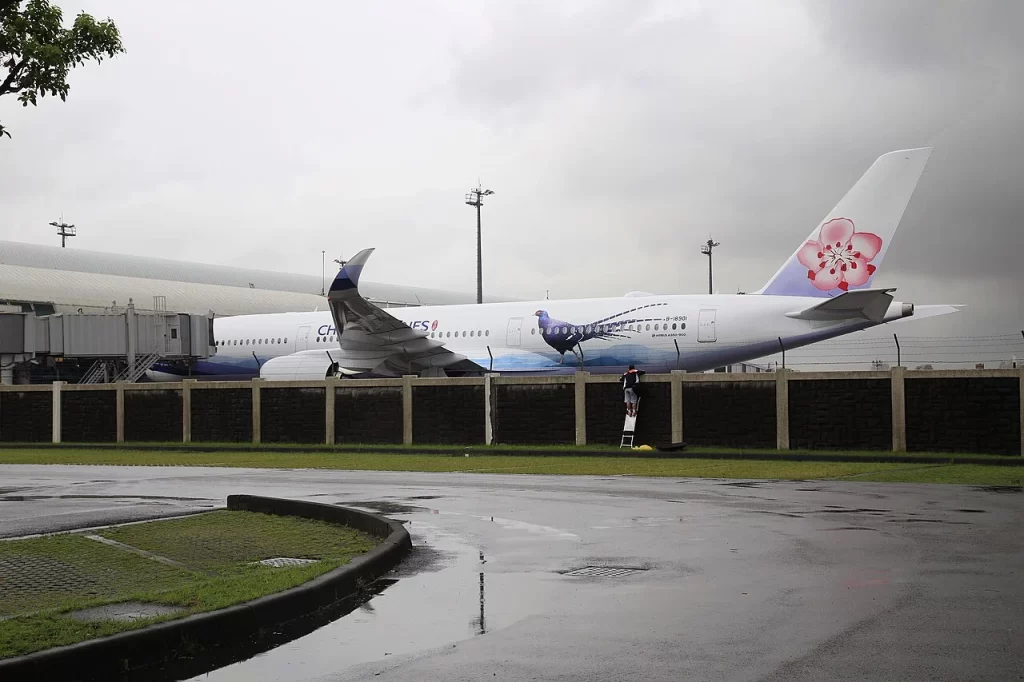
Past Incidents Show That Ground Handling Risks Remain a Recurring Concern
Jetbridge-related incidents are typically associated with either procedural errors or equipment malfunction, and aviation safety records show that similar events have occurred at airports worldwide.
According to Paddle Your Own Kanoo, at Cape Town International Airport in 2022, a Boeing 777-200 operated by British Airways suffered major door damage during ground operations after a procedural failure during pushback while still connected to ground equipment, resulting in structural separation of the door assembly.
In another case at Dublin Airport in 2023, an Boeing 787 Dreamliner operated by American Airlines sustained serious damage when a jetbridge malfunction led to a door being sheared off.
Earlier incidents have also been recorded, including a 2020 case involving an Emirates Boeing 777-300ER at Manila, and a 2008 incident involving a Lufthansa Airbus A340-300 at Denver, both of which resulted in significant door damage linked to jetbridge movement or failure.
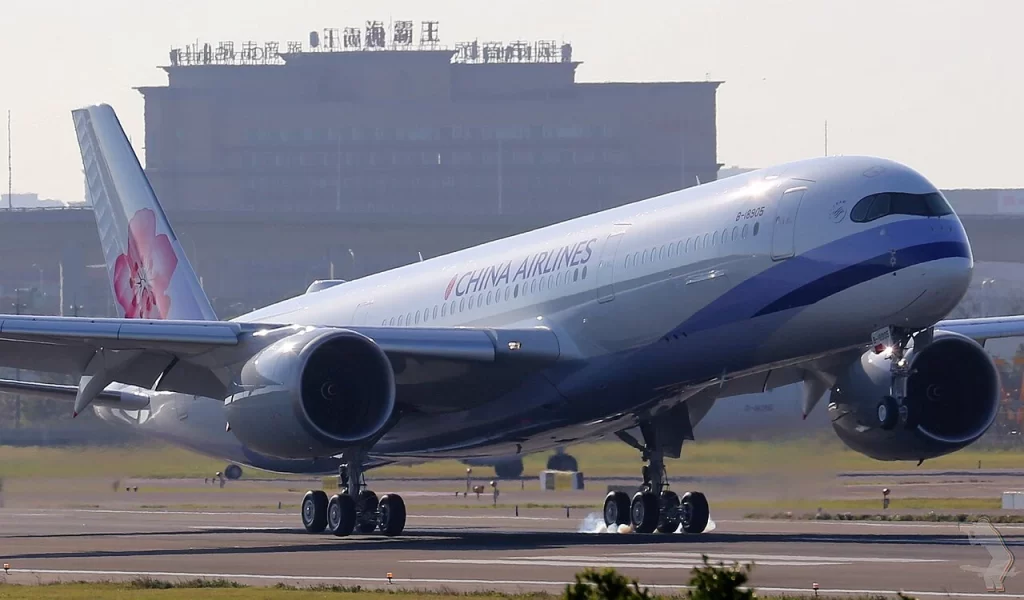
A350-1000 Grounded as Engineers Assess Structural Impact
The Airbus A350-1000 is a long-haul widebody aircraft valued in the hundreds of millions of dollars, and any damage affecting primary doors or surrounding fuselage sections can lead to extended grounding periods.
If inspections confirm that damage is limited to the door mechanism, replacement and return to service may be completed within days. However, if structural frames or surrounding skin panels are affected, repairs could extend into weeks of maintenance work.
Comparable widebody incidents have shown that structural door-area repairs can require extensive engineering attention, specialised parts sourcing, and certification checks before aircraft can be cleared for service.

.jpg)

.jpg)
_@_TPE,_Dec_2016_(02).jpg)