A bird strike is one of the most dangerous threats in aviation. Though precautions such as projecting dead birds (at the speed of sound) into engines during the testing phase, are taken into stride to ward off the most horrific effects of a bird striking a plane, a collision between a bird and a plane is almost inevitable, as birds and mechanical birds hover over the same skies. Bird strikes most predominantly take place while taking off (as was the case of a plane that crashed while heading to the most dangerous airport in the world, i.e., Lukla Airport aka Tenzing Hillary Airport ), landing or when the planes are flying at an altitude where birds cruise.
Over many years, many high-profile bird strikes have afflicted the aviation industry. Here is a list of five of the most famous bird strike events throughout history.
US Airways Flight 1549
Landed safely in the water
| Aircraft type | Airbus A320-214 |
| Operator | US Airways |
| Total passengers | 155 |
On a cold day in January of 2009, a U.S Airline plane, Airbus A320-214, was regularly scheduled to take off from New York City to Charlotte, Seattle. The aircraft had 155 members, including 5 crew members. The flight took off from LaGuardia’s Runway 4. When the aircraft was in its initial climb (an altitude of 3000 ft), the plane struck a flock of Canada geese causing a commotion. What followed was a dual-engine failure, with the captain instructing the first officer to “get the QRH [quick reference handbook] loss of thrust on both engines” and reported to the controller at LaGuardia “mayday mayday mayday this is…Cactus fifteen thirty nine hit birds, we’ve lost thrust in both engines, we’re turning back towards LaGuardia.”
Three minutes after takeoff (the flight took off at 15:24), the captain’s words were “birds”, obviously hinting at the fact that birds had hit the plane. At 15:30:43, the aircraft landed on the surface of the Hudson River. The scenes of the extraordinary water landing will forever be one of the greatest aviation pictures to have been taken. 
Photo: Greg L | Wikimedia Commons
The rescue team was deployed, and all the passengers on the flight were rescued safely. The passengers got a compensation of $15000 for lost baggage and agreed not to sue U.S airlines.
Often described as the “Miracle on the Hudson,” the successful outcome of the US Airways Flight 1549 accident was attributed to several key factors. The Aviation Safety Network highlighted the importance of the flight crew’s decision-making and effective Crew Resource Management during the emergency.
The aircraft’s equipment also played an unexpected role. Although it was not required to carry them, the Airbus A320 was configured for extended overwater operations and had forward slide-rafts available, which proved useful during the evacuation.
The cabin crew also contributed significantly by carrying out the evacuation quickly and efficiently. Their response helped passengers leave the aircraft before conditions on board could deteriorate further.
Finally, emergency responders were located close to the crash site and reacted immediately. Their rapid and appropriate response allowed rescue operations to begin quickly after the aircraft came to rest in the Hudson River.
Eastern Air Lines Flight 375
The second-most fatal bird strike ever
| Aircraft type | Lockheed L-188A Electra |
| Operator | Eastern Airlines |
| Occupants | 72 |
| Fatalities | 62 |
October 4th, 1960, an Eastern Airlines flight 373 headed from Logan International Airport in Boston and with en route stops at Philadelphia, Pennsylvania; Charlotte, North Carolina; and Greenville, South Carolina. Only a few seconds after taking off, the Lockheed L-188A Electra, which was manufactured in 1959 and had completed 3562 hours struck a flock of starlings, which were ingested in engines no.1, 2 and 4. The aircraft plunged into Winthrop Bay, prompting a Boston-bound pilot to utter’“Tower, an Electra just went into the drink!”
This crash was the fifth Electra to have crashed since the four-engined turboprop planes went into service in 1959. Despite calls to ground the aircraft type, The then Federal Aviation Agency Chief Elwood (“Pete”) Quesada had opposed grounding. The tragedy of the accident was captured poignantly in Time magazine:
“.. the rescue operation threatened to become a greater disaster than the crash. As dark fell, a grim collection of bodies, many still strapped in their seats, began to collect on shore. A TV and radio call for skindivers brought hundreds to the scene. Only a few dozen were qualified, but none hesitated to thrash through the black, blinding water while boat propellers churned around them. In the confusion survivors were mistaken for the dead. Civil Defense Director Jerry Wyman uncovered a blanketed body, applied a resuscitator and brought one “dead man” to life.”
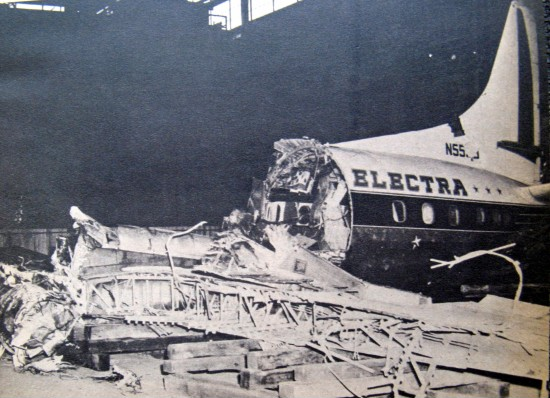
Photo: Civil Aeronautics Board | Wikimedia Commons
The aircraft had plunged almost vertically into Winthrop Bay. Investigators recovered approximately 75 starling carcasses on/near the presumed area where the fatal bird strikes had taken place. “Electra” is a character in Greek mythology who “dallied with the gods, was dashed to earth by Athena“. After the crash of the Lockheed L-188A Electra, The Wall Street Journal, rather mournfully commented “Everything she tried turned to tragedy and mourning became all the bearers of her name.”
Ethiopian Airlines Flight 604
Pigeons led to the death of 35
| Aircraft type | Boeing 737-200 |
| Operator | Ethiopian Airlines |
| Passengers | 98 |
| Crew | 6 |
| Casualties | 35 |
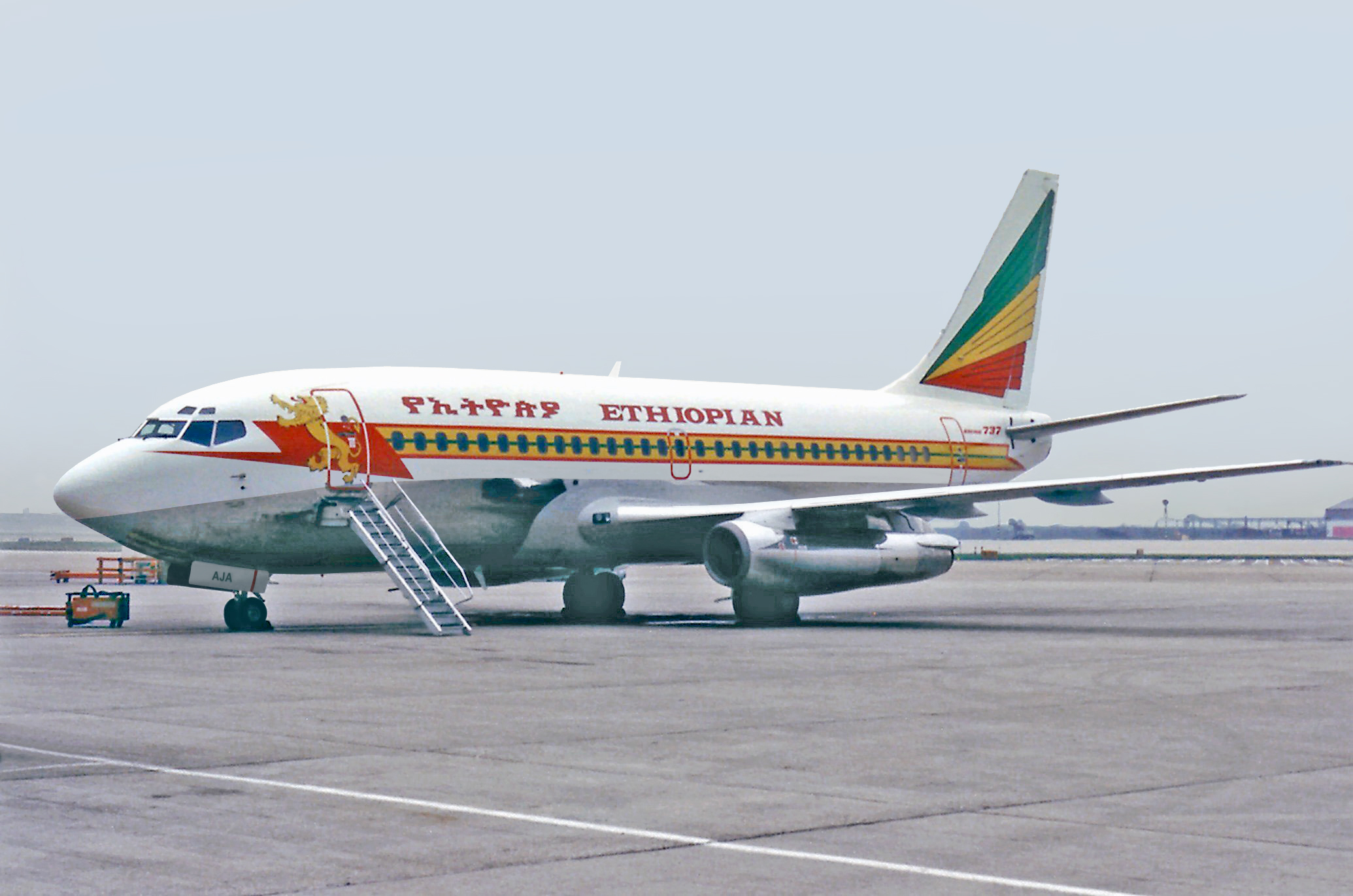
Photo: Kev Colbran | Wikimedia Commons
On the 15th of September 1988, a Boeing 737-200 operated by Ethiopian Airlines carrying 98 passengers and 6 crew members met with a bird strike (when the aircraft had at an airspeed of 146 knots and was at an altitude of 5730 feet above mean sea level) after taking off from Bole International Airport, Ethiopia. Aviation Safety Network reported that “during the initial 32 seconds after the impact, the airplane had gained altitude from 5,730 feet to 6,020 feet and had accelerated from 146 knots to 154 knots.”
The pilot wanted to prolong the operational life of the engines by reducing engine thrust. The pilot wanted to turn back to the airport where he’d departed from (to complete an emergency landing). However, the aircraft lost power in both engines and had to make an emergency landing in a patch of clear land nearby.
During the gear-up landing performed by the captain, the aircraft broke up and caught fire. The aircraft involved in the accident was manufactured only a year prior to the event (registered ET-AJA had completed merely 1870 flights). The bird strike involved the collision of the aircraft with a speckled pigeon- a native of Sub-Saharan Africa. This bird isn’t as large as the Canada goose, the bird which led to the “Miracle on the Hudson River”. On average, the specked pigeon weighs between 7.7 and 13.7 ounces.
JeJu Air Flight 2216
South Korea’s worst plane crash
| Date | 29 December 2024 |
| Aircraft type | Boeing 737-8AS |
| Operator | Jeuu air |
| Fatalities | 179 |
On the 29th of December 2024, a Boeing 737 operated by Jeju Air met with a bird strike and led to South Korea’s worst air disaster. The accident was the first fatal accident in the near two-decade long operational history of Jeju Airlines. In the backdrop of 2023, whwhich was the safest in aviation history, the crash of Jeju Airlines Flight 2216 culminated in making 2024 “the deadliest in commercial aviation in six years.
The aircraft involved in the accident had completed at least 2,136 flights (747 domestic and 1,389 international trips) over the past year. With a total of 356 flights, the route between Jeju and Seoul was the aircraft’s most common. In the wake of the crash, South Korea entered seven days of national mourning to mark the tragedy. On-the-ground footage of the jet before landing hints towards the flaming out of one engine(following the bird strike). The condition of the second engine, however, isn’t known. Many suspect that both engines had lost power before the gear-up landing, with Aviation Safety Network reporting that the plane:
“……..slid past the end of the runway and collided with the ILS localizer antenna array that was installed in a concrete platform. The aircraft disintegrated and burst into flames, while the tail separated near the beginning of the vertical stabiliser and remained relatively intact.”

Photo: 자연속으로 into nature | Wikimedia Commons
The fact that the flight data and the cockpit voice recorders the aircraft had switched off four minutes before the plane plundered into a concrete structure at the end of a runway raised concerns about the inability of older aircraft to keep a cockpit voice recorder working when the main power sources fail, reported The Japan Times:
“It also brings to the forefront one significant shortcoming of older planes. Cockpit voice recorders on all new aircraft must have a backup power source that can keep them working for about 10 minutes after main power fails, a system many older planes lack and didn’t have to be equipped with retroactively. The absence of a transcript of the final moments leaves the investigation without crucial clues that would likely have shed more light on what caused the catastrophe.”
PHI Inc
The most fatal helicopter crash caused by bird strike
| Date | 4 January 2009 |
| Aircraft type | Sikorsky S-76C++ |
| Operator | PHI, Inc. |
| Fatalities | 8 |
On January 4, 2009, a Sikorsky S-76C++ helicopter, operating under day visual flight rules (VFR) crashed seven minutes after takeoff. The chopper was operated by PHI, Inc. (PHI), and registered N748P. The crash took place 12 miles southeast of the departure heliport (Lake Palourde Base Heliport) and it was en route to the South Timbalier oil platform. Barring one, all transport workers from two different oil exploration companies who were onboard were killed.
Aircraft accident investigation revealed that there were no manufacturing, construction, or material defects in the helicopter.
The helicopter’s windshield was damaged after it struck a bird during flight. Investigators recovered feathers and other bird remains from the canopy, windshield and several other areas of the helicopter’s exterior, with laboratory testing identifying the bird as a female red-tailed hawk weighing approximately 2.4 pounds on average.
The examination found that the damage near the upper portion of the right windshield section and the adjacent canopy was consistent with the hawk striking the canopy immediately above the windshield. Investigators determined that the fractures found in other sections of the windshield occurred later as a result of the helicopter’s impact with the ground.
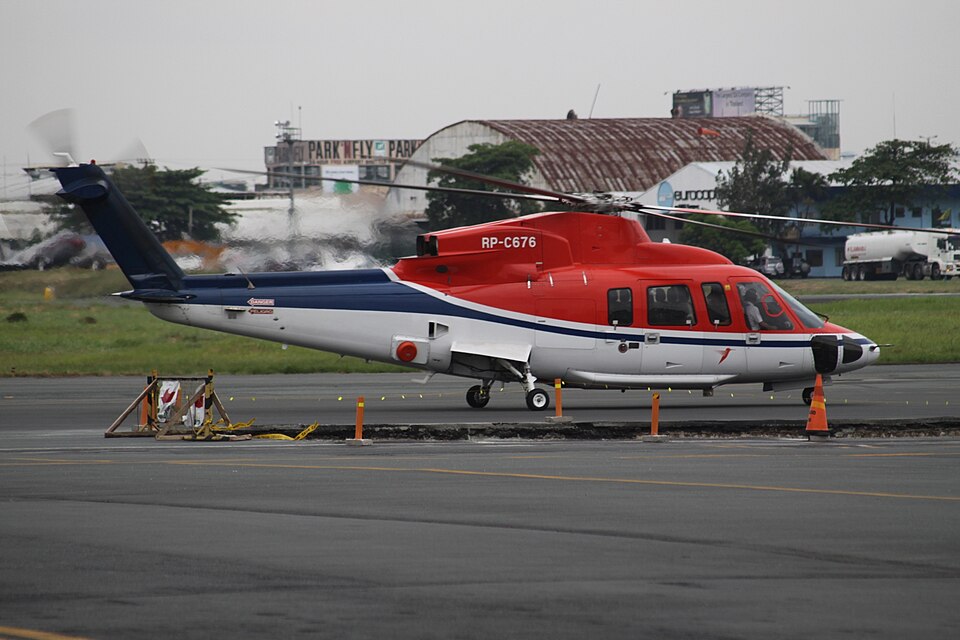
Photo: Aeroprints.com | Wikimedia Commons
Some of the contributory factors to the crash were:
- lack of FAA regulations and guidance requiring helicopter windshields to be resistant to bird strikes
- lack of protections that would prevent the T-handles from inadvertently dislodging out of their detents,
- a master warning light and audible system to alert the flight crew of a low-rotor speed condition.

_after_crashing_into_the_Hudson_River.jpg)


.jpg)