AirTran Airways (FL) was a low-cost American airline that operated from 1993 to 2014. Southwest Airlines (WN) announced its acquisition of AirTran on September 27, 2010, and closed the $1.4 billion deal on May 2, 2011. The carrier’s final revenue flight took off from Hartsfield-Jackson Atlanta International Airport (ATL) and landed at Tampa International Airport (TPA) on December 28, 2014. By the time of its retirement, AirTran flew nearly 700 daily flights to more than 70 cities across the United States, the Caribbean, and Mexico.
The airline began life in Orlando, Florida, in 1993 as Conquest Sun Airlines, a startup operator of Boeing 737-200 jets. It changed hands several times over the next two decades, surviving a corporate rebrand tied to the troubled ValuJet Airlines and a fatal 1996 crash, before becoming a Southwest subsidiary. This article traces AirTran’s path from a small Florida startup to a national low-cost carrier and explains why its brand disappeared after just over two decades in the sky.
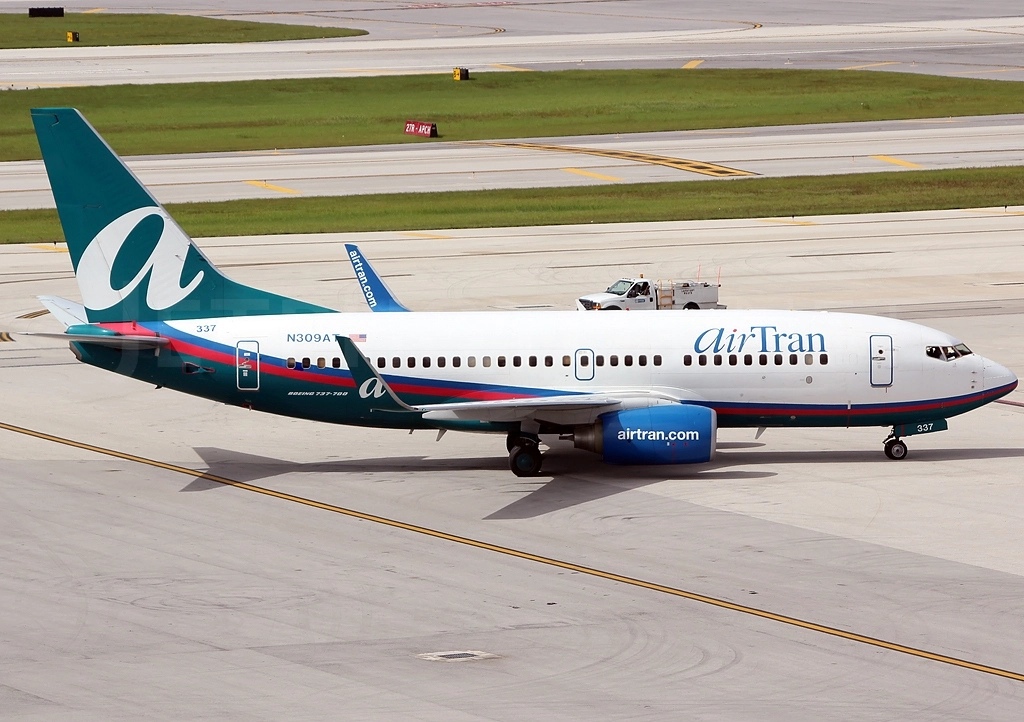
How Conquest Sun Airlines Became AirTran
Conquest Sun Airlines began flying out of Orlando International Airport (MCO) in 1993. Two small carriers, Destination Sun Airways and Conquest Airlines, supplied the management team behind the new venture. Conquest Airlines co-founder Victor Rivas played a major role in setting up Conquest Sun.
In 1994, the AirTran Corporation bought Conquest Sun Airlines. The new owner renamed the carrier AirTran Airways. AirTran Corporation was also the holding company of Mesaba Airlines, a Minneapolis-based regional carrier that flew as a Northwest Airlink partner. After the purchase, AirTran moved its headquarters to Orlando and grew its fleet to 11 Boeing 737 aircraft, serving 24 cities across the eastern and midwestern United States.
In 1995, AirTran Corporation spun off a new entity called Airways Corporation to hold AirTran Airways. The parent company then renamed itself Mesaba Holdings, distancing its identity from the airline brand.
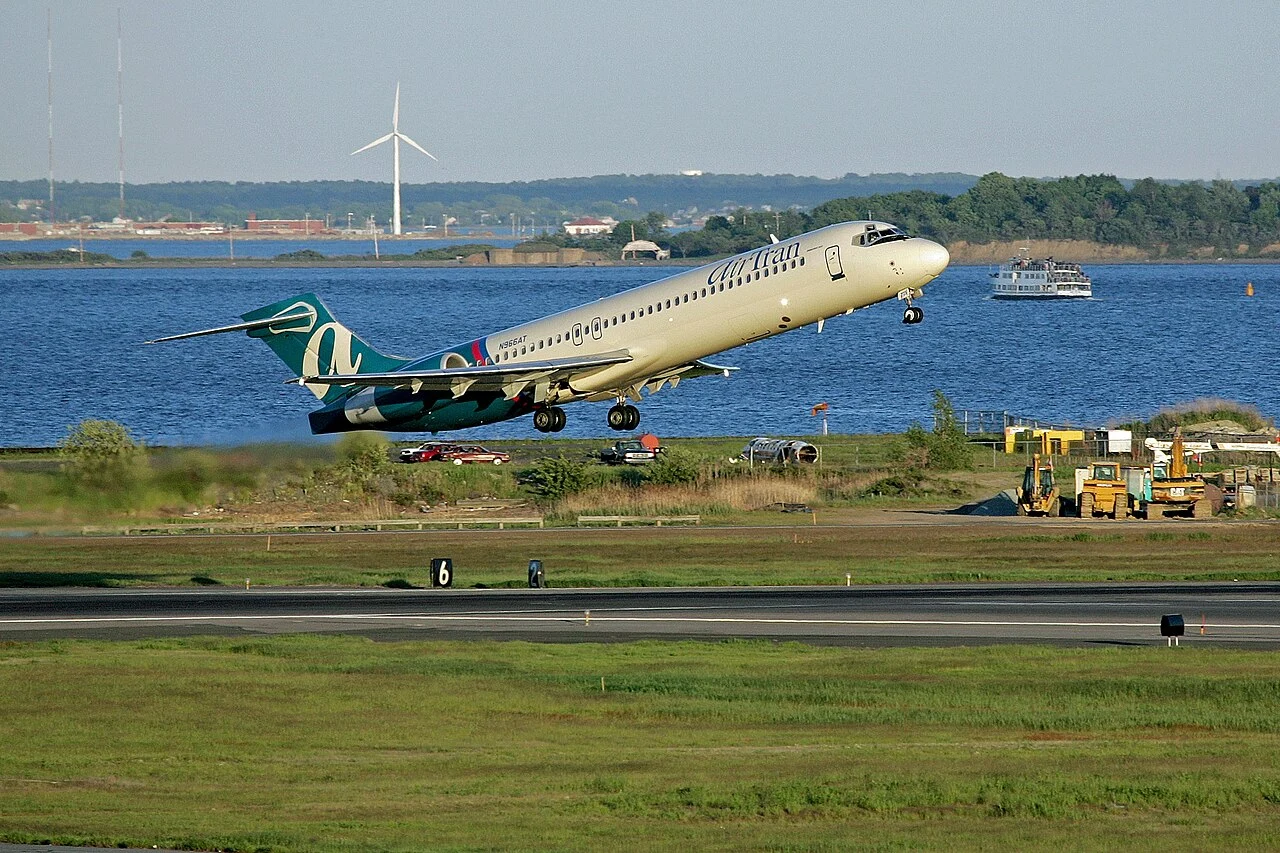
The ValuJet Merger And A Name Born From Tragedy
AirTran’s history connects directly to ValuJet Airlines, a low-cost carrier founded in Atlanta in 1992. On May 11, 1996, ValuJet Flight 592, a McDonnell Douglas DC-9, crashed into the Florida Everglades roughly ten minutes after departing Miami International Airport (MIA). The crash killed all 110 people on board. Investigators traced the fire to mislabeled and improperly stored chemical oxygen generators in the cargo hold.
The Federal Aviation Administration (FAA) grounded ValuJet on June 16, 1996, after a 30-day investigation uncovered serious lapses, including incomplete repair documentation and ignored safety directives. The airline returned to service on September 30, 1996, but it never recovered its reputation.
On July 10, 1997, ValuJet’s parent company agreed to acquire the much smaller AirTran Airways and its parent, Airways Corporation. ValuJet was the nominal corporate survivor of the deal, yet the combined company adopted the AirTran name. The renamed holding company, AirTran Holdings, moved its headquarters to Orlando in January 1998, while Atlanta remained the airline’s operational hub.
The rebrand drew criticism from national media at the time. Time magazine described it as “a corporate disappearing act” in which the troubled airline bought a smaller rival and adopted its name. The Los Angeles Times wrote that ValuJet had spent more than a year “reminding too many people of a disaster rather than low fares” before choosing a new identity.
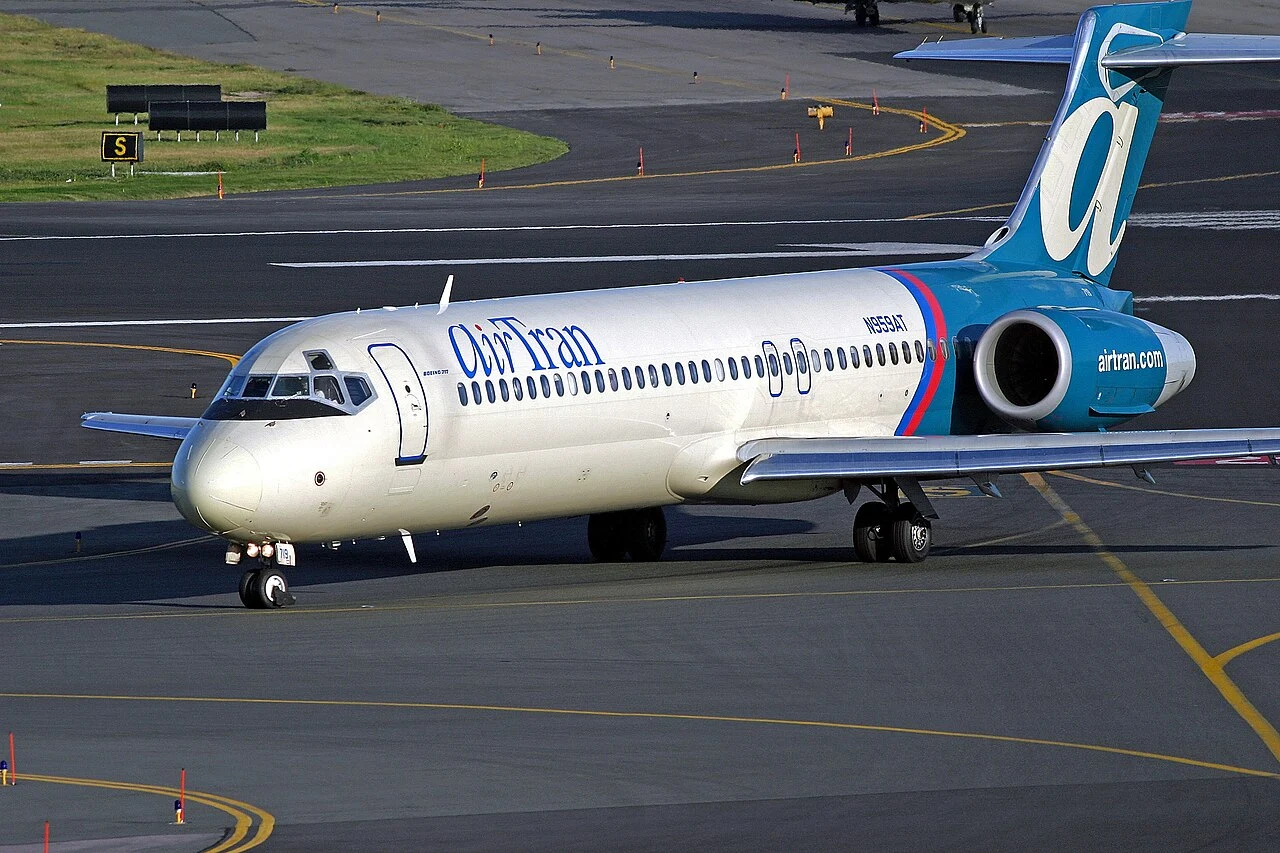
Fleet Growth And The Boeing 717 Era
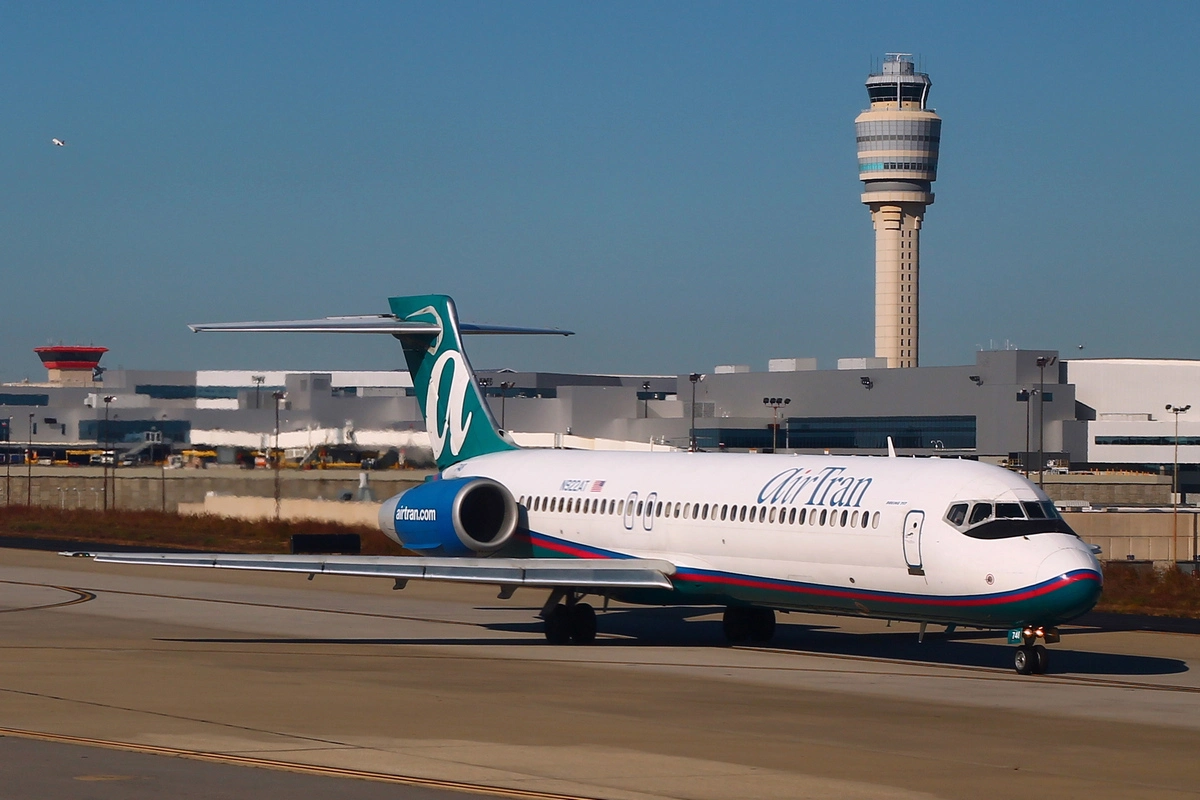
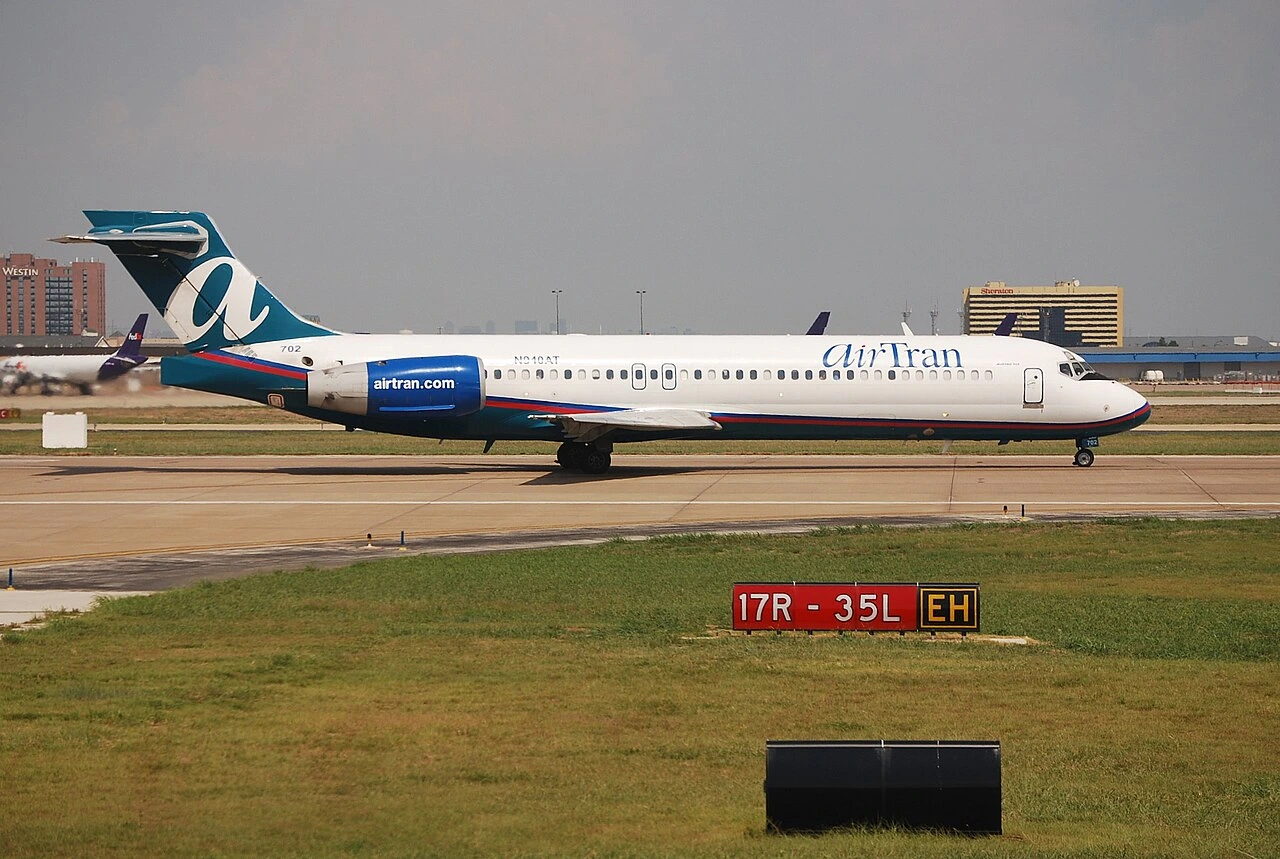
AirTran became the launch customer for the Boeing 717-200, taking delivery of the type’s first production aircraft as well as its last. The airline grew into the world’s largest operator of the 717, eventually flying a fleet of 89 of the jets.
Key fleet facts from AirTran’s operating years include:
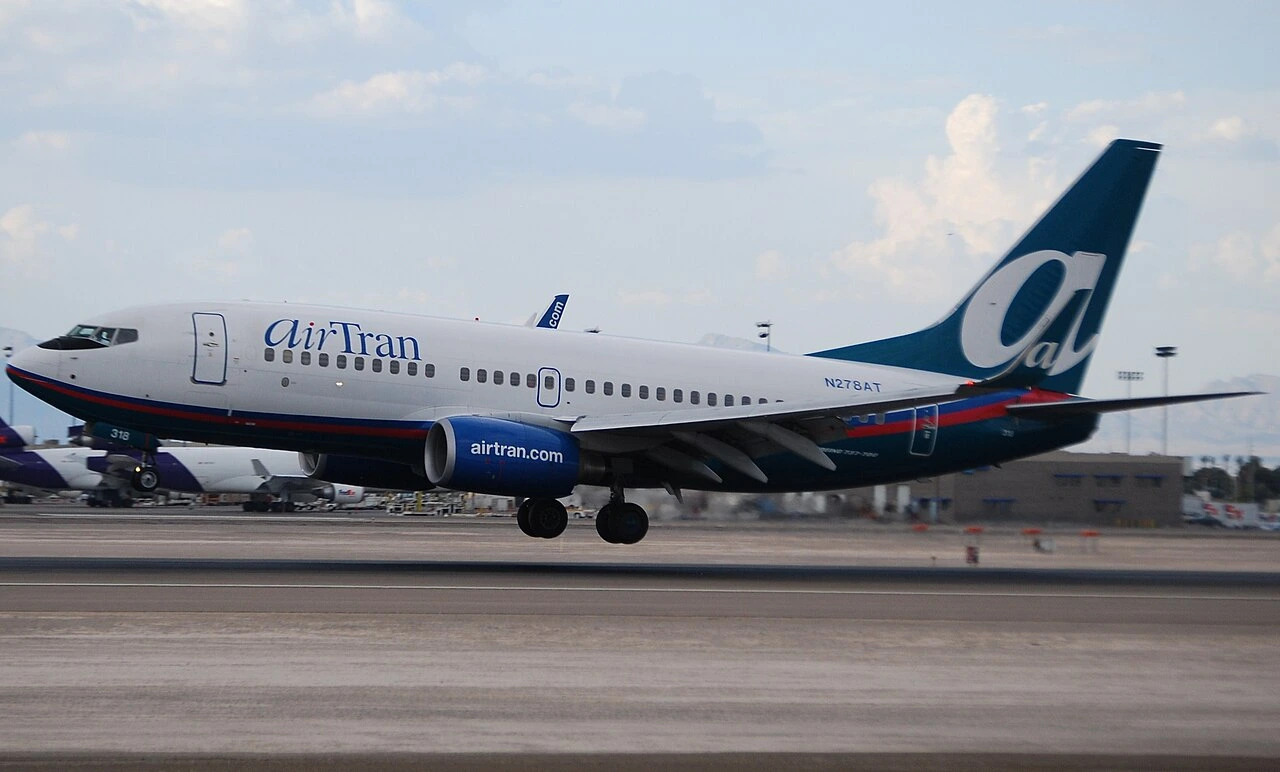
- AirTran operated Boeing 717-200 aircraft alongside Boeing 737-700s on longer routes.
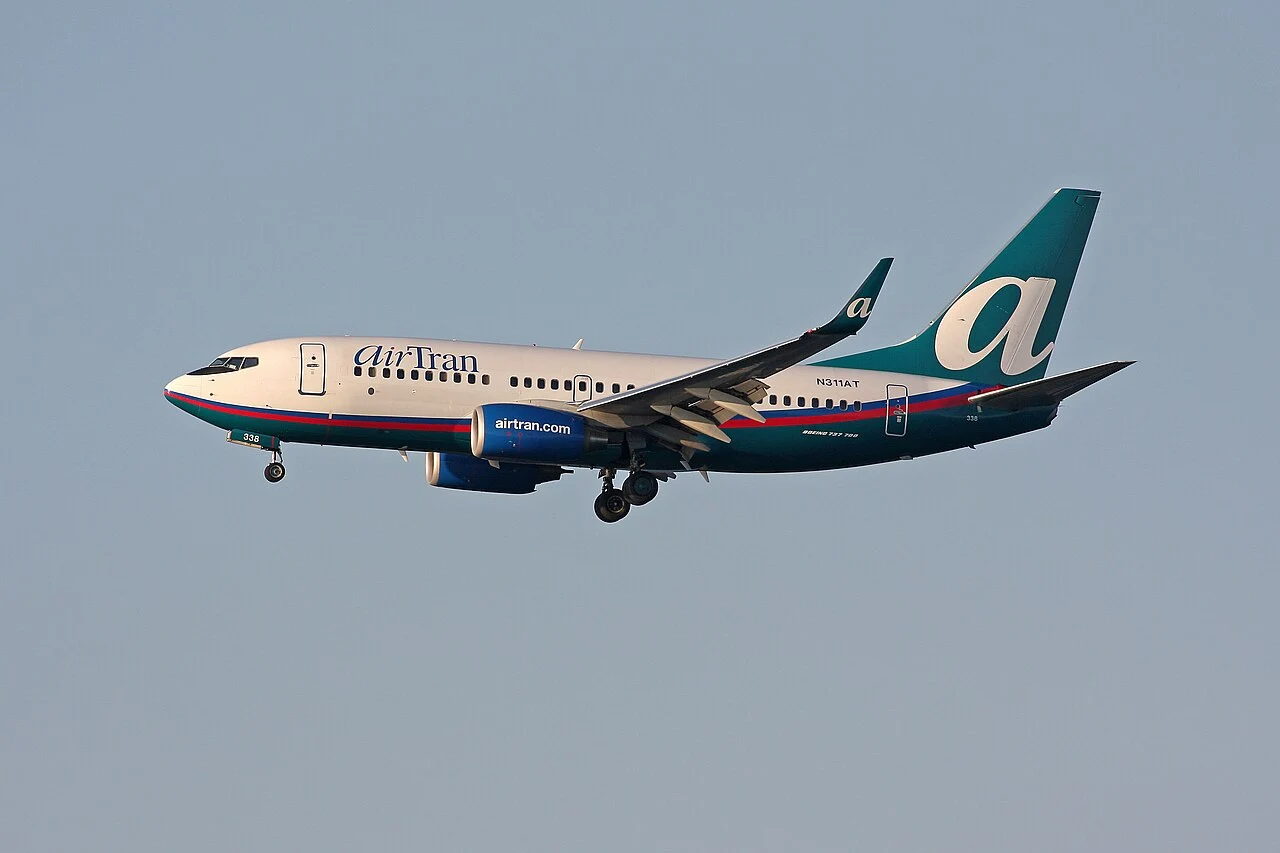
- The carrier flew 62 Boeing 737-700s over its corporate life, of which 22 were leased from GECAS and 40 were ordered new from Boeing.
- Boeing reported that AirTran saved more than $3 million in fuel costs during its first year of 717 operations, with direct maintenance costs falling by an estimated 45 percent.
- Before receiving its own 737 fleet, AirTran arranged for Ryan International Airlines to fly a small number of Airbus A320 jets on routes to the US West Coast.
In April 2011, AirTran posted the best safety record among US carriers, measured by incidents such as bird strikes, with 0.0000196 incidents per flight compared with 0.0000203 for both Southwest and US Airways. Bill Voss, then head of the Flight Safety Foundation, said “the safety record in the U.S. is so good that it’s very difficult to find enough accidents or incidents to draw much of a conclusion about who’s safest.”
Expansion Attempts At Midway And Midwest Airlines
AirTran pursued growth through acquisition more than once before its own sale to Southwest. In 2004, the airline tried to expand at Chicago Midway International Airport (MDW) by buying the leases on 14 gates from the bankrupt ATA Airlines. Southwest Airlines outbid AirTran for those gates, and the deal fell through.
In December 2006, AirTran made an offer to acquire Midwest Airlines, another operator of the Boeing 717. The Midwest board rejected the initial bid, and AirTran raised its offer several times over the following months, reaching $15 a share by April 2007, which CEO Joe Leonard called the company’s final bid. AirTran later increased the offer once more, to the equivalent of $16.25 a share, after a rival bidder entered the contest.
Private equity firm TPG Capital, working with Northwest Airlines, ultimately won Midwest with a $17-per-share offer, and the two sides reached a definitive agreement on August 16, 2007. AirTran’s pursuit of Midwest ended without a deal, leaving the carrier to keep growing organically instead.
The Southwest Airlines Acquisition
Southwest Airlines announced its agreement to buy AirTran Holdings on September 27, 2010, in a transaction valued at $1.4 billion. The two airlines operated under separate identities for a period before combining under a single Air Operators Certificate in 2012.
Under the terms of the agreement, each share of AirTran common stock converted into $3.75 in cash plus 0.321 shares of Southwest common stock. Including AirTran’s existing debt and aircraft lease obligations, the total transaction value reached $3.2 billion. Southwest projected net annual synergies of more than $400 million by 2013, against estimated one-time integration costs of about $500 million.
The sale closed on May 2, 2011. Gary Kelly, Southwest’s chairman, president and chief executive officer at the time, said the closing “marks a great day in the history of Southwest Airlines” and thanked employees from both carriers for reaching the milestone. Bob Jordan, then Southwest’s Executive Vice President of Strategy and Planning, took on the title of President of AirTran Airways to oversee the integration.
What Southwest Gained from the Deal
AirTran’s network gave Southwest immediate entry into Atlanta and Ronald Reagan Washington National Airport (DCA), two high-value markets it had not previously served at scale. The acquisition expanded Southwest’s domestic capacity by about 25 percent and lifted its domestic market share, by capacity, from 14.6 percent in 2010 to 17.7 percent in 2011.
AirTran added $2.6 billion in annual revenue to Southwest at the time of the deal. The combined carrier’s profit climbed from $178 million in 2011 to $421 million in 2012 and $754 million in 2013, a rise that Southwest attributed in part to merger synergies. AirTran’s international routes, including service to Mexico and Central America, also gave Southwest its first meaningful footprint outside the continental United States.
Southwest leased AirTran’s retired 717 fleet to Delta Air Lines after the merger, preserving its own single-aircraft-type cost structure built around the Boeing 737. As of 2025, dozens of former AirTran 737-700s remained in Southwest’s active fleet, though the carrier has been retiring older 737-700s as it adds newer 737 MAX aircraft.
How Different Outlets Covered the AirTran Story
Coverage of AirTran’s history has varied in emphasis depending on the outlet and the angle being pursued. Simple Flying framed AirTran’s sale to Southwest as a commercial success story rather than a forced rescue, noting that the airline’s rapid growth and attractive network caused Southwest to eye an opportunity, in contrast to many airline mergers driven by financial distress.
The Knowledge at Wharton analysis from the University of Pennsylvania, published shortly after the deal was announced, focused on integration risk rather than network gains. Wharton management professor Peter Cappelli told the publication that seniority-list disputes are often “the big issue that often destroys airline mergers“, particularly for pilot groups, since Southwest’s pilots outnumbered AirTran’s roughly five to one.
The Forbes retrospective, written as the integration neared completion in late 2014, took a financial-performance angle, crediting AirTran with accelerating Southwest’s push into international markets and helping the airline overtake rivals to become the largest US carrier by passengers flown. Together, these accounts show that reporters generally agree on the deal’s basic facts but differ on whether AirTran’s absorption should be read as a growth story, an integration challenge, or a financial turning point for Southwest.
A Brand Built on a Difficult Past
AirTran’s identity remained tied to its ValuJet origins throughout its operating life, even as the airline distanced its public image from the 1996 crash. Industry observers have noted that AirTran management did little to clarify the airline’s full corporate history for the public, given the unusual structure in which ValuJet was the legal survivor of the merger but AirTran was the surviving brand.
By the time Southwest announced its acquisition in 2010, AirTran had become a Fortune 1000 company and the top-rated low-cost carrier in the Airline Quality Rating study for three consecutive years. It was also the first airline to equip its entire fleet with Wi-Fi, doing so in the summer of 2009.
Final Flight and Legacy
AirTran’s last revenue flight operated as AirTran Airways Flight 1, a Boeing 717 departing ATL for TPA at 22:25 EST on December 28, 2014. Former and current employees filled the flight to mark the end of the brand. Southwest’s then-network planning leadership described the AirTran deal as a unique opportunity to extend the Southwest network into key markets it didn’t yet serve, such as Atlanta and the greater Washington, D.C., area.
More than a decade after the merger closed, AirTran’s operational footprint persists inside Southwest. Dozens of former AirTran Boeing 737-700s still flew under the Southwest livery as of 2025, even as the carrier phases out older aircraft in favor of the 737 MAX family.



.jpg)
.jpg)
.jpg)
