China’s civil aviation sector is expanding aggressively at a time when much of the global airline industry is pulling back. On June 22, 2026, China Eastern Airlines (MU) resumed its direct flight from Shanghai Pudong International Airport (PVG) to Stockholm Arlanda Airport (ARN), Sweden — a route suspended six years ago — while Capital Airlines (JD) simultaneously launched the first-ever nonstop service between Beijing Daxing International Airport (PKX) and Humberto Delgado Airport (LIS), Lisbon, marking PKX’s first nonstop connection to Portugal. Both moves arrived amid global flight shortages, mounting fuel costs, and geopolitical pressures that are compelling many international carriers to trim capacity rather than add it.
China is charting a different course entirely. Data from the Civil Aviation Administration of China (CAAC) shows that in the summer-autumn 2026 season (March 29 to October 24), China’s international routes reach 86 countries and regions, with 191 airlines operating 21,047 international flights per week — a 1.8 percent year-on-year increase, Global Times reported. This expansion is not limited to a single carrier. Air China (CA), Hainan Airlines (HU), and China Southern Airlines (CZ) all launched new European routes this month, together reshaping China’s international air network from a hub-and-spoke model into what industry analysts describe as a nationwide grid-linked layout.
China Eastern’s Stockholm Comeback
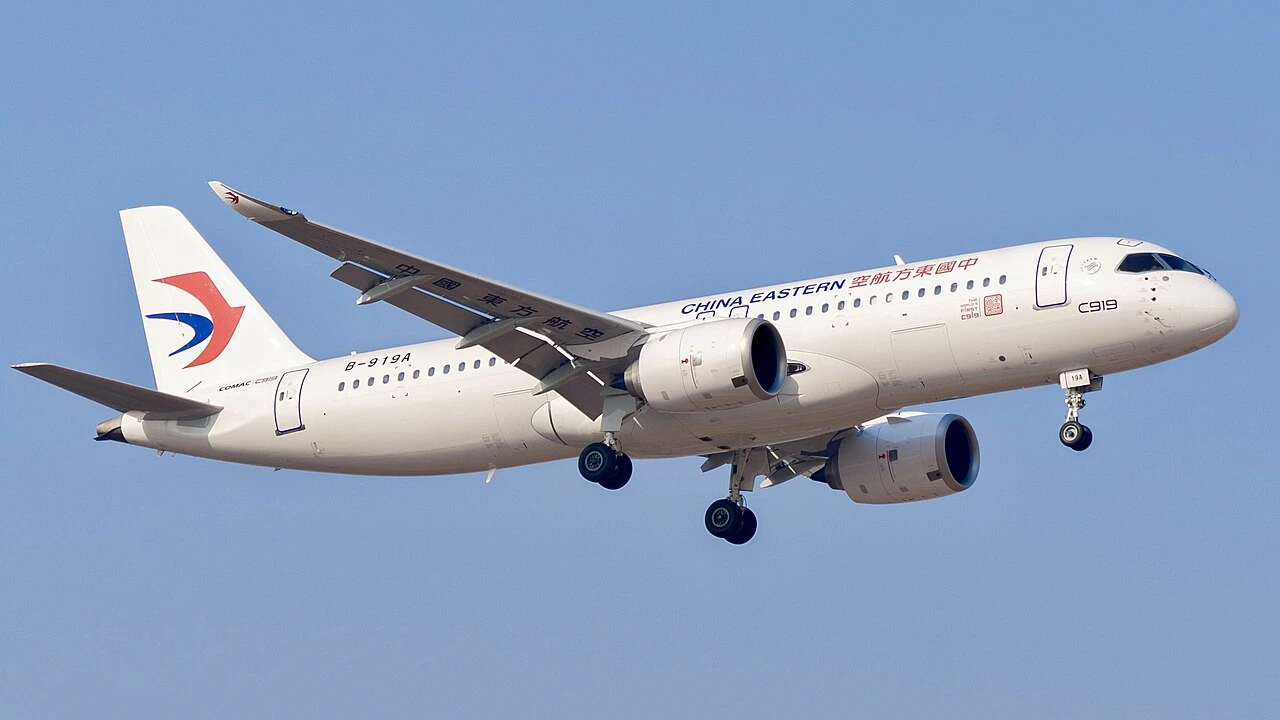
The departure of China Eastern Airlines flight MU289 from Shanghai Pudong International Airport (PVG) on June 22, 2026, marked the official return of a direct route that had been absent since 2020. The carrier now operates three roundtrips per week on Mondays, Thursdays, and Saturdays using an Airbus A330-200, with MU289 departing Shanghai at 15:00 and arriving in Stockholm at 20:10 and return flight MU290 leaving Stockholm at 22:40 to land in Shanghai at 14:40 the following day.
The route, first launched in 2018 and suspended during the pandemic, eliminates the 30- hour multi-stop itineraries that had become the norm for Sino-Swedish travel and cuts end to-end journey times to roughly 10 to 12 hours. China is Sweden’s largest trading partner in Asia, and Shanghai is home to more than 700 Nordic-invested enterprises. Swedish multinationals such as Volvo, Ericsson, and IKEA can now rotate China-based executives with less travel time and lower duty-of-care risk.
The resumption came just days after China Eastern launched its inaugural Shanghai–Zurich flight — the carrier’s second Swiss route, following the 2025 launch of Shanghai–Geneva flights. Together, these launches reflect a deliberate multi-city European strategy, not a single route bet.
Shi Yanyan, a senior manager in China Eastern’s marketing department, told the Global Times on June 22 that in June and July, the airline will roll out new routes from Shanghai Pudong (PVG) to Tbilisi, Dublin, and Cheongju, South Korea. She added that preparations are underway for additional routes, including Mumbai, India.
The return to Stockholm also carries competitive significance. At present, Air China is the only other carrier operating a nonstop Sweden–China service, via Beijing Capital International Airport to Stockholm Arlanda. China Eastern’s re-entry gives Swedish travelers a second direct option and gives Shanghai Pudong (PVG) a strengthened position as a gateway into mainland China’s broader domestic and regional network.
Capital Airlines Launches Beijing Daxing’s First Nonstop to Portugal
Capital Airlines (JD), a subsidiary of the Hainan Airlines Group, launched the first-ever nonstop flight between Beijing Daxing International Airport (PKX) and Humberto Delgado Airport (LIS), Lisbon, on June 22, 2026. The route operates once weekly, with flight JD627 departing Beijing at 10:55 and arriving in Lisbon at 17:15. Return flight JD628 departs Lisbon at 18:55 and lands in Beijing the following day at 14:00. The service runs until September 28, 2026, using an Airbus A330 wide-body aircraft.
The CAAC’s official website confirmed the launch, stating it was planned to meet growing demand for cross-border travel and international exchanges between China and Portugal. This is Capital Airlines’ second direct link between China and Portugal, complementing its existing Hangzhou–Lisbon route.
Aviation Week noted that the Beijing Daxing to Lisbon launch reflects a broader attempt to diversify Europe-bound traffic away from saturated Western European hubs and toward emerging tourism and trade corridors. Lisbon’s position as a gateway for Lusophone markets in South America and Africa is seen as a potential long-term advantage for cargo and connecting traffic.
Capital Airlines has a fleet of approximately 82 to 83 all-Airbus aircraft. It operates as a hybrid low-cost/full-service carrier, with its hub at Beijing Daxing (PKX) and a secondary hub at Hangzhou Xiaoshan International Airport (HGH). Its parent, Hainan Airlines Holding, returned to profitability in 2025 with revenue of RMB 68.47 billion and net profit of RMB 1.98 billion.

Beijing Daxing’s Expanding European Web In 2026
The Lisbon launch is part of a broader international expansion at Beijing Daxing International Airport (PKX). Since the beginning of 2026, Daxing has opened multiple new international routes, including direct flights to Helsinki, Frankfurt, and Milan, further expanding its European network.
Air China launched routes from Beijing Daxing (PKX) to Frankfurt and Milan over the past two months. Air China launched daily Beijing Daxing–Milan Malpensa service on June 13 using A330-300 aircraft.
These launches are transforming PKX from a domestic-focused secondary capital airport into an international hub. Beijing Daxing, which opened in 2019, now operates approximately 979 flights daily, including 82 international and regional services, during the current season, CAAC’s winter-spring season data cited by China Daily reported.
Hainan Airlines Reaches Madrid Via Haikou and Chongqing
Hainan Airlines (HU) added a new European dimension to its network on the same weekend, integrating the Haikou–Chongqing–Madrid route into its European route map. The inaugural flight departed from Haikou Meilan International Airport (HAK), with outbound flights stopping over at Chongqing Jiangbei International Airport (CKG) before proceeding to Adolfo Suárez Madrid–Barajas Airport (MAD) and back. Outbound flights operate every Saturday, with return flights on Sundays. The route uses Boeing 787 wide-body aircraft.
This launch marks the first-ever round-trip route connecting the Hainan Free Trade Port with Spain. According to FlightConnections, Hainan Airlines serves 72 domestic destinations and 47 international destinations in 35 countries, as of June 2026. The Madrid route continues a broader Hainan Airlines European push that has previously included routes to London Heathrow, Brussels via Chongqing, and Edinburgh.
China Southern Expands Germany Network Via Xinjiang Hub
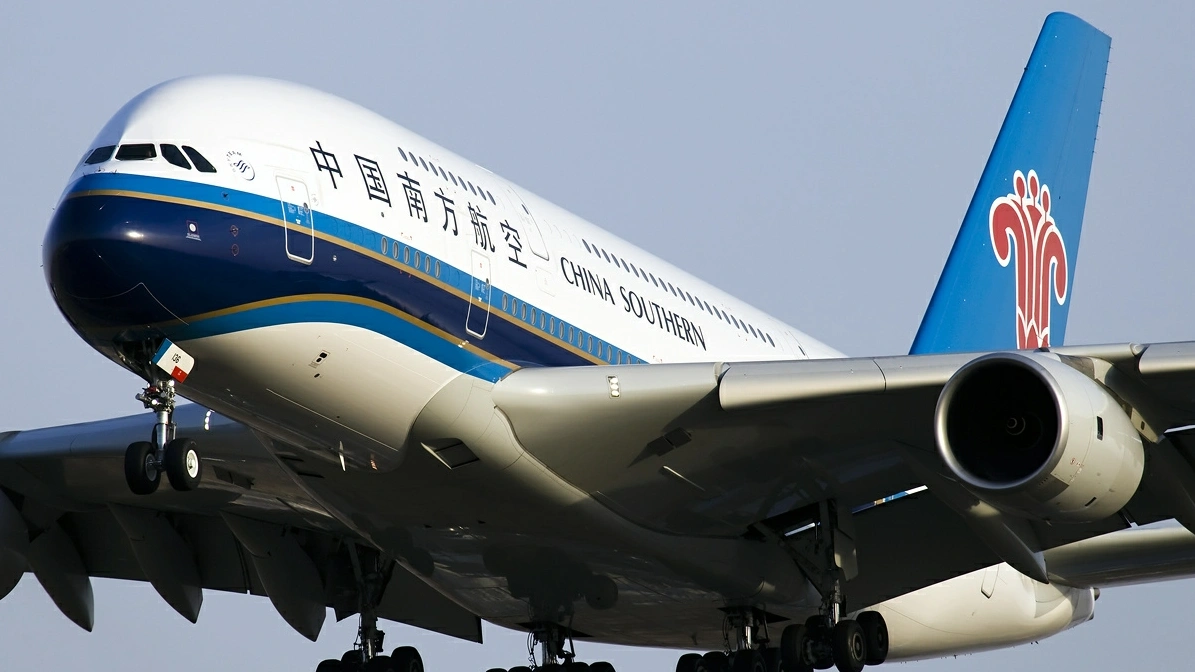
China Southern Airlines added another layer to China’s European expansion with the launch of its Guangzhou–Urumqi–Frankfurt route. The service, which began on June 1, 2026, operates twice weekly using Boeing 787-9 aircraft.
This routing via Urumqi reflects a deliberate strategy to bring secondary Chinese cities into the global route map. Rather than concentrating all international traffic through established hubs in Beijing or Shanghai, Chinese carriers are increasingly routing flights through inland airports like Urumqi, Chongqing, and Haikou. The launch of routes such as China Southern’s Guangzhou–Urumqi–Frankfurt has brought more airports into the global route map, upgrading the network from single-point radiation to a nationwide grid-linked layout.
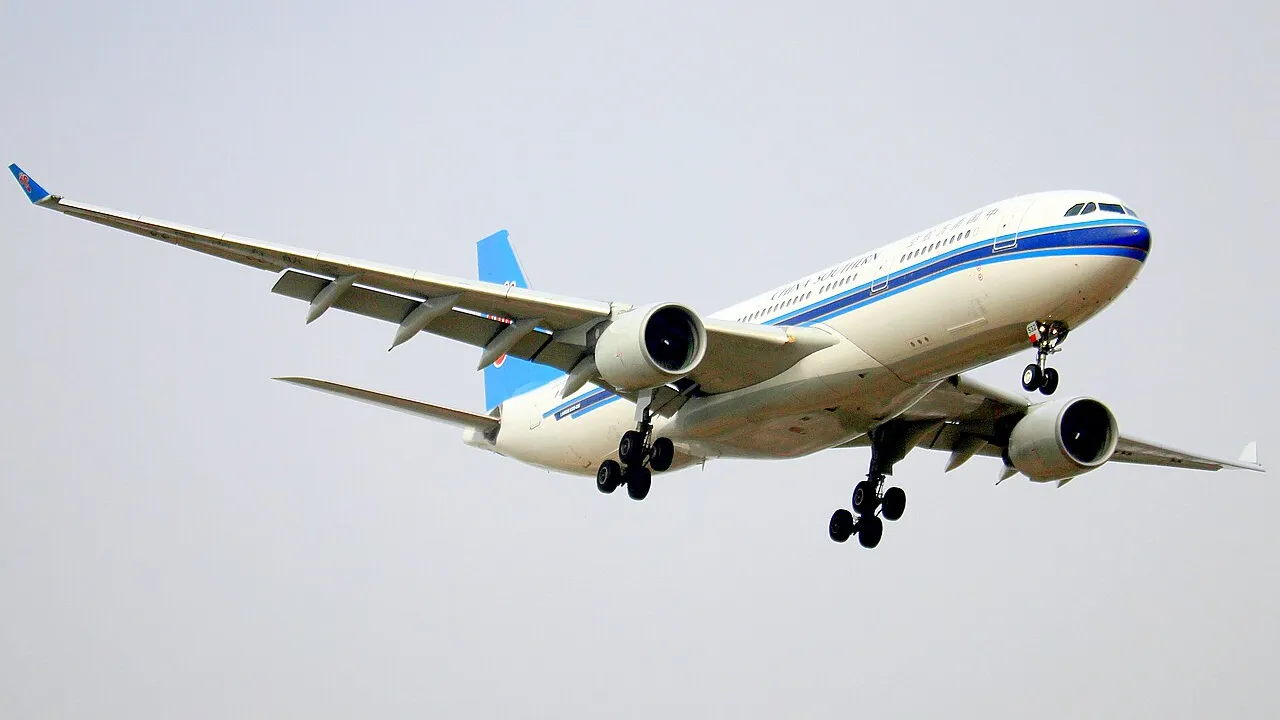
This strategy also has geopolitical utility. Chinese airlines can still traverse Russian airspace, shaving over an hour off westbound flying time compared with European competitors. That routing advantage gives Chinese carriers a significant time-and cost edge on Europe-bound routes that Western airlines, constrained by the Russian airspace ban, cannot match.

Juneyao And China Eastern Deepen Cross-Carrier Transfer Services
Beyond new routes, Chinese carriers are also deepening interline connectivity within Shanghai Pudong International Airport (PVG). On June 16, 2026, Juneyao Air and China Eastern Airlines launched the second phase of their cross-carrier transfer service at Shanghai Pudong, expanding international connections to more intercontinental destinations including New York, Los Angeles, Vancouver, Sydney, and Brussels.
This cross-carrier agreement is designed to allow domestic passengers on Juneyao’s network to connect seamlessly onto China Eastern’s international flights, and vice versa. It is a significant structural development because it effectively extends China Eastern’s intercontinental reach into domestic catchment areas without requiring the carrier to launch those domestic routes itself.

What Global Airlines Are Doing Differently
China’s expansion is striking when placed against the backdrop of global aviation’s current environment. The International Air Transport Association (IATA) released data for April 2026 global passenger demand showing that in terms of revenue passenger-kilometers (RPKs), demand fell 3.4 percent year-on-year. Excluding the Middle East, demand increased by only 1.2 percent. Asia-Pacific airlines achieved a 3.0 percent year-on-year increase in demand.
Fuel costs are a particular pressure point for international carriers globally. In a piece published in Global Times report in April 2026, it was reported that the average refueling price for Chinese airlines at overseas airports has exceeded 11,000 yuan ($1,612) per ton — more than double the previous level — with prices at some individual airports surpassing 30,000 yuan per ton, . These elevated costs are making it difficult for some low-cost carriers to sustain regular operations on low-efficiency routes.
Yet China’s major carriers continue to expand. Guo Jia, an independent market watcher, told the Global Times on June 22 that the continued expansion of international routes, particularly the launch of new services to Europe, “underscores China’s firm commitment to opening-up.” The expansion represents not just commercial strategy but a policy directive to position Chinese carriers as a globally connected infrastructure network, not merely a domestic airline industry.
How Other Media Have Covered China’s Aviation Expansion
Coverage of China’s aviation push has surfaced across multiple outlets with different angles and emphasis.
Fly for Points framed the China Eastern Stockholm return as a SkyTeam competitive play, noting that it “gives SkyTeam a more visible role in the Nordic-China market” and sharpens China Eastern’s position against one-stop operators via Helsinki, Amsterdam, Paris, Istanbul, Doha, Dubai, and other hubs. The article noted that for alliance travelers, a nonstop Shanghai option reduces total travel time and creates cleaner redemption options for those flying within the SkyTeam network.
Scandasia focused on the competitive landscape in Sweden, pointing out that Air China is currently the only other nonstop carrier on the Sweden–China market, and that the China Eastern return gives Swedish passengers a second direct option at a time when air connectivity between Scandinavia and China remains limited.
The Traveler highlighted the trade angle, noting that Sweden has deep trade, technology, and manufacturing links with China, and that the route complements an existing domestic and regional connection network at Shanghai Pudong. Data from Visit Sweden shows Chinese overnights had already surged 51 percent year-on-year in 2025; the direct link is forecast to push arrivals back toward the pre-pandemic peak of 250,000 annual visitors.
Cirium Ascend Consultancy placed the expansion in a financial context, noting that China’s “big three” carriers — Air China, China Eastern, and China Southern — had delivered their first profitable nine-month result since the onset of the pandemic in their Q3 2025 results. The consultancy said international routes remain a critical driver of airline profitability, with load factors on high-yield segments playing a major role in earnings flexibility.

Visa-Free Policies Are Fueling Demand for New Routes
A key enabler of China’s aviation expansion is its rapidly evolving visa-free entry program. China now allows ordinary passport holders from 45 countries to enter without a visa for up to 30 days for tourism, business, family visits, or transit. Canada and the United Kingdom were added on February 17, 2026, and Sweden was included in the scheme on November 10, 2025.
The impact is measurable. Data from Shenzhen Bao’an International Airport (SZX) border inspection authorities showed that from January 1 to June 17, 2026, the airport processed more than 457,000 inbound foreign nationals — a 32.9 percent year-on-year increase — spanning 190 countries and regions. Visa-free entrants accounted for 63.3 percent of the total, surging 45.5 percent year-on-year.
In the first quarter of 2026, foreign nationals made approximately 8.32 million visa-free entries, accounting for nearly 78 percent of all inbound foreign crossings and surging almost 30 percent year-on-year.
Analysts at Ctrip Research predict 38 million foreign visitors in 2026 — around 60 percent of the 2019 peak — enough to restore route profitability and support Beijing’s ambition to pivot toward services exports.
How China Is Redistributing International Aviation Traffic
A defining feature of China’s 2026 expansion is its geographic breadth. Rather than concentrating international traffic through Beijing and Shanghai alone, Chinese carriers are
routing long-haul flights through secondary cities including Haikou, Chongqing, Urumqi, and Hangzhou.
This approach has strategic and commercial dimensions. Commercially, it allows airlines to capture provincial demand that would otherwise connect through crowded primary hubs. Strategically, it develops the international aviation profile of inland and southern cities, giving China’s Belt and Road partner economies in Central Asia, Southeast Asia, and Europe more direct connections to Chinese manufacturing and logistics centers.
Guo Jia, the independent market watcher quoted in the Global Times, described this as upgrading the network “from single-point radiation to a nationwide grid-linked layout.” That phrase captures the ambition: China’s international aviation is no longer just connecting Beijing and Shanghai to the world. It is connecting the world to every major Chinese city, simultaneously.
The CAAC’s 2025 Statistical Bulletin, released in April 2026, confirmed that the international recovery was the standout for the year. Routes to 147 overseas cities in 65 countries generated passenger growth above 20 percent and cargo growth of a similar magnitude. China’s commercial airlines carried 770 million passengers in 2025 — a 5.5 percent rise that pushed traffic within 3 percent of the pre COVID peak.

What Beijing Daxing’s Growth Means for Chinese Aviation Rivalry
The concentration of new international routes at Beijing Daxing International Airport (PKX) is reshaping the competitive dynamics between China’s two Beijing airports. PKX, which opened in September 2019, was designed from the outset as an international hub and a challenger to the congested Beijing Capital International Airport (PEK).
Capital Airlines, which moved its hub to Beijing Daxing (PKX) after PKX opened, now serves around 75 destinations and has an international portfolio spanning 19 routes across 10 countries, including the new Lisbon route. Air China also recently shifted some international operations to PKX, launching Frankfurt and Milan routes from there rather than PEK.
The dual-airport model in Beijing is creating competition for international traffic, with both hubs vying for airlines and routes. For passengers, this means more international options at PKX — an airport built with modern infrastructure and fewer slot constraints than the older PEK.
China’s Aviation Expansion In Context
The commercial foundation supporting this route expansion is the financial recovery of China’s biggest carriers. Cirium Ascend Consultancy reported that following Q3 2025 results, China’s “big three” delivered their first profitable nine-month financial result since the onset of the pandemic. China Eastern recorded a 19.4 percent increase in operating income and a 32.5 percent rise in net profit compared with Q3 2024.
International routes drove this improvement. Load factors on high-yield international segments played a major role in earnings flexibility. The CAAC Q1 2026 data confirmed that international routes handled 20.819 million passenger trips — up 10.0 percent year-on-year — and recorded 16.41 billion ton-kilometers of cargo, up 17.5 percent year-on-year.

That financial health is giving Chinese carriers the confidence — and the cash — to launch new routes even as competitors pull back. While carriers in Europe and the Middle East face higher operating costs on longer routings due to the Russian airspace ban, Chinese airlines continue to benefit from Russian overflight rights. That structural advantage allows them to offer competitive fares and shorter journey times on China–Europe routes simultaneously.

More Routes in the Pipeline for China
The June 22 launches are part of a wave of new routes still coming in the weeks ahead. China Eastern’s Shi Yanyan confirmed that Shanghai Pudong routes to Tbilisi, Dublin, and Cheongju in South Korea are set to launch in June and July 2026, with Mumbai preparations also underway.
Capital Airlines is also launching a Beijing–Colombo service as part of its South Asian expansion. Hainan Airlines has been steadily growing routes from Haikou to global capitals, positioning the Hainan Free Trade Port as an emerging international gateway.
China Southern has announced its focus on boosting capacity on routes connecting Australia in 2026. Air China continues to hold a strong international portfolio, including the only other nonstop Sweden–China service at Beijing Capital International Airport (PEK).
Together, these moves signal that China’s aviation expansion in 2026 is not a collection of individual route decisions but a coordinated national strategy to make Chinese carriers the connective tissue of global air travel between Asia, Europe, Africa, and beyond.
China’s Aviation Ambition Sets It Apart in a Turbulent Year
China’s civil aviation industry is executing a rare feat in 2026: aggressive international expansion during a period of global headwinds. While IATA reports declining global passenger demand and high fuel costs are pushing international carriers to consolidate, Chinese carriers are opening new routes to Stockholm, Lisbon, Madrid, Zurich, Frankfurt, Milan, and beyond — with more to come.
The policy foundations are in place. Visa-free entry for 45 countries through December 2026, a grid-style route network using secondary cities as launch points, and a recovering financial base at the “big three” all support continued expansion. The CAAC’s summer autumn 2026 season connects China to 86 countries and regions across 21,047 weekly international flights operated by 191 airlines.
As Guo Jia told the Global Times: this expansion “underscores China’s firm commitment to opening-up.” For the global aviation industry watching from the sidelines, that commitment is translating into measurable action — route by route, airport by airport, city by city.