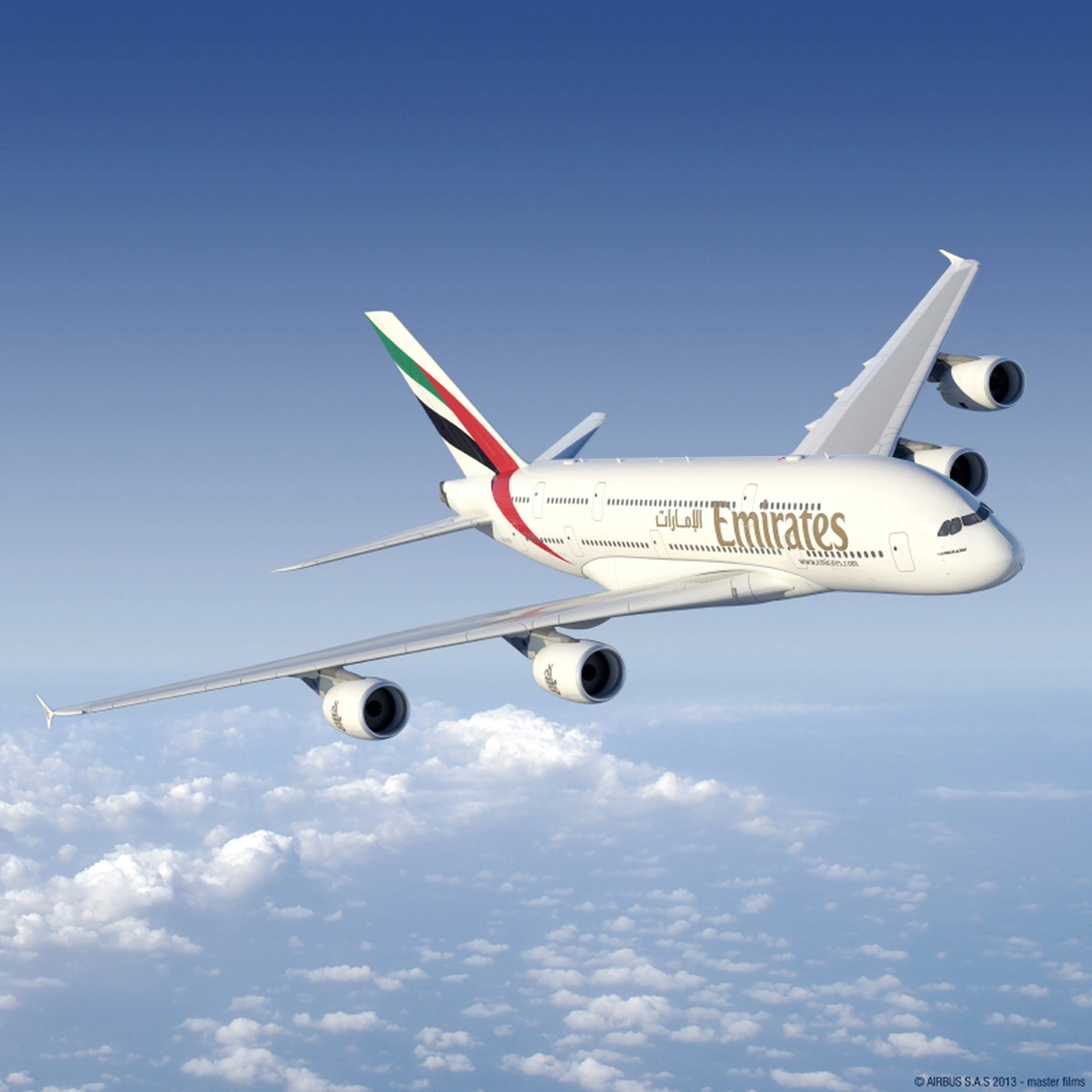
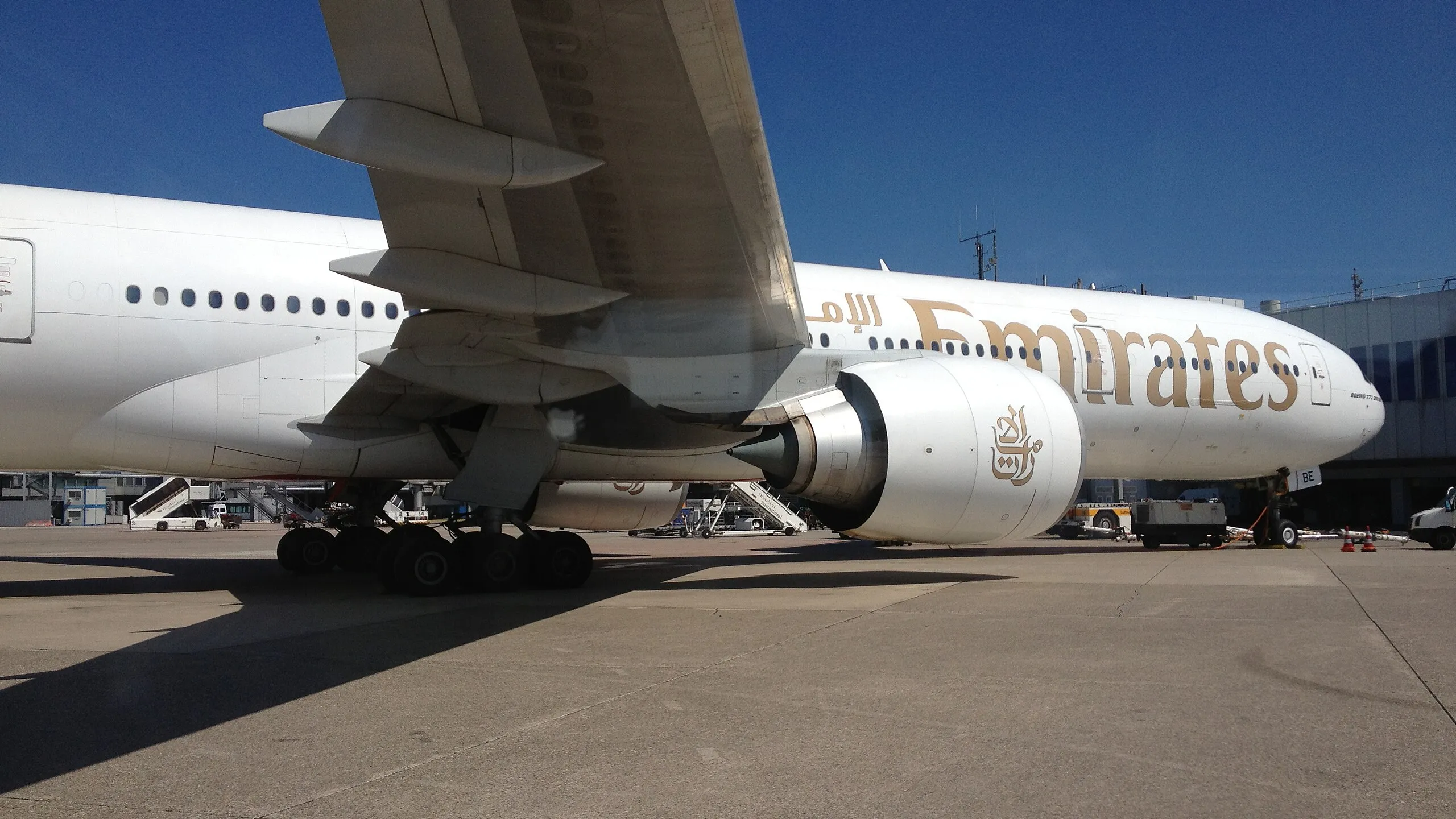
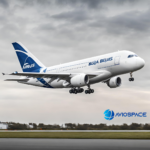
Emirates (EK) will stop flying the Airbus A380 to Beijing Capital International Airport (PEK) from July 2026. The Dubai-based carrier confirmed the change through schedule filings tracked by AeroRoutes, which show the airline replacing its single daily A380 flight with two daily Boeing 777-300ER services starting July 1, 2026. The move affects flights EK306, EK307, EK308, and EK309 between Dubai International Airport (DXB) and PEK, a route Emirates has served since 2010.
The shift restores Beijing’s second daily Emirates frequency for the first time since late February 2026, when conflict-related airspace disruptions forced widespread schedule cuts across the carrier’s network.
Emirates says the dual-777 setup keeps overall seat capacity roughly level with the single A380 flight, even though the smaller jet seats fewer passengers per departure. The airline will keep the A380 on two other Chinese routes, to Shanghai Pudong International Airport (PVG) and Guangzhou Baiyun International Airport (CAN), underscoring that this is a Beijing-specific frequency decision rather than a retreat from the Chinese market.
Why Beijing Capital Airport’s Terminal 3 Still Matters for Emirates?
PEK’s Terminal 3 opened in February 2008 ahead of the Beijing Summer Olympics, and at the time it was the largest airport terminal-building complex in the world to be built in a single phase, with 986,000 square metres of total floor area at its opening.
The terminal and its Ground Transportation Centre together enclose roughly 1.3 million square metres, mostly under one roof, architecture firm Foster + Partners notes, which is why the building is still widely described as one of the largest single-roof structures ever built for air travel.
That record did not last long. Terminal 3’s title as the world’s largest passenger terminal passed on October 14, 2008, to Dubai International Airport’s own Terminal 3, which has 1,713,000 square metres of floor space.
Today, the strict title of world’s largest single-building airport terminal belongs to Beijing Daxing International Airport (PKX), Beijing’s newer airport south of the city, whose 700,000-square-metre terminal is described as the world’s largest single-building airport terminal on a 47-square-kilometre site.
Emirates does not fly to PKX. Its Beijing service operates exclusively from PEK, the older and historically record-holding terminal that remains one of the largest airport buildings ever constructed.
What Changes on the Dubai-Beijing Route in July
Emirates’ route filings, reported by AeroRoutes, show the following schedule from July 1, 2026:
- EK306 departs DXB at 03:50 and arrives PEK at 15:25, operated by Boeing 777-300ER.
- EK308 departs DXB at 10:40 and arrives PEK at 22:20, operated by Boeing 777-300ER.
- EK307 departs PEK at 00:40 and arrives DXB at 05:00, operated by Boeing 777-300ER.
- EK309 departs PEK at 07:25 and arrives DXB at 11:35, operated by Boeing 777-300ER.
Before this change, Emirates ran a single daily A380 rotation on the route. Aviation outlet Simple Flying reports that the A380 was last deployed on the Beijing route in May 2026, and that roughly half of all historical flights on the route since 2010 used the A380, with the remainder flown by 777s. The publication adds that the move restores the second daily frequency rather than simply downgrading the aircraft, so Emirates is not cutting capacity in net terms, even though it is removing its largest aircraft type from the route.
Why Emirates is Swapping the Superjumbo for two 777s
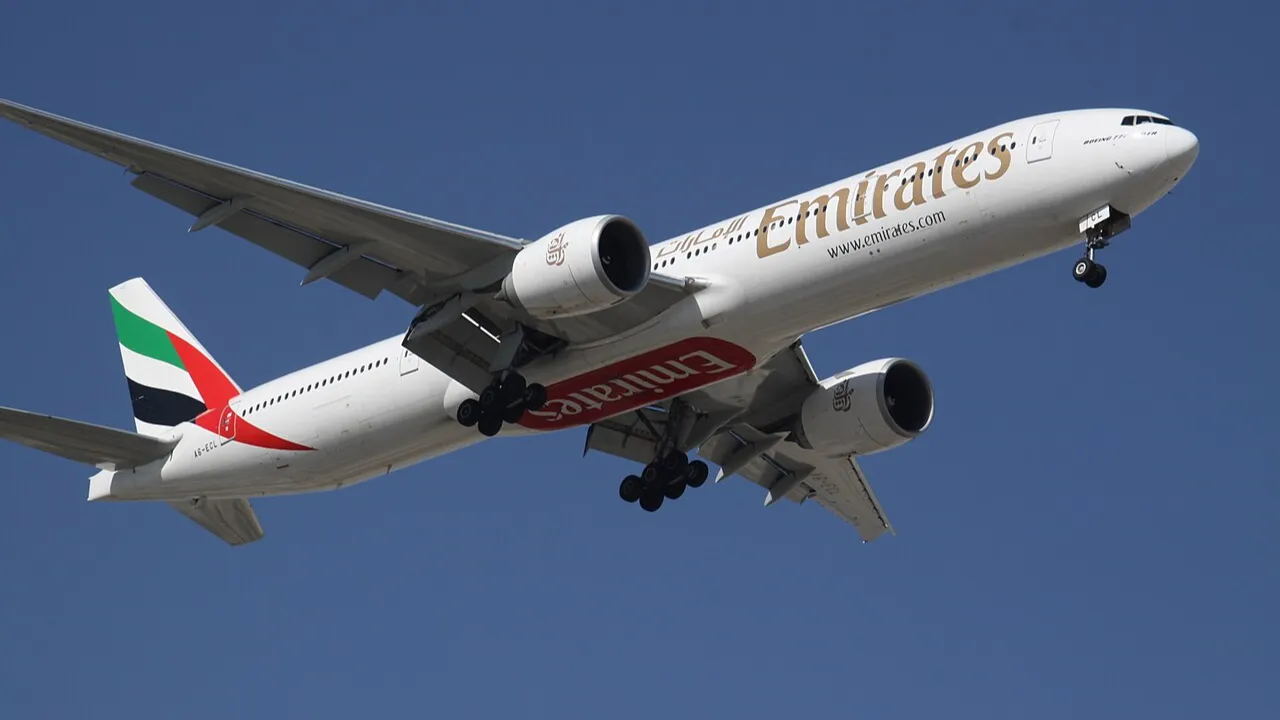
Emirates’ own Boeing 777-300ER configuration on the Beijing route carries a smaller passenger load than the A380, but flying it twice daily offsets the difference. Emirates’ December 2025 press release on its retrofitted 777 fleet describes the four-class configuration as featuring 260 Economy seats, 24 Premium Economy seats, 40 Business Class seats in a 1-2-1 layout, and eight First Class Suites. Two such departures a day add up to roughly the same total seats as one A380 flight, while giving passengers a wider choice of departure times.
This is not a downgrade in product terms either. Emirates confirmed in a December 2025 media release that the Beijing route, served by flights EK306 and EK307, would receive its newly retrofitted Boeing 777 aircraft from February 1, 2026, bringing Premium Economy to the route for the first time.
Beijing became the fourth city in mainland China to receive Emirates’ latest aircraft and next-generation cabin products, the airline said, following Shanghai, Guangzhou, and Hong Kong. The Business Class cabin on the retrofitted jet also moved to a 1-2-1 layout with champagne-leather seating to match the airline’s newest A380 cabins, giving Beijing passengers a similar premium experience without the four-engine aircraft.
A Second Beijing Downgrade in Two Years
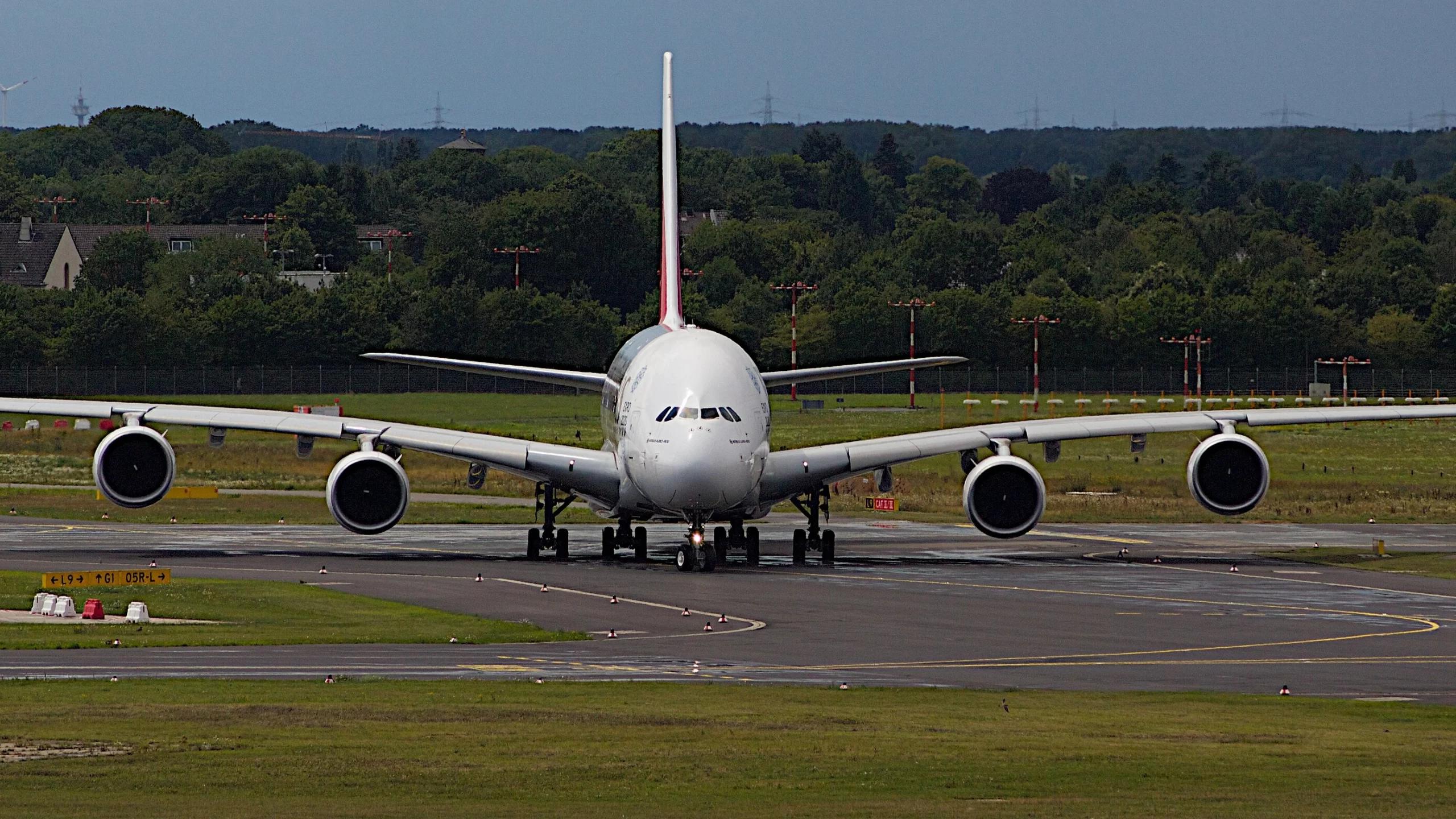
This is not the first time Emirates has pulled the A380 from Beijing. Emirates already replaced the A380 with 777-300ER service on the Dubai-Beijing route from June 1, 2024, as part of a wider pullback of the superjumbo from Chinese routes that also affected Shanghai.
Emirates restored the A380 to Beijing at some point after that 2024 swap, only to remove it again from July 2026, suggesting Beijing has become a route where Emirates regularly tests frequency against capacity rather than locking in one aircraft type long-term.
The current change also follows a period of network-wide disruption. The conflict that began in late February 2026 forced Emirates to suspend flights and rebuild its schedule in stages. Industry tracker LoyaltyLobby, as cited in an Avio Space report, said Emirates had already rebuilt to approximately 70% of its pre-war schedule within two weeks of the conflict’s onset, recovering faster than regional rival Etihad Airways (EY) over the same period. Restoring the second Beijing frequency in July, even without the A380, which Emirates painted with UAE colors last month, is part of that broader recovery rather than an isolated decision about one route.

.jpg)
.jpg)