Air France (AF), France’s flag carrier operating out of its primary hub at Paris Charles de Gaulle International Airport (CDG), is now approximately 60% through its Starlink Wi-Fi installation program, with the entire fleet of roughly 228 mainline aircraft and 37 regional jets set to carry the technology by the end of 2026, One Mile at a Time reported.
The airline officially began the rollout in September 2025, making it the first major European carrier to offer complimentary, high-speed satellite internet across all cabin classes. The service is free of charge for passengers who log in with a Flying Blue loyalty account, and it covers every travel class from Economy to La Première.
The partnership with SpaceX’s Starlink — announced in autumn 2024 — represents a deliberate move upmarket by Air France, at a time when in-flight connectivity is rapidly shifting from a premium add-on to a baseline passenger expectation.
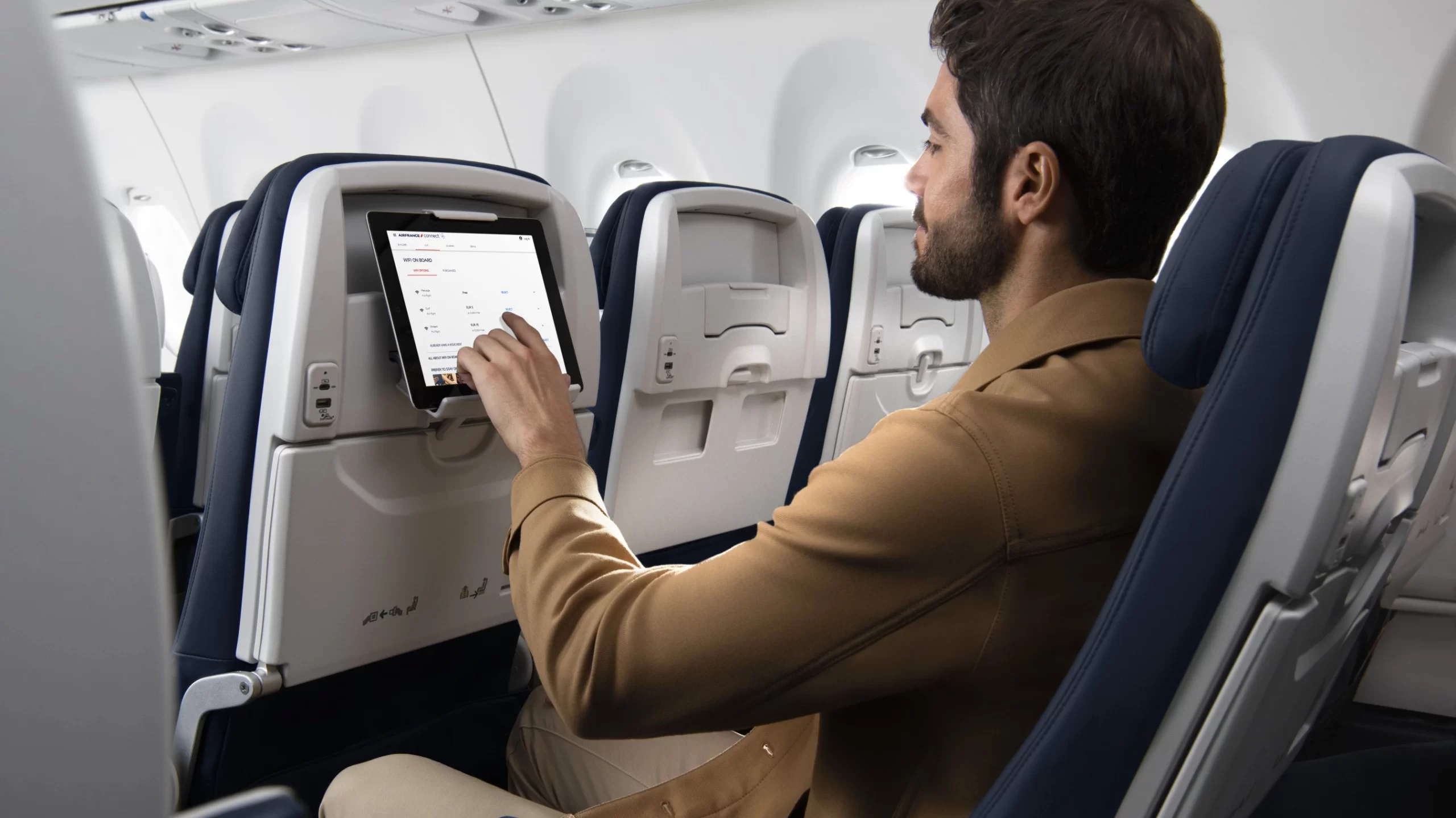
Air France’s Starlink Rollout a Timeline from Launch to Today
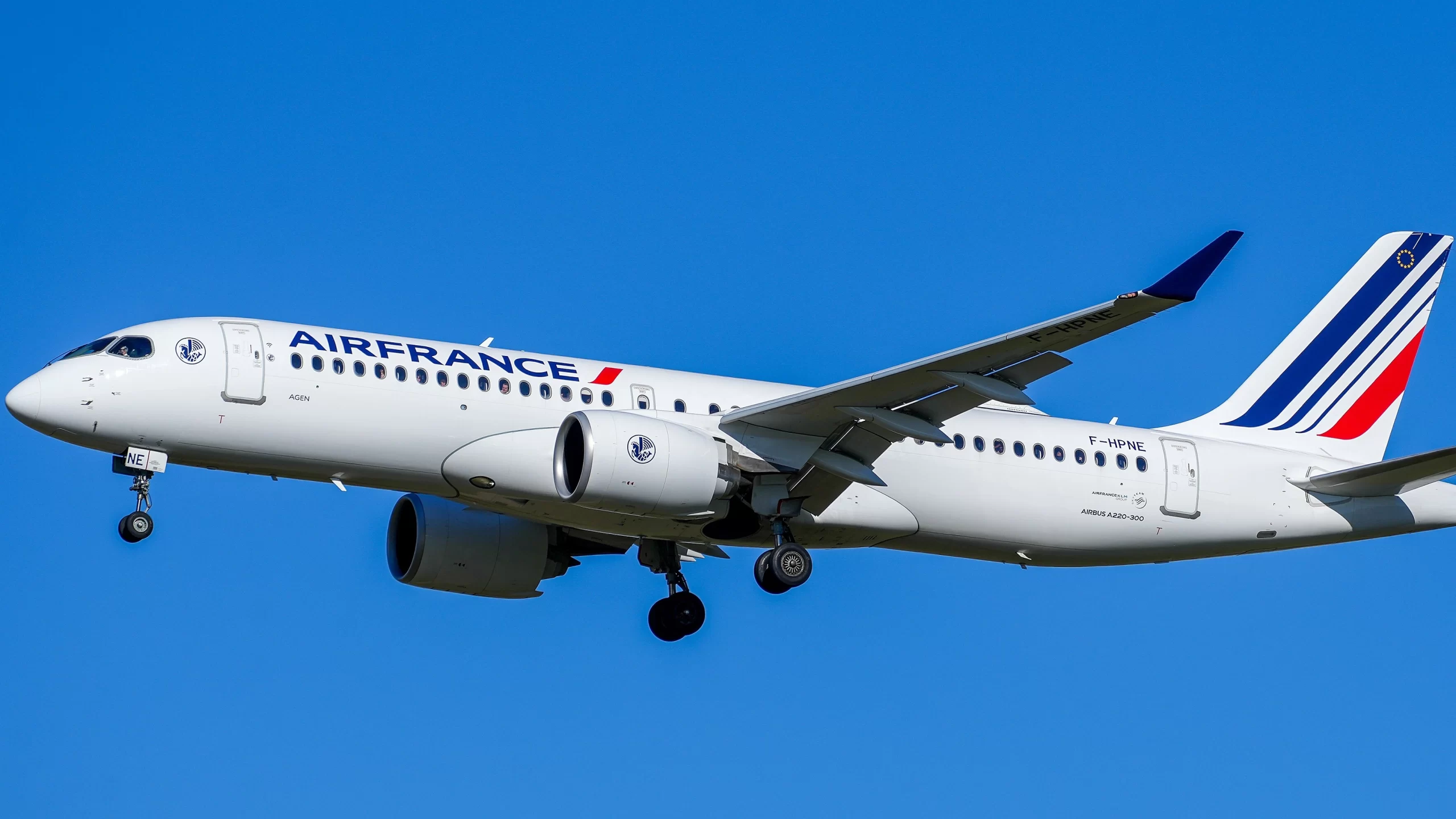
Air France’s Starlink service first flew commercially on September 1, 2025, aboard a retrofitted Embraer E190 registered F-HBLV, on a service from CDG to Hamburg Airport (HAM), Germany. Within days of that inaugural flight, two Embraer E190s, two Airbus A220s, and one Airbus A350 had all been equipped, marking the simultaneous entry of Starlink onto both Air France’s regional and long-haul networks.
By late September 2025, Aviation Week reported that Air France had already fitted three Embraer E190s, three Airbus A220-300s, and three A350-900s with the technology. The pace accelerated steadily through the fourth quarter of 2025. By October 2025, approximately 20 medium and long-haul aircraft were carrying Starlink, and Air France reaffirmed its target to cover roughly 30% of its total fleet by December 31, 2025. That target was met, with the carrier equipping approximately one-third of its aircraft with Starlink by year-end 2025.
As of April 2026, fleet tracking data from SeatWifi showed that 14 out of 21 of Air France’s A350-941 aircraft had been fitted with Starlink, and installations were continuing across the A320-family and Boeing wide-body fleets.

Aircraft Types in the Rollout Queue
Air France operates a fleet that spans regional narrow-bodies through ultra-long-haul wide-bodies. The Starlink installation program covers this full spectrum, including the airline’s regional subsidiary, Air France Hop, which operates approximately 37 Embraer E190s. The rollout sequence, as it has progressed:
- Embraer E190 (regional): First aircraft type to receive Starlink, entering service on September 1, 2025.
- Airbus A220-300: Among the earliest equipped, operational with Starlink from early September 2025.
- Airbus A350-900: First wide-body type to receive Starlink, fitted from mid-September 2025 onward; 14 of 21 aircraft equipped as of April 2026.
- Boeing 777: Wide-body long-haul fleet scheduled to begin Starlink installation in autumn 2025, with ongoing retrofits through 2026.
- Airbus A320-family (including A320-214): Installations underway; 3 of 28 A320-214 aircraft equipped as of April 2026.
The inclusion of regional jets marks a first for Air France. The airline noted explicitly that extending Starlink to its regional aircraft was a milestone in its wider premiumization strategy.
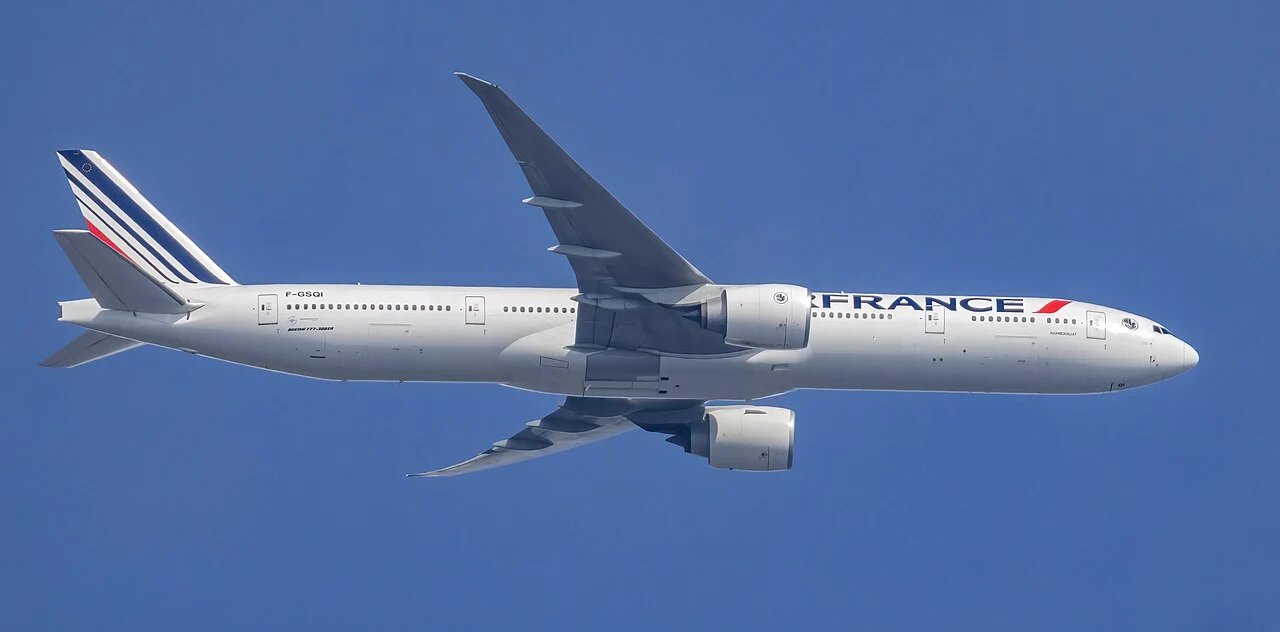
Air France’s Starlink
The Starlink rollout does not exist in isolation. It forms part of a wider program of product investment that Air France has been executing under Chief Executive Anne Rigail. Air France-KLM Group reported full-year 2025 revenues of €33.0 billion, a 4.9% year-on-year increase, with an operating result of €2.0 billion and an operating margin of 6.1%. That financial performance has provided the carrier with the balance sheet confidence to pursue capital-intensive projects including fleet renewal and cabin upgrades.
On the cabin side, Air France simultaneously launched a new interior configuration on its Embraer E190 fleet in September 2025. The refurbished E190, registered F-HBLV, entered service with a new 2-2 cabin layout using lightweight Expliseat TiSeat 2X seats, alongside Starlink. Business class passengers on those aircraft are also guaranteed an adjacent empty seat from October 2025 onwards.
Air France-KLM’s 2025 results also reflected a jump in new-generation aircraft within the fleet to 35%, up eight percentage points versus 2024, alongside a more-than-doubling of sustainable aviation fuel incorporation to 2.9%. The carrier has positioned Starlink as integral to this premiumization narrative, rather than a standalone amenity.
The Flying Blue Dimension: Loyalty At 35,000 Feet
The decision to gate Starlink access behind Flying Blue membership is deliberate. Air France uses the service as a direct incentive for loyalty program enrollment. The airline confirmed that passengers without a Flying Blue account can register onboard, at no cost, during the flight itself. The program, jointly operated by Air France and KLM, is the primary loyalty vehicle for the Air France-KLM group.
Flying Blue Ultimate tier members and La Première passengers retained complimentary Wi-Fi access even during the transitional period on aircraft not yet equipped with Starlink. This ensured continuity of a benefit these passengers already expected. The broader Flying Blue base now gains access to Starlink connectivity — a product previously unavailable at any price point on legacy systems. British Airways, by contrast, has chosen not to require a loyalty login for its Starlink service, countering the prevailing industry model.

Air France’s Path to Full Coverage
Air France has not published a granular aircraft-by-aircraft schedule beyond confirming the fleetwide December 2026 deadline. However, the trajectory of the program suggests the carrier is tracking ahead of its internal milestones. Air France CEO Anne Rigail indicated in a LinkedIn post that the program might conclude ahead of the official fleetwide timeline, though the carrier has not formally revised its public guidance.
Roughly 90% of Air France flights already carry some form of Wi-Fi capability, including legacy Gogo 2Ku systems on Boeing 777 and 787 aircraft pending Starlink retrofits. The remaining gap is a function of retrofit scheduling rather than connectivity infrastructure. Once Starlink reaches 100% of the fleet, Air France will retire its legacy connectivity products entirely, replacing them with the single unified Starlink-powered offer.
For passengers, the practical implication is that the probability of encountering Starlink on any given Air France flight is already above 60% today, and rises sharply before the year ends. Travelers booked on A350 routes from CDG have the highest likelihood of access, given the advanced state of that fleet’s retrofit program.

.jpg)
.jpg)