Etihad Airways (EY) is moving to surpass its pre-conflict capacity levels within days and is finalising a substantial new order for widebody aircraft. This comes despite the continuing geopolitical uncertainty triggered by the 2026 Iran War. Speaking on the sidelines of the International Air Transport Association’s (IATA) Annual General Meeting in Rio de Janeiro, Brazil, CEO Antonoaldo Neves confirmed that the Abu Dhabi-based carrier expects to operate roughly 8% more capacity than it did in the same period last year by 15 June 2026, Zawya reported.
The airline’s assertive posture stands in stark contrast to the broader industry landscape. IATA projects that Middle Eastern carriers will collectively post a $4.3 billion loss in 2026, making the region the only one globally forecast to fall into the red this year. Etihad itself had been tracking toward a $1 billion net profit before the conflict erupted on 28 February 2026, but Neves now concedes the airline may merely break even. Nevertheless, the carrier is pressing forward with fleet acquisitions, network expansion, and product investment at an accelerated pace.
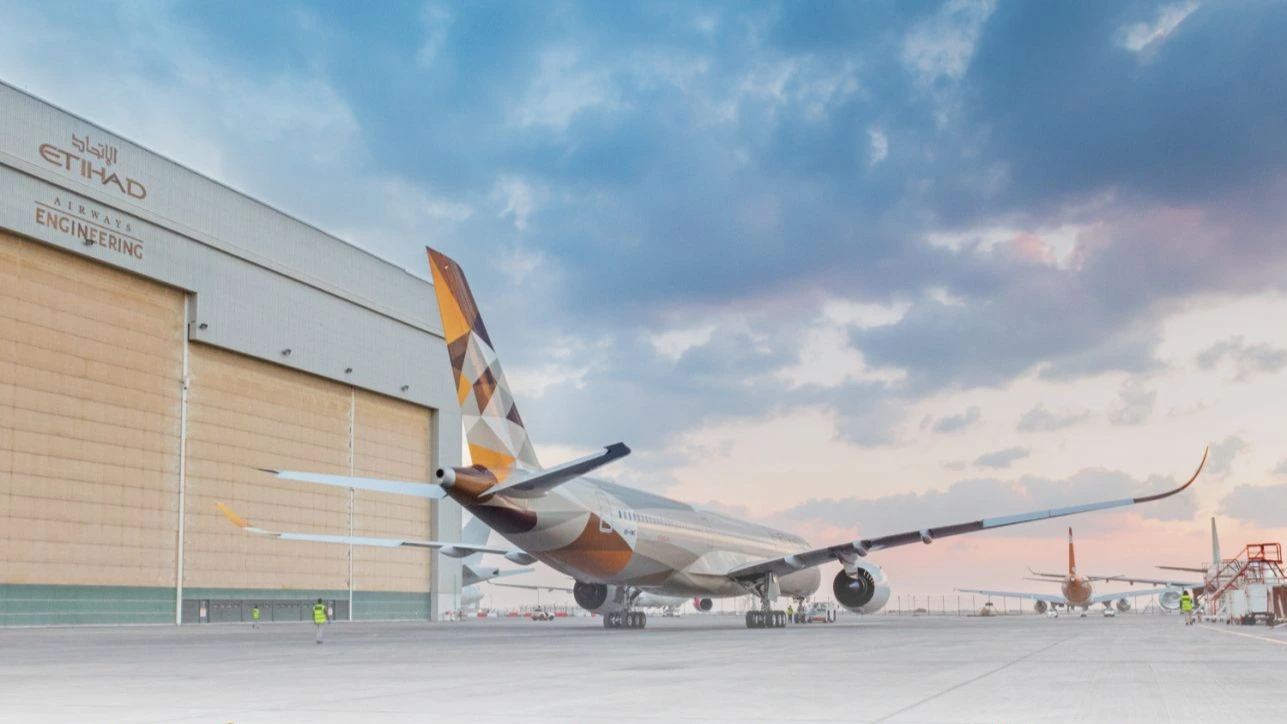
How The Iran War Grounded and Then Galvanised Etihad
The conflict that began on 28 February 2026, when coordinated US-Israeli strikes on Iran triggered retaliatory Iranian ballistic missile and drone attacks across the Gulf, forced Etihad into an immediate and near-total operational halt. Neves described those opening days as deeply uncertain for the entire airline industry. “The first three days were very different,” he told Gulf News. “We just grounded the fleet trying to understand how things would evolve.”
During that initial phase, the airline concentrated entirely on passenger welfare. Etihad arranged hotel accommodation, meals, and repatriation flights for stranded travellers while aviation authorities assessed the rapidly evolving security situation. The carrier also weathered a sharp spike in contact centre demand as travellers rushed to reach the airline. Following an outage tied to Amazon Web Services, Etihad activated backup systems. “We had zero downtime of contact centre,” Neves stated.
Abu Dhabi Zayed International Airport (AUH), Etihad’s home hub, suffered comparatively less disruption than neighbouring Dubai International Airport (DXB). One civilian died when debris from a low-altitude drone interception fell near the airport. Iran’s broader bombardment of the UAE involved 537 intercepted ballistic missiles, 2,256 drone attacks, and 26 cruise missiles before mid-April 2026, according to UAE defence authorities. The scale of the offensive underscored why the airline industry treated the early weeks as entirely unpredictable.
.jpg)
Etihad’s Phased Recovery: From 78% To 108%
After the initial grounding, Etihad entered what Neves characterised as a structured three-phase recovery. March and April constituted a transition phase during which the carrier incrementally reintroduced flights in coordination with the UAE General Civil Aviation Authority (GCAA) and regional air traffic control. “March and April we had a transition phase,” Neves said. “All safe, no safety issue.”
Load factors — the measure of how many available seats are filled by paying passengers — tell the story of the recovery in numbers. According to Gulf News:
- March 2026: Load factor at 60–65%
- April 2026: Load factor climbed to approximately 75%
- May 2026: Load factor reached 83%
- Pre-conflict (late February 2026): Load factor stood at approximately 88%
The trajectory points toward a normalised summer. By June 15, Neves expects Etihad to operate at roughly 108–110% of its pre-war schedule, not merely restoring prior levels but surpassing them. The CEO said Etihad is also selling 110,000 to 120,000 flight segments per day, which matches pre-conflict volumes, and that average fares have returned to their earlier levels.
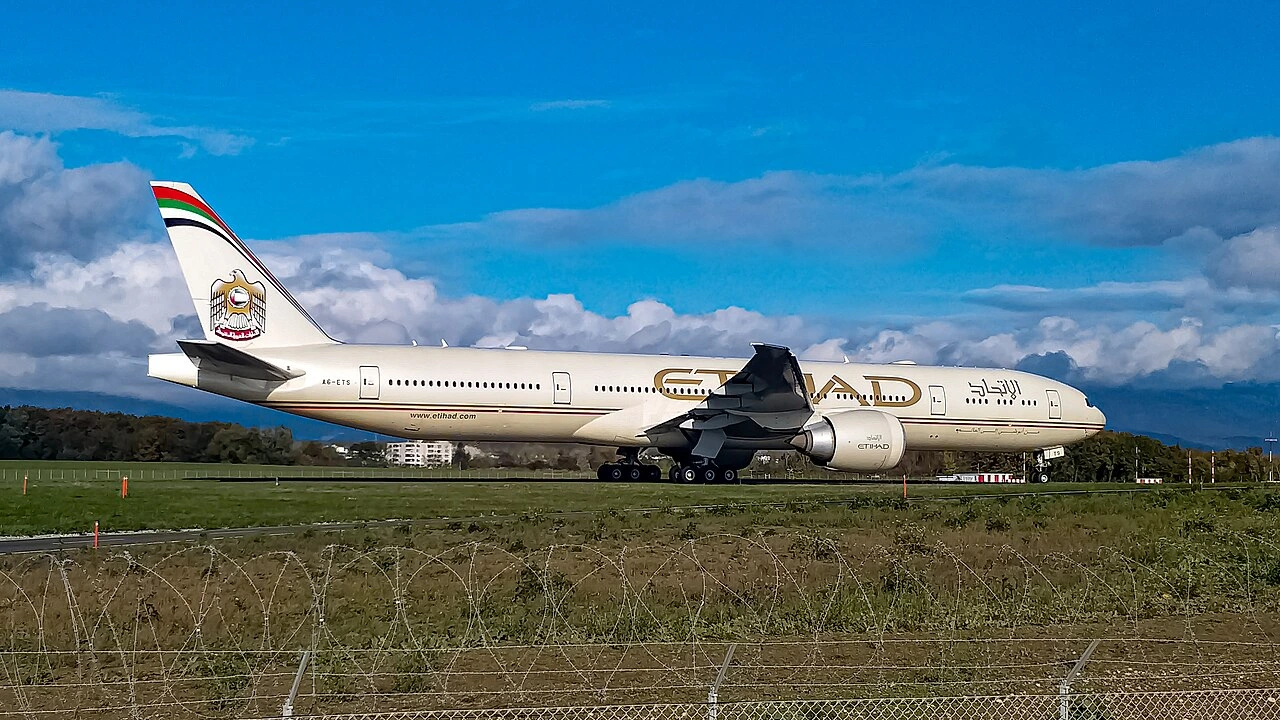
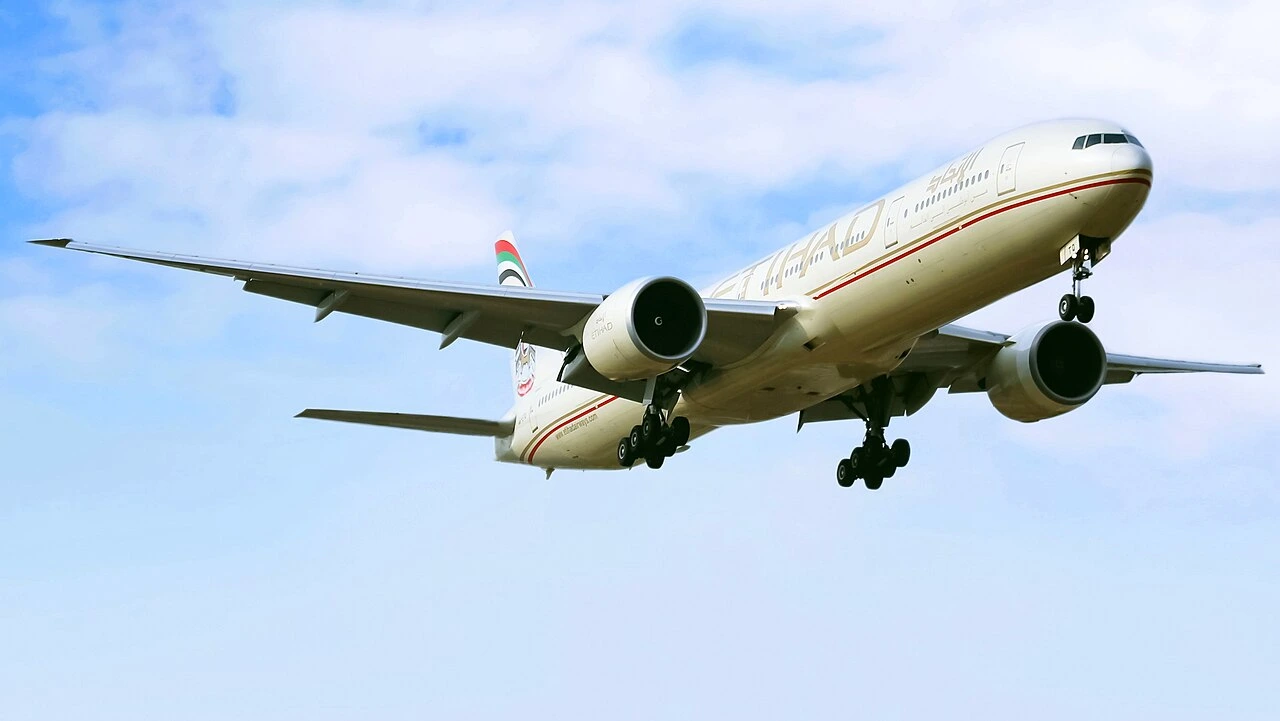
https://commons.wikimedia.org/wiki/File:Etihad_Airways_777-300ER_A6-ETS_at_Geneva_international_airport.jpg
Etihad’s Double-Digit Widebody Order
At the IATA AGM in Rio de Janeiro, Neves confirmed that Etihad is “just about to close a deal on incremental widebodies for the next five years,” according to Aviation Week. The order involves a double-digit number of aircraft, though the manufacturer and precise quantity remain undisclosed.
This acquisition builds on a sequence of fleet commitments made in the years prior. In May 2025, Etihad placed an order for 28 additional wide-body Boeing aircraft, including 787 Dreamliners and the yet-to-be-certified Boeing 777X. At the Dubai Airshow in late 2025, the carrier added six further Airbus A350-1000s to its order book. The airline’s current operating fleet as of mid-2026 consists of approximately 95–100 aircraft, encompassing:
- Airbus A380 (10 total, with the 8th and 9th frames reactivated in 2026)
- Airbus A350-1000 (including recent deliveries)
- Boeing 787-9 / 787-10 Dreamliner
- Boeing 777-300ER
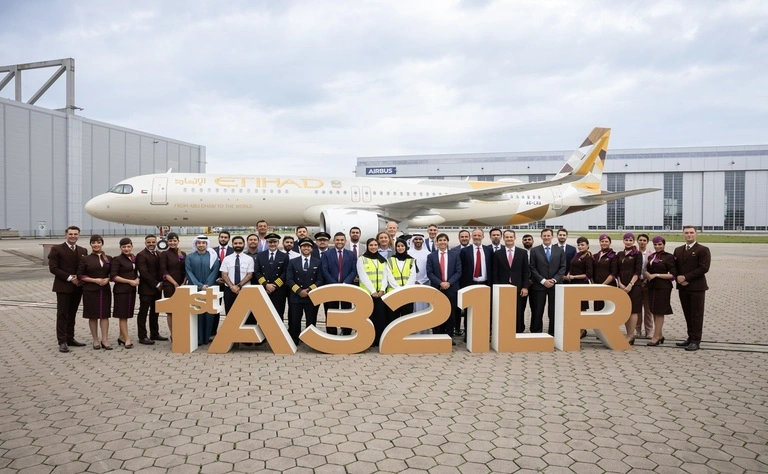
- Airbus A321LR (introduced August 2025 with First Class suites and 14 lie-flat business seats)
- Airbus A320 family (narrow-body, medium-haul network)
- Boeing 777F (operated by Etihad Cargo)
The incoming widebody order is understood to sit within a broader ambition to grow the fleet toward 200 aircraft by 2030, an upward revision from Etihad’s original Journey 2030 target of approximately 170 aircraft. Here’s a look at the carrier’s current fleet:
| Aircraft Type | In Service | Parked | Total Active Fleet | Future Orders | Avg. Age |
|---|---|---|---|---|---|
| Airbus A320 | 16 | 1 | 17 | – | 14.1 Years |
| Airbus A321 | 27 | – | 27 | 9 | 5.6 Years |
| Airbus A350 XWB | 12 | – | 12 | 2 | 3.3 Years |
| Airbus A380 | 6 | 3 | 9 | – | 10.7 Years |
| Boeing 777 | 15 | – | 15 | – | 12.9 Years |
| Boeing 787 Dreamliner | 46 | 1 | 47 | – | 7.4 Years |
| Total | 122 | 5 | 127 | 11 | 8.4 Years |
Data: planespotters.net
Etihad’s Expansion Blueprint Before and After the War
Etihad’s Journey 2030 strategy, announced in November 2023 at the airline’s 20th anniversary, set the ambition to double fleet size and expand the global route network to 125 destinations. The war did not cause Neves to retreat from these targets. On the contrary, he framed the moment as one that calls for acceleration. “We’re going to do more, quicker and faster of everything,” he said. “We’re so confident in our strategy, we’re going to double the bet. We’re going to do whatever we can to accelerate because it’s working.”
The airline recorded a post-tax profit of $698 million in 2025, an era-defining result for a carrier that posted a $1.70 billion loss as recently as 2020. Passenger numbers reached 22.4 million in 2025, a 21% year-on-year increase, supported by a 30% expansion in fleet capacity and the launch of 16 new destinations. Load factor for 2025 reached 88.3%, up two percentage points from 2024.
Etihad is investing around $2 billion annually in new aircraft as it builds toward its long-term targets. Neves said the airline may suspend dividend payments in 2026 to preserve cash for the ongoing expansion and for operational stability through the downturn. “If I had to bet, I would bet that doesn’t make sense this year,” he said, in reference to dividends.
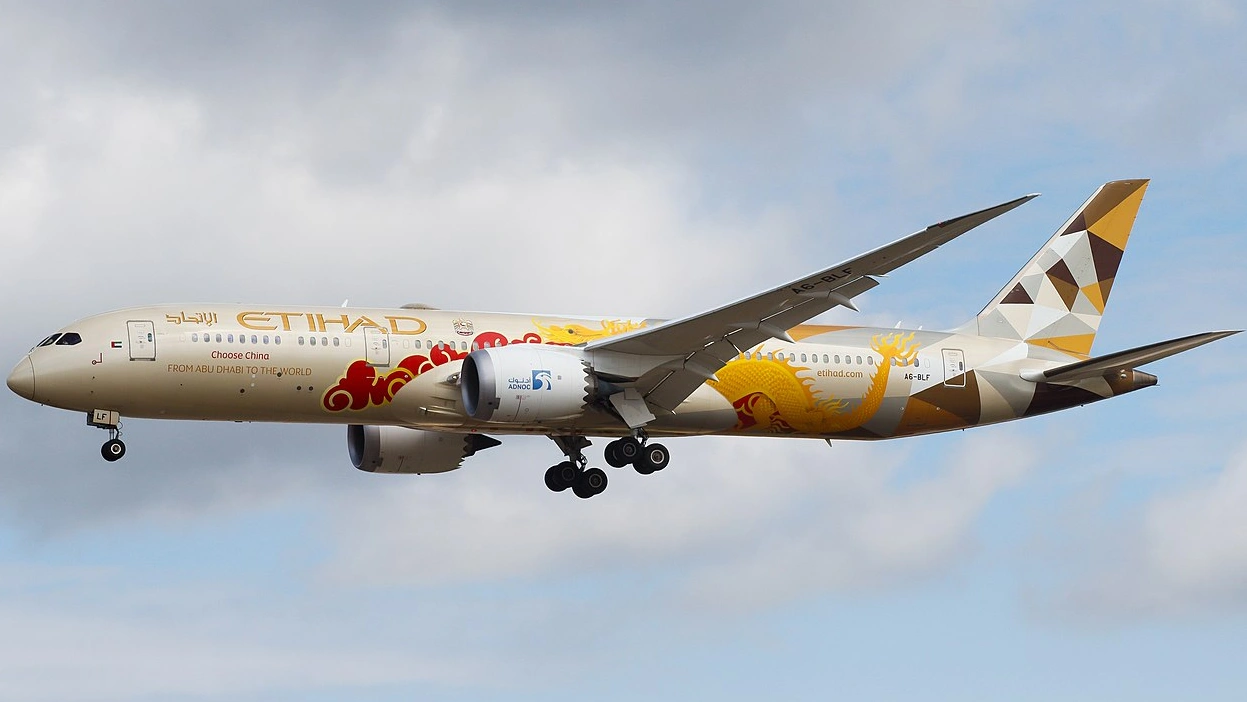
The carrier recorded nine-month financial results for 2025 and the deployed of Boeing 787-9 Dreamliners on the Melbourne route as part of its broader re-fleet strategy.
_-_Etihad_Airways_-_MSN_41700_-_VGHS.jpg)
How Etihad Compares with Emirates and Qatar Airways During the Crisis
The 2026 Iran War affected all three major Gulf carriers, but their responses and recovery trajectories have diverged. Emirates airline (EK), the Dubai-based carrier operating the world’s largest Boeing 777 and Airbus A380 fleet, was widely regarded as having managed the initial disruption more effectively than its Abu Dhabi counterpart.
As LoyaltyLobby reported in late March 2026, Emirates had already rebuilt to approximately 70% of its pre-war schedule within two weeks of the conflict’s onset, while Etihad — whose network relies more heavily on transit traffic — had reached only around 50% in the same period.
Early criticism focused on Etihad’s communication. The airline overpromised and underdelivered on the number of destinations it would restore during its initial hub restart, and failed to publish a clear destination list for customers booking during the transition phase. In response, Etihad extended flexible rebooking and refund policies and reduced Etihad Guest tier qualification requirements by 25% through March 2027 to retain loyalty programme members affected by the disruption.
By contrast, Qatar Airways (QR) moved to expand operations to 33 additional destinations through April 2026. Doha’s Hamad International Airport (DOH) sustained heavier missile activity during the conflict, with Qatar absorbing 203 missiles and 87 drones from Iran. As Etihad now closes in on 108% of its pre-war schedule, it is the first of the three major Gulf carriers to publicly commit to exceeding — rather than merely matching — pre-conflict capacity levels.

China, Africa, And Key Markets Driving the Recovery Agenda
Etihad’s network recovery is not uniform. Neves identified India-to-US transit traffic via Abu Dhabi as performing at record levels. “The traffic flow from India to the US and vice versa via the Middle East in our airline is bigger than ever before,” he told Gulf News. The airline recently increased its Chicago flights to double-daily services.
French corporate travellers continue to book Abu Dhabi flights in strong numbers, and Neves noted that inbound corporate travel to Abu Dhabi has held at pre-war levels, supported by continued foreign investment interest in the emirate. “Foreign investors want to come to Abu Dhabi, and they want to tell Abu Dhabi, I’m here with you,” he said.
Looking further ahead, Neves flagged China and Africa as the two most consequential growth markets. “We’re going to multiply China by five in one year,” he said, adding that expansion plans for both regions had been in development before the conflict and have now been accelerated.
Meanwhile, on a parallel track, Etihad recently confirmed plans to resume widebody Boeing 777 services to Hazrat Shahjalal International Airport (DAC), Dhaka beginning 26 June 2026, underscoring the carrier’s ambition to deepen connectivity across the South Asia corridor.
Fuel Costs, IATA Forecasts, And the Financial Uncertainty Ahead
The financial backdrop remains challenging. IATA expects jet fuel prices to average nearly 70% higher in 2026 than in 2025, adding approximately $100 billion to the global airline fuel bill. Fuel accounts for roughly 30% of Etihad’s cost base, and Neves acknowledged that competitive dynamics in the Gulf market make it difficult to pass those increases fully on to passengers. “We have much more competition in the Middle East than we have in the US,” he said.
IATA Director-General Willie Walsh, speaking at the Rio AGM, cited two compounding factors: the surge in jet fuel prices and the disruption to Gulf carriers specifically. The combined effect has caused IATA to nearly halve its global airline profit forecast for 2026. Walsh said most regions should remain profitable, while Middle Eastern carriers are the sole regional group forecast to turn a loss.
Etihad has mitigated part of the fuel exposure through hedging. “We have a relatively good hedging position,” Neves said in his Aviation Week interview. He also articulated his philosophy on capacity: rather than cutting flights to reduce costs, Etihad treats a full aircraft as its primary cost-control mechanism. “The biggest cost we have is an empty plane, so the way I cut cost is I don’t have empty planes,” he told Connecting Travel. Neves expects revenues to stabilise by August 2026 if regional conditions remain broadly calm, though he cautioned that booking patterns will remain volatile. “It’s going to be volatile, but it’s about the trajectory,” he said.