JetBlue Leads: Which Airlines Took Over Spirit Airlines’ Routes And Airport Slots?

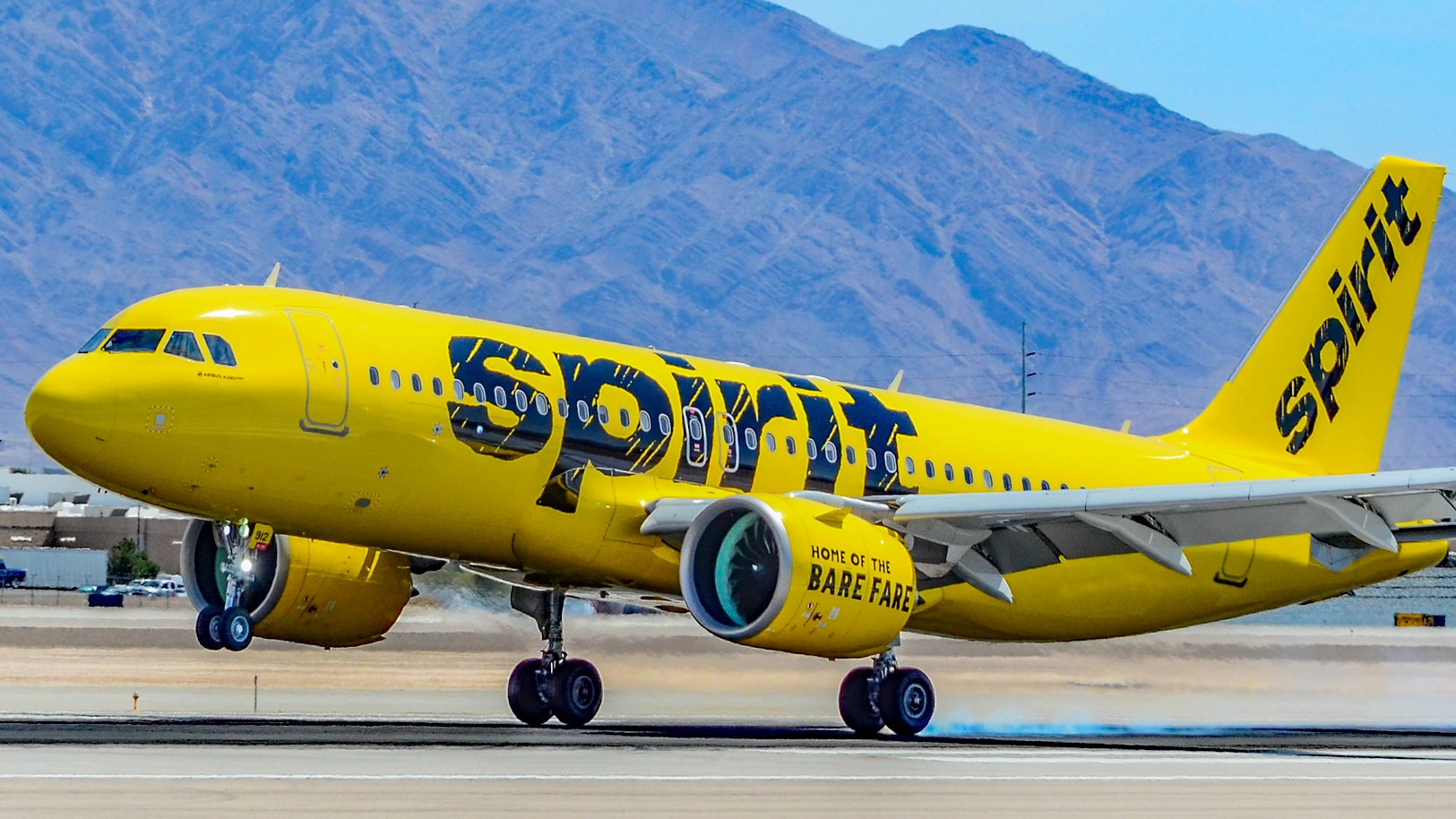
Spirit Airlines (NK), the Dania Beach, Florida-based ultra-low-cost carrier that pioneered the no-frills model in the United States, ceased all global operations on May 2, 2026, following the collapse of a last-minute $500 million Trump administration rescue package. In a statement released before dawn, Spirit said:

“It is with great disappointment that on May 2, 2026, Spirit Airlines started an orderly wind-down of our operations, effective immediately. All flights have been cancelled, and customer service is no longer available.”

The shutdown put 17,000 workers out of a job and stranded an estimated 60,000 passengers per day across the airline’s network. It was the first time in 25 years that a major U.S. airline had gone out of business due to financial failure.

The scale of what Spirit left behind is substantial. According to analysis by Data Appeal and Mabrian, the carrier’s exit will remove 21.3 million seats from the U.S. aviation market between May and December 2026, representing 4.5% of total domestic low-cost capacity and 1.4% of all U.S. air connectivity during that period.

More than 91% of those seats were tied to domestic routes. Over 81% of the affected seats are concentrated in just 15 major airports, led by:

  • Fort Lauderdale-Hollywood International Airport (FLL)
  • Orlando International Airport (MCO)
  • Newark Liberty International Airport (EWR)
  • Detroit Metropolitan Wayne County Airport (DTW)
  • Hartsfield-Jackson Atlanta International Airport (ATL).

The question now is which carriers are filling that void — and whether the replacement capacity is sufficient to protect budget travellers from the so-called “Spirit Effect” in reverse.

Photo: Colin Brown | Wikimedia Commons

Spirit’s Collapse

Spirit’s demise was years in the making, culminating in two Chapter 11 filings in less than 18 months. The airline first sought bankruptcy protection in November 2024, following accumulated losses exceeding $2.5 billion since the pandemic and the January 2024 collapse of its proposed $3.8 billion merger with JetBlue Airways, which a federal judge blocked on antitrust grounds. Spirit emerged from its first bankruptcy in March 2025 after slashing $800 million in debt and receiving a $350 million equity infusion, but the recovery proved short-lived. The airline filed for bankruptcy for a second time in August 2025, weighed down by surging jet fuel costs driven partly by the ongoing Iran conflict, soft domestic demand, and a cost structure that left no room for error.

The airline had spent its final months in an accelerating retreat. Between 2024 and early 2026, Spirit exited dozens of routes, including service to Milwaukee Mitchell International Airport (MKE), Phoenix Sky Harbor International Airport (PHX), Rochester International Airport (ROC), and St. Louis Lambert International Airport (STL). OAG’s data shows Spirit cut its scheduled seat capacity from 23.3 million in Summer 2025 to just 10.7 million — a reduction of 54% in a single year — as it sought court approval to return more than half its Airbus A320-family fleet to lessors. When the Trump administration bailout fell through, it accelerated that collapse into an immediate, overnight liquidation.

U.S. Bankruptcy Judge Sean Lane authorised Spirit’s rapid wind-down on May 5, 2026, acknowledging it wasa very challenging day” that he had hoped would never come, while extending sympathy to Spirit employees and their families. The liquidation authorised conversion of Spirit’s remaining assets into cash for creditors and marked the formal end of a carrier that had operated for 34 years.

Photo: JetBlue

JetBlue Was the Largest Single Beneficiary at Fort Lauderdale

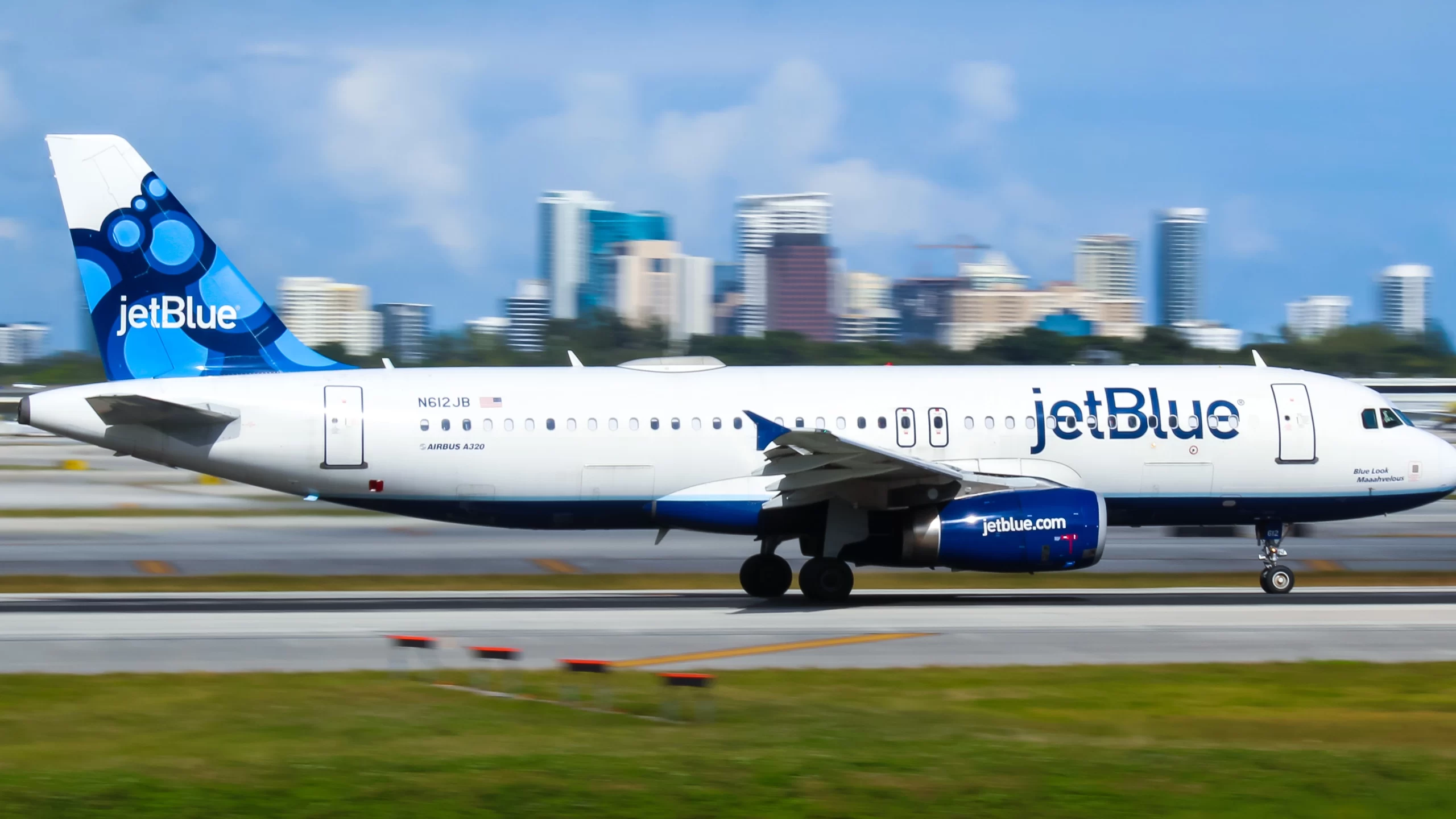
The data from OAG’s Schedules Analyser, drawn as of May 2026 with September used as the benchmark month for post-Spirit scheduling, identifies JetBlue Airways (B6) as the primary carrier filling capacity left by Spirit’s departure. By September 2026, JetBlue will have opened nine new routes that were previously operated by Spirit, with Fort Lauderdale-Hollywood International Airport as the primary beneficiary. The two airlines had competed head-to-head at FLL for many years, where Spirit had previously held nearly 30% of total passenger capacity.

JetBlue’s official press release announced plans to launch 11 new destinations from FLL, expecting to operate nearly 130 daily departures from Fort Lauderdale this summer — more than 75% above its 2025 levels — in what the airline described as the largest operation in its history from the airport.

The expansion raises JetBlue’s capacity share at FLL from approximately 22% in April 2026 to 37% in September, though OAG notes this still falls short of a dominant market position, given Delta Air Lines holds a 16% share. As JetBlue President Marty St. George stated in media briefings after Spirit’s shutdown: “We’re stepping up for Fort Lauderdale to ensure the availability of air service in this market.”

New FLL routes announced by JetBlue include:

  • Barranquilla (Ernesto Cortissoz Barranquilla International Airport, BAQ), daily from October 1
  • Baltimore/Washington International Thurgood Marshall Airport (BWI), thrice daily from July 9
  • Cali (Alfonso Bonilla Aragon International Airport, CLO), daily from October 1
  • Charlotte Douglas International Airport (CLT), with new service from July
  • Columbus John Glenn International Airport (CMH), new nonstop from July
  • Indianapolis International Airport (IND), new service from July
  • Nashville International Airport (BNA), new service
  • Detroit Metropolitan Wayne County Airport (DTW), new service
  • Houston, Chicago, and Ponce (Luis Muñoz Marín International Airport, SJU) also among new additions

Source: The Points Guy

JetBlue also introduced a temporary loyalty status match for Free Spirit Silver and Gold members, easing the transition for Spirit’s most frequent customers. The irony of JetBlue’s windfall is not lost on analysts: the carrier once tried — and failed — to merge with Spirit, with the Biden administration blocking the deal in January 2024 on grounds that it would reduce competition for low-cost fares. Spirit’s collapse achieved the competitive reordering the merger would have created, at far greater human cost.

Photo: Spirit Airlines

The ULCC Tier Comprising Frontier, Breeze, And Allegiant Responds

JetBlue is not the only carrier moving into Spirit’s vacated territory. Travel Weekly’s analysis confirms that Frontier Airlines (F9), Breeze Airways (MX), Delta Air Lines (DL), Southwest Airlines (WN), and United Airlines (UA) have all added routes or increased capacity on former Spirit markets since May 2, 2026. Among ultra-low-cost carriers, Frontier has moved most decisively.

Frontier announced it would resume service on two former Spirit routes — Las Vegas (Harry Reid International Airport, LAS) to Kansas City International Airport (MCI) and MCO to Memphis International Airport (MEM) — while adding capacity on 13 former year-round Spirit routes, eight of which serve Orlando, and increasing frequencies on eight seasonal routes that Spirit had operated.

Frontier is also positioning itself at New Orleans Louis Armstrong International Airport (MSY), adding ongoing Dallas-Fort Worth (DFW) service and daily Orlando flights from July, with its spokesperson stating the carrier wants to become “the new value airline of choice” in the market. Frontier currently operates more than 100 routes in markets where Spirit was previously a direct competitor, placing it in a structurally strong position to absorb price-sensitive travellers.

Breeze Airways (MX) has added 12 routes on the former Spirit network, including four connecting Atlantic City International Airport (ACY) to Florida destinations and Myrtle Beach International Airport (MYR). Breeze’s expansion reflects its strategic focus on point-to-point leisure markets — precisely the segment Spirit served most heavily — and the carrier has prioritised Florida beach destinations and U.S.-Mexico routes in its post-Spirit growth plan.

Allegiant Air (G4) has also announced added flights from Florida, though its expansion is more selective than Frontier’s or Breeze’s, consistent with Allegiant’s model of serving thin, leisure-oriented routes with lower frequencies.

Photo: Spirit Airlines

The Big Four Stay Out Of Spirit’s Old Routes

One of the more analytically significant findings from OAG’s data is what the legacy carriers have conspicuously not done. OAG’s analysis confirms that none of the “Big Four” — American Airlines (AA), United Airlines (UA), Delta Air Lines (DL), and Southwest Airlines (WN) — have picked up any routes that were previously operated solely by Spirit, despite each of them having competed against Spirit on numerous routes.

This is a rational commercial response: the Big Four compete on yield management and premium products, and Spirit’s thinnest routes — which generated revenue only at ultra-low cost structures — are not structurally attractive for higher-cost operators.

The legacy carriers have, however, moved to capitalise on Spirit markets where they already operate. Delta has added capacity at DTW; United has bolstered service at EWR and selectively expanded in Houston, Chicago, and Central American markets; Southwest has increased frequencies at MCO and Las Vegas; and American has consolidated its position at Charlotte Douglas. Robert Mann, an aviation industry consultant and former airline executive, characterised the dynamic precisely:
“It’s at the low-fare end of the spectrum where the market price is established. And it’ll make it easier for everyone else to raise prices at that level.”

Photo: JetBlue

JetBlue’s Gained At FLL But Slashed Elsewhere

The expansion at Fort Lauderdale represents only one dimension of JetBlue’s response to Spirit’s collapse. Our analysis of JetBlue’s simultaneous route discontinuations reveals, the carrier is cutting 10 routes serving Manchester, Orlando, and Newark even as it expands dramatically at FLL.

The apparent paradox resolves when yield enters the equation: routes like Hartford–Tampa and Orlando–San José faced strong nonstop competition from Southwest and Frontier, limiting JetBlue’s ability to extract pricing power from those markets. At Fort Lauderdale and San Juan, JetBlue is the largest operator and faces conditions where Spirit’s exit genuinely removes a competitive floor on fares, giving JetBlue room to grow both volume and yield simultaneously.
Routes where Spirit was a direct competitor but JetBlue lacked market power are being shed; routes where JetBlue already commanded scale — and Spirit’s exit creates a structural pricing opportunity — are being aggressively expanded.

The Five Routes Nobody Has Claimed

For all the rapid redeployment by JetBlue, Frontier, Breeze, and others, OAG’s data identifies five routes previously operated solely by Spirit that remain unclaimed by any airline as of May 2026. These unserved corridors represent the thinnest and most economically marginal routes in Spirit’s network — markets that the airline’s ultra-low-cost structure made viable but which no current carrier has found commercially attractive at any price point.

OAG does not disclose the specific routes in its public summary, but their existence confirms that the replacement of a true ultra-low-cost carrier is never one-to-one: some connectivity is structurally lost.

The gap is quantifiable. OAG’s data shows that collectively, Spirit and JetBlue operated 637,700 seats from FLL in April 2026; by September, the combined figure falls to 425,532 — a reduction of roughly one-third. Even at Fort Lauderdale, Spirit’s single most important hub, the replacement capacity fails to restore the market to its pre-collapse state. For secondary leisure markets, the gap is wider and the timeline for recovery longer.

Photo: Tomas Del Coro | Wikimedia Commons

Comparing Spirit’s Collapse Against Other U.S. Airline Exits

Spirit’s failure is not without historical precedent, but its scale places it in a distinct category. The carrier was the ninth largest airline in the United States by seat capacity as of 2026 and the largest ultra-low-cost carrier in North America before its bankruptcies began.

Prior U.S. airline collapses — including Aloha Airlines (2008), ATA Airlines (2008), and Frontier’s first bankruptcy (2008) — occurred in a market less concentrated at the low-cost end than today’s. The consolidation of the full-service sector into four dominant carriers since 2010 means Spirit’s departure removes not just a niche player but a fundamental competitive mechanism.

The “Spirit Effect” — a term coined by transportation economists to describe the systematic downward pressure on fares that Spirit’s entry exerted across its network — is now documented as a market-wide loss. A 2024 Department of Transportation Office of Inspector General research paper confirmed that major airlines reduced their fares when a discount carrier entered a route, and one analysis found fares rose by an average of 14% on routes that Spirit exited between 2024 and 2025.

Historical data from Travel Pirates shows that fares rise by an average of 23% on routes when Spirit exits a market — and with Spirit holding nearly 29% of FLL capacity before its closure, the fare implications at that airport alone could be considerably more severe.

As William Swelbar, an aviation consultant and economist, noted:

“It is the industry that is the big winner as unprofitable domestic capacity is further reduced. Fares have to increase or we will lose more airlines to bankruptcy or consolidation.”

That framing crystallises the tension at the heart of Spirit’s legacy: its existence was financially ruinous for itself, yet its absence is economically costly for the price-sensitive travellers it served.

Photo: Spirit Airlines

A Three-To-Six Month Backfill Window

Aviation analysts broadly agree that meaningful low-cost capacity replacement will take three to six months from Spirit’s May 2 shutdown. Summer 2026 schedules were already filed before the collapse, meaning that despite the rapid announcements from JetBlue, Frontier, and Breeze, most of the new capacity begins in July at the earliest.

Data Appeal’s Maria Pradissitto stated:

“While other carriers may absorb part of the demand, affordability and accessibility will be impacted in the short to medium term, particularly for price-sensitive travelers.”

The structural constraints of aircraft availability, pilot recruitment, gate access, and slot allocation at congested airports mean that the ULCC sector cannot respond at the same velocity with which Spirit’s capacity vanished overnight.

For the airports most exposed — FLL, MCO, EWR, DTW, and ATL — the near-term pricing outlook favours the remaining carriers. Kayak data cited by industry analysts shows that as of late April 2026, the average domestic round-trip fare stood at $365, already up roughly $70 year-on-year, with Spirit’s absence expected to sustain upward pressure through the summer.

Leave a Comment

Your email address will not be published. Required fields are marked *

Scroll to Top