Since Boeing’s 737-100 rolled out at Boeing’s Renton factory in January 1967, the type has accumulated more than 7,000 deliveries in its Next Generation (NG) form alone, produced over 2,200 737 MAX aircraft, and maintains a backlog that has grown the company’s total orderbook to a record $695 billion. In addition, the 737 family accounting for the majority of the roughly 6,100 commercial aircraft still on order.
A plane takes off or lands somewhere in the world on a Boeing 737 every few seconds, and Boeing’s current production target stands at 42 aircraft per month, with a longer-term ambition to reach 63 per month once a new Everett production line reaches full operational capacity.
The 737’s dominance, however, has seen catastrophic disruption as well. The programme’s fourth generation — the Boeing 737 MAX — triggered the deadliest product crisis in Boeing’s history when two fatal crashes between October 2018 and March 2019 killed 346 people and precipitated a 21-month global grounding. The aircraft returned to service following an overhaul of its flawed Maneuvering Characteristics Augmentation System (MCAS), but the reputational and financial damage it caused continues to echo through Boeing’s recovery efforts today.
In this article, we will try to understand the full arc of the 737 programme – something that requires tracing all four generations from their origins to the present.
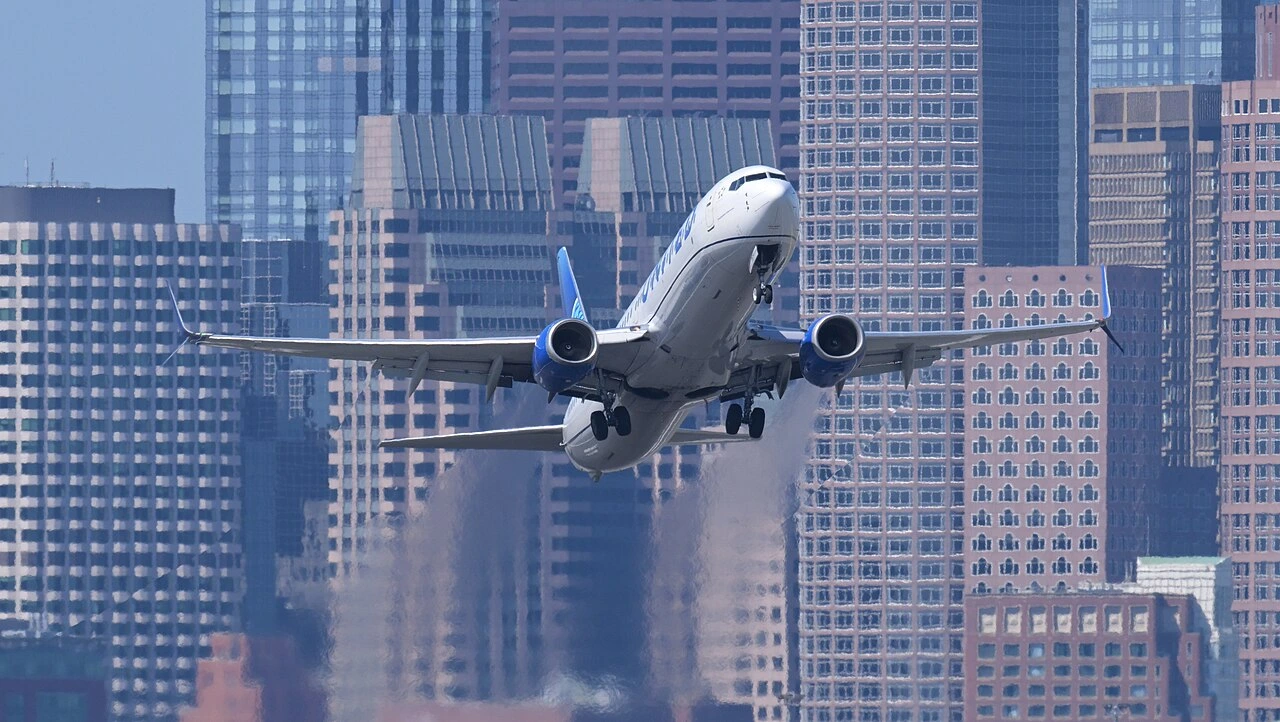
Generation One: The Boeing 737 Original
The Boeing 737-100 did not arrive in the world with the fanfare its legacy would later justify. Boeing launched the programme in 1964 largely in response to competitive pressure from the Douglas DC-9 and the BAC 1-11, and the aircraft that emerged was compact to the point of being ungainly. After all, it was a squat, low-slung twin-jet configured for short-haul city pairs.
Powered by Pratt & Whitney JT8D low-bypass turbofan engines, the 737-100 offered:
- seating for between 85 and 124 passengers
- a cruise speed of Mach 0.73
- A maximum range of 1,720 nautical miles .
The 737-100 first flew on April 9, 1967, and entered commercial service with Lufthansa (LH) in February 1968, making the German flag carrier the type’s launch operator. Lufthansa and Malaysia-Singapore Airlines were among the primary early customers. The variant sold modestly — only 30 aircraft were ever delivered — but its successor proved far more persuasive.
The Boeing 737-200 entered service with United Airlines (UA) in April 1968, offering a lengthened fuselage, a maximum range of 2,645 nautical miles, and certified seating for up to 136 passengers. It sold over 1,000 units across passenger, cargo, corporate, and military variants, including the U.S. Air Force’s T-43 navigation trainer and the Indonesian Air Force’s B737-2×9 Surveiller maritime patrol derivative.
The 737 Original competed in a crowded market against the SE 210 Caravelle, BAC-111, McDonnell Douglas DC-9, and MD-80 derivatives.

Generation Two: The 737 Classic
By the late 1970s, the Original series showed its age against a new generation of fuel-efficient competitors. Airlines demanded lower seat-mile costs, reduced noise signatures, and greater capacity without requiring Boeing to design an entirely new airframe.
Boeing’s answer was the Classic series, launched in March 1981 with joint orders from USAir and Southwest Airlines (WN). The defining technical challenge of the Classic programme was fitting a modern, high-bypass turbofan engine — the CFM International CFM56-3, developed jointly by General Electric and SNECMA — beneath a wing designed in the 1960s for a much smaller powerplant.
The solution Boeing and CFM International devised became one of the most recognisable design signatures in commercial aviation: the CFM56’s fan diameter was minimised, and the engine accessories were relocated to the sides of the nacelle rather than the bottom, producing the distinctive non-circular air intake that still identifies the 737 Classic on any ramp.
| Feature | Boeing 737-300 | Boeing 737-400 | Boeing 737-500 |
|---|---|---|---|
| First Flight | February 24, 1984 | Not specified | Not specified |
| Entry Into Service | November 28, 1984 | September 1988 | 1990 |
| Launch Operator | USAir | Piedmont Airlines | Southwest Airlines |
| Length | Extended by 9 ft 5 in around wing section | 36.45 metres | Smaller airframe footprint |
| Maximum Passenger Capacity | 149 passengers | 188 passengers | 140 passengers |
| Maximum Range | Not specified | 2,800 nautical miles | Longest range in Classic family |
| Main Purpose | Increased capacity and efficiency | High-density short-haul operations | Replacement for Boeing 737-200 |
| Key Features | Added 23 cm winglet extensions | Longest Boeing 737 Classic variant | Suitable for thin and longer-stage routes |
| Production / Deliveries | 1,113 aircraft built | Included in total Classic deliveries | Included in total Classic deliveries |
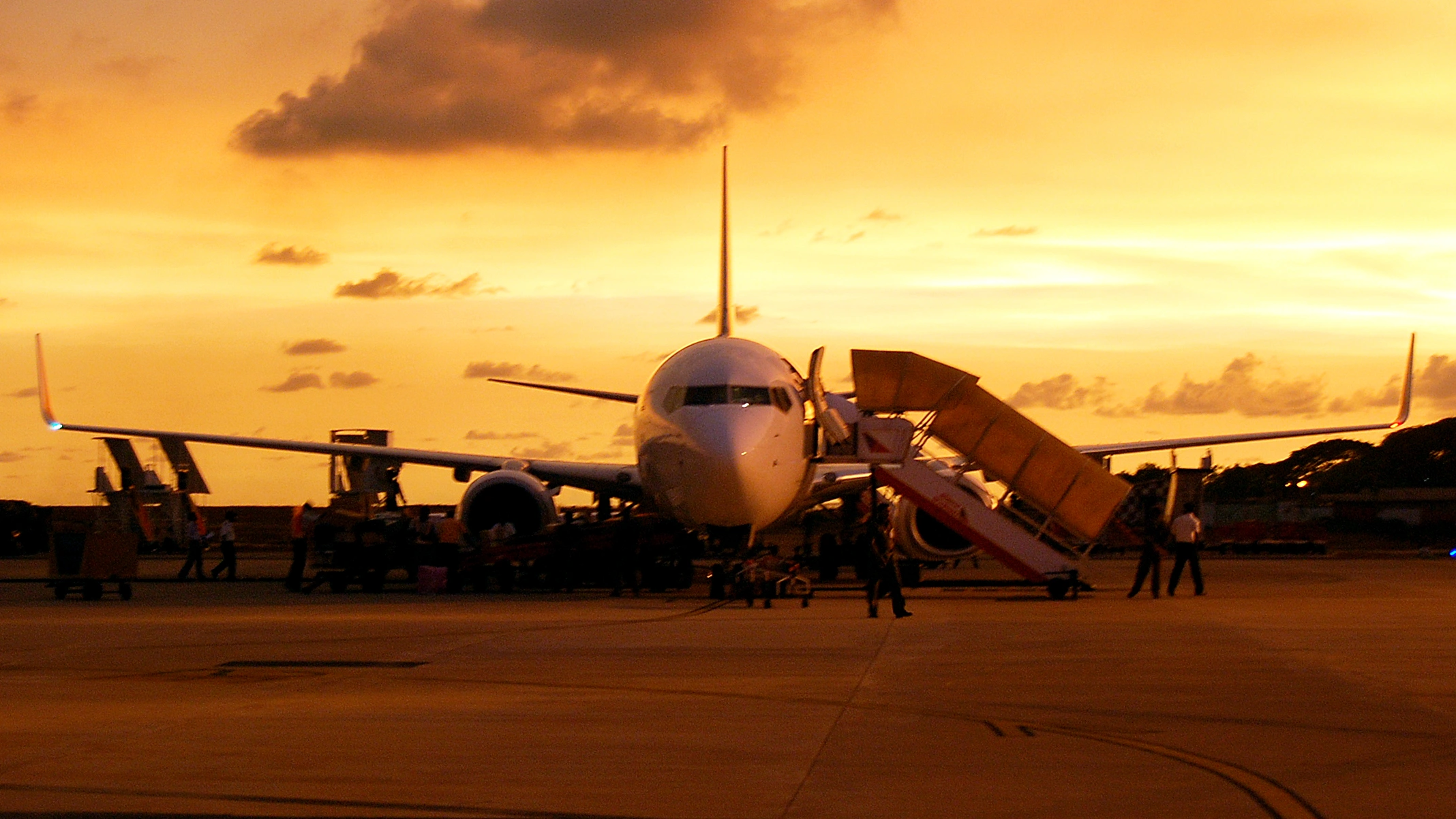
Generation Three: The Next Generation 737
The Next Generation programme was Boeing’s most consequential 737 reinvention. It would also become the most successful. Boeing’s board of directors authorized the NG programme in the early 1990s with a mandate to produce a materially superior aircraft on the same fundamental airframe — one that could neutralize the growing threat of the Airbus A320 family without requiring airlines to retrain their entire pilot corps or restructure their maintenance operations. The result was a near-complete redesign of every system above the fuselage floor.
The 737NG received redesigned wings with increased span and area, upgraded CFM56-7B engines with improved fuel efficiency, greater fuel capacity permitting longer range, a glass cockpit with modern avionics, and new interior configurations. The series includes four variants — the -600, -700, -800, and -900 — and entered service on December 17, 1997, when Southwest Airlines operated the type’s inaugural commercial flight. By 2012, the cumulative Boeing 737 programme had become the first commercial aircraft to surpass 10,000 orders, a milestone driven almost entirely by NG demand.
As of March 2026, a total of 7,121 737NG aircraft had been delivered from a total orderbook of 7,141, with remaining orders limited to two 737-800s and 18 P-8 Poseidon maritime patrol variants for military customers.
The 737-600 was the Variant That Failed to Find Its Market
The Boeing 737-600 was designed as the NG family’s replacement for the 737-500, and it competes directly with the Airbus A318. It is the smallest member of the NG series, with a fuselage length of 31.20 metres and maximum certified seating of 149 passengers.
The -600 struggled to generate orders in a market that increasingly favoured either the larger -700 and -800, or smaller regional jets. It remains the least commercially successful member of the entire NG family by units delivered.
The 737-700 was a Rival of the A319
The Boeing 737-700 replaced the 737-300 and competes directly with the Airbus A319. It accommodates 126 passengers in two-class configuration or 149 in a single-class layout, measures 33.60 metres in length, and offers a maximum range of 4,400 nautical miles — substantially greater than any of its Classic series predecessors. Southwest Airlines was again the launch customer, placing an order for 63 aircraft at entry into service in 1997. The -700 became the backbone of Southwest’s fleet for two decades and the foundation of the Boeing Business Jet (BBJ) corporate aircraft programme.
The 737-800 was the Most Successful Commercial Aircraft Variant in History
The Boeing 737-800 is, by a wide margin, the single most commercially successful aircraft variant ever produced — surpassing even the Airbus A320-200 in total deliveries. With 4,991 commercial deliveries, plus 206 military and 23 corporate examples, the -800 accounts for a total of 5,220 aircraft, making it the most-ordered variant in the entire 737 programme. It seats 175 passengers in a typical single-class layout and can fly 2,935 nautical miles. This a combinationwas suited to both legacy network carriers and the expanding global low-cost carrier model that was consolidating its market position just as the -800 entered service in 1998.
Ryanair (FR) is the world’s largest 737-800 operator, with over 400 active aircraft in its fleet. American Airlines (AA) maintains an active fleet of approximately 303 aircraft of the type, while Southwest Airlines operates around 205. The -800 achieved something rare in commercial aviation: it found a performance sweet spot — capacity, range, and operating economics — that proved applicable across nearly every market segment, from high-frequency European leisure flying to transcontinental domestic operations in the United States.
In 2011, a United Airlines -800 operating from Houston to Chicago became the first U.S. commercial flight powered by a blend of algae-derived biofuel and traditional jet fuel, marking a notable milestone in the broader aviation industry’s movement toward sustainable aviation fuel (SAF).
The 737-900 And 900ER
The Boeing 737-900 and its extended-range 737-900ER variant represent the NG family’s attempt to compete against the Airbus A321. The -900ER, in particular, incorporates additional fuel tanks and a maximum seating capacity of up to 220 passengers in high-density configuration. These are figures that approach the A321neo’s capacity but fall short of its range capability.
Generation Four: The 737 MAX was Boeing’s Best-Seller and Its Worst Crisis
The 737 MAX programme was launched in August 2011 and represented Boeing’s decision to extend the 737 platform into a fourth generation rather than develop a clean-sheet replacement. The commercial logic was compelling: the programme promised airlines lower fuel costs, retained cockpit and maintenance commonality with existing NG fleets, and could be certified quickly on the basis of the 737’s existing type certificate. The engineering logic, however, contained a fatal flaw.
To accommodate the larger CFM International LEAP-1B engines — which offered approximately 15% better fuel efficiency than the CFM56-7B — Boeing relocated the engine nacelles forward and upward on the wing, altering the aircraft’s aerodynamic characteristics.
To compensate for the resulting tendency of the nose to pitch upward at high angles of attack, Boeing introduced the Maneuvering Characteristics Augmentation System (MCAS), an automated flight control feature that pushed the nose down when its angle-of-attack sensors detected a potential stall. MCAS was not disclosed to pilots in the original flight manual.
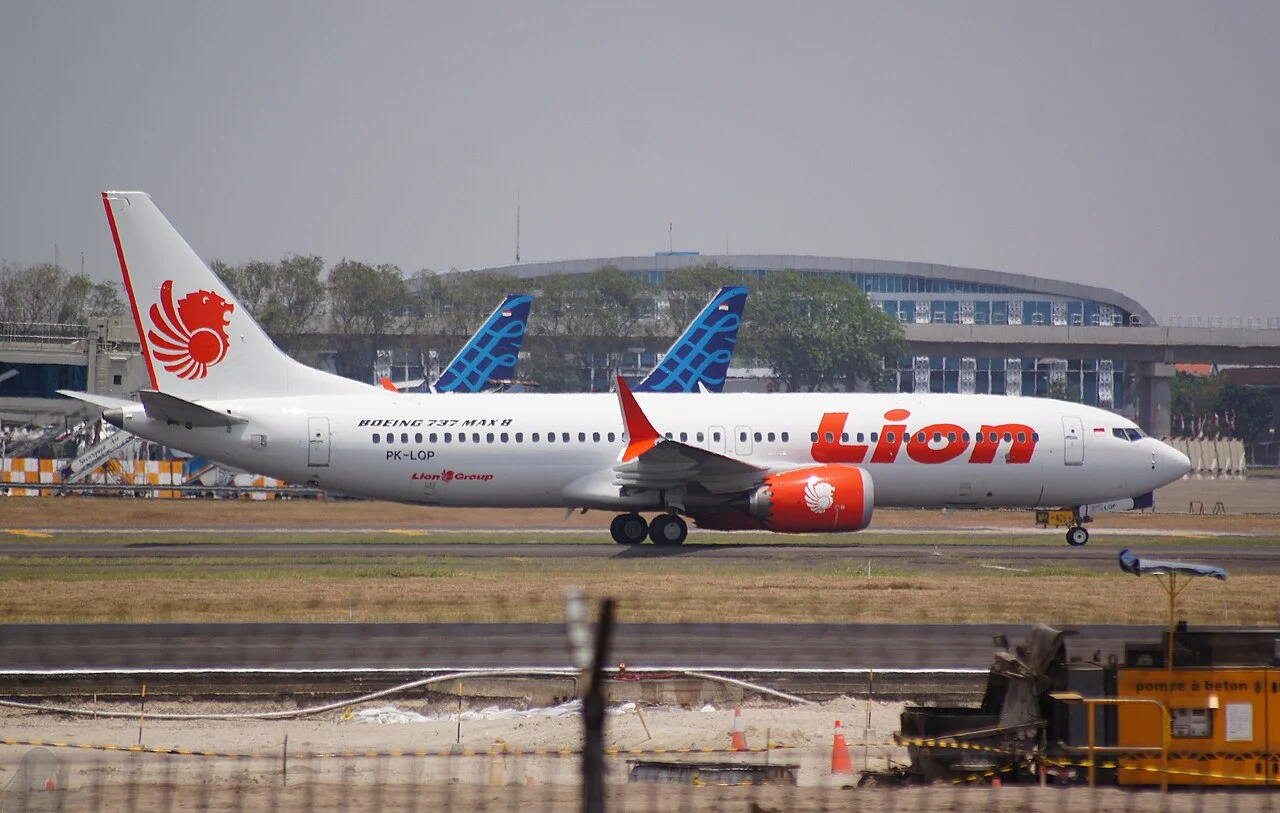
The Lion Air Flight 610 crash on October 29, 2018, killed all 189 people aboard when a faulty angle-of-attack sensor caused MCAS to activate repeatedly, overpowering the crew’s manual attempts to correct the dive.
Ethiopian Airlines Flight 302, another 737 MAX 8, crashed on March 10, 2019, just six minutes after takeoff from Addis Ababa Bole International Airport (ADD), killing all 157 passengers and crew — with investigators concluding that the pilots followed Boeing’s own emergency procedures but still could not overcome the MCAS inputs. The global grounding that followed lasted 21 months. Hundreds of MAX orders were cancelled, Boeing suffered billions in losses, and multiple civil and criminal investigations were launched.
Boeing overhauled the MCAS software — requiring it to draw on data from both angle-of-attack sensors rather than one, limiting the maximum stabiliser input, and making it non-repeating — and the MAX was recertified by the FAA in November 2020. As of March 2026, Boeing has delivered a total of 2,233 MAX aircraft since the programme began, with a MAX family backlog of approximately 4,774 aircraft as of December 2025.
The MAX 7 is The Smallest Variant Still Awaiting Certification
The Boeing 737 MAX 7 is 35.56 metres long and offers a typical seating capacity of 149 passengers with a maximum range of 3,850 nautical miles — greater than any 737 variant that preceded it. It entered service in 2021 and delivers 18% lower fuel costs per seat compared to the 737-700 it replaces. The MAX 7 has not yet received FAA Phase 2 Type Inspection Authorization, highlighting the uneven certification timelines within the MAX family, with Boeing expecting certification alongside the MAX 10 during 2026.
The MAX 8
The Boeing 737 MAX 8 is the first variant and the most commercially dominant member of the MAX family. Powered by CFM LEAP-1B engines and designed for short- to medium-haul routes, it seats 178 passengers in two-class configuration and can fly approximately 4,085 miles.
It is the direct successor to the 737-800 and the variant involved in both the Lion Air and Ethiopian Airlines crashes. Following recertification, the MAX 8 has resumed deliveries and service across dozens of airlines globally. According to an analysis by Simple Flying, the MAX 8 remains the most impactful MAX variant by far, driven by its range improvement over the NG, its fuel efficiency, and the failure of the MAX 10 to reach certification.
The MAX 8-200, or MAX 200, is a high-density configuration of the MAX 8 developed specifically for Ryanair. It accommodates up to 200 passengers by adding additional seating rows and delivers 20% better cost-efficiency per seat and 5% lower operating costs than the standard MAX 8, making it one of the most efficient narrowbody configurations commercially available.
The MAX 9: A Stretched Variant with a Near-Catastrophic 2024 Incident
The Boeing 737 MAX 9 first flew in 2017 and entered service with Lion Air (JT) in 2018. Its fuselage stretches to 41.16 metres with a typical seating capacity of 192 passengers in two-class configuration. In January 2024, an Alaska Airlines (AS) 737 MAX 9 experienced an in-flight door plug failure during cruise, causing rapid decompression and prompting the FAA to ground the MAX 9 fleet pending inspection. The incident led to stricter FAA oversight of Boeing’s production process and contributed to the production cap of 38 aircraft per month that remained in place through late 2025.
Outside the United States, the MAX 9 is predominantly a Western Hemisphere aircraft, with AeroMéxico and Copa Airlines among its largest non-U.S. operators.

The MAX 10: The Largest 737 Ever Built — And Still Uncertified
The Boeing 737 MAX 10 is the most commercially significant uncertified aircraft in the world. At 43.8 metres, it is the longest Boeing 737 ever built and can accommodate up to 230 passengers in a high-density single-class configuration. It incorporates the CFM International LEAP-1B engine, Advanced Technology winglets, and Boeing’s Sky Interior — and, at list price, it competes directly with the Airbus A321neo, which has held a decisive market advantage in the 200-seat narrowbody segment for years.
The MAX 10 logged its first flight in June 2021 and, as of January 2026, entered Phase 2 of its Type Inspection Authorization (TIA) with the FAA — the final stage of certification flight testing — having received approval before Christmas 2025.
Two technical obstacles have driven years of certification delays: an engine inlet anti-ice system issue in which the CFM LEAP-1B’s carbon-composite inlet risks overheating when the anti-ice system is active, and the crew alerting system requirements mandated by Congress following the 2018-2019 crashes. Ryanair CEO Michael O’Leary stated on March 20, 2026, that Boeing expects MAX 10 certification in the third quarter of 2026, with first deliveries to Ryanair in early 2027.
The MAX 10 has accumulated over 1,290 firm orders from customers including:
- United Airlines (UA) with 277
- Ryanair (FR) with 150 plus 150 options
- Alaska Airlines (AS) with 105
- Delta Air Lines (DL) with a position on the orderbook.

.jpg)


_(51723877374).jpg)