United Airlines (UA) is facing widespread in-flight Wi-Fi problems on its Pacific long-haul network, with passengers reporting complete connectivity failures on routes including San Francisco–Singapore, Los Angeles–Hong Kong, and Newark–Paris. According to One Mile at a Time’s Ben Schlappig, United pilots received an internal memo stating that Panasonic Avionics’ satellite network becomes “saturated” during peak Pacific flight periods.
The issue affects United’s Panasonic-equipped widebody fleet, including Boeing 787s, 777s, 767s, and 757s, which operate across the airline’s extensive transpacific network. Limited bandwidth and heavy demand over remote ocean regions appear to be driving the ongoing disruptions.

The timing is acutely uncomfortable for United. The airline has aggressively marketed its SpaceX Starlink partnership as a transformative connectivity upgrade since announcing it in September 2024, yet as of May 2026, Starlink remains installed on approximately 300 aircraft — almost exclusively narrow-body regional jets and Boeing 737s — while the widebody fleet that flies the Pacific routes experiencing these failures remains entirely dependent on the deteriorating Panasonic GEO network.
United’s own VP of Digital Technology Grant Milstead confirmed in February 2026 that more than 500 mainline aircraft would receive Starlink by end of 2026, and Chief Commercial Officer Andrew Nocella confirmed on United’s earnings call that widebody completion is expected sometime in 2027 — a timeline that leaves passengers on 17-hour trans-Pacific flights without functional connectivity for up to 19 additional months.
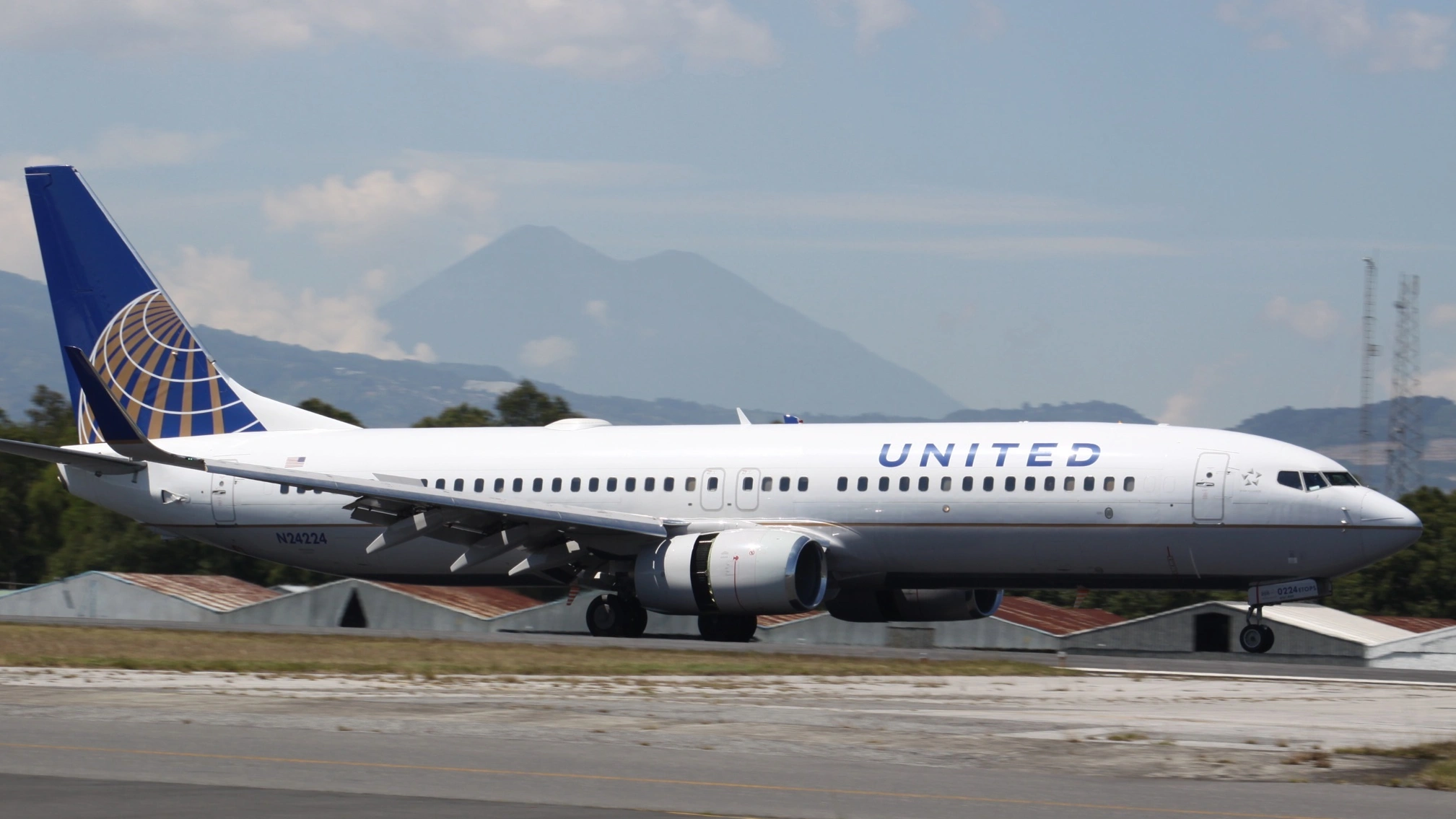
What Pilots Were Told About the Panasonic Saturation Memo
The internal communication to United pilots represents a significant moment of institutional transparency — and confirms that the Wi-Fi failures passengers have experienced are systemic rather than isolated. Aviation industry insider JonNYC, citing a source on X (formerly Twitter), described the memo as an explicit acknowledgment from the airline’s operations centre that Panasonic’s satellite network was experiencing bandwidth saturation, particularly during peak Pacific crossing hours.
The Pacific is uniquely demanding for GEO satellite connectivity because eastbound and westbound flights across the ocean concentrate enormous numbers of connected aircraft in the same geographic satellite coverage zone simultaneously — during morning departures from Asia and evening departures from North America, the aircraft density within a single Ku-band satellite beam peaks dramatically.
JonNYC also definitively quashed a circulating theory that United had deliberately terminated its Panasonic contract ahead of the Starlink transition. The source was quoted directly as having said:
“This is 100% unequivocally false. United’s contract with Panasonic remains in force and will on an indefinite basis, since there are many aircraft which won’t get Starlink.”
The confirmation matters because it reframes the outage not as a contractual or commercial decision — which would have an identifiable resolution date — but as a capacity constraint within Panasonic’s existing satellite infrastructure, whose resolution depends entirely on Panasonic’s ability to add bandwidth over the Pacific, not on United’s procurement decisions. One Mile at a Time noted that the issue appears to affect multiple aircraft types simultaneously, including the 787, 767, 777, and 757. This essentially rules out any single aircraft’s antenna configuration as the cause.
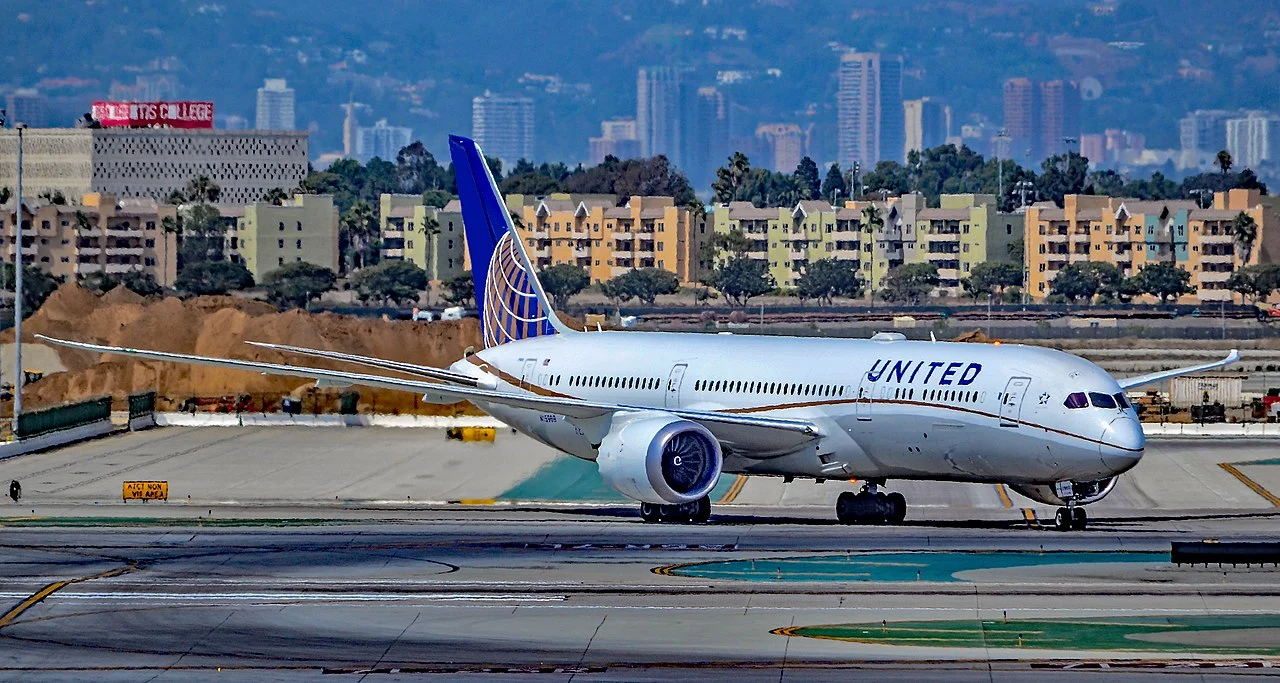
Why GEO Satellites Struggle Over the Pacific
Understanding the Panasonic saturation problem requires understanding the fundamental architecture difference between the legacy GEO Ku-band satellite network and the LEO constellation that Starlink is replacing it with. Panasonic Avionics operates a Ku-band GEO satellite network — geostationary satellites that orbit at approximately 35,786 kilometres above Earth, fixed in position relative to the surface below.
A single GEO satellite covers a wide geographic area, but that coverage beam has a fixed and finite bandwidth that must be shared among all the aircraft within that footprint simultaneously. Aerospace Global News’ Ookla-cited analysis confirms that a GEO satellite is more than 3,000 times higher in altitude than an aircraft flying at 35,000 feet, a physical distance that imposes a minimum round-trip latency of approximately 480 milliseconds — and dramatically limits the throughput available per aircraft as beam occupancy rises.
Panasonic announced a 50 percent global capacity increase through new HTS (High Throughput Satellites) and XTS (Extreme Throughput Satellites) in August 2023, per Aviation Today, including additional HTS capacity specifically over China and Japan. That expansion targeted speeds of up to 75 Mbps per aircraft via HTS and 200 Mbps via XTS.
However, the capacity expansion was geographically weighted toward the Americas, North Atlantic, Europe, the Middle East, and the Indian Ocean — not the central and North Pacific, which represents the most concentrated long-haul bandwidth demand zone in Panasonic’s entire network.

United’s Starlink Delay Leaves Pacific Passengers Waiting
United’s Starlink deployment is progressing at what the airline itself describes as an unprecedented speed and scale — but the widebody gap is substantial and the Pacific specifically will be last in line. Simple Flying confirmed that United began Starlink installations on Boeing 737-800s in October 2025 from Newark to Houston, with narrowbody rollout proceeding at 15 aircraft per month.
By February 2026, United confirmed Starlink installations on over 300 aircraft, almost all regional jets and narrow body mainline types, with more than seven million passengers having used the service across 129,000 flights. The target of 800 aircraft by end of 2026 encompasses primarily narrowbodies and A321 family jets — not the widebody fleet flying trans-Pacific.
The Boeing 777 specifically is still awaiting FAA Supplemental Type Certificate (STC) approval for Starlink installation, per The Points Guy’s February 2026 report, alongside the 737-900ER and Airbus A321 family. The FAA STC process requires individual certification for each aircraft type — a regulatory sequencing that means the 777 widebody cannot receive Starlink until its type-specific approval is granted, regardless of how fast the hardware is available.
According to Aviation Week, United is targeting widebody Starlink completion by end of 2027, with roughly half of mainline aircraft expected by end of 2026. A passenger boarding a 777 on a SFO–SIN service in May 2026 and a passenger boarding that same route in December 2027 face a radically different connectivity experience with no improvement available in the interim beyond hoping the Panasonic satellite overhead is not overloaded that day.
What Passengers Can Do and What United Should Explain
Passengers can check whether their specific flight is assigned a Starlink-equipped aircraft via united.com’s flight status page, which displays a Starlink banner for confirmed equipped flights — though as of May 2026, no trans-Pacific widebody flights carry that designation.
United’s MileagePlus members can receive Wi-Fi day passes for USD 8 or 1,600 miles on most flights, with a monthly subscription available for USD 49.



.jpg)
.jpg)
.jpg)
