Nepal’s Karnali Province, which has been regarded as the nation’s most geographically isolated and least-developed administrative region, is enduring a severe aviation breakdown in 2026 as Tara Air (T), Nepal Airlines Corporation (RA), Summit Air (GG), Sita Air (ST), and Yeti Airlines (YT) collectively canceled more than 40 domestic flights within a 72-hour window, stranding critically ill patients, grounding adventure tourists, and exposing a systemic failure in the country’s remote connectivity infrastructure Nomad Lawyer reported.
The crisis has produced a documented fatality. On April 8, 2026, doctors referred 71-year-old Kal Bahadur Adhikari from Hima Rural Municipality-6 in Jumla to Nepalgunj Airport for prostate surgery after Karnali Academy of Health Sciences Teaching Hospital could not provide adequate treatment. His family waited all day for a scheduled flight that never arrived. They later arranged an emergency ambulance, but the vehicle crashed in Khadachakra Municipality-2 of Kalikot, killing Adhikari’s son, Bhim Bahadur, 32, and the driver, Shakti Bahadur Shahi, 26. Adhikari also suffered injuries. Speaking to The Kathmandu Post, he said, “If the plane had arrived that day, my treatment would have been easier. Instead, I lost my son.”
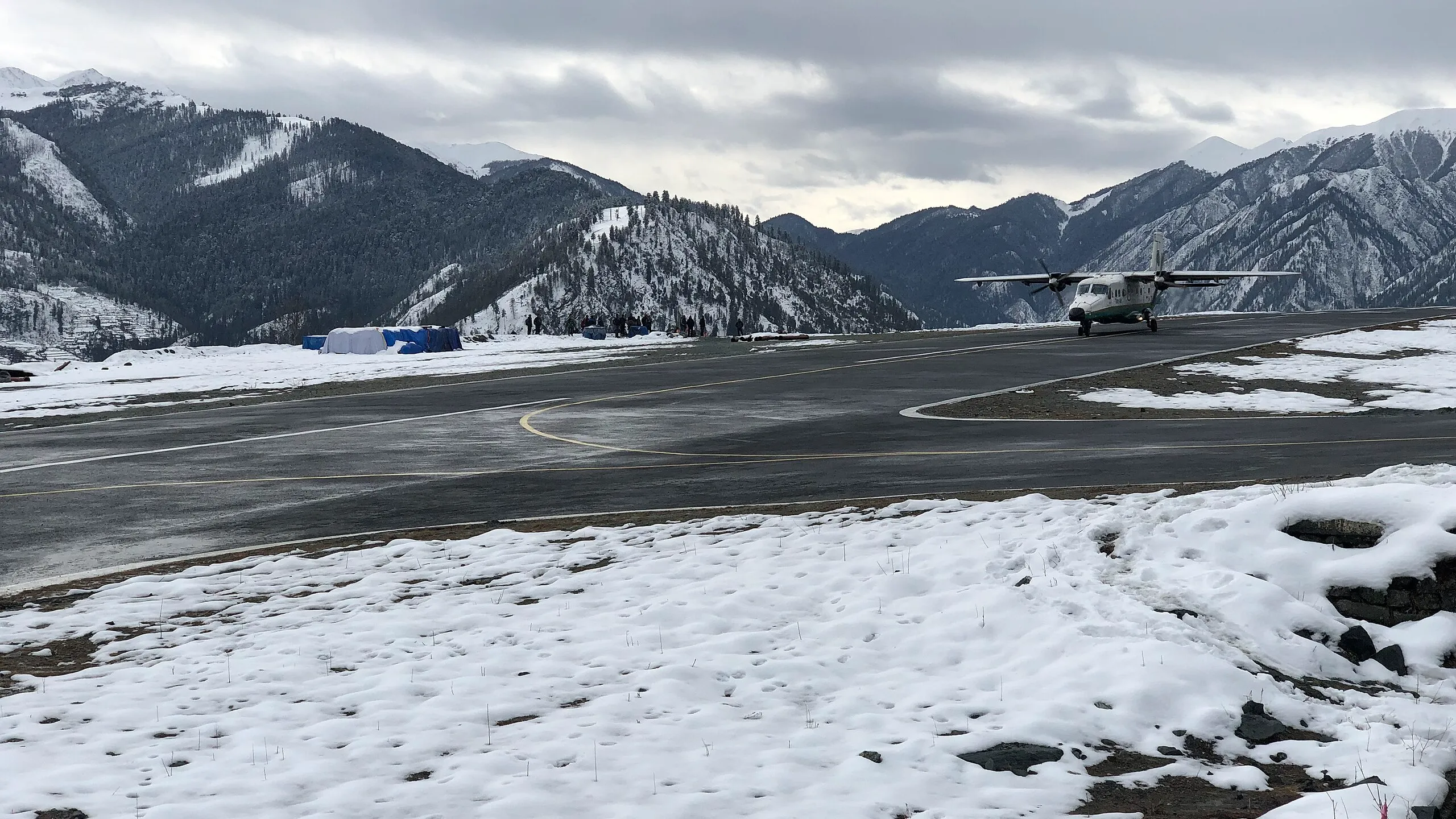
Photo: Tannu 01 | Wikimedia Commons
Weather, Aging Fleets, And Route Overloading in Karnali
The flight disruptions afflicting Karnali in 2026 do not derive from a single cause. High-altitude winds that especially affect Short Take-Off and Landing (STOL) airports remain the most frequently cited immediate trigger. Strong winds, low cloud ceilings, and poor visibility regularly reduce the operational window at remote STOL strips to a few usable morning hours, leaving little margin for recovery when any single flight runs late.
Nepal Airlines Corporation presents the starkest illustration of fleet-driven fragility. As confirmed by the Kathmandu Post, the carrier operates just two De Havilland Canada DHC-6 Twin Otter aircraft for all domestic STOL services — one deployed from Kathmandu serving eastern mountain districts, and one based at Nepalgunj serving the entirety of Karnali.
That Nepalgunj-based Twin Otter departs Kathmandu on Sunday mornings and returns to the capital on Friday evenings, meaning it must complete approximately 40 flights in six operational days across destinations including Jumla (JUM), Simikot (IMK), Dolpa (DOP), Talcha (THL), Bajura, and Rukum West.
Yamaraj Singh, the Nepal Airlines station chief in Nepalgunj, stated how the work horse of the carrier might be worked up too much:
“The aircraft has a very demanding schedule. In six days, it is expected to operate nearly 40 flights. Technical problems and bad weather often affect operations.”
Travel agent Amar Raj Pun, speaking to the Kathmandu Post, offered a pointed commercial diagnosis: Nepal Airlines has “overloaded a single aircraft with too many destinations.” The aircraft had also remained grounded for an extended period prior to its return to service after repairs.
Private carriers face a parallel but structurally different challenge: Tara Air and Summit Air operate small fleets of Twin Otter DHC-6 and Dornier 228 aircraft, but these are concentrated on higher-yield tourist routes such as Lukla, which has gained notoriety following its moniker of being the most dangerous airport in the world. This reduces the number of flights available to Karnali even during peak demand.
Patients Turned Away, Medical Evacuations Delayed
Karnali province’s topography makes road-based medical transfer inherently dangerous — the Karnali Highway, the 232-kilometre artery connecting remote districts, is narrow, subject to monsoon damage, and prone to landslides. One local resident, Neupane, described conditions that force a stark choice:
“Even light rain causes vehicles to stop or leaves them stuck in mud. If one vehicle breaks down, traffic can remain blocked for hours. The blacktopped road built five years ago has already peeled away, so even winter travel becomes dusty and difficult.”
The consequences for patients are immediate. According to the Kathmandu Post, Sabee Kami, a 21-year-old from Chandannath Municipality-8 in Jumla, was admitted to the Karnali Academy teaching hospital after developing heart, chest, and lung complications. Doctors advised her family to transport her to Nepalgunj with oxygen support by air. The scheduled Wednesday service did not operate.
Her brother, Binod Kami, stated: “The doctors here had already referred her, but the flight was cancelled. We had to return to the hospital again.” Durga Rawat of Tila Rural Municipality-8 in Jumla faced a comparable predicament when chronic gastritis failed to respond to local treatment and the flight that would have taken her to Nepalgunj for further care did not materialise.
Healthcare officials at Karnali Academy have raised concerns that patients requiring oxygen support during transit are among those most dangerously exposed when flights cancel. As Travel and Tour World reported, medical professionals note that such incidents are becoming increasingly common because patients referred to advanced hospitals frequently fail to secure timely flights. The structural absence of a guaranteed minimum service obligation means that the burden of each disruption falls entirely on families.
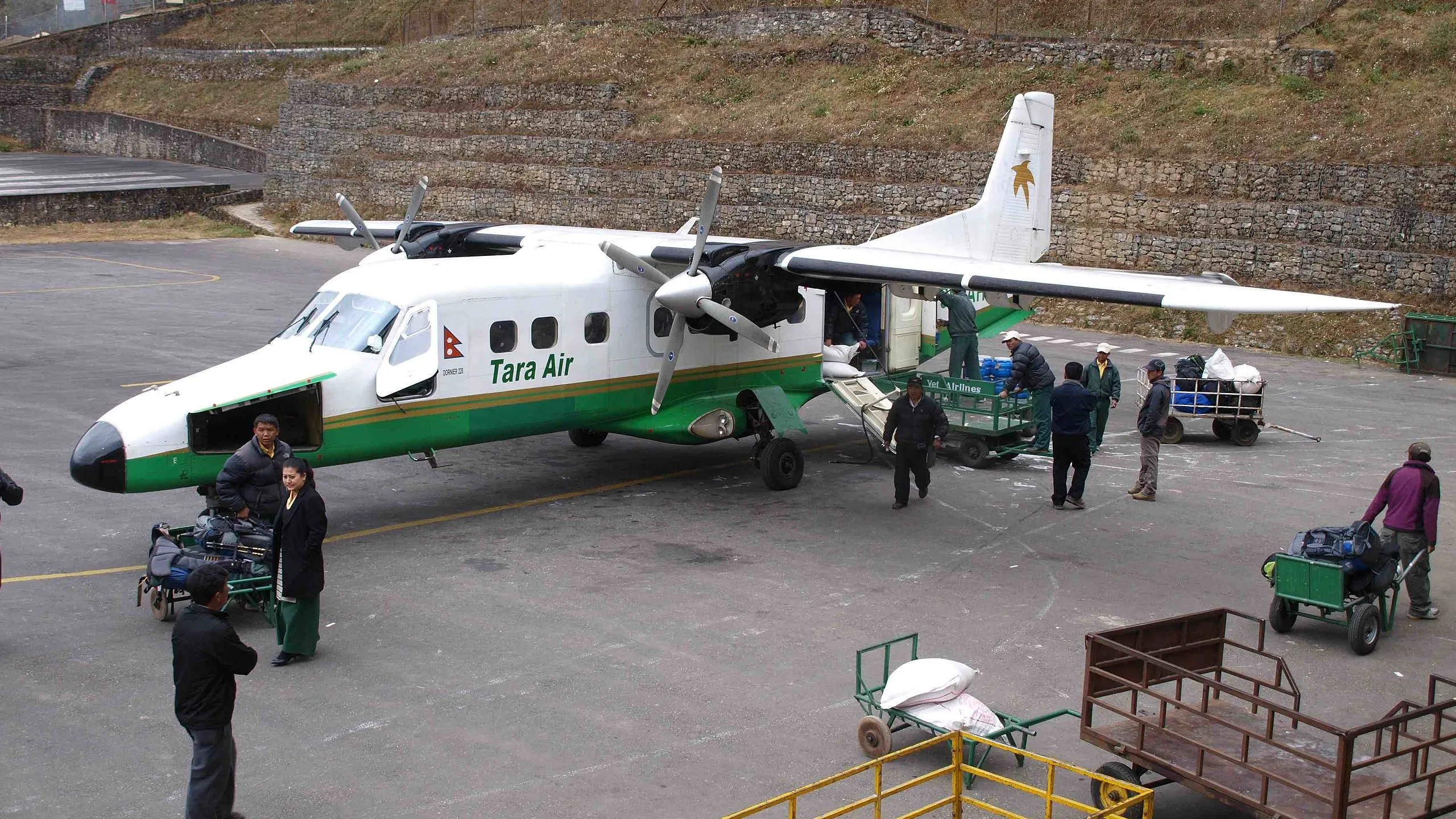
Tara Air’s Has Suspended Surkhet Operations
The current crisis did not arise without warning. In March 2025, Tara Air suspended its regular flights from Surkhet Airport to the mountainous Karnali districts of Mugu, Humla, and Jumla just three months after Karnali Province Minister for Industry, Tourism, Forests, and Environment Suresh Adhikari inaugurated the routes on December 4, 2024.
Himali Travels and Tours, which operated the service in partnership with Tara Air, said the company incurred continuous financial losses on every flight and did not receive the logistical and financial support promised by the Karnali Provincial Government during the launch. Min Bahadur Rawal of Himali Travels and Tours said, “We started operating regular flights twice a week in the three districts under the agreement, but we later shut down the service because the required support never arrived.”
The Himalayan Times confirmed that the suspension forced all Karnali-bound travelers to reroute through Nepalgunj Airport in Banke district — adding a time and cost burden that falls disproportionately on patients, subsistence farmers, and low-income households. New Business Age further noted that Nepal Airlines, the state-owned carrier, neither operates flights from Surkhet nor maintains an office in Karnali Province at all — meaning the province’s capital effectively lost its only point of scheduled air departure when Tara Air withdrew.
The Traveler reported that media coverage of late January 2026 snowfall in Mugu — which triggered simultaneous road blockages along the Karnali Highway and prolonged disruptions to local air services — had already foreshadowed how quickly the province’s mobility collapses when multiple transport modes fail concurrently.