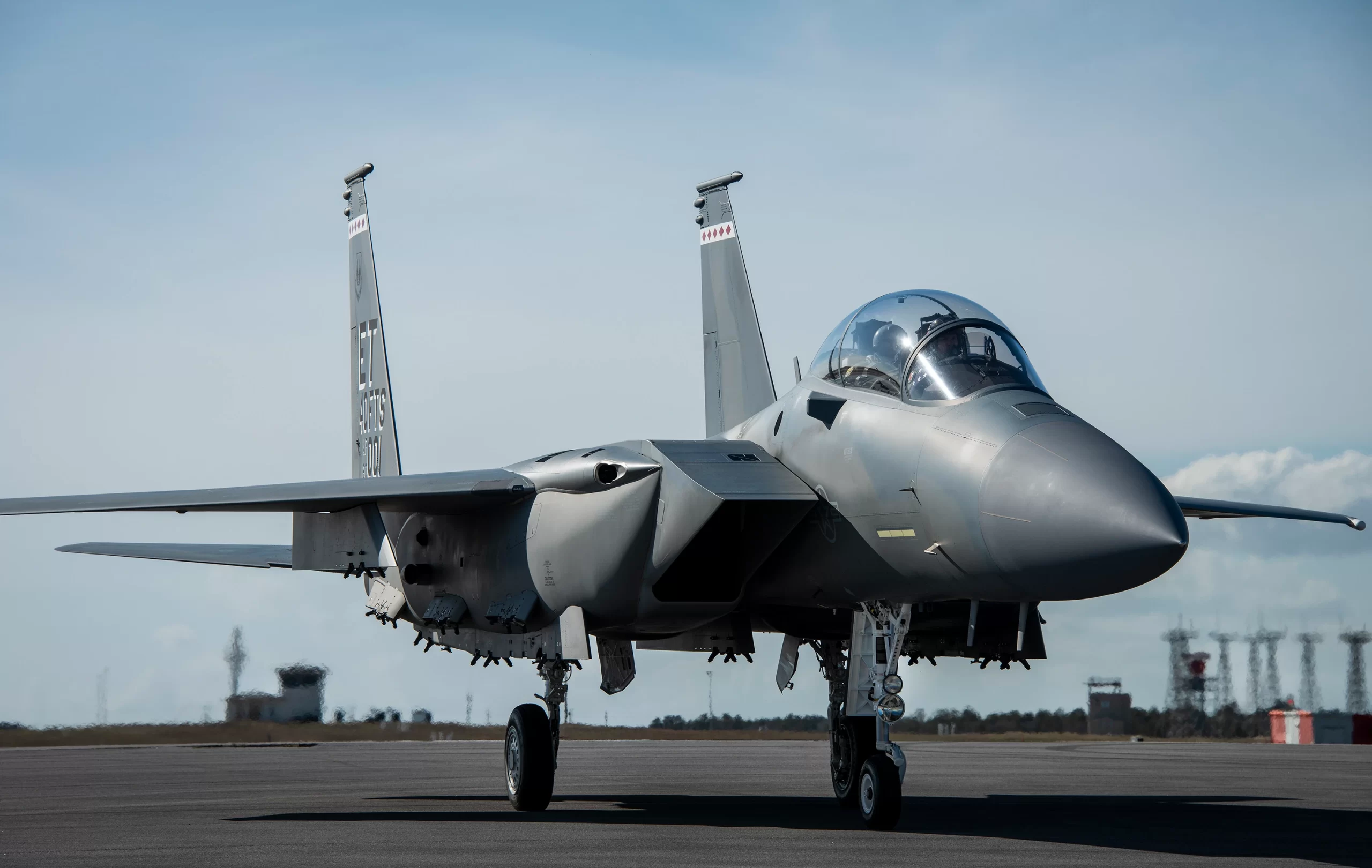
The United States Air Force (USAF) has unveiled plans to significantly expand its Boeing F-15EX Eagle II fleet as part of the Pentagon’s proposed fiscal 2027 defense budget. The service now aims to acquire 267 F-15EX fighters, more than doubling its previous target of 129 aircraft, AeroTime reported.
The proposal was included in the US Department of Defense’s $1.5 trillion fiscal 2027 budget request announced in April 2026. The expanded procurement plan positions the F-15EX alongside the Lockheed Martin F-35A Lightning II as a central component of the Air Force’s future combat structure. Boeing builds the aircraft in St. Louis, Missouri, while the type is expected to support missions ranging from homeland defense to Indo-Pacific operations.
[Note that USAF lost its F-15 during its war in Iran]
United States Air Force’s Budget Priorities
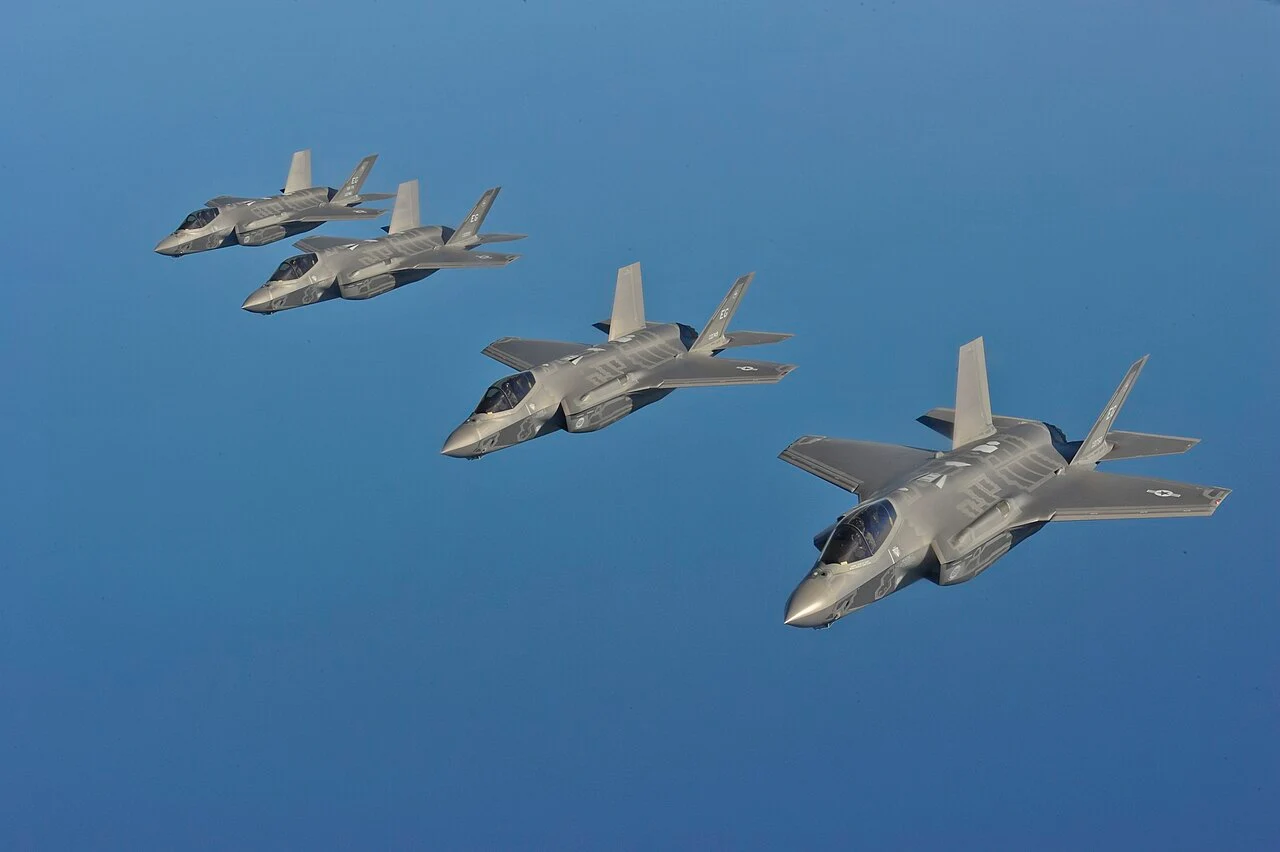
The Air Force’s fiscal 2027 request allocates approximately $3 billion for 24 new F-15EX fighters. The same proposal also includes $7.4 billion for 38 F-35 fighters, $3.2 billion for the B-21 Raider bomber, $3.9 billion for 15 KC-46A Pegasus tankers, and $1.1 billion for Collaborative Combat Aircraft programs.
The White House said the proposed defense package would increase military spending by $441 billion, or roughly 44%, compared with fiscal 2026 levels. If approved by Congress, the funding would represent one of the largest defense spending increases in recent US history.
Air Force officials stated during an April 21, 2026 budget briefing that the service requires both the stealth-focused F-35A and the heavily armed F-15EX because the aircraft perform complementary roles. While the F-35A is optimized for penetrating contested airspace, the F-15EX offers greater payload capacity and extended operational flexibility.
The latest procurement target marks another major shift for the Eagle II program. Earlier Air Force plans fluctuated several times, initially discussing up to 144 aircraft before reducing the requirement to 80. The projected fleet later increased to 104 and then 129 before reaching the current 267-aircraft proposal.
The F-15 Has an Expanding Mission
The F-15EX is the newest evolution of the long-running F-15 fighter family, which first entered US Air Force service in the 1970s. The aircraft incorporates fly-by-wire flight controls, upgraded avionics, advanced mission systems, and modern electronic warfare capabilities.
F-15EX Eagle II Specifications
| Category | Specification |
|---|---|
| Manufacturer | Boeing |
| Role | Multirole Fighter (Air Superiority / Strike) |
| Crew | 1–2 (Pilot + Weapon Systems Officer) |
| Length | 63.8 ft (19.4 m) |
| Wingspan | 42.8 ft (13 m) |
| Height | 18.5 ft (5.6 m) |
| Max Takeoff Weight | ~81,000 lb (36,700 kg) |
| Engines | 2 × F110 or F100 turbofan engines |
| Maximum Speed | ~Mach 2.5 |
| Service Ceiling | ~50,000 ft (15,240 m) |
| Combat Range | ~1,270 km |
| Maximum Payload | ~29,500 lb (13,300 kg) |
| Hardpoints | 11+ |
| Missile Capacity | Up to 12 × AMRAAMs |
| Radar | AN/APG-82 AESA radar |
| Electronic Warfare | EPAWSS suite |
| Cockpit | Advanced digital glass cockpit |
| Flight Controls | Fly-by-wire system |
| Special Capability | Hypersonic weapon compatibility |
| Architecture | Open Mission Systems (OMS) |
Unlike fifth-generation stealth fighters, the F-15EX is designed around carrying large quantities of weapons over long distances. Analysts believe the aircraft could become particularly important in the Indo-Pacific region, where long-range strike capability and missile capacity are increasingly critical.
The Air Force originally intended the F-15EX mainly as a replacement for aging F-15C and F-15D fighters, many of which have served since the 1980s. However, the larger procurement plan may now allow the service to begin replacing portions of its F-15E Strike Eagle fleet as well.
According to an official who was quoted in Air and Space Forces magazine that there is a “special need” for a platform as the F-15EX:
“There are fundamental differences in what we’re looking for in a platform like the F-15EX, as compared to other advanced fifth-generation and sixth-generation fighters..And when you break down the specifics of what that airplane can do, in its specific carriage capability, is the number of [weapons] rails that it has, and its role in the Pacific theater, there is a specific need for it. It’s about a balanced portfolio in order to meet combatant command and joint service requirements.”
Defense officials have repeatedly emphasized that the Eagle II is not intended to replace stealth aircraft. Instead, it is expected to operate alongside platforms such as the F-35A and future unmanned Collaborative Combat Aircraft, creating a mixed-force structure that combines survivability, range, and firepower.
The aircraft’s large payload capacity has become one of its defining advantages. The F-15EX can carry significantly more missiles and heavier ordnance than stealth fighters, making it suitable for air defense, maritime strike, and long-range escort missions. Some of the features of the F-15EX include:
- Digital fly‑by‑wire controls
- All‑glass cockpit
- modern mission systems and software
- open mission systems architecture
- Advanced AESA radar and the EPAWSS electronic‑warfare suite
According to Boeing, the F-15EX’s payload capacity of 29,500 pounds (13,300 kilograms) helps it affordable massed effects at extended ranges to counter rapidly evolving threats.
Congressional Approval for the Proposal
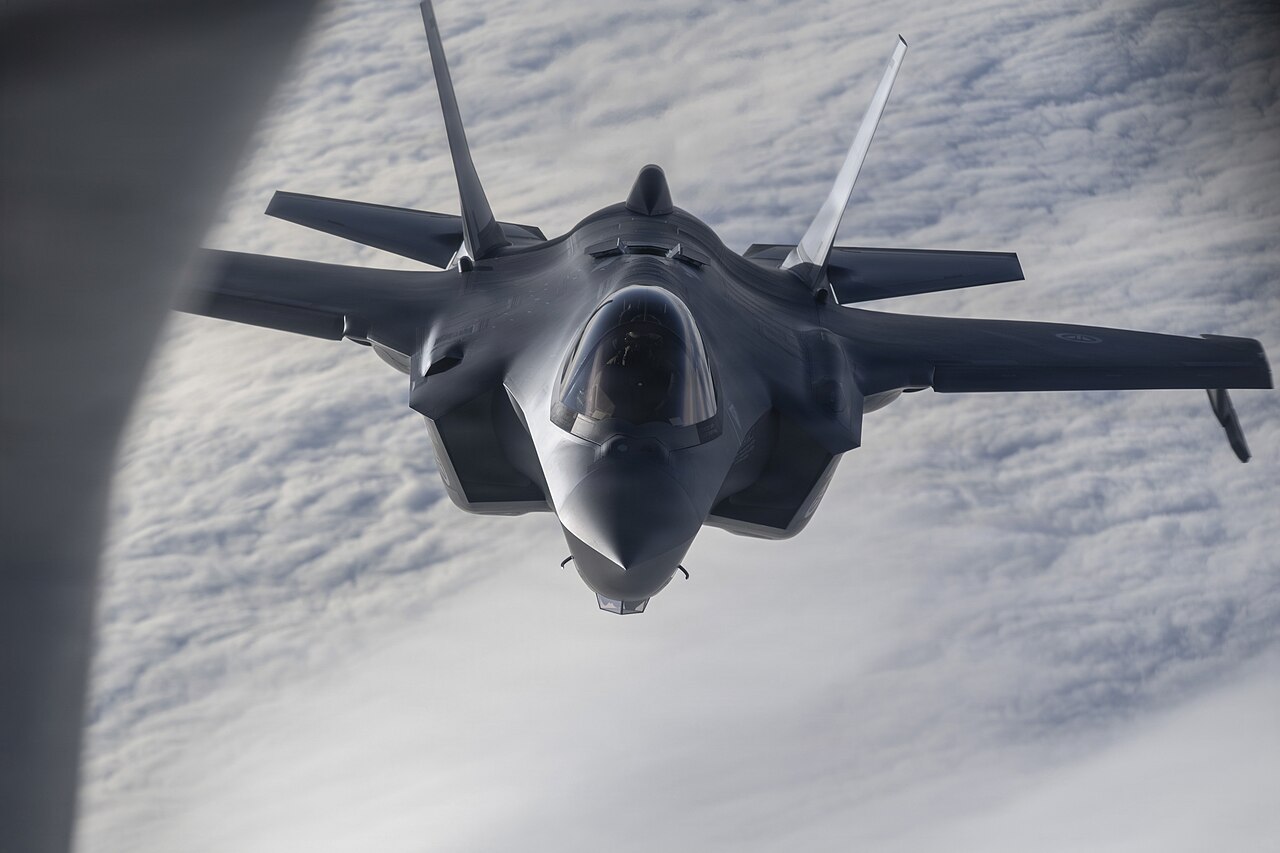
Despite the ambitious expansion plan, the proposal still requires congressional approval before additional aircraft can be funded and procured. Future procurement numbers may ultimately depend on annual appropriations and broader political negotiations surrounding the defense budget.
The expanded fleet proposal also arrives as Boeing seeks to strengthen its position in the US military aviation market. The company has faced growing competition from Lockheed Martin’s F-35 program, which continues to dominate fighter procurement across the US and allied air forces.




.jpg)