Kathmandu’s Tribhuvan International Airport (KTM) will suspend flight operations for nearly seven hours each night from April 20 through May 18, the airport authority confirmed on Monday, My Republica reported. The restriction, implemented through a Notice to Airmen (NOTAM), immediately reduces the airport’s daily operational window. This comes days after carriers in Nepal were said to be in “Survival mode” given the number of decreased number of flights in Nepal due to airfare hikes.
Airport officials stated that the revised schedule took effect from Monday night and will continue without interruption until mid-May. The measure compels all airlines operating into Kathmandu to reconfigure schedules, particularly affecting late-night and early-morning services.
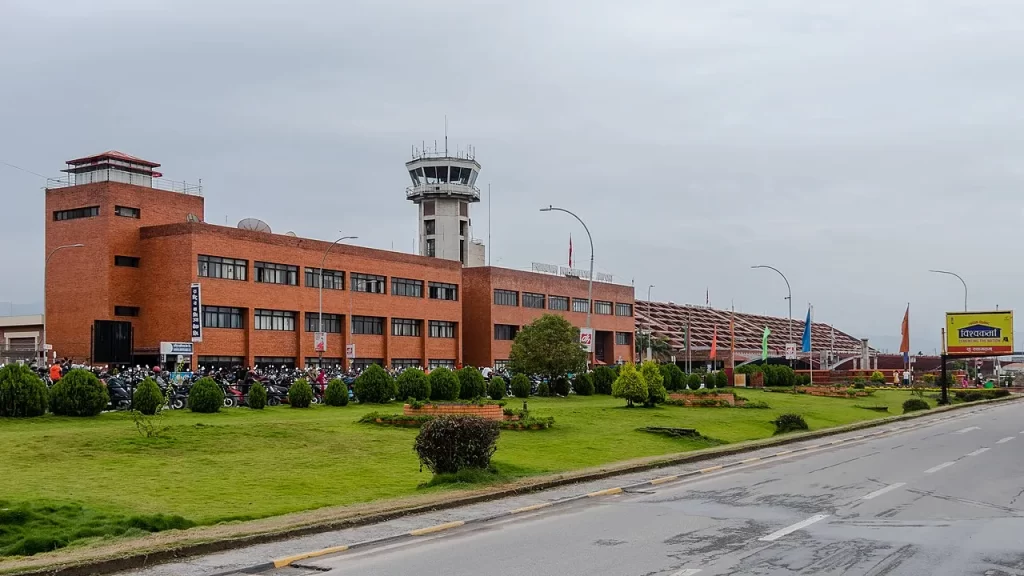

Tribhuvan International Airport (KTM) Night Closure Schedule
The airport authority replaced the previous operational pattern that permitted flights until 01:00 local time. Under the revised arrangement, KTM will remain closed for a continuous nightly window of approximately seven hours. Here’s a look at the airport:
| Attribute | Details |
|---|---|
| Airport Name | Tribhuvan International Airport |
| IATA Code | KTM |
| ICAO Code | VNKT |
| Location | Kathmandu, Nepal |
| Elevation | 4,390 ft (1,338 m) |
| Operator | Civil Aviation Authority of Nepal |
| Hub for | Nepal Airlines, Buddha Air |
| Runway Length | 3,050 m (10,007 ft) |
| Runway Surface | Asphalt |
| Type | Public / Military |
| Time Zone | UTC +5:45 |
Officials have not publicly detailed the exact closure interval in the initial communication. However, they emphasized that the restriction applies uniformly each night throughout the specified period.
Airlines have already begun adjusting departure banks and arrival waves. The changes are expected to compress traffic into narrower daytime operating hours, increasing reliance on precise slot coordination. This author has noted that even in domestic flights over the Nepalese airspace, carriers have had to be in a holding pattern because of the heavy traffic at Tribhuvan International Airport.

-070A2336.jpg)
NOTAM Impact on Airline Scheduling and Fleet Utilization in Kathmandu
The NOTAM obliges immediate compliance from both domestic and international carriers. Airlines must recalibrate rotations, crew duty times, and aircraft utilization to align with the reduced operational window. While the FAA had issued a NOTAM over Latin America recently due to tensions in Venezuela, Nepal had not seen advisory in recent times.
Carriers operating short-haul regional routes into KTM face particular constraints, as turnaround flexibility diminishes. Narrow-body operators, which dominate Kathmandu’s international traffic, may need to re-time services or temporarily reduce frequencies.
Aviation analysts note that such extended nightly closures typically disrupt network integrity. Missed connections and tighter scheduling buffers could cascade across airline systems, especially for carriers linking Kathmandu with major Asian hubs.


Passenger Disruption and Daytime Congestion Risks at TIA
The curtailed schedule is likely to affect passenger itineraries across both point-to-point and connecting traffic. Airlines may consolidate flights into peak daytime periods, intensifying congestion at terminals and on the apron.
Passengers have been advised to reconfirm flight timings with their respective carriers. While authorities have issued the operational notice, they have not announced additional passenger facilitation measures alongside the closure.
Industry observers expect increased pressure on check-in counters, security screening, and baggage handling during peak hours. The redistribution of flights may also reduce schedule flexibility for travelers.
Some of the reasons why NOTAMs might be issued over certain airspaces include:
| Reason Category | Description |
|---|---|
| Airspace Hazards | Airshows, parachute jumps, glider or microlight flying activities |
| VIP Movements | Flights involving heads of state or other high-profile individuals |
| Airport Closures | Closed runways, taxiways, or other airport infrastructure |
| Navigation Failures | Unserviceable radio navigational aids |
| Military Activity | Military exercises leading to airspace restrictions |
| Obstruction Lighting Issues | Unserviceable lights on tall structures |
| Temporary Obstacles | Cranes or other temporary structures near airfields |

Infrastructure Constraints and Rationale Behind Kathmandu’s Airspace Closure
KTM, Nepal’s primary international gateway, operates under significant infrastructure limitations. The single-runway configuration and constrained apron capacity leave limited margin for simultaneous operations and maintenance activities.
Although the airport office has not explicitly cited the reason for the current closure, similar NOTAMs in the past have coincided with runway maintenance, resurfacing, or airside upgrades. Such interventions are often scheduled during night hours to minimize daytime disruption.
The chief of the Tribhuvan Airport’s Terminal Management Division, Induraj Adhikari, said that all takeoffs and landings will be suspended from 11:45 pm to 6:30 am “to allow for pavement construction work”, reported Khabarhub.
Construction is currently underway on the taxiway adjacent to the runway, and the nightly closure has been implemented primarily for safety reasons. In a public notice, the airport office stated that the temporary shutdown aims to expedite ongoing upgrades.