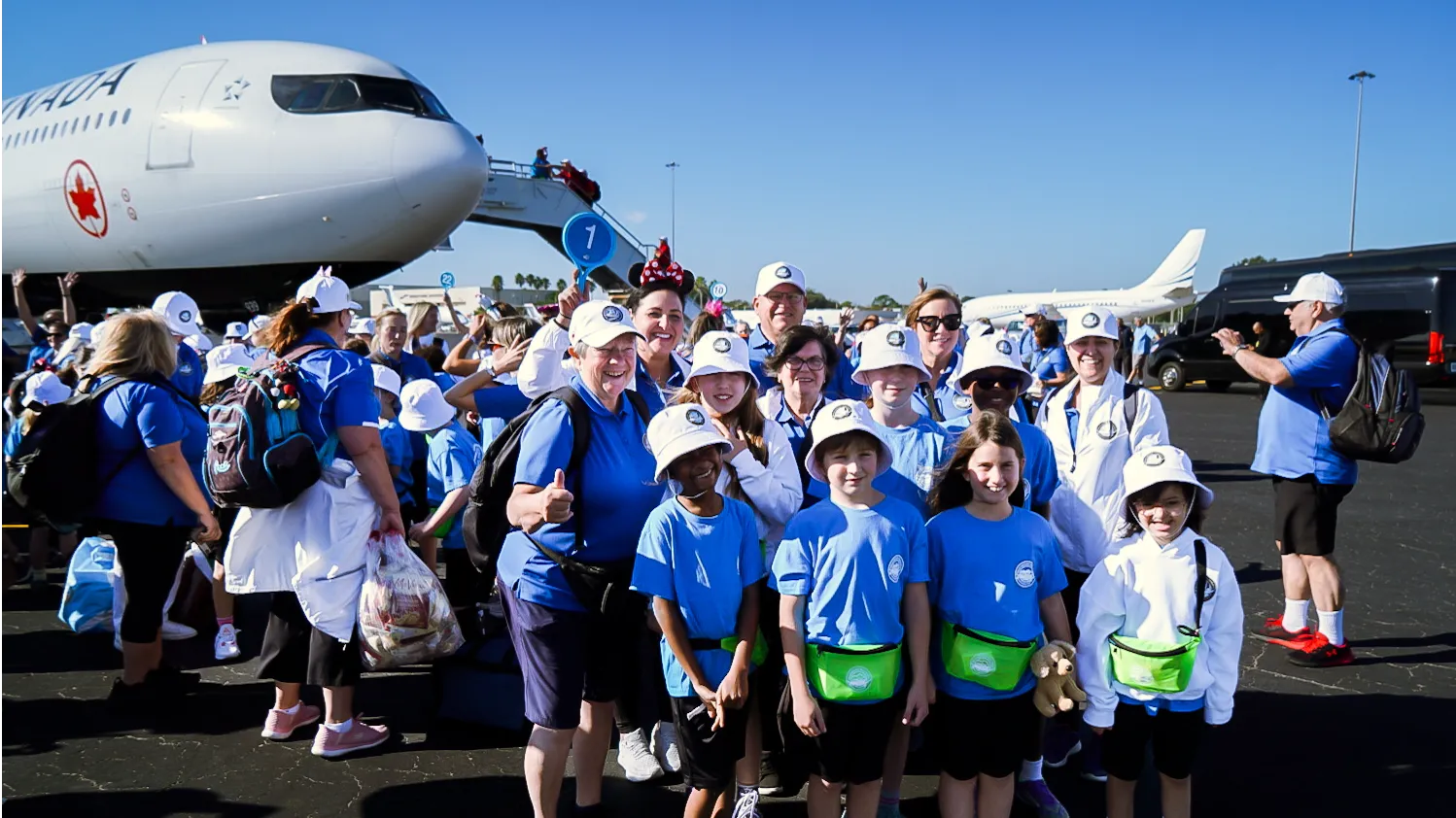
Air Canada’s (AC) customer service agents — represented by Unifor Local 2002 — may initiate strike action in early 2026 if contract negotiations with the airline fail, potentially disrupting operations at major Canadian airports including Toronto Pearson International Airport (YYZ), Vancouver International Airport (YVR), and Montréal–Trudeau International Airport (YUL), reported Vancouver is Awesome. The existing collective agreement expires February 28, 2026, and without a negotiated settlement, federal labor law provisions could open the door for job action later that spring.

Unifor’s roughly 5,800 customer service agents are essential to passenger processing — from ticketing, check-in, and baggage service to contact center support — and have raised concerns about wages, staffing levels, and working conditions as contract talks intensify. Both union leadership and Air Canada have signaled a desire for a negotiated resolution, but failure to reach common ground could lead to a strike or a related work stoppage under Canada’s Labor Code.
Air Canada: At a Glance
| Attribute | Details |
|---|---|
| Airline Name | Air Canada |
| IATA Code | AC |
| ICAO Code | ACA |
| Headquarters | Saint-Laurent, Quebec, Canada |
| Founded | 1937 as Trans-Canada Air Lines (renamed Air Canada in 1965) |
| Hubs | Toronto Pearson (YYZ), Montréal–Trudeau (YUL), Vancouver International (YVR) |
| Fleet Size | ~211 mainline aircraft (Airbus & Boeing) ^ |
| Alliance | Star Alliance |
| Destinations | ~190+ globally |
| Union Representation | Unifor Local 2002 (customer service agents) |
| Website | aircanada.com |

Toronto Pearson Gold Heist: Canada Arrests Suspect as Insider Accused Remains in India
What the Potential Strike Means for Travel plans
Air Canada’s customer service agents are the first point of contact for passengers navigating complex airport procedures, including check-in, baggage, and rebooking logistics. Should negotiations collapse and a legal strike or lockout occur, travelers could encounter:
-
Long delays and queues at check-in counters and contact centers.
-
Reduced customer support availability during flight irregularities or disruptions.
-
Delayed rebooking or itinerary adjustments for affected passengers.
-
Increased uncertainty at peak travel periods such as spring break or early summer.
Despite the potential for disruption, federal law in Canada includes mechanisms to mitigate abrupt work stoppages. After a contract expires, parties typically enter a 60-day conciliation period, followed by a 21-day cooling-off period where job actions are prohibited. Only after these mandatory intervals can legally strike or lockout actions proceed. According to Unifor’s National President, Lana Payne:
“Air Canada’s customer service agents are the backbone of the passenger experience. They manage delays, disruptions, and customer care under immense pressure, yet too often without the staffing and protections that reflect the value of their work. This bargaining round is about respect, safety, and fairness for the workers who keep Canada flying.”
According to Unifor, approximately 6,000 Unifor Local 2002 members work at Air Canada locations nationwide.
But There is No Tentative Date When the Strikes Could Take Place
The union noted that negotiations can lawfully continue even after the collective agreement expires, as the Canada Labour Code does not impose a defined deadline on the bargaining process. As a union spokesperson explained to Vancouver Is Awesome in an emailed statement, there was “no fixed length of time for collective bargaining itself — negotiations continue as long as progress is being made.”
Under federal labour law, a strike would only be permissible once all required procedural steps have been exhausted. At this stage, the union emphasized that it is “too early to speculate on a strike date,” adding that its current priority remains “on negotiating a fair agreement, not on job action.”
Should any form of job action eventually be considered, the union stressed that it would need to be “carefully planned”. The scope and operational consequences of such action would vary depending on a range of circumstances, including:
- The progress of negotiations
- Regulatory requirements.
Reiterating its position, the union said:
“Our goal is not to disrupt the travelling public. Our goal is to reach a negotiated settlement that recognizes the critical work our members do and allows Air Canada to continue operating safely and reliably.”
What Does Canada Labour Law Say About a Potential Strike?
Under the Canada Labor Code (federal) — which applies to Air Canada as a federally regulated employer — the framework for dispute resolution and legal strike initiation includes:
-
Negotiation & conciliation: Once a collective agreement expires, mandatory conciliation under a federal mediator begins for 60 days.
-
Cooling-off period: After conciliation, a 21-day period prohibits work stoppages while further talks continue or arbitration is pursued.
-
Strike/Lockout eligibility: If the union secures member authorization and all statutory steps are completed, a legal strike or lockout may proceed.
A travel industry report stated:
“Canada’s robust Labour Code sets clear parameters for what happens when a contract between employers and unions ends… strikes or lockouts can occur provided that the appropriate legal steps are followed.”
The same report also claimed that should the labor tensions intensify, federal authorities—acting through the Canada Industrial Relations Board (CIRB)—could intervene to safeguard public safety and maintain the continuity of air travel.
In prior labor disputes involving Air Canada, the government has exercised its authority to facilitate mediation and, where necessary, impose arbitration when disruptions posed a risk to essential national services, including the aviation network.

Improvements in Workers Conditions Should Be Commensurate with Profits
Before we look into the grievances of the Union, let us have a look at the carrier’s financial results for the second quarter of 2025:
| Financial Metric | Q2 2025 Result |
|---|---|
| Operating revenues | $5.632 billion |
| Year-over-year revenue growth | +2% |
| Operating expenses | $5.214 billion |
| Operating income | $418 million |
| Operating margin | 7.4% |
| Adjusted EBITDA | $909 million |
| Adjusted EBITDA margin | 16.1% |
| Adjusted pre-tax income | $300 million |
| Net income | $186 million |
| Diluted earnings per share (EPS) | $0.51 |
| Adjusted net income | $207 million |
| Adjusted diluted EPS | $0.60 |
| Premium revenue growth (YoY) | +5% |
| Adjusted CASM* | 14.4 cents |

In light of such profits, one would find it reasonable to assume that chief concerns such as:
- Job Security
- Respect for Seniority
- Fair Wages
- Protection against fatigue
- Working conditions that support safety and long-term sustainability
Vancouver is Awesome also reports that the union members expect their agreement with the airline “to reflect their part in that financial success, particularly following the sacrifices they made during the pandemic“.

that customer service agents carry out numerous “safety-critical and regulatory duties the public rarely sees.” These responsibilities include responding to medical incidents, assisting unaccompanied minors and passengers with disabilities, and frequently serving as first responders during emergencies.
Agents are also involved in managing security-related issues and coordinating closely with flight crews and ground operations to maintain operational integrity. In addition, they are responsible for verifying passenger travel and immigration documentation, overseeing aircraft weight-and-balance compliance, and managing large-scale flight disruptions that can affect hundreds of travellers at once.

Past Airline Labor Disputes (in Canada): A Comparison
In August 2025, Air Canada’s flight attendants — a group of over 10,000 crew members represented by the Canadian Union of Public Employees (CUPE) — initiated a strike after months of failed contract negotiations over wages and compensation for duties performed on the ground. The walkout began on August 16, 2025, with the airline cancelling most of its roughly 700 daily flights and affecting an estimated 130,000 passengers per day as travellers were left stranded or forced to rebook.
The federal government intervened by directing the Canada Industrial Relations Board (CIRB) to enforce binding arbitration to end the work stoppage, though CUPE initially resisted the order before mediated talks culminated in a tentative settlement on August 19, 2025 that allowed operations to gradually resume.
Despite the tentative deal reached to halt the strike, members of the flight attendants’ union overwhelmingly rejected the wage portion of the agreement in early September 2025, with about 99.1% voting against ratification. In response, both parties agreed that the unresolved wage issues would move into mediation and potentially arbitration, with no further immediate strike or lockout permitted, ensuring flight operations continued uninterrupted while dispute mechanisms progressed.

Recent Major Aviation Labour Disruptions
| Category | Heathrow holiday strike action | Air New Zealand cabin crew strike risk | French ATC strike action |
|---|---|---|---|
| Location | Heathrow Airport (LHR), United Kingdom | Air New Zealand network, New Zealand | France / European airspace |
| Timeframe | December 18–29, 2025 (Christmas travel period) | Late 2025 (December); further risk into early 2026 | July 3–4, 2025 (summer peak) |
| Workforce involved | Outsourced airport staff; SAS cabin crew | Cabin crew represented by E tū and FAANZ | French air traffic controllers (UNSA-ICNA and others) |
| Nature of action | Ongoing strikes and walk-outs during peak holiday travel | Strike notices issued, later postponed following negotiations | Two-day national ATC strike |
| Primary issues | Pay, working conditions, outsourcing disputes | Pay, roster stability, long-haul duty conditions | Staffing levels, pay, working conditions |
| Operational impact | Delays and disruption during Christmas peak; added pressure on airline operations | Potential disruption to long-haul and regional services; strike narrowly averted | Widespread European delays; significant flight cancellations |
| Quantified disruption | Peak-period delays at one of Europe’s busiest hubs | 10,000–15,000 passengers potentially affected | ~170 Ryanair flights cancelled; 30,000+ passengers impacted |
| Wider network effect | Localized to Heathrow but compounded seasonal congestion | Primarily New Zealand network with international spillover | Pan-European disruption due to French airspace centrality |

All in All
If you are planning flights with Air Canada in early 2026, experts recommend:
-
Monitor official airline updates regularly for scheduling changes.
-
Use flexible ticketing options where available.
-
Enroll in loyalty programmes like Aeroplan for additional rebooking peace of mind.
-
Consider travel insurance covering labour disruptions.
Maintaining situational awareness and proactive planning remains vital as negotiations unfold.