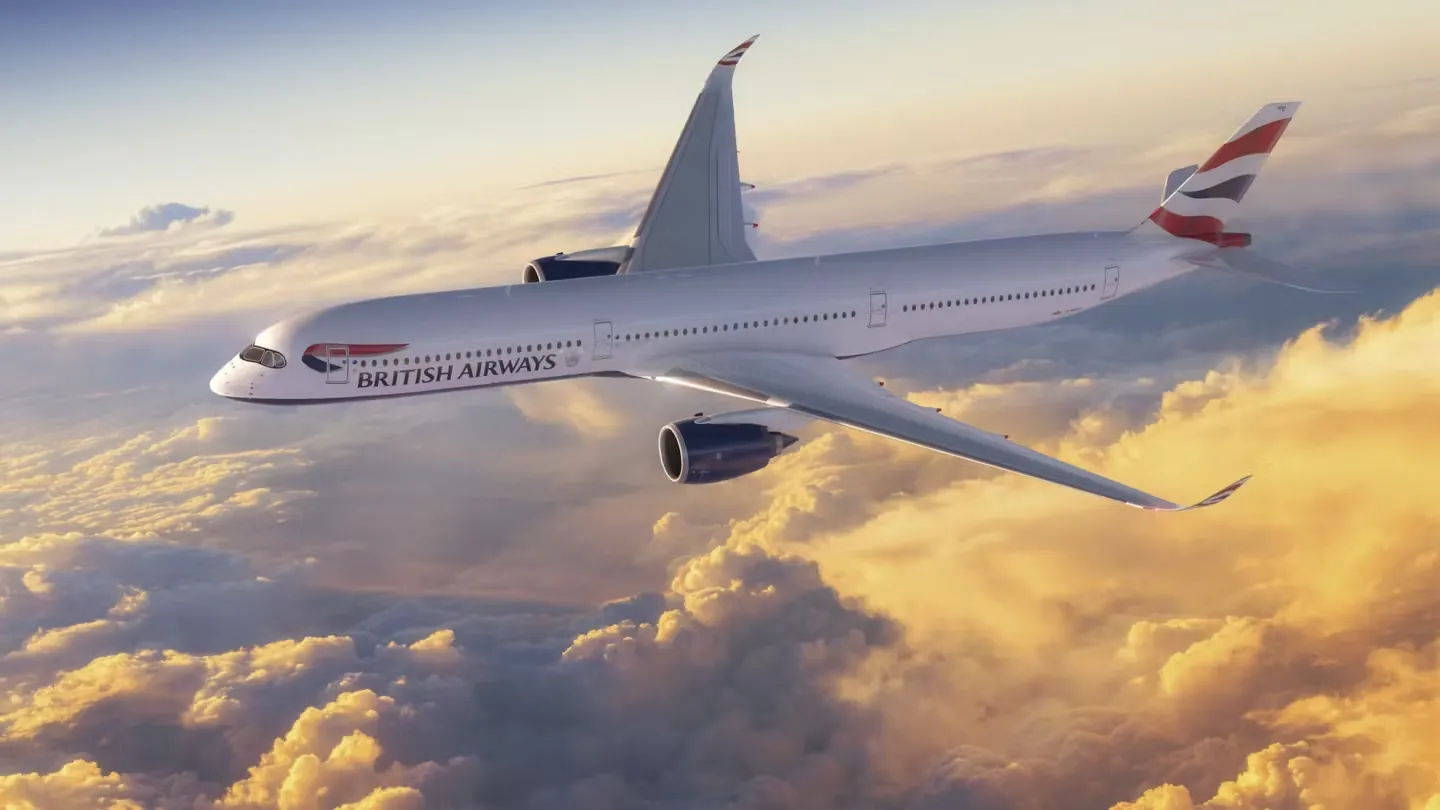
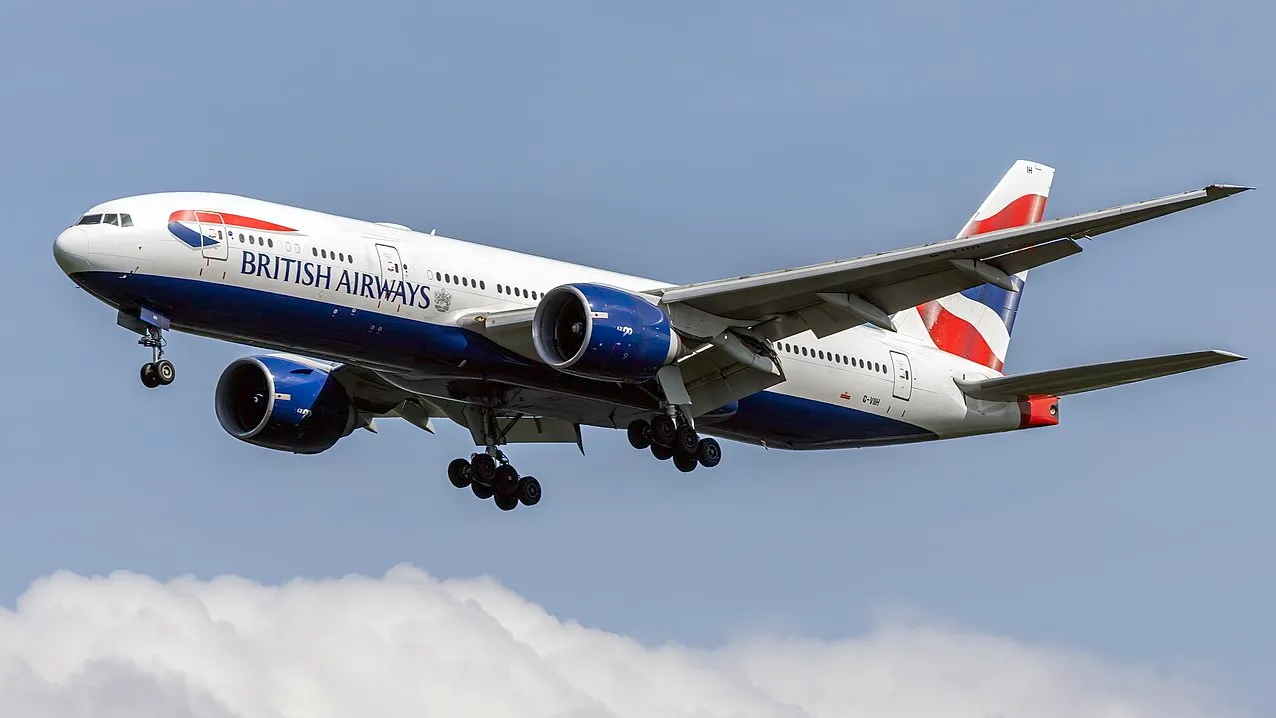
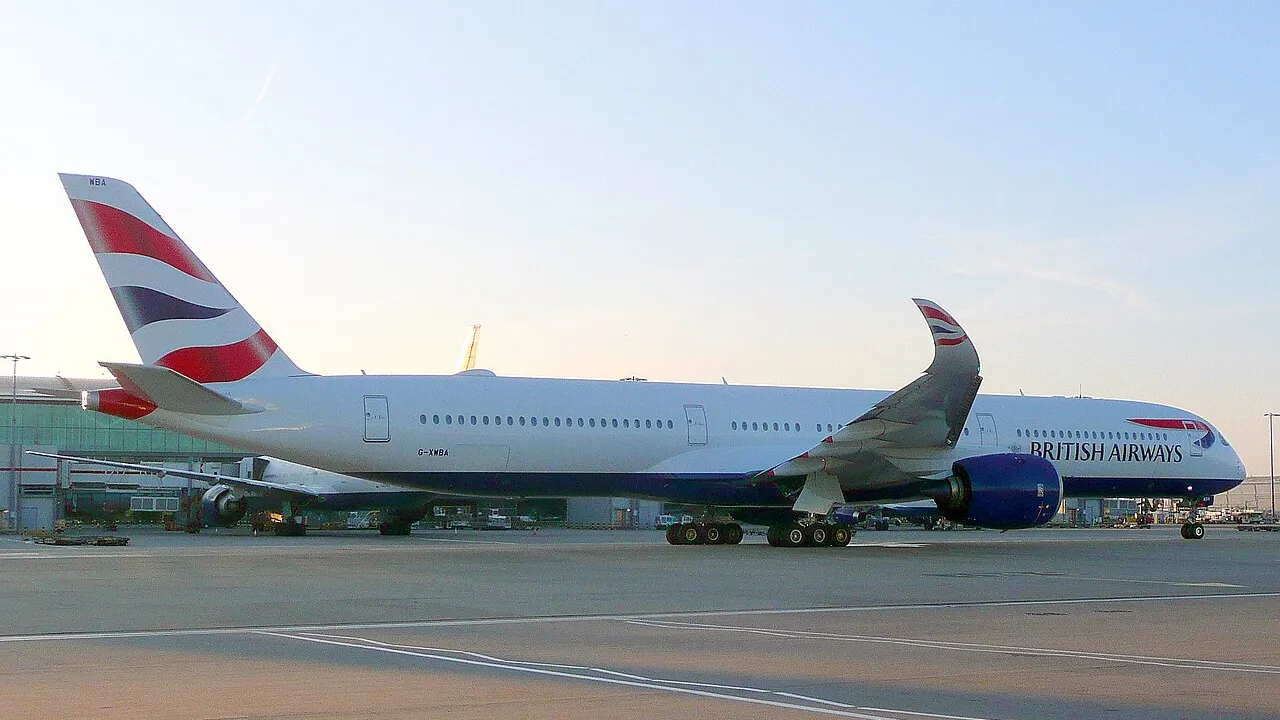
British Airways (BA) will swap the Boeing 777-200ER for the Airbus A350-1000 on its daily route between London Heathrow (LHR) and Nashville International Airport (BNA) starting March 29, 2026. The change covers the entire Northern Hemisphere summer schedule and applies to flight numbers BA223 and BA222. Britain’s flag carrier is making the swap as part of a wider fleet renewal that favors newer, larger widebody jets over its aging 777 fleet, according to a report by Simple Flying.
The move raises seat capacity on the route by 59 seats per flight, from 272 seats on the 777-200ER to 331 seats on the A350-1000. It also signals confidence in demand from Nashville, a secondary US market that has grown into one of British Airways’ steadier transatlantic performers. No announcement has been made yet on whether the smaller Boeing 787-8, which flies the route in winter, will return once the summer swap ends.

British Airways Upgauges the Heathrow-Nashville Route
British Airways currently flies the 777-200ER on the Heathrow-Nashville route through the summer months and switches to the 787-8 for winter. Starting March 29, 2026, the 777-200ER will be dropped from the route entirely for the summer season, replaced in full by the A350-1000. Industry watcher Ishrion Aviation first flagged the schedule change on X, noting that block times remain the same even though the aircraft type is changing.
The strategy is commonly called upgauging, where an airline swaps in a bigger aircraft to carry more passengers without adding a new flight. British Airways has followed the same playbook on several other US routes recently, including a planned switch from the 777-200ER to the A350-1000 on its London-Austin service.
Flight Schedule And Aircraft Speed Details
Flight numbers stay the same under the new plan. BA223 flies outbound from Heathrow to Nashville, and BA222 returns from Nashville to Heathrow. Scheduled block times remain nine hours and ten minutes for the outbound leg and eight hours and ten minutes for the return leg. Because the A350-1000 cruises slightly faster than the 777-200ER, actual flight times could shorten a little depending on wind conditions on any given day.
The A350-1000 also flies further than the jet it replaces. Boeing’s published figures put the 777-200ER’s design range at roughly 7,065 nautical miles, while Airbus lists the A350-1000’s range at around 8,700 nautical miles. That extra range gives British Airways more scheduling flexibility on the route, even though the Heathrow-Nashville distance itself does not require it.
Fleet Modernization Drives the Switch
British Airways operates a fleet of close to 300 aircraft, and roughly a fifth of that fleet is made up of 777s with an average age above 21 years. The Airbus A350-1000 is the youngest aircraft type in the airline’s fleet, averaging just over four years old. Swapping in newer jets across long-haul, high-yield routes lowers fuel burn and maintenance costs while improving the onboard experience, a pattern the airline has repeated across several of its US destinations this year.
How Nashville Fits into British Airways’ Wider A350 Push
The Nashville switch is one of several A350-1000 changes British Airways has rolled out across its US network for 2026. According to schedule data from aviation analytics firm Cirium, the carrier will operate the A350-1000 on eight daily US routes by September 2026, including Austin, Las Vegas, Philadelphia, Phoenix, Denver, and Washington Dulles, alongside Nashville.
The airline made a similar move on its Caribbean network in July, when the 331-seat A350-1000 took over from the 235-seat 777-200ER on the London-Barbados route, a switch that added more business and economy seats but also dropped first class on that route entirely, based on reporting from Simple Flying. British Airways has also deployed the A350-1000 to Dallas/Fort Worth for the first time this winter, after the route sat off its widebody map the previous summer. Together, these changes point to a carrier steadily retiring the 777-200ER from its busiest US markets in favor of the newer Airbus jet.
What Nashville Travelers Should Expect
For passengers booked on the Heathrow-Nashville route after March 29, 2026, the most noticeable changes will be a quieter cabin, fresher cabin air, and a slightly wider economy seat. Business class travelers already flying in a Club Suite will see no change in seat hardware, since British Airways fits the same suite on both aircraft types.
Cargo shippers may also benefit from the switch, as the A350-1000’s larger hold allows more freight capacity than the smaller 777-200ER. One question remains open heading into 2026: whether the Boeing 787-8 returns for winter service on the Nashville route, or whether British Airways keeps the larger A350-1000 flying the route year-round. The airline has not confirmed its winter 2026 plans for the route as of this writing.




.jpg)