A Qantas Airways (QF) Boeing 737-800 operating flight QF857 from Canberra Airport (CBR), Canberra to Perth Airport (PER), Perth diverted to Adelaide Airport (ADL), Adelaide late Friday night after crew members detected an unusual smell in the cabin. The aircraft executed a precautionary diversion and landed safely in the early hours of Saturday, with no injuries reported among passengers or crew.
The flight, which had departed Canberra on schedule, was en route across southern Australia when the cockpit crew opted for a priority landing at Adelaide Airport due to a potential onboard safety concern. According to initial reports, engineers later inspected the aircraft and cleared it for continued service, while passengers were re-accommodated to complete their journey to Perth.
Flight QF 857: Diversion from Canberra Airport (CBR) to Adelaide Airport (ADL)
Flight QF857 departed from Canberra Airport (CBR), Canberra on a scheduled service to Perth Airport (PER), Perth before the crew reported an unusual odour in the cabin mid-flight. The flight crew elected to divert to Adelaide Airport (ADL), Adelaide.
Air traffic control facilitated a priority landing at Adelaide shortly after midnight, outside standard curfew constraints. The aircraft landed without incident, and emergency services were placed on standby as a standard procedural measure before the aircraft reached the gate area.
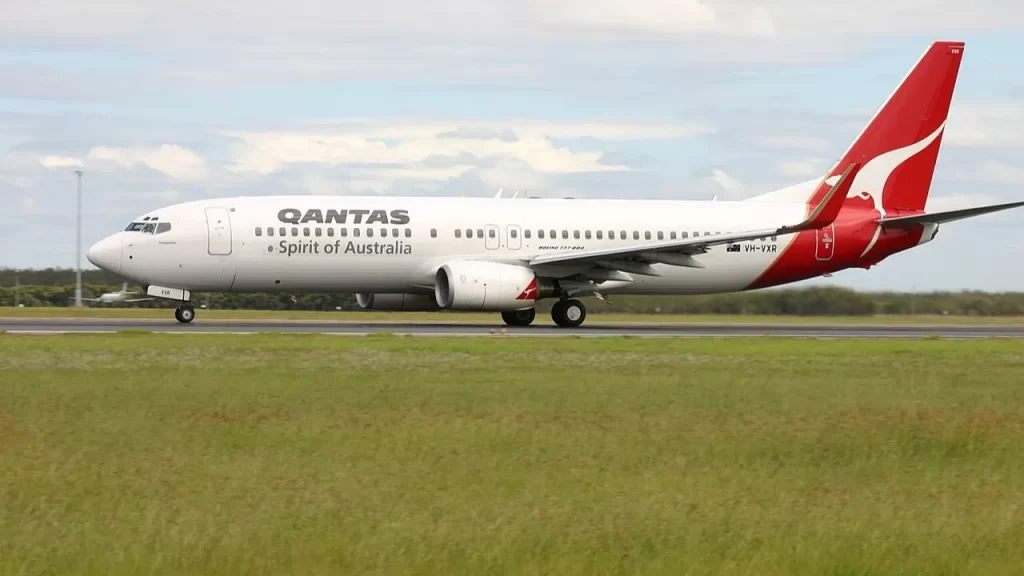
Operational Response at Adelaide Airport (ADL)
Upon landing at Adelaide Airport (ADL), Adelaide, Qantas engineering teams conducted a detailed inspection of the Boeing 737-800 aircraft. The airline confirmed that the aircraft did not sustain any structural or systems-related damage during the incident.
Following checks, engineers cleared the aircraft for return to service, indicating that no persistent safety risk was identified. The response aligned with established airline protocols for handling onboard environmental irregularities such as unusual cabin odours or suspected smoke events.
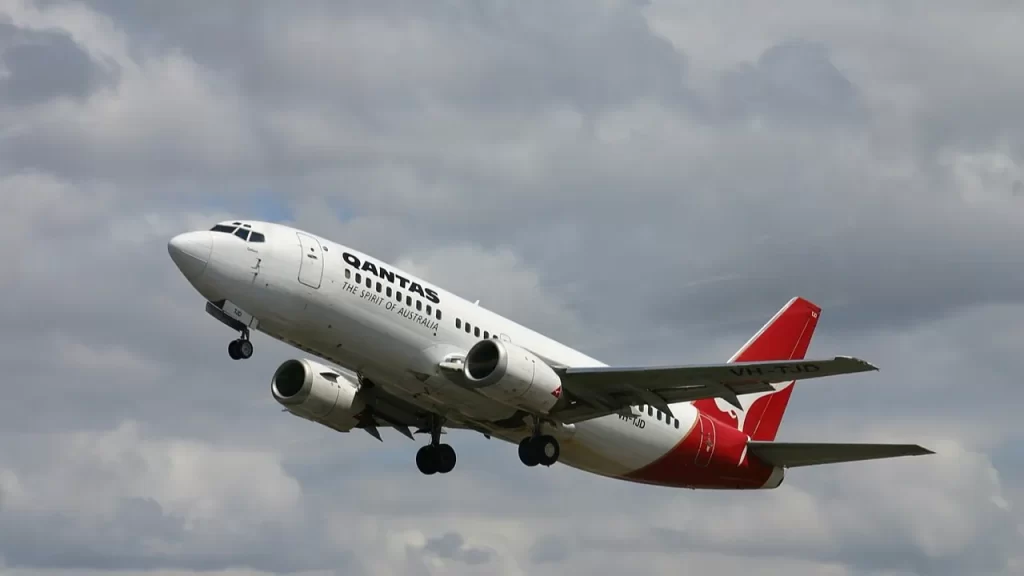
Passenger Handling and Onward Travel to Perth Airport (PER)
Passengers disembarked in Adelaide and were subsequently rebooked on alternative services to Perth Airport (PER), Perth. Qantas arranged onward connections to ensure continuation of the disrupted journey.
In a statement referenced by reporting agencies, the airline acknowledged the disruption and expressed regret for the inconvenience caused. The carrier confirmed that customer re-accommodation procedures were activated promptly following the diversion, and was quoted in news.com.au to have said:
“We know that this would have been a frustrating experience for our customers and we sincerely apologise for the inconvenience……..Passengers were re-accommodated on flights this morning from Adelaide to continue their journey to Perth.”
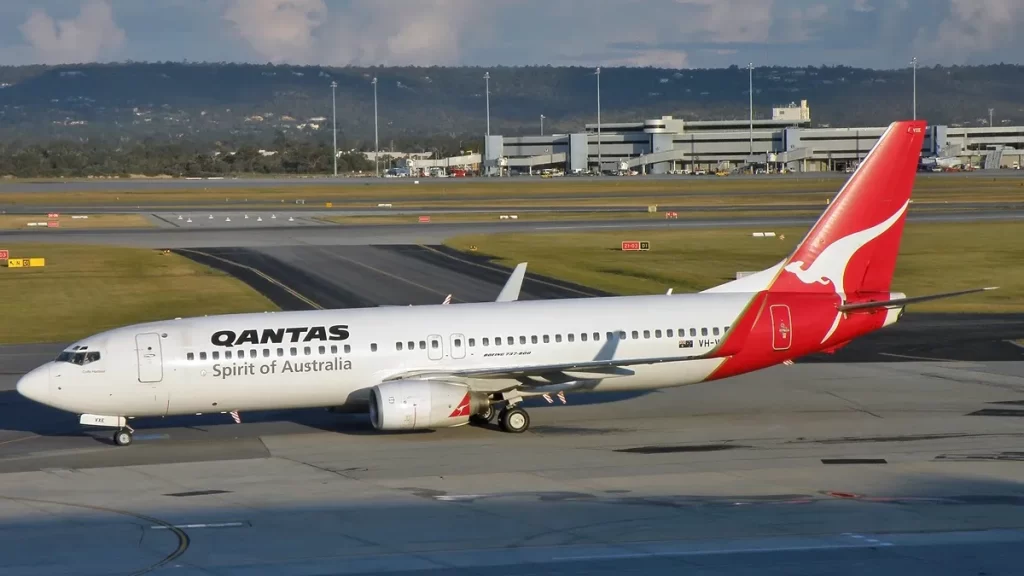
Safety Protocols for Cabin Odor incidents in aviation
In commercial aviation, an unusual smell in the cabin is treated as a potential precursor to smoke or electrical malfunction, even when no visible hazard is present.
Airlines typically respond with immediate diversion if the source cannot be rapidly identified.
Such procedures are standard across global carriers, particularly for narrow-body aircraft such as the Boeing 737 family, where early precautionary action is preferred over continued flight exposure to unidentified risks.
These protocols prioritise controlled landings at suitable alternate airports depending on route geometry and fuel status.
In modern aviation, passengers may occasionally report unusual odours or fumes inside the cabin that are not linked to fire or smoke events. These occurrences are generally attributed to environmental or system-related factors rather than onboard emergencies.
Most contemporary passenger aircraft operate with pressurised and climate-controlled cabin environments, designed to maintain comfort and air quality at cruising altitude. Despite these engineering controls, trace fumes can still enter the cabin through multiple pathways, often without indicating any mechanical failure or hazardous condition.
Common sources of non-fire cabin fumes
| Source category | Description |
|---|---|
| Airport ramp and taxiway exhaust | Engine exhaust from nearby aircraft can be ingested into intake systems during ground operations, especially in congested airport environments. |
| APU or engine compressor wash residue | After maintenance washes, residual cleaning agents or moisture may produce a noticeable smell during subsequent engine startup. |
| External air ingress via open doors/hatches | Ground operations with doors or service panels open can allow outside ambient air, including fumes, to enter the cabin. |
| Bleed air contamination pathway | Contaminants entering engine/APU compressors may be transported into the cabin via pressurisation and air conditioning systems. |
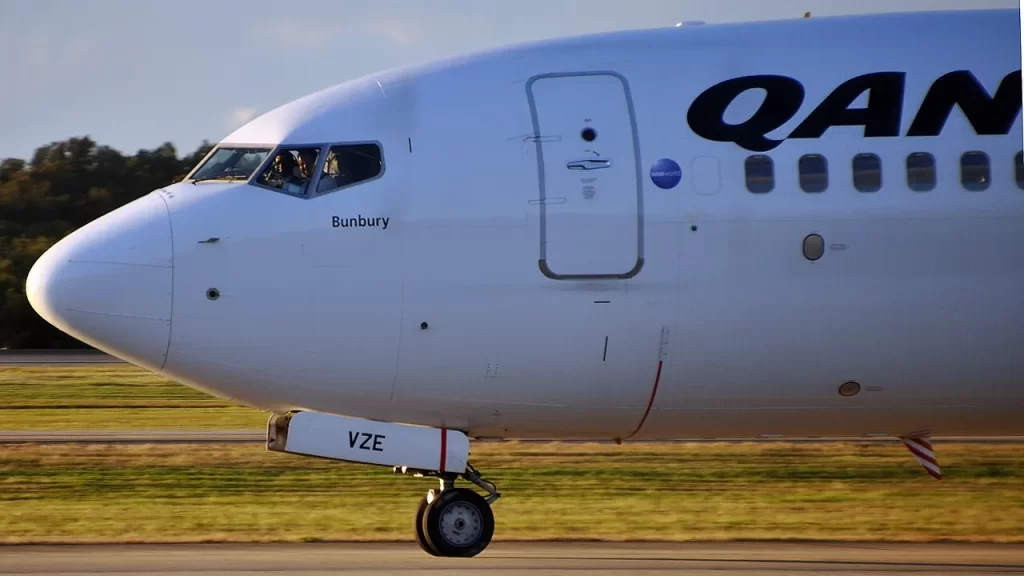
All in All
After engineering inspection, the aircraft was declared airworthy and returned to operational service. No prolonged grounding was reported, indicating that the event was assessed as non-structural and likely non-recurring in nature.
A couple of months ago, Qantas flight QF1972 which had departed from Adelaide Airport (ADL), Adelaide to Canberra Airport (CBR), Canberra, detected smoke entering the cabin and cockpit, and landed back to Adelaide.
The following table gives us an indication of some such similar events: where flight crew have opted for the nearest suitable diversion airport as a precautionary measure, prioritizing cabin air quality assessment and passenger safety over schedule adherence.
| Airline | Flight (Year) | Aircraft type | Incident description | Diversion / return airport | Outcome |
|---|---|---|---|---|---|
| Qantas | QF857 (2026) | Boeing 737-800 | Cabin smell detected mid-flight prompting precautionary diversion | Adelaide Airport (ADL) | Safe landing; aircraft inspected and returned to service |
| Qantas | Sydney–Singapore (2012) | Boeing 747 | Burning odour reported in cabin, suspected air system contamination | Darwin Airport | Aircraft given all-clear after inspection |
| Qantas | Sydney–Wellington (2018) | Boeing 737 | Unusual smell attributed to maintenance product in galley area | Returned to Sydney Airport | Aircraft cleared post inspection; passengers rebooked |
| Qantas | Adelaide–Canberra (2019) | Airbus A320-family | Cabin pressurisation system issue with odour perception reported | Diverted to Melbourne Airport | Safe landing; standard engineering inspection completed |
| Qantas | Canberra–Melbourne (2022) | Boeing 717 | Odour detected in flight deck prompting precautionary landing | Melbourne Airport | One crew member assessed; aircraft inspected |
.jpg)
.jpg)

.jpg)