
A prototype of the General Atomics Aeronautical Systems, Inc. (GA‑ASI) YFQ‑42A Collaborative Combat Aircraft (CCA) crashed shortly after takeoff from a General Atomics‑owned test airport in the California desert on April 6, 2026, prompting the company to suspend all CCA test flights pending investigation.
The unmanned aircraft suffered a mishap around 1 p.m. Pacific time but caused no injuries, according to the official company statement; GA‑ASI is conducting a disciplined inquiry to determine the root cause and will resume flight tests when appropriate safety criteria are met.
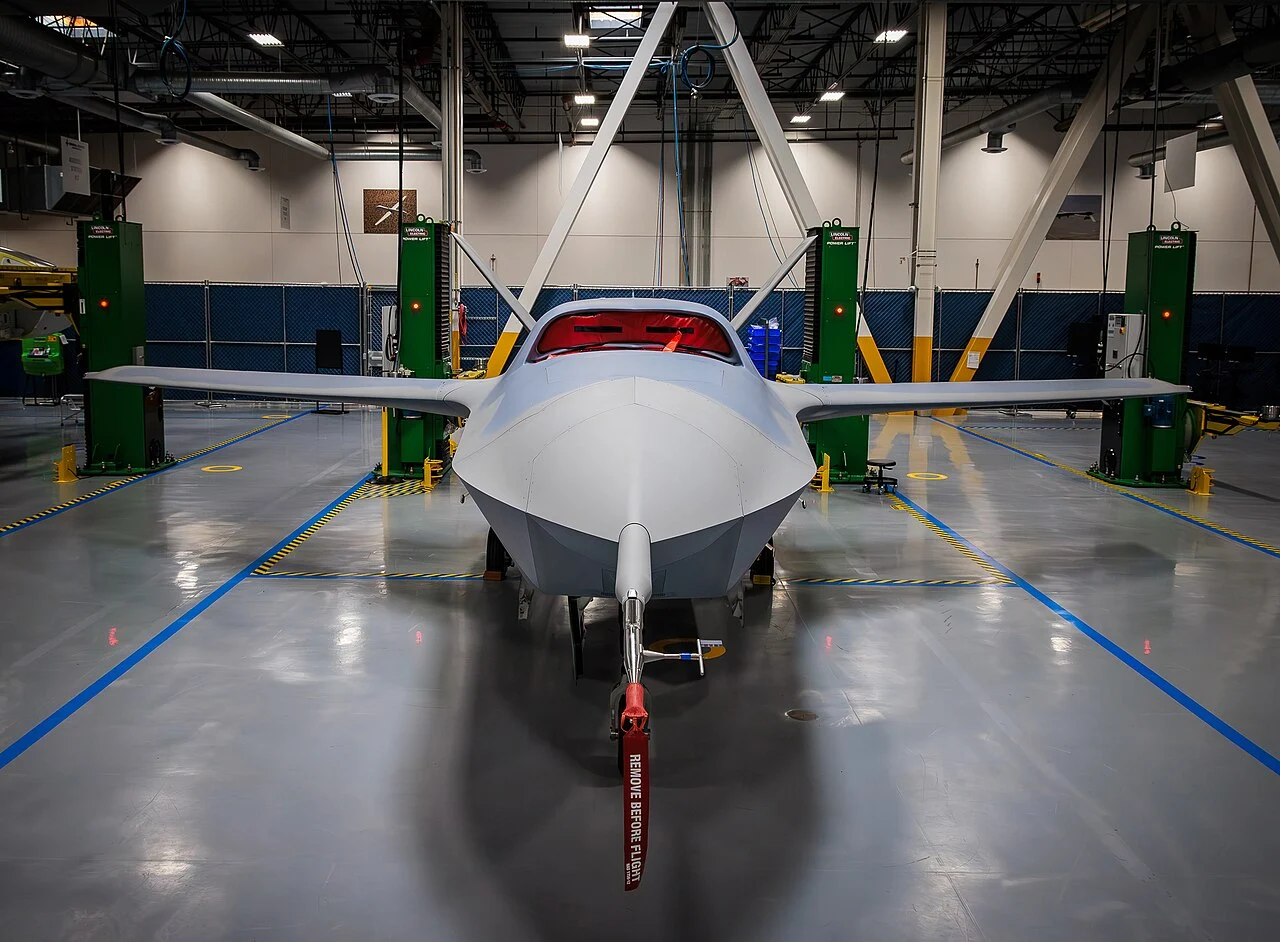
General Atomics Aeronautical Systems, Inc. overview
| Attribute | Details |
|---|---|
| Company | General Atomics Aeronautical Systems, Inc. (GA‑ASI) |
| Program | Collaborative Combat Aircraft (CCA) |
| Prototype model | YFQ‑42A |
| Test flight status | Paused pending investigation |
| Location of incident | Company‑owned test airport, California desert |
| Injuries reported | None |
| Primary mission | Semi‑autonomous combat support drone development |
YFQ‑42A Crash Details
General Atomics confirmed that a YFQ‑42A production‑representative CCA aircraft experienced a “mishap” immediately after takeoff, sustaining damage in the mishap but resulting in no injuries to personnel or bystanders.
Company officials stated that test flight activities have been temporarily paused “in an abundance of caution” as experts assess the damaged platform and analyse flight data to establish probable causation.
C. Mark Brinkley, a spokesperson for GA‑ASI, said established safety procedures functioned correctly, and the company will “allow the investigation to guide us moving forward,” :
“Safety is our top priority, for our people and the public. In this case, established procedures and safeguards worked as intended, and there were no injuries…We’re going to take a close look at what happened, gather all the data, and allow the investigation to guide us moving forward.”
Why and Where did the YFQ‑42A crash?
The mishap took place at a General Atomics‑owned airport in the California desert, a facility regularly used for operational test and evaluation of uncrewed systems.
Although the exact airport site has not been publicly specified in the press statement, industry reports identify Gray Butte Airport near Palmdale, California, as one of General Atomics’ desert flight test locations.
The publication Breaking Defense was able to reach an Air Force spokesperson, who said that while the reason of the crash in unclear, “is aware of the incident and will follow standard aircraft mishap protocols.”
General Atomics’ statement following the crash expressed a similar sentiment:
“At this early stage, it would be premature to speculate on the circumstances…..As with any program, we follow a disciplined investigation process to understand exactly what occurred, and our focus right now is on gathering data and ensuring we learn from this event.”
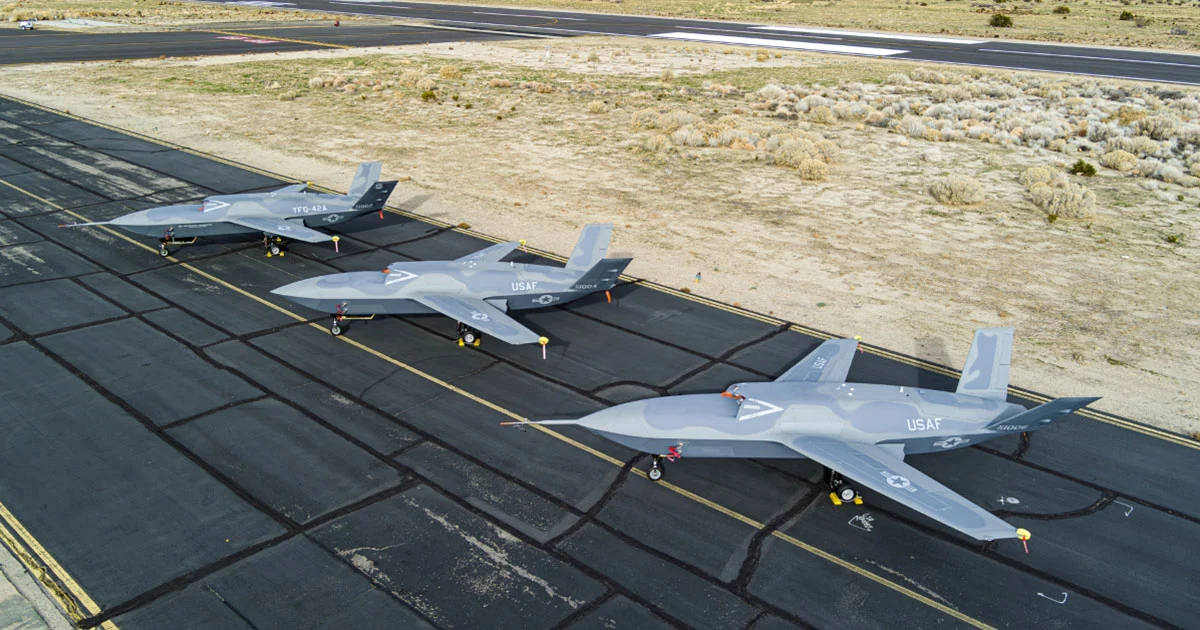
According to Aviation Safety Network, “three YFQ-42’s are airworthy, 25-1002, 25-1004 and 25-1006. It is currently unknown as to which airframe was involved“.
YQF-42A is a Part of USAF’s Combative Aircraft Program
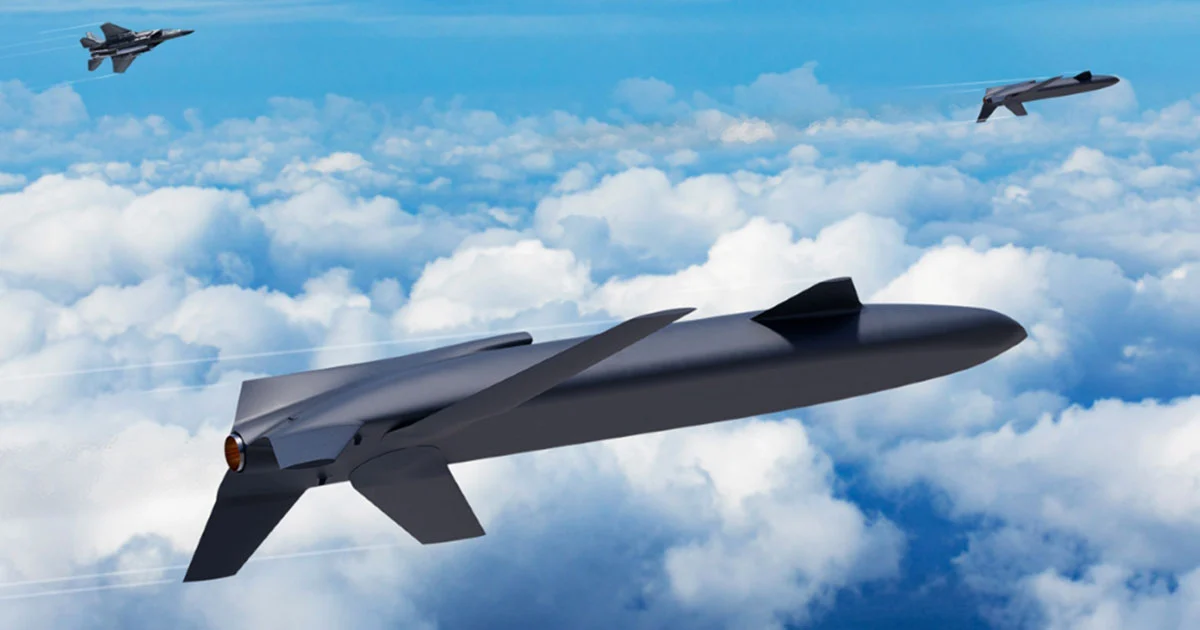
The YFQ‑42A is part of the U.S. Air Force (USAF)’s Collaborative Combat Aircraft (CCA) program, a Next‑Generation Air Dominance initiative to field semi‑autonomous aircraft that can operate alongside crewed fighters to expand mission capability and survivability.
The YFQ-42A, internally dubbed Dark Merlin by General Atomics Aeronautical Systems, Inc. (GA-ASI), represents one of the two primary designs competing in the Increment 1 Collaborative Combat Aircraft (CCA) program. The United States Air Force anticipates deploying a fleet exceeding 1,000 autonomous wingmen, with YFQ-42A positioned as a semi-autonomous air-to-air fighter that complements existing manned platforms, including:
- F-22 Raptor
- F-35 Lightning II
- Boeing F-47
Its primary competitor, Anduril Industries’ YFQ-44A Fury, completed its maiden flight in October 2025. The program aims to advance autonomous air combat capability through high-speed integration of AI and flight systems across multiple vendor platforms.
YQF-42A: Development Milestones
| Milestone | Date | Details |
|---|---|---|
| Contract award | April 2024 | USAF selected GA-ASI and Anduril to build production-representative prototypes |
| YFQ-42A first flight | August 2025 | Achieved just 16 months after contract award |
| Second YFQ-42A airframe flight | Late 2025 | Expanded flight test envelope |
| Third YFQ-42A revealed | Early 2026 | Showcased program progression and readiness for operational testing |
The YFQ-42A is derived from the XQ-67A Off-Board Sensing Station, a member of GA-ASI’s Gambit drone family. These systems share a common chassis, propulsion system, and landing gear, enabling rapid scaling and cost-effective adaptation for multiple mission sets.
| Feature | Description |
|---|---|
| Chassis | Standardized Gambit modular airframe |
| Engine | Shared propulsion system across Gambit family |
| Landing gear | Common configuration supporting flexible deployment |
| Heritage | Derived from XQ-67A Off-Board Sensing Station |
This modular approach allows GA-ASI to iterate quickly on prototypes while maintaining a reliable platform for future operational testing.