BAE Systems has successfully conducted a trial of a low‑cost precision weapon from a Eurofighter Typhoon combat aircraft, a development that could markedly enhance the fighter’s ability to counter uncrewed aerial systems (UAS) more economically. According to Breaking Defense, the test, announced in April 2026, took place at BAE’s flight test centre in Warton, Lancashire, using a Royal Air Force (RAF) Eurofighter test and evaluation aircraft that fired a precision‑guided rocket against a ground target as part of broader efforts to expand affordable counter‑drone options.
The weapon demonstrated in this trial is the Advanced Precision Kill Weapon System (APKWS), a laser‑guided kit that converts standard 70 mm rockets into precision munitions. The successful firing represents a significant step toward integrating counter‑UAS capability on one of the world’s most advanced fourth‑generation fighter platforms, where cost‑effectiveness has become as important as lethality in modern air combat.
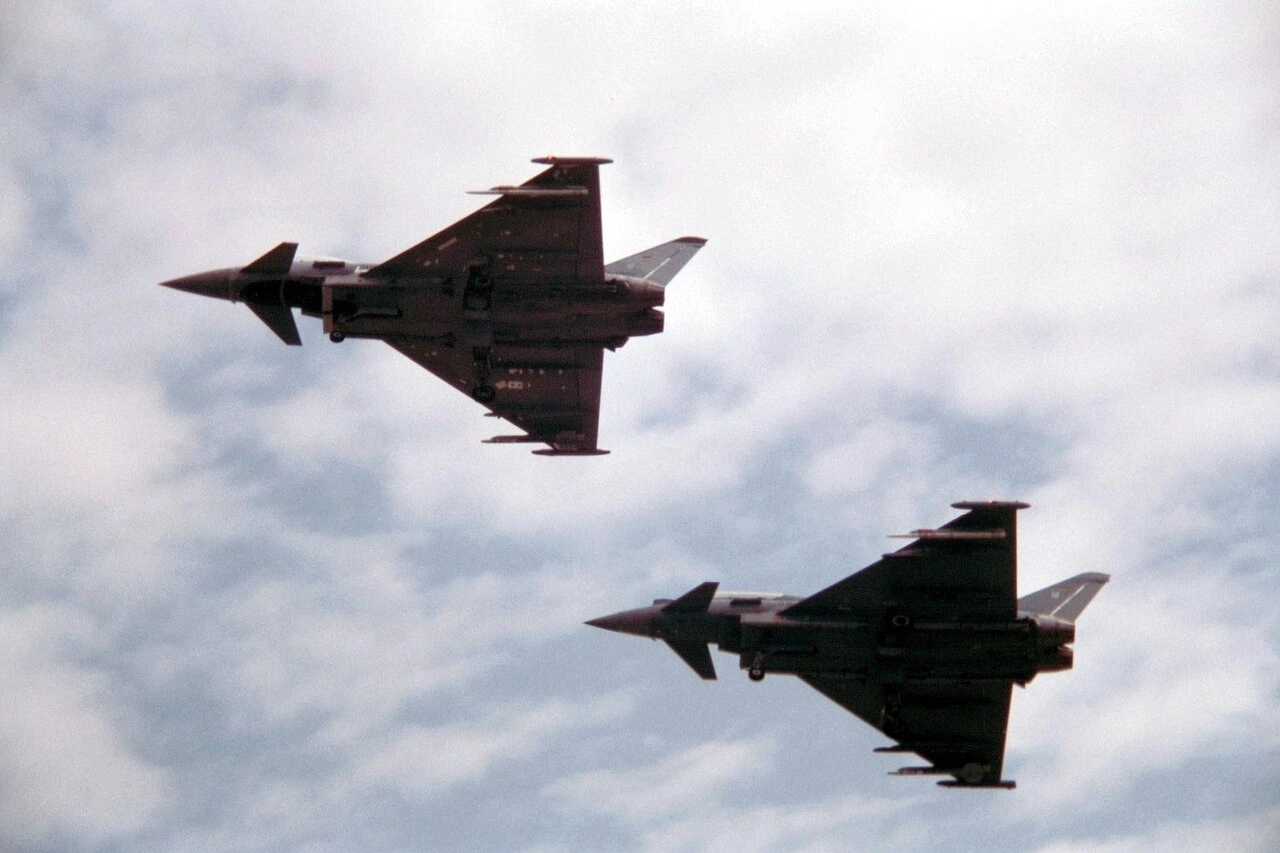

Overview of the Test Using an RAF Eurofighter Typhoon
BAE Systems conducted the trial using an RAF Eurofighter Typhoon at a UK military range, striking a ground‑based target to demonstrate that low‑cost precision rockets can be launched successfully from the aircraft.
The trials are part of an ongoing effort to explore how affordable weapons can be used to counter drones without relying solely on traditional air‑to‑air missiles, which can cost hundreds of thousands to millions of dollars per shot.
By integrating the APKWS laser‑guidance kit, BAE aims to expand the operational flexibility of the Typhoon, enabling mission profiles that include both air‑to‑surface and counter‑drone roles.
The system has already been fielded on other aircraft types such as the F‑16 and A‑10, where it has proven effective against UAS threats at significantly lower cost than conventional guided missiles.
According to Breaking Defense, the test, which comes amid the US-Israeli led conflict against Iran that has seen the downing of F-15 and A-10 warhog:
” Iran’s usage of cheap drones and missiles has forced Washington, Jerusalem and other Western partners including the UK to expend high end, expensive weapons to defend key assets.”
The move toward cheaper counter‑UAS solutions reflects a growing concern among air forces worldwide, as inexpensive unmanned systems increasingly challenge traditional aerial defence paradigms.
Platforms like the Eurofighter Typhoon, operated by the RAF and other European air arms, are tasked with both high‑end air combat and dense battlespace environments where low‑cost threats are more prevalent.
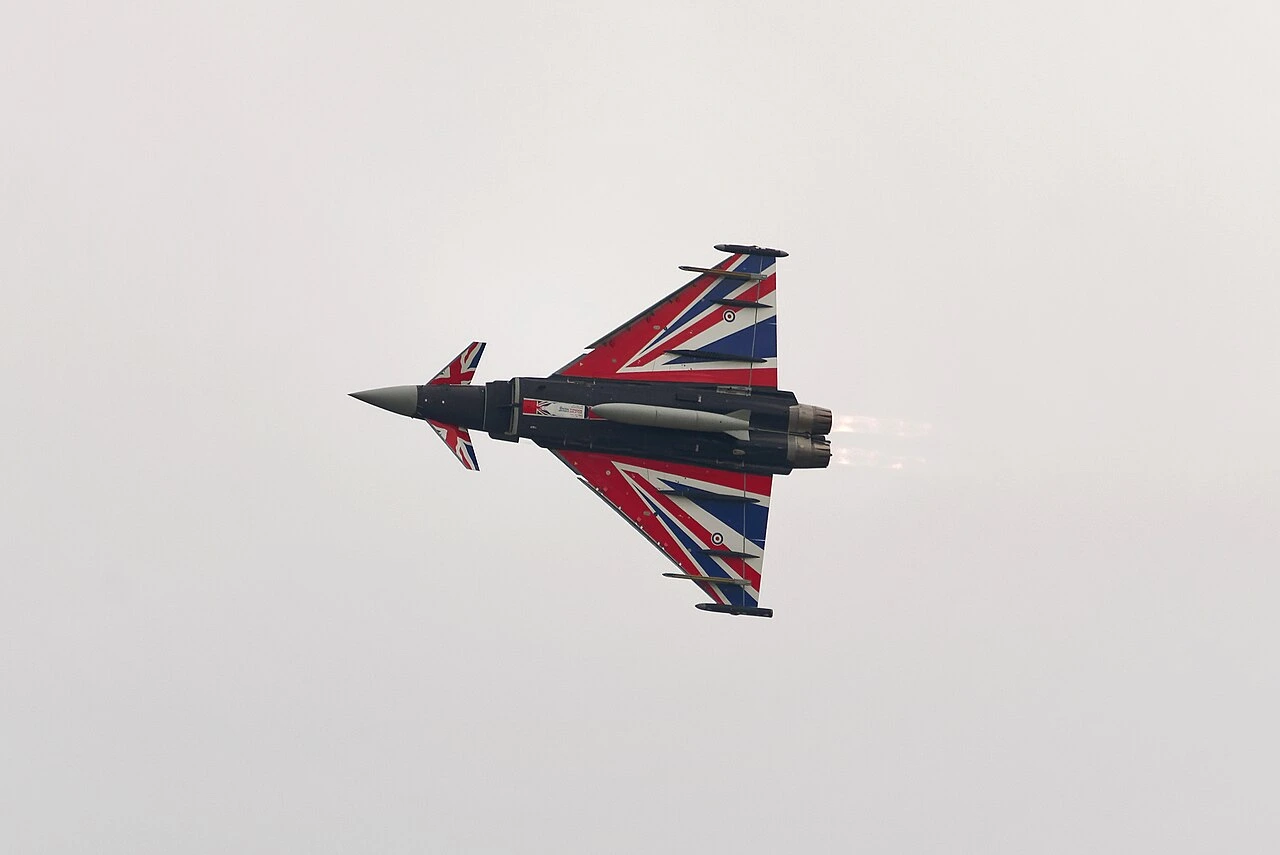
,_Radom_Air_Show,_20230826_1659_9951.jpg)
Technical Aspects of APKWS integration
The APKWS laser‑guidance kit augments existing 70 mm Hydra rockets with precision guidance by adding canard fins and a laser seeker between the motor and warhead. This guidance system enables the rocket to track a laser‑designated target with high accuracy.
Because the APKWS kit is smaller and less complex than most air‑to‑air missiles, it allows the Typhoon to carry a greater quantity of counter‑drone munitions per mission, thus enhancing magazine depth for low‑value target engagements.
The current trial focused on a ground target engagement, an initial step toward validating the Typhoon’s ability to fire the APKWS rocket from its weapon stations.
According to BAE systems, the following are some of the features of the APKWS kit:
| Feature | Description |
|---|---|
| DASALS Optics Design | Distributed Aperture Semi-Active Laser Seeker optics are embedded on all four guidance wings for improved targeting accuracy |
| Pre-Launch Protection | Wing-slot seals protect optics from adjacent rocket firings, sand, and moisture before launch |
| Post-Launch Function | Wings deploy after firing, allowing optics to lock onto designated targets and guide the rocket precisely |
| Target Engagement Capability | Can track both moving and stationary targets in open or confined environments |
| Flight Accuracy | Reduces risk of uncontrolled or missed rockets by maintaining guided trajectory after launch |
| Field of Regard | 40-degree instantaneous field of regard enables wide target acquisition and mid-flight course correction |
| Operational Benefit | Ensures precise strikes while minimizing collateral damage in complex combat scenarios |
The next phase of testing, according to industry reporting, is expected to involve engaging airborne targets, a critical milestone in moving toward operational counter‑drone capability.
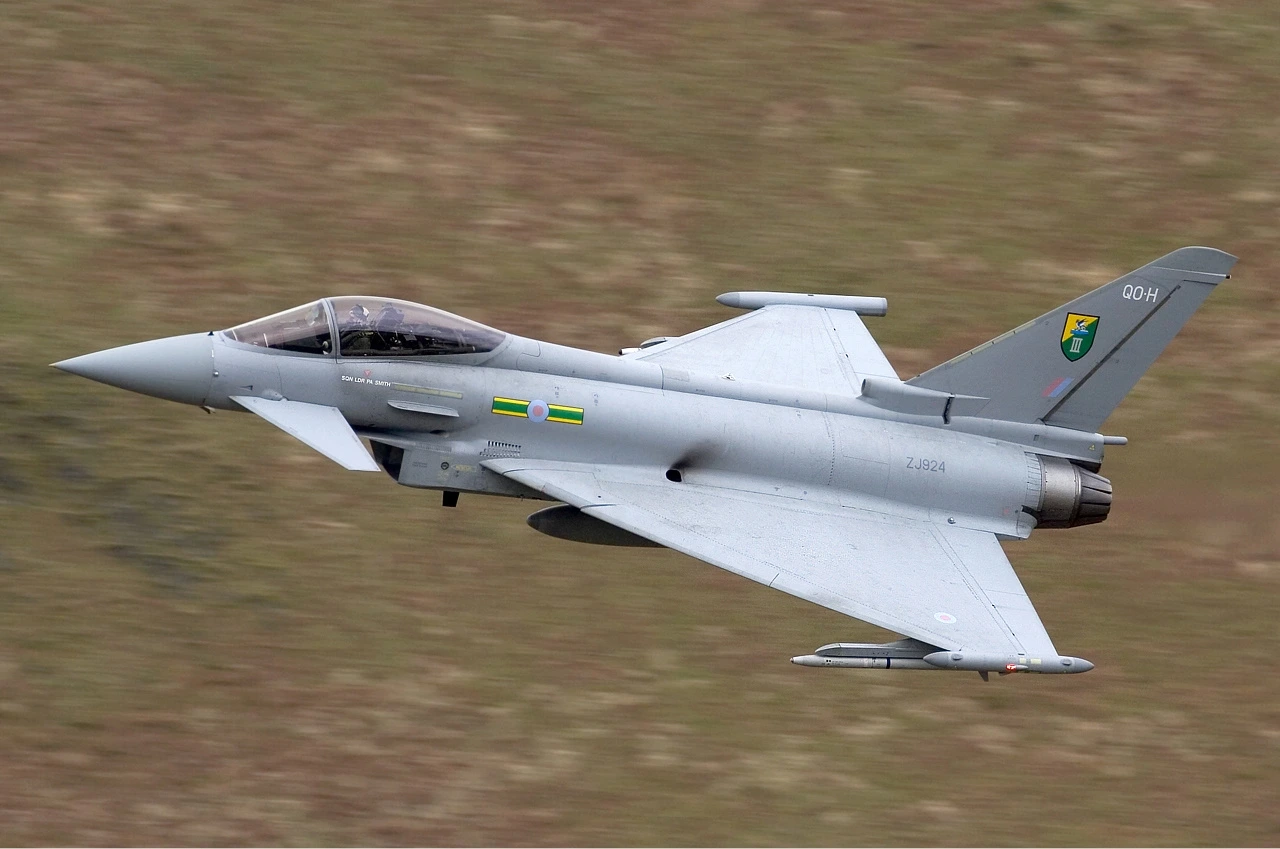

Strategic Implications of the Test
The adoption of low‑cost precision weapons like APKWS could reshape how air forces approach UAS threats, offering a middle ground between traditional cannon armament and expensive guided missiles.
As smaller drones proliferate on modern battlefields, especially in asymmetric conflicts, the ability to bring a precision rocket to bear at low cost may become increasingly valuable.
For the Eurofighter Typhoon, adding APKWS complements its existing arsenal — which includes advanced air‑to‑air missiles and deep‑strike air‑to‑surface weapons — by providing an economical option for saturation defence and close‑in engagements that would otherwise mandate the use of high‑end missiles.