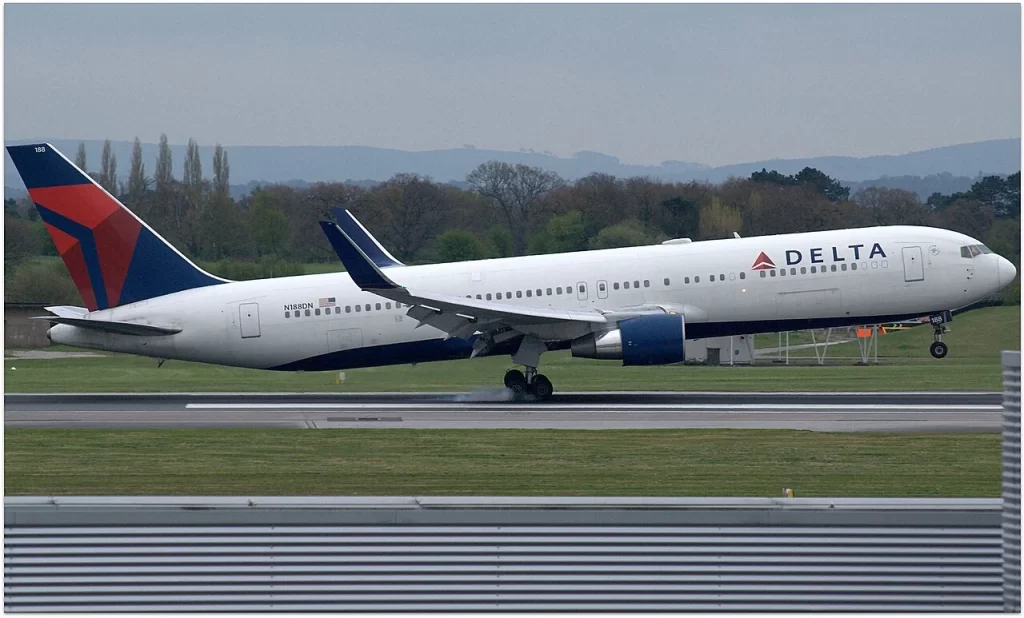
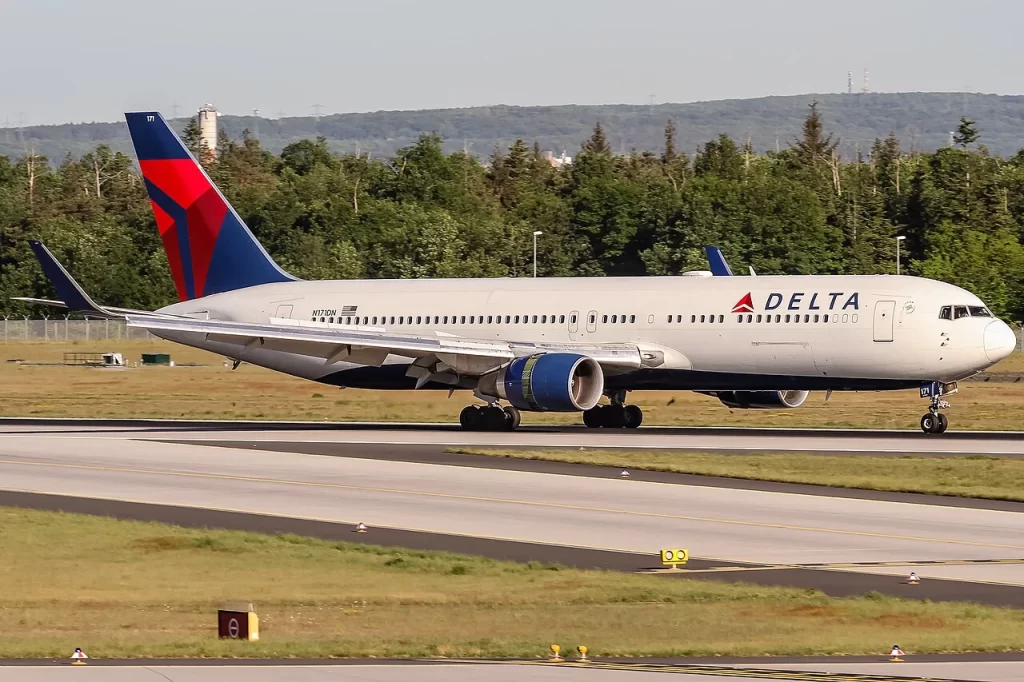
Delta Air Lines (DL) has retired its oldest Boeing 767-300ER, registered N171DN, concluding a 36-year operational lifecycle that began in June 1990. The aircraft completed its final ferry flight on April 10, 2026, departing Hartsfield–Jackson Atlanta International Airport (ATL), Georgia, en route to Birmingham–Shuttlesworth International Airport (BHM), where it is expected to be dismantled for parts.
Its penultimate flight, was a revenue one and it took place from San Francisco Airport to Atlanta.
The retirement forms part of Delta Air Lines’ broader widebody fleet renewal program, which prioritizes next-generation Airbus A330-900neo and Airbus A350-900 aircraft [which is used on the longest non-stop flights in the world] to replace ageing Boeing 767-300ER frames.
.jpg)
History of Delta’s N171DN
Delta operated the final movement of Boeing 767-300ER N171DN from Hartsfield–Jackson Atlanta International Airport, its principal global hub and largest operational base. The aircraft’s final sector was conducted as a ferry flight rather than a scheduled passenger service, marking the end of its commercial lifecycle.
The airframe entered service in June 1990 and remained in continuous operation for approximately 36 years, accumulating an estimated 150,000 flight hours across global medium- and long-haul missions. Its longevity places it among the most extensively utilised widebody aircraft in Delta’s modern fleet history.
The following table gives us a snippet into the aircraft and its history with Delta which received this bird on June 9, 1990. Its first test flight at Boeing was back on April 22, 1990.
| Field | Details |
|---|---|
| Manufacturer Serial Number (MSN) | 29690 |
| Line Number | 717 |
| Aircraft Type | Boeing 767-300 / Boeing 767-300(WL) |
| Built As | Boeing 767-300 |
| Winglets Installed | May 2011 |
| Age | 27.6 years |
| Production Site | Everett (PAE) |
| Airframe Status | Active |
| Configuration History | C36Y185 until Feb 2013 |
| C36Y175 (Feb 2013 – Mar 2018) | |
| C26Y200 (Mar 2018 – Apr 2023) | |
| C26W18Y172 (Jun 2023 – present) | |
| Storage / Maintenance Period | Std at ILN (31 Mar – 30 Sep 2020) |
| Return to Service | 2 Oct 2020 |
| Special Liveries / Markings | “Habitat for Humanity” livery (Nov 2006 – Nov 2014) |
| “80th Anniversary D-Day & Battle of Normandy” sticker (Apr – Nov 2024) |
Data: planespotters.net
In its last weeks in service, N171DN operated cross-country routes linking:
- Atlanta
- Phoenix
- New York, and
- San Francisco.
Its final scheduled passenger flight, DL715, according to Flightradar24, took off from San Francisco at 2:44 pm on April 9 and landed in Atlanta at 9:47 pm that night.
_coming_in_from_Atlanta_(ATL)_@_Frankfurt_Rhein-Main_International_(FRA)_08.05.2018_(41937154382).jpg)
Boeing 767-300ER Fleet Role Within Delta
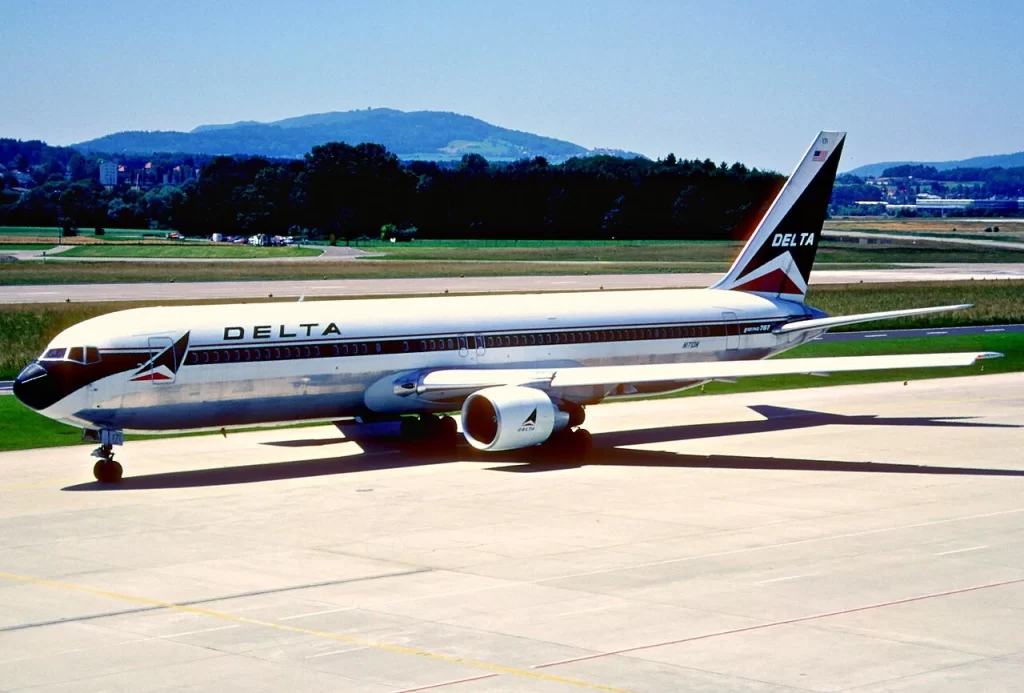
The Boeing 767-300ER has historically functioned as a core widebody platform within Delta Air Lines’ intercontinental network. The aircraft enabled medium-capacity long-haul operations that supported route development during the airline’s international expansion phase in the 1990s and 2000s.
The 767-300ER is a part of the 767 family – an aircraft that was a turning point in long-haul aviation. The jet was one of the first widebody aircraft built to meet Extended-range Twin-engine Operational Performance Standards (ETOPS), enabling twin-engine planes to operate long overwater routes that had previously been the domain of three- and four-engine aircraft.
.jpg)
The 767-300ER remains one of the most widely operated twin-engine widebody aircraft globally, with Delta continuing to utilise later production variants in select passenger and cargo missions.
However, older early-production frames such as N171DN have reached end-of-life thresholds due to escalating maintenance requirements and reduced economic efficiency relative to modern aircraft.
Delta still has 35 aircraft of the 767-300 type in its fleet and these average 29 years:
| Reg | Config | Delivered | Age |
|---|---|---|---|
| N178DZ | C26W18Y172 | May 2000 | 25.9 Years |
| N1605 | C26W18Y172 | May 1999 | 26.9 Years |
| N16065 | C26W18Y172 | Jun 1999 | 26.9 Years |
| N1604R | C26W18Y172 | Apr 1999 | 27 Years |
| N177DZ | C26W18Y172 | May 1999 | 27 Years |
| N175DZ | C26W18Y172 | Mar 1999 | 27.1 Years |
| N176DZ | C26W18Y172 | Apr 1999 | 27.1 Years |
| N1602 | C26W18Y172 | Jan 1999 | 27.2 Years |
| N1603 | C26W18Y172 | Feb 1999 | 27.2 Years |
| N173DZ | C26W18Y172 | Nov 1998 | 27.5 Years |
| N174DZ | C26W18Y172 | Nov 1998 | 27.5 Years |
| N171DZ | C26W18Y172 | Sep 1998 | 27.6 Years |
| N172DZ | C26W18Y172 | Sep 1998 | 27.6 Years |
| N169DZ | C26W18Y172 | Jun 1998 | 27.8 Years |
| N1201P | C26W18Y172 | Apr 1998 | 28 Years |
| N1200K | C26W18Y172 | Apr 1998 | 28.1 Years |
| N199DN | C26W18Y172 | Mar 1998 | 28.1 Years |
| N198DN | C26W18Y172 | Feb 1998 | 28.3 Years |
| N197DN | C26W18Y172 | Dec 1997 | 28.3 Years |
| N196DN | C26W18Y172 | Oct 1997 | 28.5 Years |
| N195DN | C26W18Y172 | Sep 1997 | 28.5 Years |
| N194DN | C26W18Y172 | Sep 1997 | 28.6 Years |
| N193DN | C26W18Y172 | Aug 1997 | 28.7 Years |
| N192DN | C26W18Y172 | Jun 1997 | 28.8 Years |
| N191DN | C26W18Y172 | Apr 1997 | 29 Years |
| N190DN | C26W18Y172 | Mar 1997 | 29.1 Years |
| N189DN | C26W18Y172 | Feb 1997 | 29.2 Years |
| N188DN | C26W18Y172 | Oct 1996 | 29.5 Years |
| N187DN | C26W18Y172 | Jun 1996 | 29.8 Years |
| N186DN | C26W18Y172 | Jul 1995 | 30.8 Years |
| N185DN | C26W18Y172 | May 1995 | 31 Years |
| N180DN | C26W18Y172 | Apr 1992 | 34 Years |
| N178DN | C36Y175 | Apr 1991 | 35.2 Years |
| N179DN | C36Y175 | Apr 1991 | 35.2 Years |
| N177DN | C36Y175 | Jan 1991 | 35.3 Years |
| N174DN | C36Y175 | Jul 1990 | 35.8 Years |

Delta Air Lines (DL) Fleet Modernisation Strategy and Widebody Replacement Programme
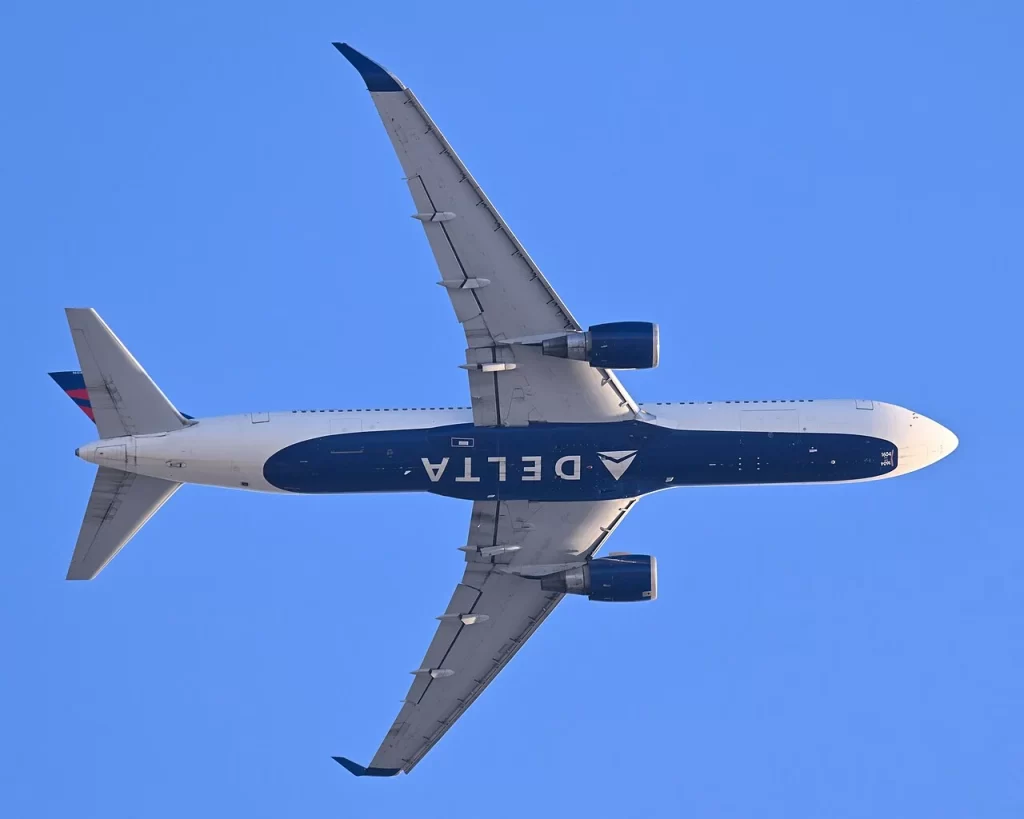
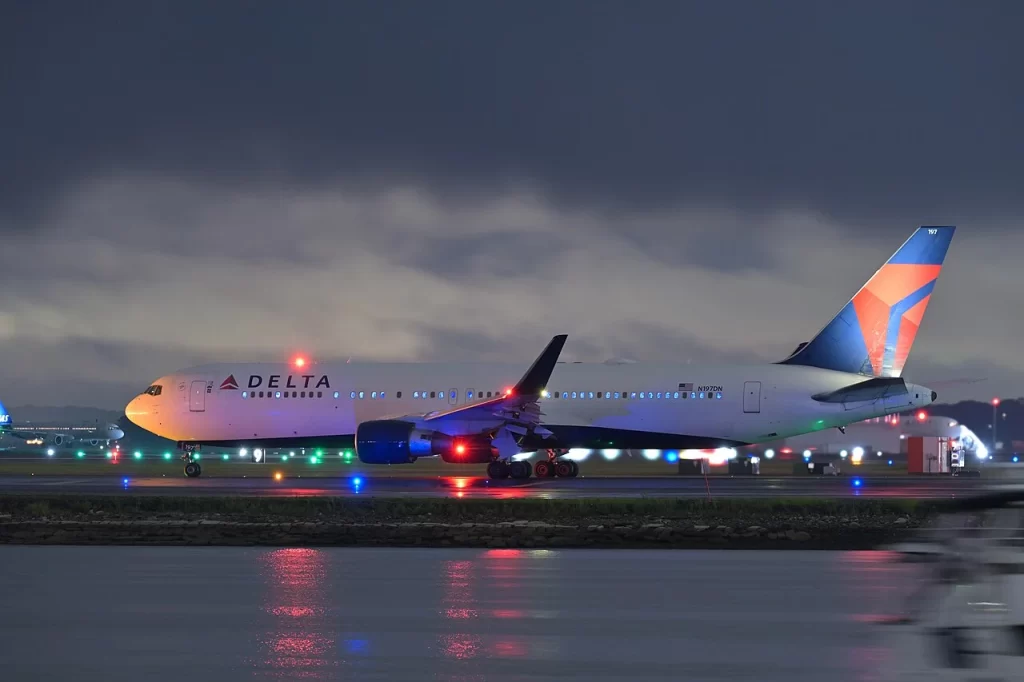
Delta Air Lines has initiated a structured transition away from ageing Boeing 767-300ER aircraft as part of its long-term fleet optimisation strategy. The airline is deploying Airbus A330-900neo and Airbus A350-900 aircraft to replace older widebody frames across transatlantic and intercontinental routes.
The strategic shift prioritises:
- reductions in fuel consumption per seat
- lower maintenance intensity
- improved operational reliability.
The transition also reflects broader industry-wide fleet rationalisation trends, in which airlines progressively eliminate older twin-aisle aircraft in favour of modern long-range, twin-engine widebodies with higher dispatch reliability and improved unit economics.

Economic and Operational Drivers Behind the 767-300ER retirement
The retirement of N171DN reflects cumulative economic pressures associated with ageing widebody aircraft. Industry analysis indicates that Boeing 767-300ER aircraft face structural disadvantages compared to newer Airbus long-haul platforms, particularly in fuel efficiency and maintenance cost profiles.
As we touched upon before, Delta Air Lines (DL)’ ‘s 767-300ER average nearly three decades, placing them beyond typical commercial widebody retirement thresholds. Key operational constraints include:
- rising heavy maintenance inspection cycles
- reduced fuel efficiency relative to A330neo and A350 aircraft
- increasing parts obsolescence pressure
- diminishing residual economic value per airframe
These factors collectively accelerate fleet retirement decisions even for aircraft that remain structurally airworthy.

What Will Happen to N171DN Now?
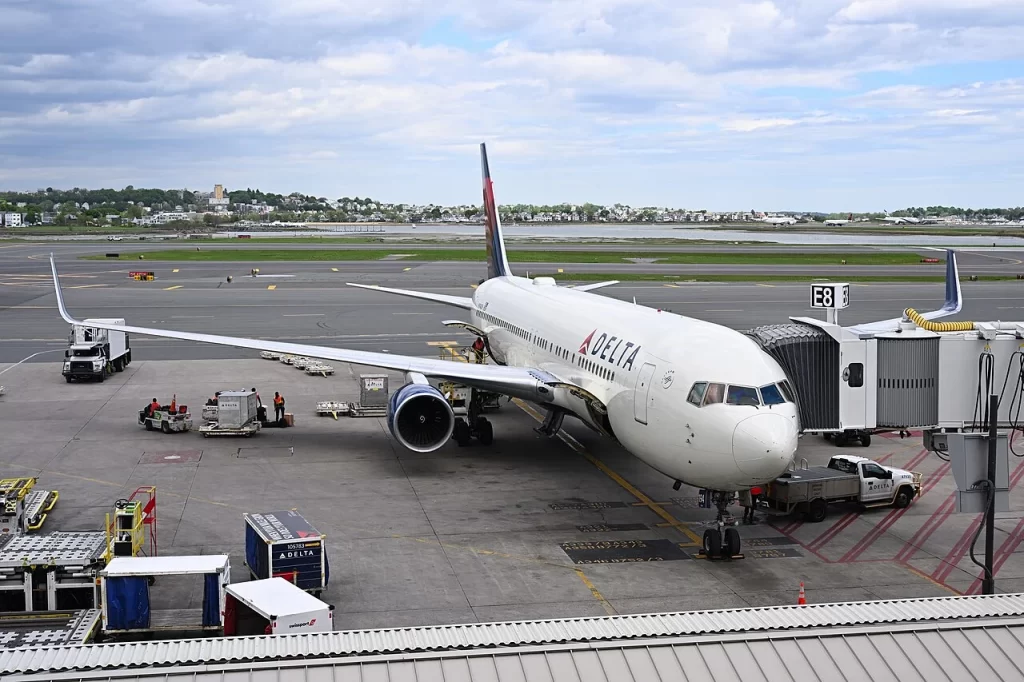
When aircraft reach the end of their operational life, they aren’t simply abandoned—they’re carefully taken apart through a highly organized and detail-oriented process. In fact, up to 90% of an aircraft’s materials can be recovered, recycled, or reused.
These jets are typically flown to specialized facilities—places like Birmingham, Alabama—where technicians methodically strip them down, removing engines, avionics, and other key systems before distributing those components into the aviation aftermarket.

According to Simple Flying, engines hold the greatest value by far:
These engines can be removed, overhauled, and then recertified and resold for use on other aircraft. For the likes of cockpit screens and navigation systems, they can be reused and repaired.
Before any part can be reused, however, it must undergo thorough inspection and refurbishment to meet safety standards. Once certified as serviceable, these components provide airlines with a more economical alternative to brand-new parts. Even larger elements—like evacuation slides, landing gear, and structural sections of the airframe—can be restored and put back into operation, ensuring that very little of the aircraft truly goes to waste.