
A routine international arrival turned extraordinary when a passenger gave birth onboard a Caribbean Airlines flight just minutes before landing at John F. Kennedy International Airport—an event that drew both swift coordination from air traffic control (ATC) and a lighthearted response that quickly captured attention online.
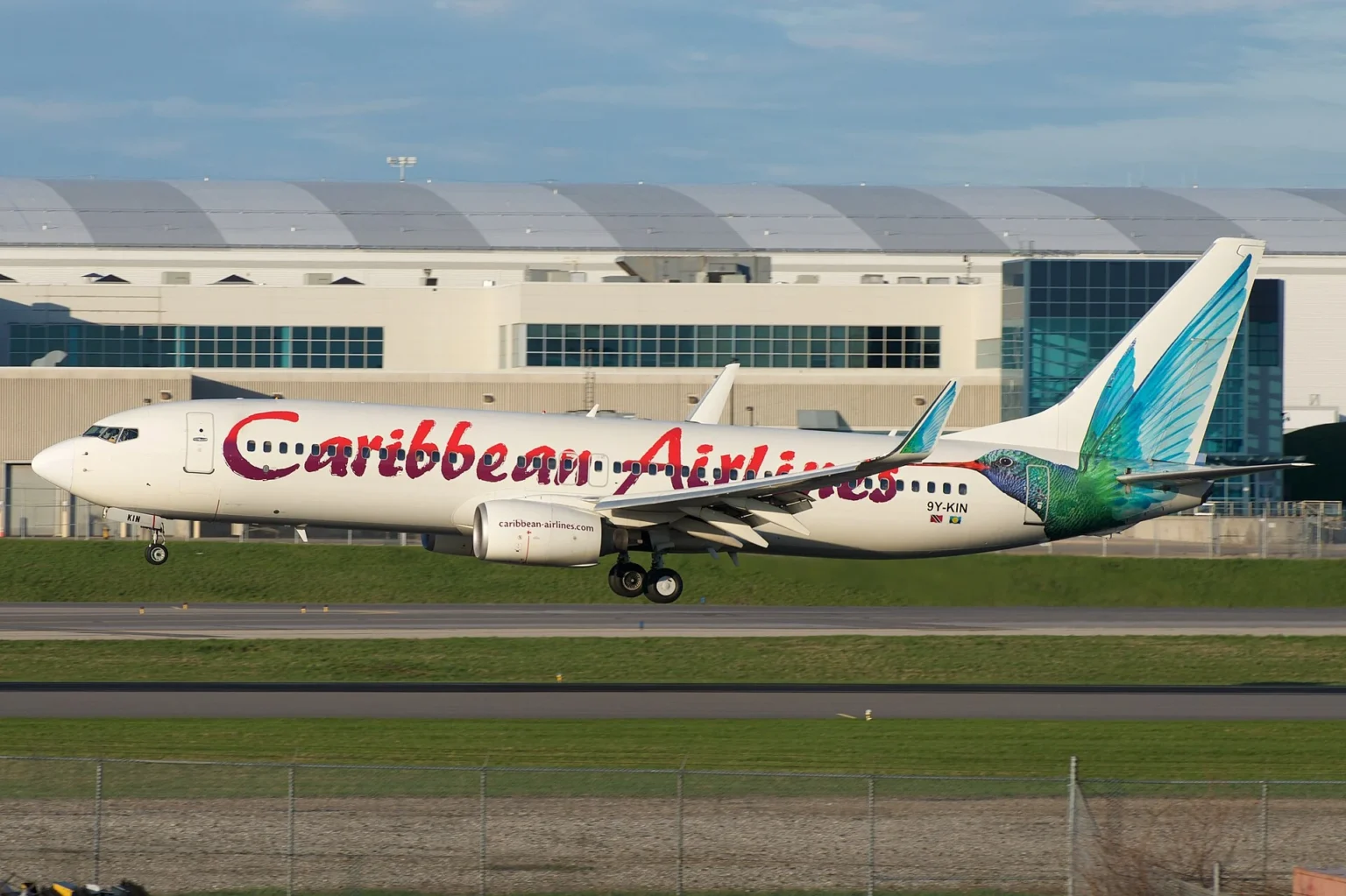
Labor Begins During Final Approach on Caribbean Airlines Flight BW005
The incident occurred on Caribbean Airlines Flight BW005 as the aircraft was descending into New York. According to aviation reporting from View from the Wing, the crew notified air traffic control that a pregnant passenger had gone into labor and requested priority handling to minimize time in the air.
Controllers responded immediately, clearing the aircraft on a more direct routing and expediting its descent. The flight was guided from 3,000 feet down to 2,000 feet and given priority clearance to land on Runway 04R at JFK, ensuring the fastest possible arrival.
A Smooth Landing—But the Baby Arrived First
Despite the expedited handling, the situation moved even faster than expected. The baby was delivered onboard before the aircraft reached the gate.
Air traffic controllers had already coordinated for medical personnel to meet the aircraft upon arrival. After touchdown, in a moment that blended professionalism with humor, a ground controller asked whether the baby had been born and jokingly suggested naming the newborn “Kennedy”—a nod to the airport’s namesake.
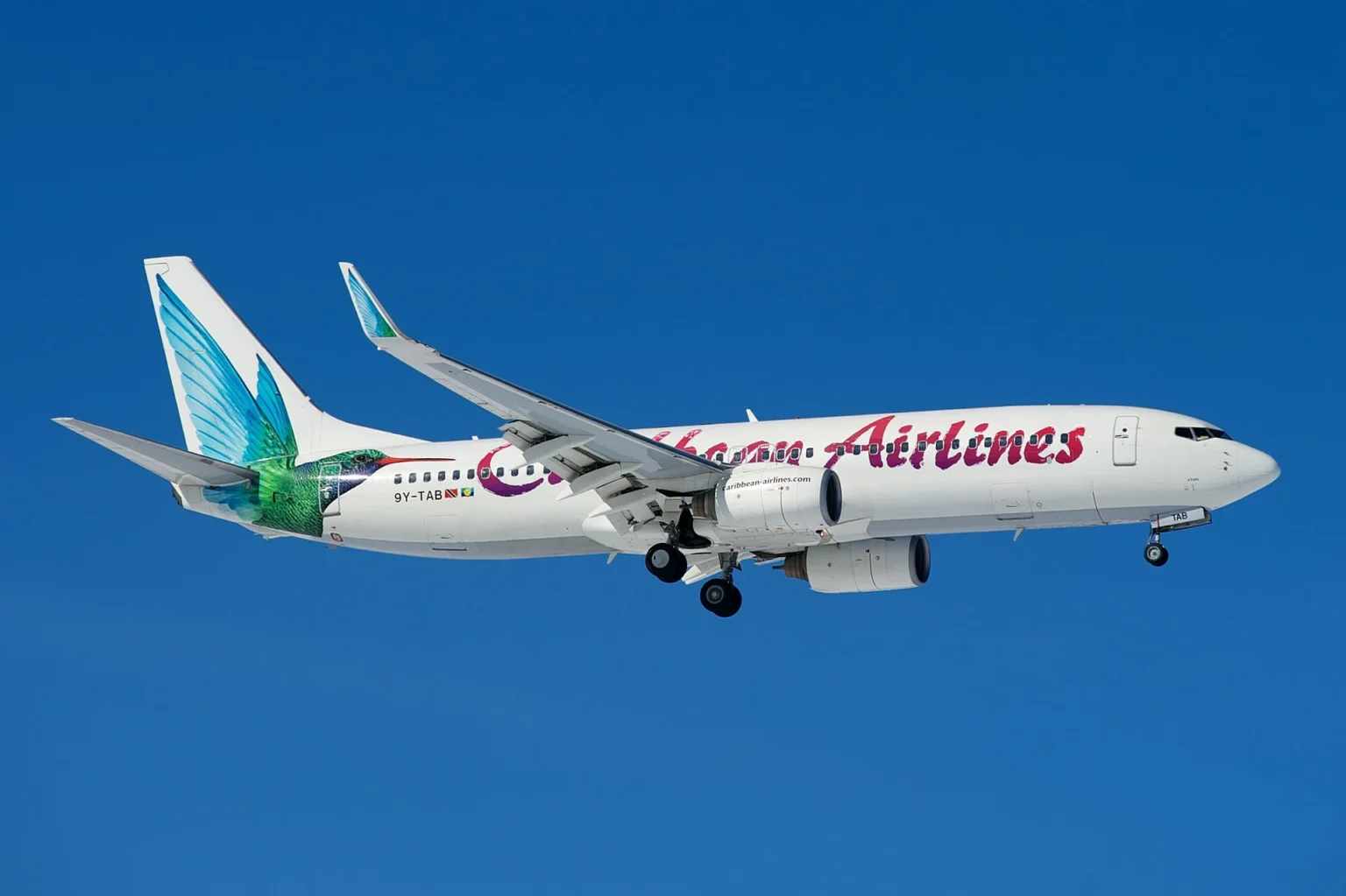
Why No Emergency Was Declared on BW005
Interestingly, the flight crew did not declare a formal emergency. Instead, they informed controllers of the situation and requested operational priority—a standard approach when conditions are urgent but stable.
According to guidance from the Federal Aviation Administration, pilots may request priority handling without declaring an emergency when safety is not immediately compromised but time-sensitive assistance is needed
This allowed for:
- Faster routing and descent
- Immediate landing clearance
- Pre-arranged medical assistance at the gate
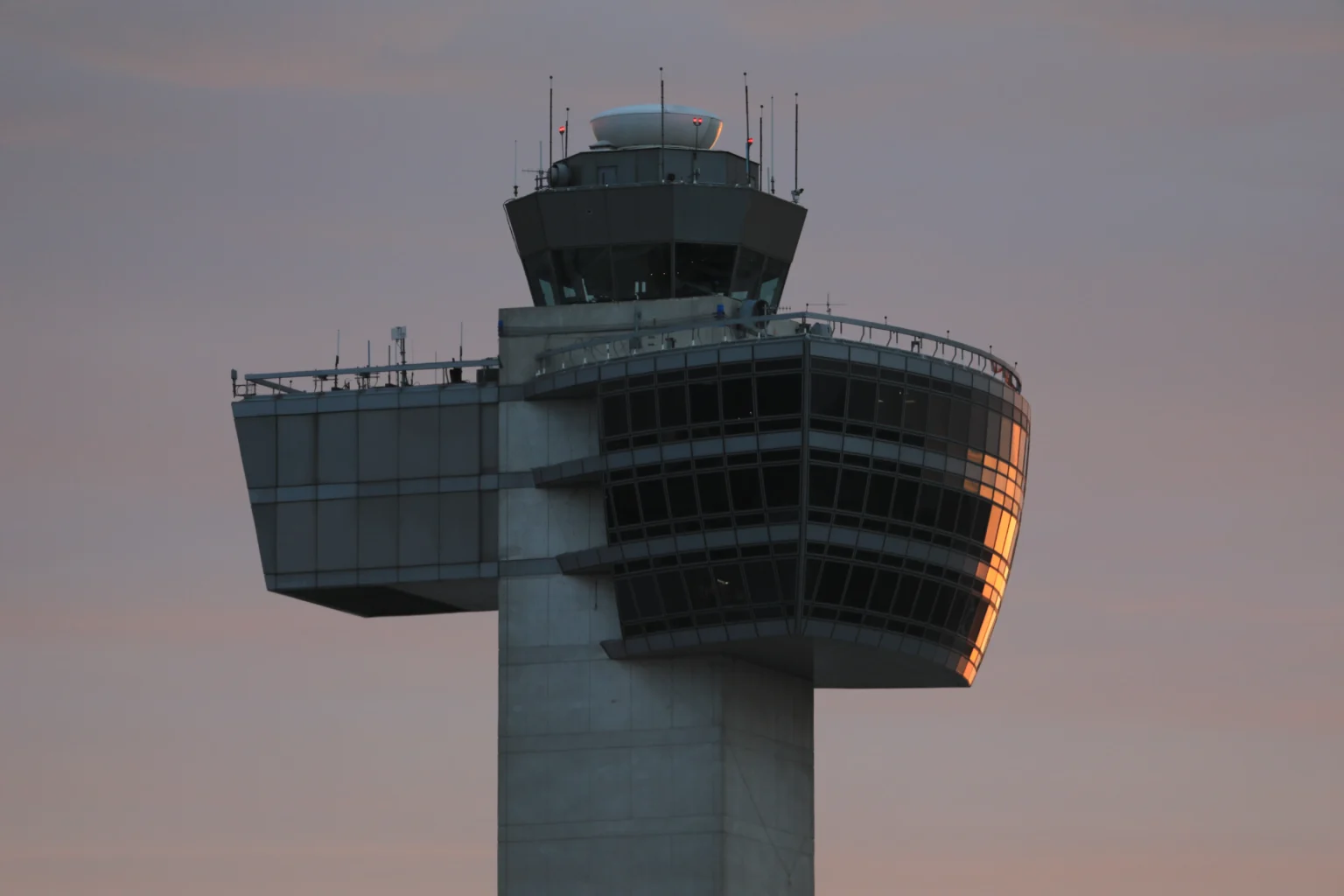
Caribbean Airlines BW005: Flight and Aircraft Details
According to data from planespotters.net, the aircraft involved was a Boeing 737 MAX 8, registered as 9Y-SUR, a model widely used for short- to medium-haul international routes. The flight landed shortly before noon local time on April 4, 2026. This aircraft that is 4.2 years old arrived in the carrier’s fleet in May 2022.
Aircraft of this type carry standard onboard medical kits, but inflight births rely largely on cabin crew training and, in many cases, assistance from medically qualified passengers if available.
How Rare Are Inflight Births?
Births on commercial aircraft are extremely uncommon. Aviation and medical estimates suggest fewer than 100 such cases have been documented globally.
A somewhat similar incident occurred in 2005 on a flight operated by BWIA West Indies Airways (the predecessor to Caribbean Airlines), where a baby was born shortly before landing—also in New York.
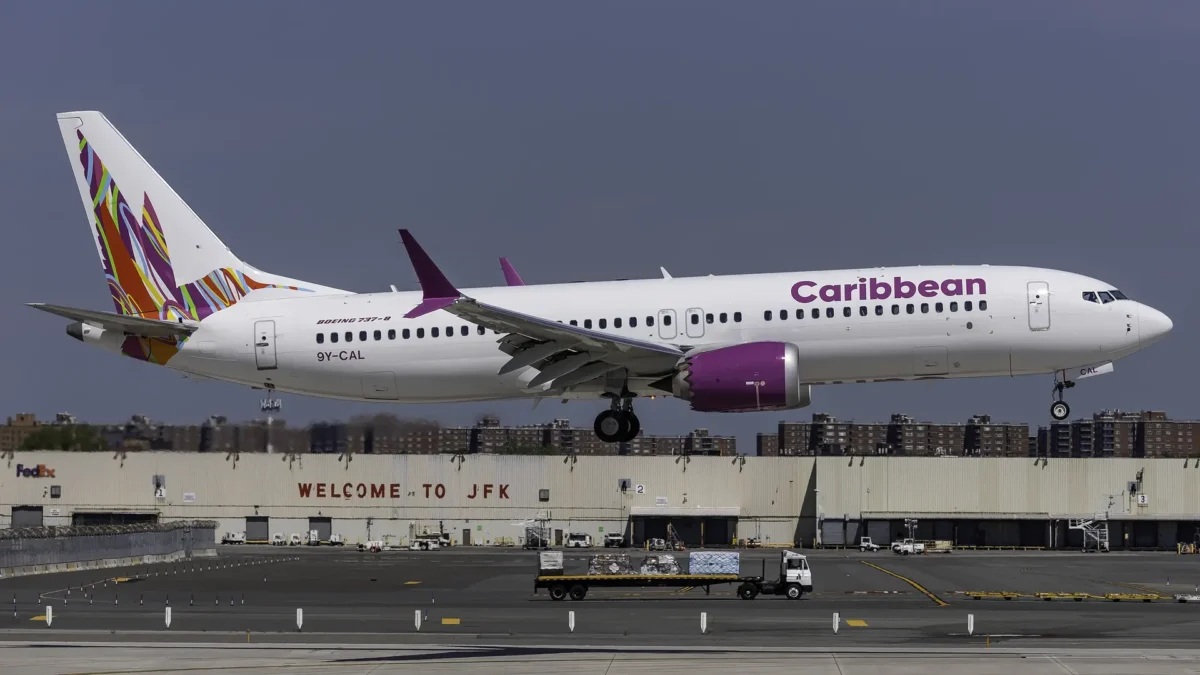
Photo: By Mark Bess – https://www.flickr.com/photos/757200er/52351198883/, CC BY-SA 2.0, https://commons.wikimedia.org/w/index.php?curid=125830547
What Happens to “Kennedy” (as proposed by the ATC) now?
One of the most intriguing aspects of inflight births is citizenship. Under the Fourteenth Amendment to the United States Constitution, individuals born “in the United States” are generally granted citizenship.
This can extend to births that occur:
- Within U.S. airspace
- Over territorial waters (up to 12 nautical miles offshore)
The U.S. Citizenship and Immigration Services confirms that jurisdiction plays a key role in determining eligibility.
Airline Rules for Pregnant Passengers
Most airlines have policies designed to reduce the risk of such mid-air events. While details vary, general guidelines include:
- Travel permitted up to 36 weeks of pregnancy
- Medical clearance often required after 28 weeks
- Increased risk of labor after 37 weeks
Caribbean Airlines allows expectant mothers to travel without medical documentation until approximately 32 weeks, after which additional requirements may apply.
All in All
While unexpected, this incident highlights how modern aviation systems are designed to handle unusual situations efficiently. From cockpit coordination to air traffic control support, the response ensured both a safe landing and immediate medical attention.
At the same time, it left one newborn with an unforgettable origin story—arriving just moments before touchdown at one of the world’s busiest airports.