Sikorsky, a Lockheed Martin company, has introduced new Armed Black Hawk helicopter kits designed to expand the operational envelope of the UH-60 Black Hawk fleet into multi-role combat applications. The announcement was made on April 15, 2026, at the Army Aviation Warfighting Summit in Nashville, Tennessee, held near Nashville International Airport (BNA), United States.
The company positions the upgrade as a modular pathway that enables a single airframe to perform airmobile assault, close air support, medical evacuation (MEDEVAC), intelligence, surveillance and reconnaissance (ISR), and tactical lift missions. The kits aim to reduce fleet complexity while improving mission flexibility and lifecycle economics for both U.S. and allied operators.
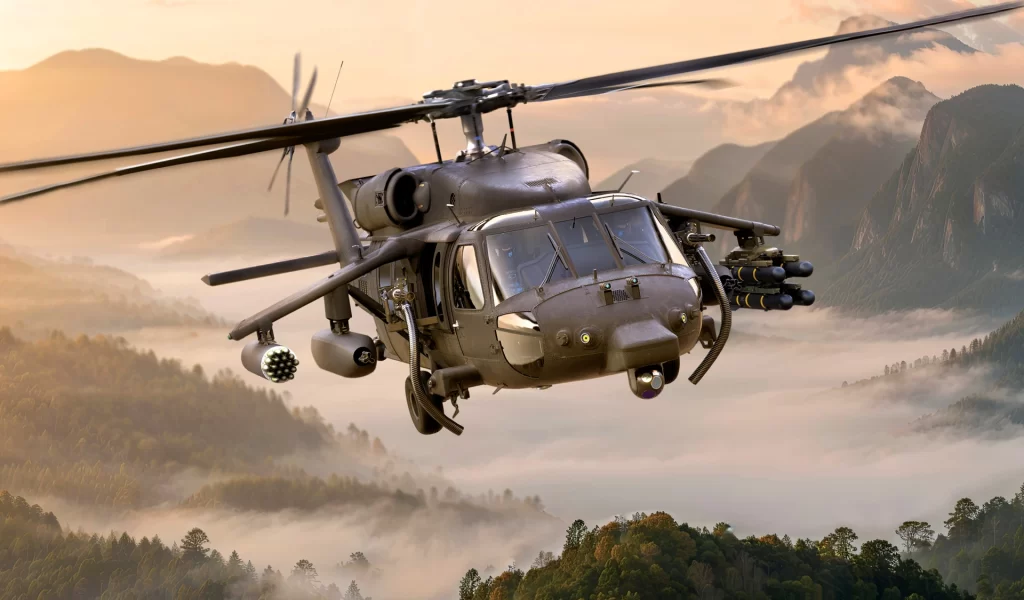
Sikorsky Unveils Armed Black Hawk Kits in Nashville
Sikorsky formally unveiled the Armed Black Hawk kits at the Army Aviation Warfighting Summit in Nashville, as it presented two production-ready configurations designed to enhance both close support and precision strike capabilities.
Rich Benton, Vice President and General Manager at Sikorsky, emphasized the operational philosophy behind the upgrade. He stated,
The new Armed Black Hawk kits give warfighters one aircraft that can do it all: a single, versatile, combat-proven platform where ground units can quickly switch out the commercially-produced kits, keeping mission readiness high.
He further added that the initiative reflects Sikorsky’s broader modernization strategy, noting that the company is committed to delivering
21st Century Security solutions that deliver unmatched performance, lifecycle savings and gives soldiers the reliable, interoperable capability they need to win today and tomorrow.
The presentation also included a Black Hawk airframe configured with both new kit variants, highlighting their plug-and-play integration philosophy and modular weapon system architecture.
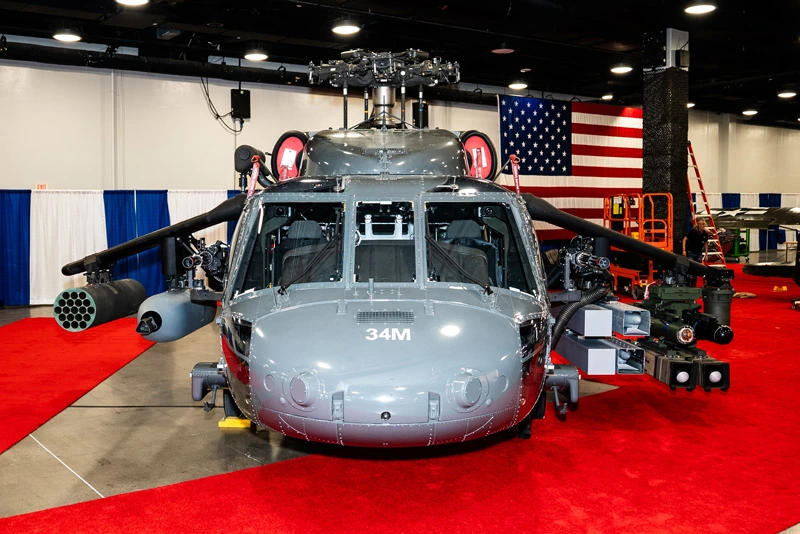
Modular Armed Black Hawk Kits expand Multi Role Mission Flexibility
The Armed Black Hawk kits introduce a structural shift in how medium-lift rotorcraft can be configured for combat operations. Sikorsky designed the system to allow rapid conversion between mission sets without requiring permanent airframe modifications.
The company states that operators can reconfigure the helicopter in approximately three hours, enabling commanders to adapt rapidly to changing operational environments. This flexibility supports high-tempo deployments where aircraft availability and mission diversity are critical.
The kits are engineered to support multiple mission roles, including:
- airmobile assault
- close support operations
- medical evacuation
- ISR
- tactical transport
This consolidation of capabilities into a single platform reduces the requirement for multiple specialized aircraft types.
Sikorsky also emphasizes that the system builds on existing operational experience with armed Black Hawk deployments in the Middle East. That operational history provides a baseline for refining survivability, payload integration, and weapons system compatibility across diverse theatres.
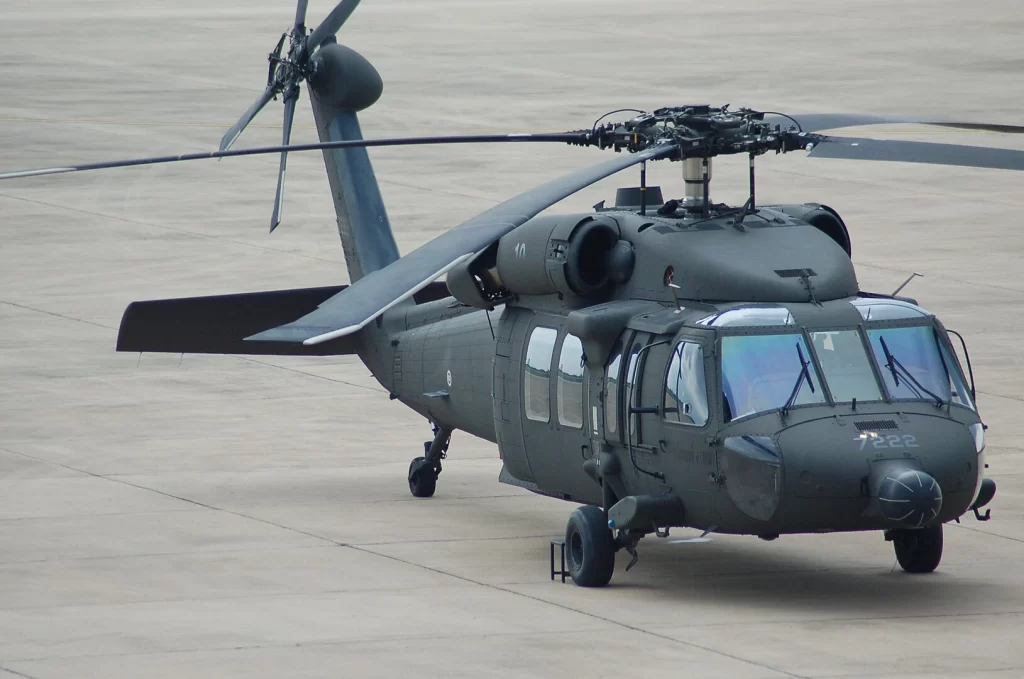
Production Ready Configurations and Armament Integration Options
Sikorsky has developed two production-ready kit variants that allow operators to tailor the Black Hawk’s combat role without redesigning core airframe systems. One configuration focuses on close support, while the other enables precision strike capability through modular weapon integration.
The kits include provisions for “armament wings,” which function as modular attachment points for weapons and sensors. Operators may select an integrated configuration at procurement or upgrade later through retrofit pathways, depending on operational requirements.
This modularity reflects a broader trend in military aviation toward scalable mission systems rather than fixed-role aircraft. The approach reduces procurement risk while increasing interoperability across allied fleets.
The design also aligns with Sikorsky’s long-term production roadmap, which anticipates Black Hawk support and sustainment extending beyond 2070.
Rapid Reconfiguration Capability and Operational Efficiency Gains in UH-60
A central feature of the Armed Black Hawk concept is its rapid reconfiguration capability, which Sikorsky estimates at approximately three hours for full mission role changes. This capability significantly reduces downtime between sorties in dynamic combat environments.
The modular architecture allows ground crews to switch between mission-specific kits without extensive depot-level maintenance. This approach improves sortie generation rates and operational availability, particularly in expeditionary deployments.
By consolidating multiple mission profiles into a single airframe, the system reduces logistical overhead associated with training, maintenance, and spare parts provisioning. This results in a more streamlined sustainment model for operators.
Sikorsky positions the system as a cost-efficient alternative to maintaining multiple specialized fleets, particularly for countries seeking scalable modernization of rotary-wing assets.
Black Hawk Modernization and Long-Term Platform Evolution
The Armed Black Hawk kits form part of a broader modernization trajectory for the UH-60 platform family. Sikorsky continues to introduce incremental upgrades that enhance performance, digital integration, and autonomy support systems.
The company has progressively integrated higher-output engines, improved avionics, and digital mission architectures into the Black Hawk fleet. These enhancements aim to improve survivability and operational effectiveness in contested environments.
Here are the specifications of this chopper:
| Category | Specification |
|---|---|
| Crew | 2 pilots + 1–2 crew chiefs/gunners |
| Troop capacity | 11–14 combat troops |
| MedEvac capacity | Up to 6 stretchers + medical attendants |
| External cargo | ~4,100 kg (9,000 lb) sling load |
| Length (rotors turning) | 19.76 m (64 ft 10 in) |
| Rotor diameter | 16.36 m (53 ft 8 in) |
| Height | 5.13 m (16 ft 10 in) |
| Engines | 2 × General Electric T700 turboshaft |
| Power output | ~1,890 shp each |
| Max speed | ~357 km/h (193 knots) |
| Cruise speed | ~280 km/h (150–175 knots) |
| Combat radius | ~590 km |
| Ferry range | Up to ~2,200 km |
| Service ceiling | ~5,800–6,000 m (≈19,000 ft) |
| Rate of climb | ~700–1,500 ft/min |
| Empty weight | ~5,100–5,400 kg |
| Max takeoff weight | ~9,900–10,660 kg |
| Armament (optional) | 7.62 mm door guns, rockets/missiles (variant dependent) |
| Primary roles | Troop transport, MEDEVAC, cargo lift, special operations |
Sikorsky is also investing in autonomy systems designed to reduce pilot workload and improve safety margins during complex missions. These technologies support the transition toward semi-autonomous rotorcraft operations in future conflict scenarios.
Each upgrade cycle builds on decades of operational feedback, ensuring that the platform remains relevant across evolving battlefield requirements.
All in All
The Black Hawk remains one of the most widely deployed military helicopters globally, with decades of operational refinement across multiple theatres. Its continued evolution demonstrates how legacy platforms can remain strategically relevant through modular innovation.
The Armed Black Hawk kits extend this trajectory by shifting capability expansion from structural redesign to mission system interchangeability. This reduces upgrade friction while maintaining compatibility with existing global fleets.
As modern military aviation increasingly prioritizes flexibility over specialization, the Black Hawk’s modular roadmap positions it as a sustained reference point for medium-lift combat aviation design philosophy.