Choosing an aviation training school is not a minor decision. Flight training costs range from approximately $10,000 for a Private Pilot License (PPL) to $89,000 or more for a zero-to-airline programme, with international students at some academies paying between $85,000 and $150,000 in total training costs.
The school a student chooses determines not just how quickly and cost-effectively they learn to fly, but also how well-positioned they are to secure employment with airlines, corporate operators, or charter companies when training is complete. In 2026, the global aviation industry is experiencing one of the most intense pilot demand cycles in its history, which means students who train at the right school will find themselves entering a market where demand far exceeds supply.
Boeing’s 2025 Pilot and Technician Outlook projects that the commercial aviation sector will need 660,000 new pilots globally between 2025 and 2044. Oliver Wyman forecasts that the pilot supply gap will reach its peak in 2026 itself, with a shortfall of approximately 24,000 qualified pilots in the United States alone. For aspiring pilots, the window for career entry has rarely been more favorable — but the quality of training school chosen will determine how quickly and effectively they can take advantage of it.
Why The Choice of Flight School Matters More Than Most People Realize
Many aspiring pilots focus on the cost of tuition when evaluating flight schools. Cost is important, but it is only one of several critical factors. Schools that train under different FAA regulatory frameworks, operate different fleet sizes, employ instructors with different levels of experience, and sit in different geographic locations will produce meaningfully different outcomes for their students — even if they advertise similar prices.
The stakes are high in both directions. A student who selects the wrong school may face training delays caused by aircraft availability, instructor turnover, or an unstructured curriculum. Gaps between lessons force students to relearn previously practised skills, and on irregular training schedules, roughly 20% of each flight may be spent reviewing material from the previous session rather than progressing. A school that loses a student to poor fleet maintenance or poor instructor quality does not refund the hours already spent.
On the other hand, the right school — with FAA-approved structure, a well-maintained fleet, experienced instructors, and active airline partnerships — can take a student from zero experience to a commercial airline cockpit in as little as three years under current market conditions. ATP Flight School’s own data shows that regional airline placements for its graduates now occur just three years after training began.
Step One: Understand The Two FAA Regulatory Frameworks Before You Apply Anywhere
The single most fundamental choice in flight training in the United States is between a Part 61 programme and a Part 141 programme. Both pathways lead to the same FAA pilot certificates, but they differ in structure, cost, minimum hours, and career implications.
The FAA’s 14 CFR Part 61 sets baseline requirements for pilot certification on an individual basis. Under Part 61, any FAA-certificated flight instructor can train a student with no required curriculum structure, no set sequence of lessons, and no FAA oversight of the school’s specific training programme. Because of this flexibility, the FAA requires more minimum flight hours before a student can sit a checkride.
Under Part 141, a school must submit an FAA-approved Training Course Outline (TCO), syllabus, and facility documentation for review before it can operate as a certificated pilot school. The FAA audits pass rates, and schools where fewer than 80% of students pass their checkrides on the first attempt risk losing their certification. The benefit of this extra oversight is a reduction in minimum required hours.
The key hour differences between the two pathways:
- Private Pilot License (PPL): Part 61 requires 40 hours minimum; Part 141 requires 35 hours minimum
- Instrument Rating: Part 61 requires 50 hours of cross-country Pilot in Command time plus 40 hours of instrument time; Part 141 requires only 35 hours of instrument training
- Commercial Pilot License (CPL): Part 61 requires 250 total flight hours; Part 141 graduates who complete the integrated private + instrument + commercial sequence may qualify at approximately 190 hours
These lower minimums under Part 141 do not automatically guarantee lower totals. Weather delays, schedule gaps, proficiency levels, and aircraft or instructor availability can push students beyond the minimums regardless of which path they take. However, the structured curriculum does tend to produce more consistent outcomes for career-track students.
Which path is right for you?
- Part 61 suits recreational pilots, students with full-time jobs or irregular schedules, and those who prefer a personalised, instructor-tailored approach.
- Part 141 suits career-minded students, international students who need visa status (as M-1 student visa eligibility generally requires a Part 141 school), and those who want the most efficient path to airline employment.
A practical approach used by many students: start Part 141 for the structure and reduced hours. If life circumstances change, switching to Part 61 is possible and all logged hours transfer.
Step Two: Verify FAA Accreditation and Do a Full Background Check
The FAA maintains a public list of certificated pilot schools, and any serious candidate should verify a school’s standing before enrolling. A school that cannot demonstrate current FAA certification — or a school operating under Part 61 whose instructors cannot show current CFI certificates — represents a significant risk to a student’s investment.
Beyond the FAA’s own records, the Aircraft Owners and Pilots Association (AOPA) conducts an annual Flight Training Experience Survey that identifies the best-rated schools and instructors across the country, based on reviews from actual students. AOPA’s programme is one of the most reliable public signals of school quality available to prospective students.
AOPA’s 2025 national winner for best flight school was In The Pattern, from the Central Southern region — the school’s fourth consecutive year winning recognition from AOPA, having been named best flight school in the nation in 2021, 2022, 2023, and again in 2025. Awards of this consistency provide meaningful signal about a school’s quality.
The AOPA also maintains a flight school directory that aspiring pilots can use to find both Part 61 and Part 141 schools in their area, along with links to student reviews and feedback.
A background check on any school should include:
- FAA certification status (verified directly on the FAA website)
- Student reviews on independent platforms such as Google, AOPA, and aviation forums
- First-attempt checkride pass rates, if the school will disclose them
- Instructor retention rates (high turnover is a warning sign)
- Any FAA enforcement actions or safety notices on record
Step Three: Evaluate Instructor Quality — The Single Biggest Variable in Training Outcomes
Of all the factors that determine how fast and how well a student learns to fly, instructor quality is the most important and the hardest to evaluate before enrolling. A strong flight school should have instructors who know their subject matter, can communicate it effectively, and create a supportive learning environment. Flight training is inherently stressful, and the wrong instructor can slow a student’s progress significantly.
The national first-attempt checkride pass rate for Private Pilot candidates in 2023 was 74.5%, meaning roughly one in four candidates failed their first attempt. That figure varies considerably by school. A school that produces consistent first-attempt pass rates above the national average is demonstrating strong instructor preparation.
In 2025, FAA data showed that DPE (Designated Pilot Examiner) administered checkrides at the Private Pilot level had a pass rate of 75.1%, while checkrides administered by FAA Inspectors had a pass rate of 75.7%. Prospective students should ask schools directly for their first-attempt pass rate data before committing.
When evaluating instructors, ask the following questions:
- How many hours of total flight time does each instructor have?
- What is each instructor’s teaching experience and background?
- How many students has the instructor taken through a successful first-attempt checkride?
- What is the school’s instructor retention rate — and how often do students have to switch instructors mid-training?
- Are the instructors full-time employees or part-time contractors building hours before moving to airline jobs?
AOPA’s guidance on choosing a flight school emphasises that even if a school has excellent overall ratings, it is still the quality of the individual instructor that will determine the benefit to any particular student — and that quality ranges from poor to exceptional within any given school.
Step Four: Inspect The Fleet — Size, Age, And Equipment All Matter
A school with only a few aircraft and high student volume will create scheduling bottlenecks. Students wait longer between lessons, skills fade between sessions, and training timelines stretch — all of which increase total cost. Before enrolling, ask specifically how many aircraft the school operates and what the student-to-aircraft ratio looks like.
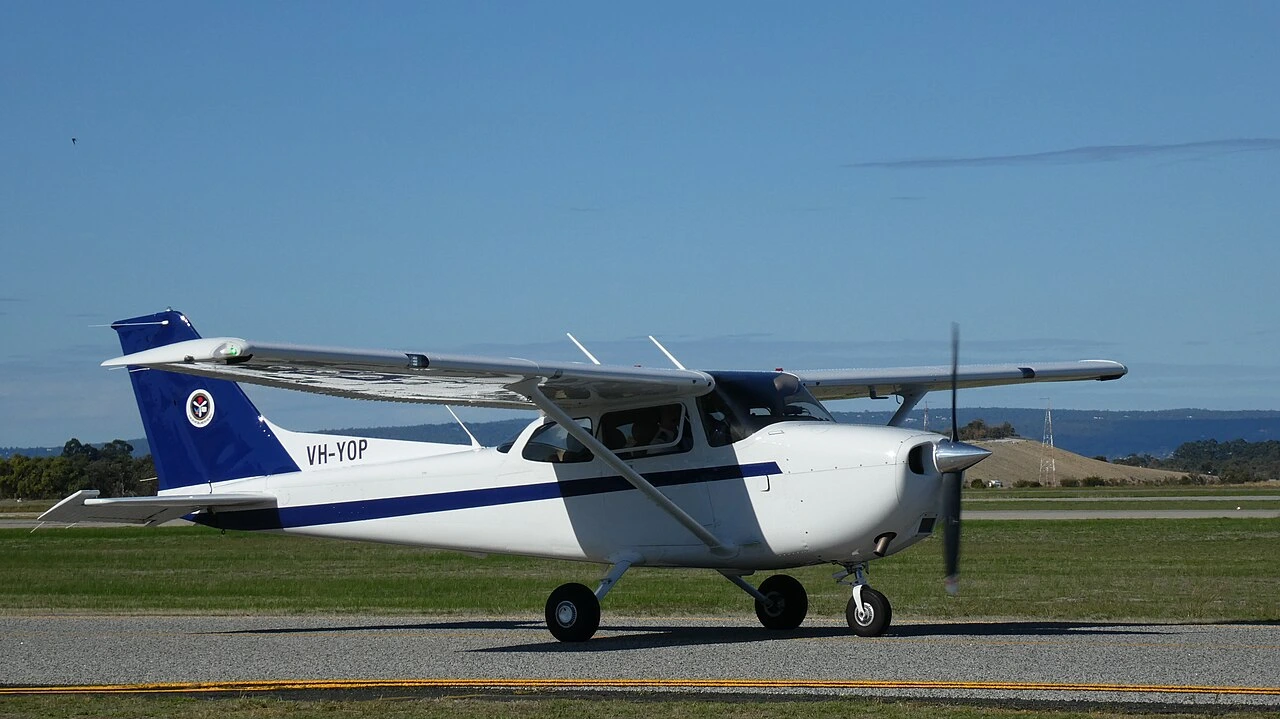
Aircraft used for primary training include the Cessna 172 Skyhawk, the Piper Archer, and the Diamond DA40. Single-engine training aircraft typically cost $150 to $200 per hour to rent at most schools. Schools that own their aircraft outright, rather than leasing, tend to have better maintenance control and lower downtime.
Key questions to ask about the fleet:
- Is maintenance done in-house or outsourced? (In-house maintenance minimises downtime)
- What avionics does the training fleet use? (Glass cockpit aircraft such as Garmin G1000-equipped Cessna 172s better prepare students for modern airline cockpits)
- Does the fleet include instrument-capable aircraft and simulators for advanced ratings?
- What is the typical aircraft availability rate?
ATP Flight School, currently the largest flight training provider in the United States, took delivery of 61 new factory aircraft in 2025 — including 54 Cessna 172 Skyhawks equipped with Garmin G1000 NXi avionics and seven Piper Seminoles. That level of fleet investment ensures low student-to-aircraft ratios across its 87 training centres nationwide.
Simulators also play an important role in modern flight training. For instrument training specifically, Flight Training Devices (FTDs) allow students to practise emergency procedures and cockpit flows in a lower-cost, lower-stakes environment — and approved simulator time does count toward certain rating minimums. A school that integrates simulator training well into its curriculum can reduce total costs and increase training quality simultaneously.
Step Five: Consider Geographic Location And Its Impact On Training Time And Cost
Where a flight school is located directly affects how quickly a student can complete training and what the total cost will be. Flight schools in regions with favorable weather year-round — such as Florida, California, and Arizona — allow students to log more flight hours with fewer weather-related cancellations. Students in rainy or snowy regions often take longer to finish, and every additional month of training adds cost.
Climate data shows that tropical and desert climates offer 300 or more flying days per year, while temperate climates may offer only 180 to 220 flying days annually. Fast-track candidates in Arizona and Florida can complete training three to six months faster than counterparts training in the United Kingdom or Canada. That difference in timeline translates directly into a difference in total cost.
Studying in states like Florida or Texas often reduces training costs due to favorable weather and more affordable living expenses, while training in major cities can significantly increase total cost of attendance. Students who must relocate for training should factor in housing and living costs, which can add approximately $8,000 to $12,000 over a 9-to-12-month programme.
In choosing a location, consider:
- Average flying days per year in the region
- Proximity to controlled airspace (useful for building radio communication skills)
- Cost of living in the area
- Proximity to airports where checkrides can be efficiently scheduled
- Access to multi-engine training aircraft and complex airspace for advanced ratings
Step Six: Research Airline Partnerships And Graduate Placement Records
For career-track students, a flight school’s relationships with airlines and its track record of graduate placements are among the most important selection criteria. Schools that have formal cadet or pathway agreements with regional and major airlines give their graduates a direct route into professional employment that independent students do not have.
ATP Flight School led the industry in graduate airline placements in 2025, with 983 graduates placed at regional and major airlines as well as corporate operators. At the regional airline level, one out of every four new hires in 2025 graduated from ATP. Legacy and major airline placements in 2025 outperformed the previous year by 30%, exceeding overall industry hiring growth.
American Airlines (AA) expanded its Cadet Academy network in March 2025 by adding ATP Flight School’s Charlotte location, noting that more than 1,500 ATP graduates had joined American’s wholly owned regional carriers — Envoy, Piedmont, and PSA — since 2004.
Embry-Riddle Aeronautical University (ERAU) announced a strategic partnership with ATP Flight School in November 2025, creating an integrated pathway for ATP graduates to earn Embry-Riddle degree programmes — including an Associate of Science in Aeronautics, a Bachelor of Science in Aeronautics, or a Bachelor of Science in Pilot Operations — with up to 45 transfer credits from their flight certificates.
Frontier Airlines (F9) has its own pilot hiring programme with Embry-Riddle students, requiring candidates to maintain a GPA above 3.2 in the Aeronautical Science degree programme and hold the ability to obtain a First Class medical certificate.
Students should ask every school they consider the following questions about placement:
- How many graduates were placed with airlines in the past 12 months?
- Which specific airlines have formal pathway or cadet agreements with the school?
- What is the typical time from first training day to first airline job?
- Does the school offer interview preparation support or alumni networking?
The Hidden Costs No Flight School Prospectus Tells You About
When a school advertises a programme price, that figure often reflects minimum flight hours only. The true total cost of training includes many line items that are rarely mentioned upfront. Students should request a fully itemised all-in quote from every school they consider, and should add a contingency budget of at least 15–25% above the base estimate.
The following costs are frequently understated or excluded from headline tuition figures:
- FAA written exam fees
- Checkride fees paid to Designated Pilot Examiners (DPEs)
- Aircraft rental for additional hours beyond minimum (most students need them)
- Ground school and study materials
- Headset and Electronic Flight Bag (EFB) costs
- Medical examination fees
- TSA Alien Flight Student Program (AFSP) fees for international students
- Housing and living expenses during full-time programmes
- Insurance and renter’s insurance
Going from zero experience to the 1,500 hours required for an Airline Transport Pilot License (ATPL) costs $80,000 to $150,000 or more at most schools when all costs are included.
Aviation scholarships and financing options are increasingly available. AOPA, the Organization of Black Aerospace Professionals (OBAP), and many individual airlines and manufacturers offer grants. GI Bill benefits also apply at many Part 141 schools for eligible veterans.
The Essential Pre-Enrolment Checklist
Choosing a flight school correctly requires firsthand verification, not just website research. The following steps will give any prospective student the clearest picture of what to expect before committing financially.
Before making a final decision:
- Take a discovery flight at the school to experience the aircraft, the instructors, and the daily training environment
- Tour the hangar and inspect the fleet for aircraft age, condition, and avionics equipment
- Speak directly with current students and recent graduates — not just the admissions office
- Request first-attempt checkride pass rate data in writing
- Verify FAA certification status at faa.gov/licenses_certificates/airline_certification/pilotschools
- Cross-reference the school’s reputation on AOPA’s Flight Training Experience Survey database
- Request a fully itemised cost estimate including a realistic total (not just FAA minimums)
- Confirm what airline partnerships or cadet pathway agreements the school holds
- Ask about instructor retention rates and what happens if your assigned instructor leaves mid-training
AOPA’s Choosing a Flight School guide notes that schedule and learning style are just as important as programme structure — and that home-study ground school guided by an instructor is a popular and cost-effective option for students who cannot attend in-person classes full-time.
The Eight Factors That Determine the Right Aviation Training School
Every aspiring pilot has a unique combination of goals, budget, schedule, and career ambitions. There is no single correct school for every student. However, the following eight factors provide a consistent framework for making a well-informed decision:
- Regulatory framework: Part 141 for career-track and international students; Part 61 for recreational pilots or those with inflexible schedules
- FAA accreditation: Verify certification status directly with the FAA before enrolling
- Instructor quality: Evaluate experience, retention, and first-attempt checkride pass rates
- Fleet size and condition: Sufficient aircraft-to-student ratios; modern avionics; in-house maintenance
- Geographic location: Favour year-round flying climates to minimise weather delays and total costs
- Airline partnerships: Schools with formal cadet or pathway agreements give graduates a direct employment advantage
- Total cost transparency: Demand fully itemised quotes and budget a 15–25% contingency above the stated figure
- Graduate outcomes: Ask for documented placement rates, not marketing claims


.jpg)


