More than 10,000 Air Canada and Air Canada Rouge flight attendants, represented by the Canadian Union of Public Employees (CUPE), went on strike in August 2025 after eight months of bargaining failed to produce a deal.
Ottawa invoked Section 107 of the Canada Labour Code within 12 hours to force binding arbitration, and the Canada Industrial Relations Board ordered crew back to work the next day. A tentative agreement followed on August 19, 2025, but when it went to a ratification vote, members rejected the wage portion by 99.1 percent, sending pay rates alone to arbitration while the rest of the contract, including new “ground pay” for pre-flight duties, stood.
Arbitrator Paula Knopf issued her ruling on February 17, 2026, closing the dispute. The award set wage increases of 12 percent for junior mainline flight attendants and 8 percent for senior mainline steps in year one, 13 percent for Rouge crew, and further increases of 3 percent, 2.5 percent, and 2.75 percent across the remaining three years of a contract that runs through March 2029. All increases are retroactive to April 1, 2025.
What Cabin Crew Actually Earn
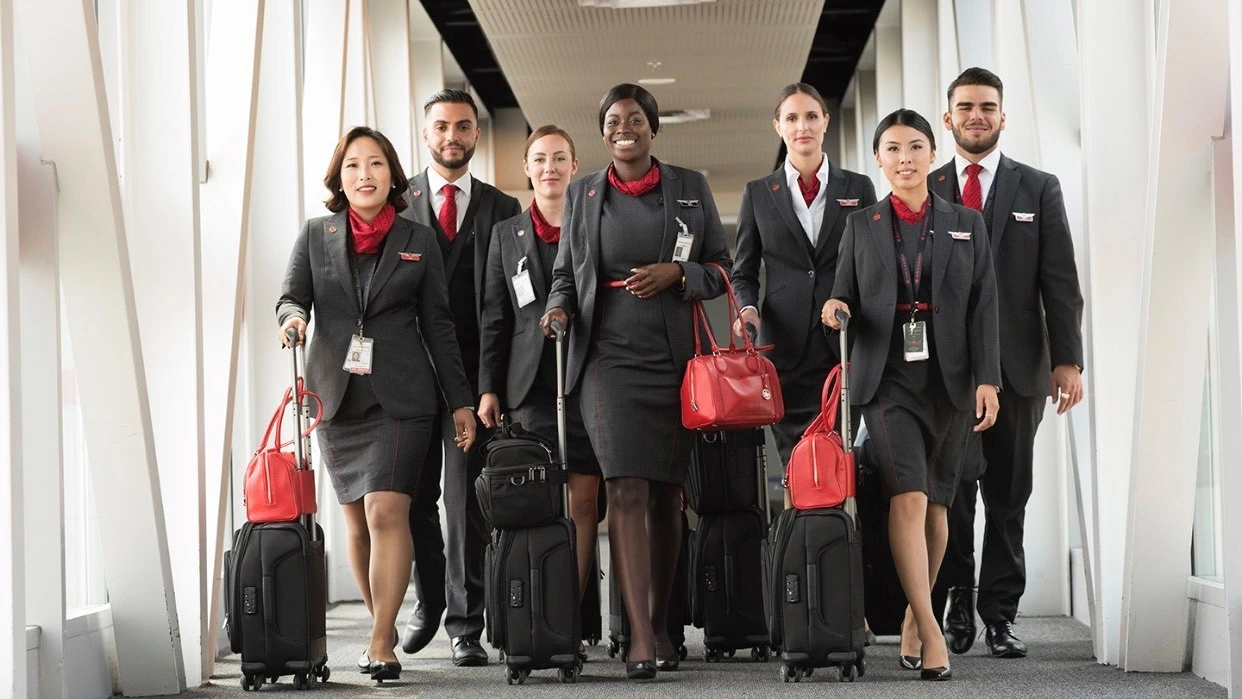
Air Canada (AC) cabin crew are paid hourly against block time (time the aircraft is actually moving), not a flat salary, which is why published monthly figures vary by how many hours a given crew member is credited in a month.
According to Air Canada’s own compensation backgrounder, a flight attendant’s hourly rate can climb over 150 percent through the pay scale’s first ten years of seniority, reaching roughly CA$63/hour at the top of the Flight Attendant scale before the 2026 arbitration increases were layered on top.
On a typical monthly credit in the 65–79 hour range, that translates to roughly the following bands once the new rates and ground pay are included:
- New hires: approximately CAD 4,000–5,000/month (USD 2,900–3,650), primarily flying domestic and transborder routes while building seniority.
- Mid-career crew: approximately CAD 5,800–7,500/month (USD 4,200–5,450), reflecting international schedules, overtime, and premium duty pay.
- Senior crew and Service Directors: approximately CAD 8,000–10,500/month (USD 5,800–7,650) during busy operational periods and long-haul flying.
- Annual range: roughly CAD 48,000–126,000/year (USD 35,000–92,000), depending on seniority, flying hours, overtime, and allowances.
International routes to Europe, Asia, Australia, and South America generally pay more overall, since they combine more flying hours with overseas per diem allowances.

The Ground Pay Fight Behind the Numbers
The single biggest structural change in this contract is not the percentage increase — it’s the introduction of dedicated ground pay. Before this agreement, Air Canada cabin crew, like crew at most airlines, were compensated primarily for block time, with pre-flight safety and boarding duties bundled into that structure rather than paid separately. CUPE argued this amounted to unpaid work and made it the centrepiece of its campaign.
Under the new deal, flight attendants on narrow-body aircraft receive 60 minutes of dedicated ground pay at 50 percent of their hourly wage in year one, rising to 70 percent by 2028; wide-body crew receive 70 minutes at the same escalating rates.
A federal government probe into unpaid work across the airline sector, whose initial findings were published shortly before the arbitration ruling, did not find that industry pay practices fell below the federal minimum wage, but flagged that compensation for many part-time and entry-level flight attendants warranted “closer examination.” The same unpaid-work argument is now driving a nearly identical dispute at WestJet, where flight attendants opened their own strike mandate vote in July 2026.
Why Published Salary Ranges Still Disagree
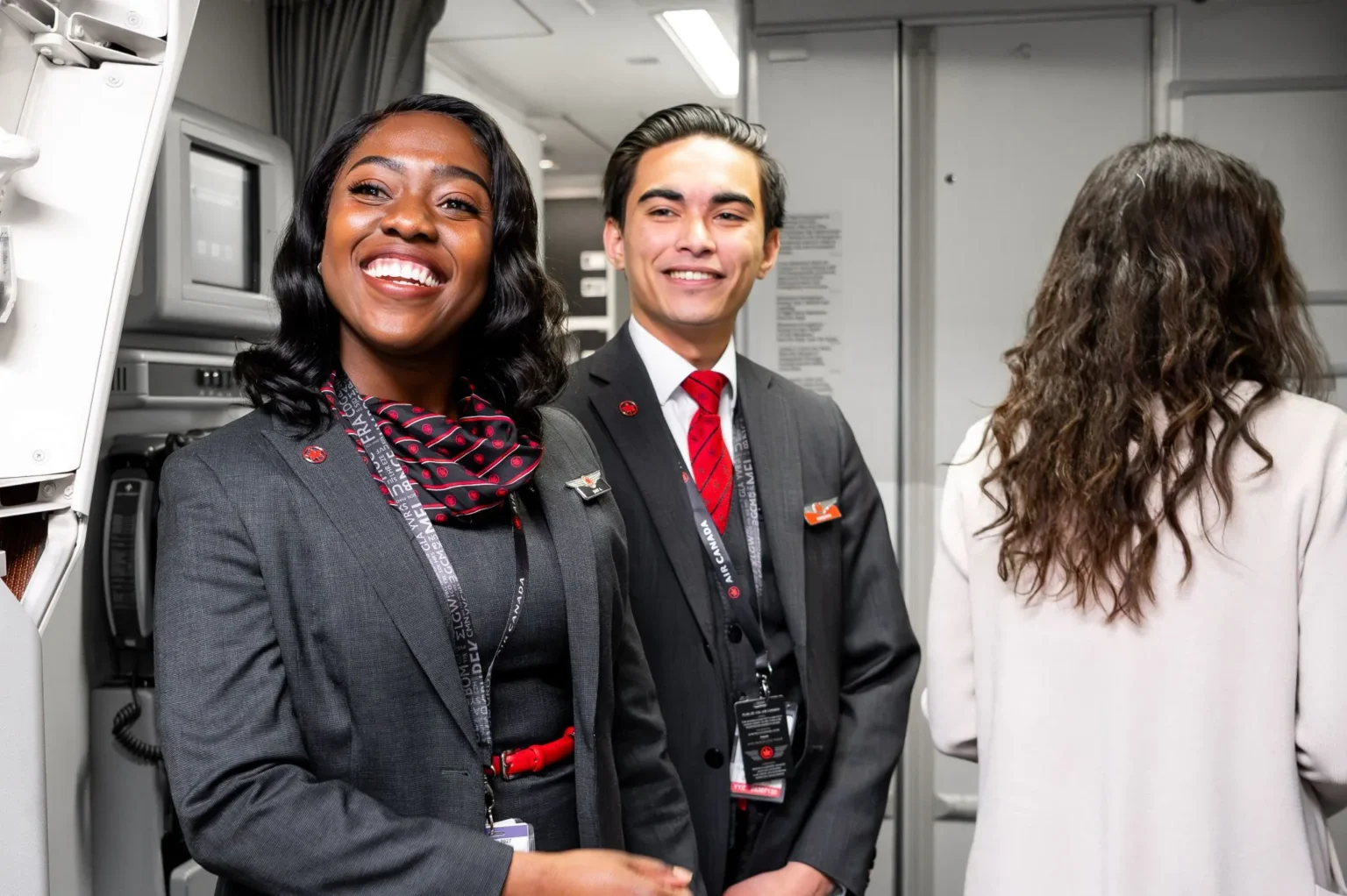
Even after the arbitration, third-party trackers land in noticeably different places. Air Canada’s own materials frame the deal as delivering roughly 21.5 to 36 percent higher take-home pay over four years once ground pay is included. Independent aggregators built from job-posting data put new-hire annual pay closer to CAD 21,000–46,000 and senior pay up to roughly CAD 87,000, a lower range than Air Canada’s own backgrounder implies.
The gap comes down to the same factors that complicate every airline’s published pay: how many hours a given estimate assumes a crew member flies, whether ground pay and premiums are included, and whether the figure reflects mainline or Rouge scales, which remain separate.
Benefits Beyond the Paycheck
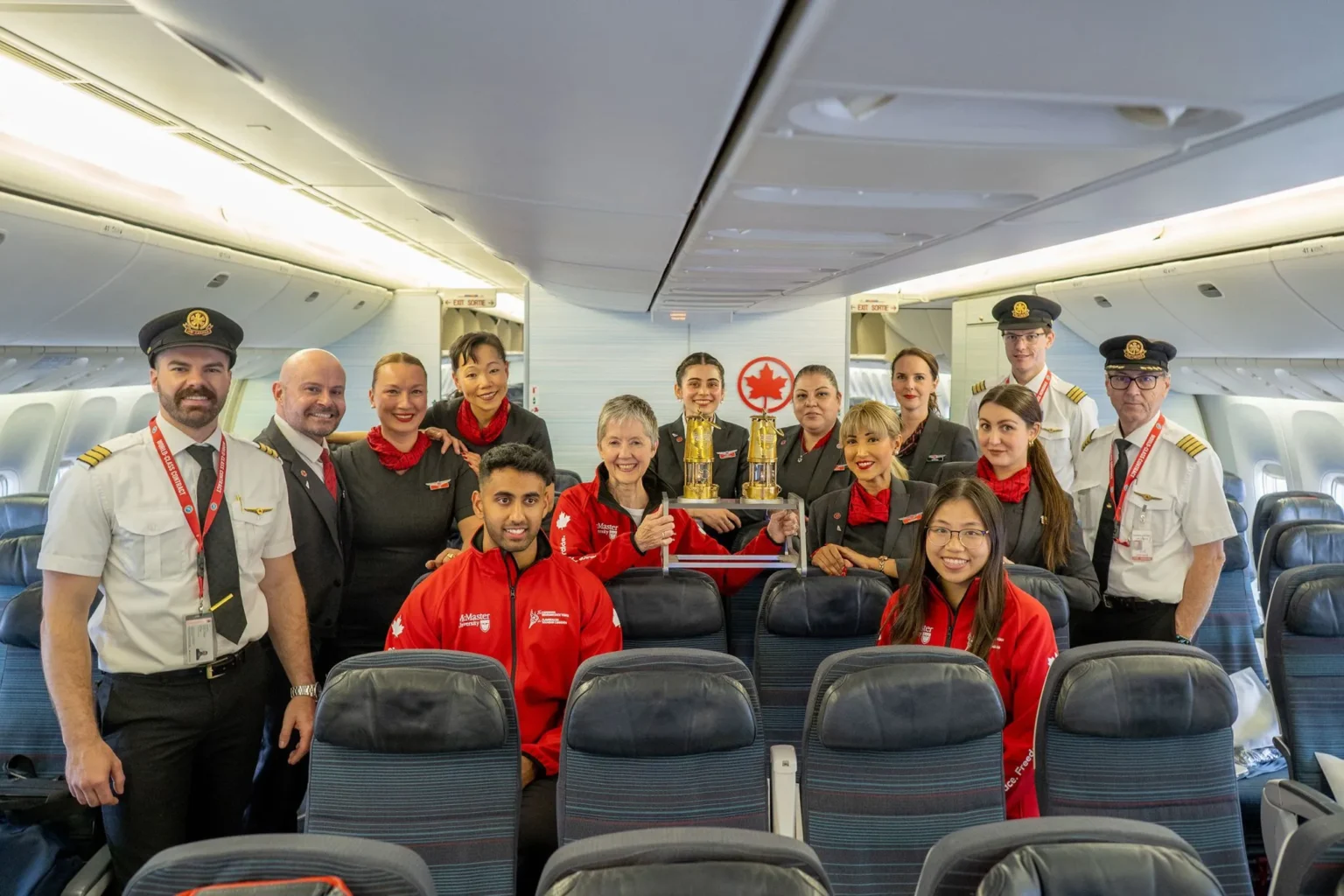
- Flying pay — additional earnings based on flight hours, route types, and operational duties each month
- International per diem allowances — daily payments during layovers to cover meals and incidentals
- Hotel accommodation — provided during overnight domestic and international layovers
- Staff travel benefits — discounted and standby travel on Air Canada, Air Canada Rouge, and Star Alliance partners
- Medical and dental coverage — comprehensive healthcare, dental, and vision insurance for eligible employees
- Retirement and pension plan — company-sponsored pension and retirement savings, with enhancements added under the 2026 agreement
- Paid training — covering safety, emergency procedures, first aid, and service standards before flying duties begin
- Career progression — pathways to Service Director, cabin crew instructor, recruitment, and in-flight management roles
- Profit-sharing opportunities, tied to company performance
- Paid annual leave — vacation, statutory holidays, and regulated rest periods, with increased vacation entitlements and a new minimum layover rest guarantee under the current agreement
Requirements To Become Air Canada Cabin Crew
- At least 18 years old
- Valid passport with unrestricted international travel eligibility
- Legal right to work in Canada
- Completed secondary education or equivalent
- Fluent in English; French is a significant advantage for many positions
- Meets the airline’s height and reach requirements
- Professional appearance, with no visible tattoos conflicting with grooming standards
- Physically fit and able to pass aviation medical examinations
- Strong customer service and communication skills
- Willing to work overnight, weekend, holiday, and international schedules
Recruitment Process
- Online application — submitted through Air Canada’s careers portal with personal, educational, and work-experience details.
- Application screening — recruiters check eligibility, language standards, and customer service expectations.
- Assessment stage — group activities and communication exercises evaluate teamwork and problem-solving.
- Interview — structured interviews assess interpersonal skills, adaptability, and conflict resolution.
- Medical examination and background checks — aviation medical assessment, reference checks, and security clearance.
- Cabin crew training — several weeks of paid training in emergency procedures, first aid, safety equipment, and service standards before operating commercial flights.
How This Compares with Other Carriers
Emirates publishes its own entry-level numbers directly: a basic salary of AED 4,980/month plus flying pay of AED 69.60/hour, averaging AED 11,244/month (about USD 3,100) for new Economy Class crew — and because the UAE has no personal income tax, that entire figure is take-home pay, before Emirates’ free shared accommodation and layover-paid hotels are even counted. Air Canada’s comparable new-hire band, CAD 4,000–5,000/month (roughly USD 2,900–3,650), sits modestly below Emirates’ published average in headline terms, though Air Canada’s figure is taxed under Canadian payroll rules while Emirates’ is not.
Lufthansa runs on a fully transparent, union-negotiated pay table: entry-level base pay of €2,262/month (about USD 2,580), climbing to €5,511/month for Pursers, under a schedule that raised base pay 8 percent in 2024, 5 percent in 2025, and 3.5 percent in 2026. That entry point converts to a broadly similar range to Air Canada’s new-hire band, though Lufthansa’s figures reflect base pay only, before shift and layover allowances that push actual take-home meaningfully higher.
Air France reports first-year cabin crew pay averaging around €34,000/year (roughly €2,800/month before allowances), climbing to €57,000–68,000/year for senior long-haul crew — a taxed salary, like Air Canada’s, but with a steeper senior-crew ceiling once converted to Canadian dollars than Air Canada’s own top band.
Oman Air, by contrast, illustrates the lower end of the international full-service comparison: a tax-free monthly range of roughly OMR 610–1,780 (about USD 1,584–4,623), sitting behind both Emirates and Air Canada at the entry level despite its tax-free structure. Across all five carriers, the pattern holds: published base or entry pay tells only part of the story, and flying hours, ground pay provisions, seniority, and route assignment — not the headline number — determine what actually lands in a crew member’s account each month.
Bottom Line
A cabin crew career with Air Canada in 2026 looks meaningfully different than it did before February’s arbitration ruling. First-year pay still starts modestly, in the CAD 4,000–5,000/month range, but the newly introduced ground pay provision and the arbitrated wage increases, running through a contract that lasts to March 2029, represent the most significant compensation changes the role has seen in years.
Senior crew and Service Directors flying long-haul international routes can reach CAD 8,000–10,500/month, with total annual earnings spanning roughly CAD 48,000–126,000 depending on seniority and flying hours.
Combined with staff travel benefits, healthcare coverage, an enhanced pension, and clear career progression, Air Canada remains one of the most attractive cabin crew employers in North America — and one whose current pay structure was shaped directly by its flight attendants’ own labour action.
FAQs
How much do Air Canada cabin crew earn in 2026?
Most Air Canada cabin crew earn between roughly CAD 4,000 and CAD 10,500 per month (USD 2,900 to USD 7,650), depending on seniority, flying hours, route assignments, and the ground pay provisions introduced under the February 2026 arbitration award.
Did Air Canada flight attendants get a raise in 2026?
Yes. A federal arbitrator finalized wage increases in February 2026 of 12 percent for junior mainline crew, 8 percent for senior mainline crew, and 13 percent for Rouge crew in year one, retroactive to April 2025, with further increases through the contract’s expiry in March 2029.
What is Air Canada’s “ground pay” provision?
It’s newly dedicated compensation for pre-flight and boarding duties, separate from block-time flying pay: 60 minutes at 50 percent of the hourly wage for narrow-body crew in year one (rising to 70 percent by 2028), and 70 minutes at the same rates for wide-body crew.
Do Air Canada cabin crew receive travel benefits?
Yes. Employees receive discounted and standby travel on Air Canada and eligible Star Alliance partner airlines, subject to company policy.
Where are Air Canada cabin crew based?
Most are based at Toronto Pearson International Airport, Montreal–Trudeau International Airport, Vancouver International Airport, and Calgary International Airport.