United Airlines (UA) has intensified enforcement of its reserve-duty policy, leading to disciplinary action and, in some instances, dismissals of newly hired flight attendants accused of not being at their assigned base when their reserve shifts begin. The airline, headquartered near Chicago O’Hare International Airport (ORD), maintains that reserve crew must already be at—or close enough to—their designated base at the start of their on-call period.
Most newly hired United flight attendants spend their first two to three years on reserve status. Rather than working fixed schedules, they remain available to cover flights at short notice. Since February, the airline has interpreted its policy to mean these employees must either be physically in their base city or capable of reaching it within three hours from the moment reserve duty officially starts. That interpretation has sparked a dispute with the Association of Flight Attendants-CWA (AFA-CWA).
Reserve Assignments Leave Little Flexibility
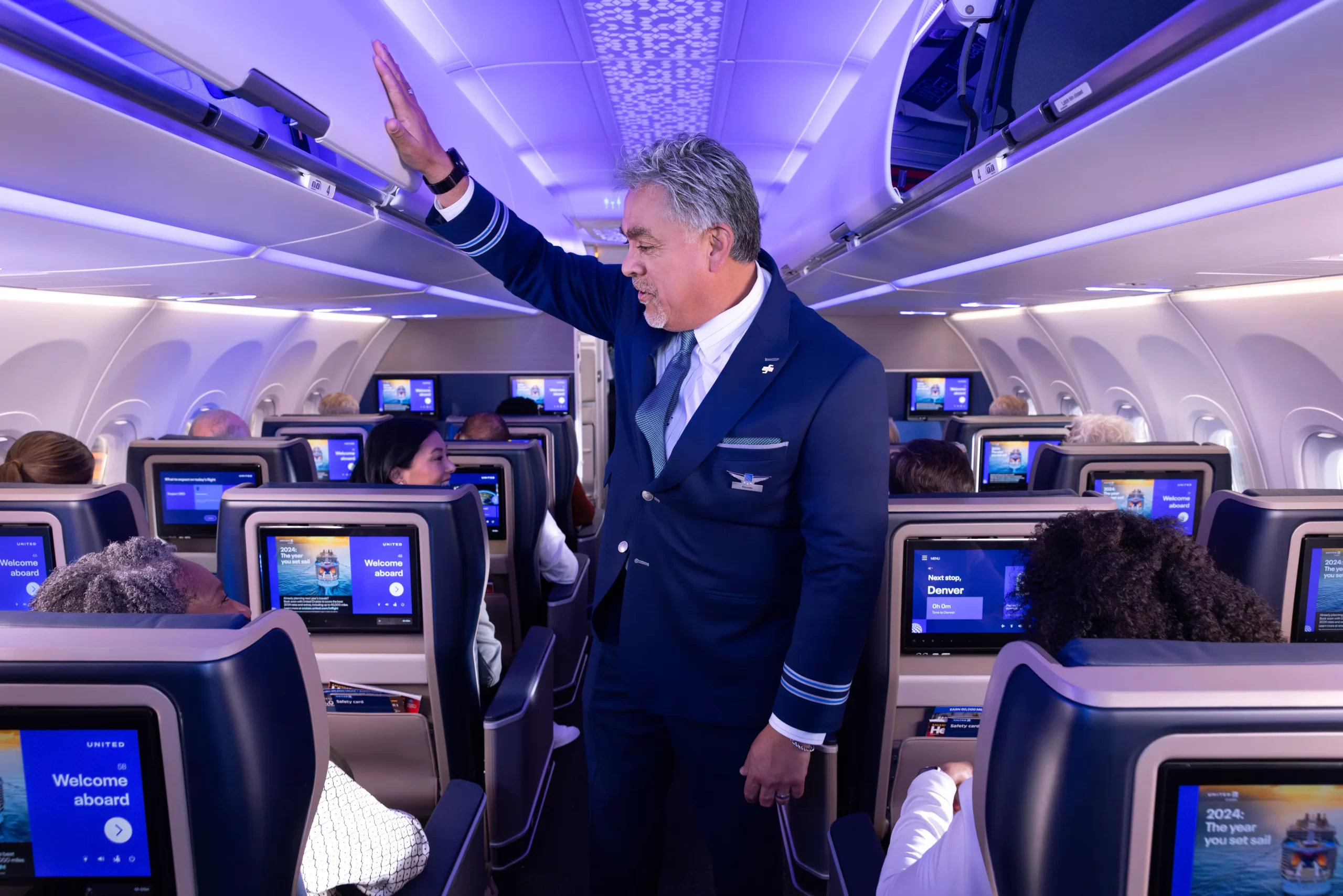
Unlike lineholders, reserve flight attendants do not receive predetermined flight schedules each month. Instead, they are assigned trips when staffing shortages arise because of illness, operational disruptions, or other unforeseen circumstances. Once contacted, they are expected to report within a specified timeframe.
A significant number of junior crew members commute to work rather than living in the city where they are based. Because many of United’s hub airports are located in high-cost metropolitan areas, newer employees often choose to live elsewhere and travel to their base before reserve duty.
That commuting practice now lies at the heart of the disagreement between the airline and its flight attendants.

Airline Targets “Out of Position” Crew Members
According to a report by Paddle Your Own Kanoo, some reserve flight attendants have been delaying their travel to base until after their reserve period begins, believing they could still arrive within the required reporting window if called.
Others reportedly assess their likelihood of being assigned a trip by monitoring their position on the reserve list. If they believe the chance of receiving an assignment is low, they may decide not to travel to base at all.
United has identified these practices as violations of its reserve policy and has begun taking disciplinary action against employees it believes are intentionally remaining away from their assigned base.
Flight Booking Records Used in Investigations
Rather than relying on company-issued devices or location tracking, United is reportedly examining travel booking records to determine whether flight attendants were in the correct location when reserve duty started.
For example, a standby booking from a commuter city to the employee’s base after the reserve period has already begun may indicate the crew member was not in position at the required time.
Likewise, if a flight attendant travels home after completing an assignment but has no return booking scheduled before their next reserve shift, the airline may view that as evidence they did not intend to be available at their base.
Under United’s current interpretation of the policy, reserve flight attendants are expected to arrive in their base city by 11:00 p.m. on the evening before reserve duty begins. The reserve period officially starts at 12:01 a.m., while the earliest possible report time for an assignment is 4:00 a.m.
Flight Attendants Union Challenges United’s Position
The AFA-CWA has filed a grievance opposing the airline’s enforcement of the policy.
The union argues that the collective bargaining agreement requires reserve flight attendants only to accept an assignment when contacted and report for duty within the contractual reporting window. It contends that the agreement does not require employees to already be physically located at their base before they are assigned a trip.
As the grievance proceeds, the union has advised members that United may continue issuing discipline to flight attendants it considers out of position.
Similar Enforcement Seen at Other Airlines
United is not alone in taking a stricter approach to reserve compliance.
In 2022, American Airlines (AA) dismissed more than 50 flight attendants over a six-month period for comparable reserve-related violations after repeated instances of crew members failing to report for assigned flights.
Reserve duty remains one of the most demanding stages of a flight attendant’s career. With unpredictable schedules, limited control over time off, and frequent commuting, some newer employees have attempted to maximize time at home—a practice airlines are increasingly scrutinizing.