Singapore Changi Airport (SIN) is looking to strengthen its position as one of Asia’s leading aviation hubs by adding more underserved destinations to its global network.
The airport operator, Changi Airport Group (CAG), has identified several “white spot” markets where direct air connectivity remains limited, including cities such as Banda Aceh (BTJ), Hai Phong (HPH), Almaty (ALA) and Tashkent (TAS).
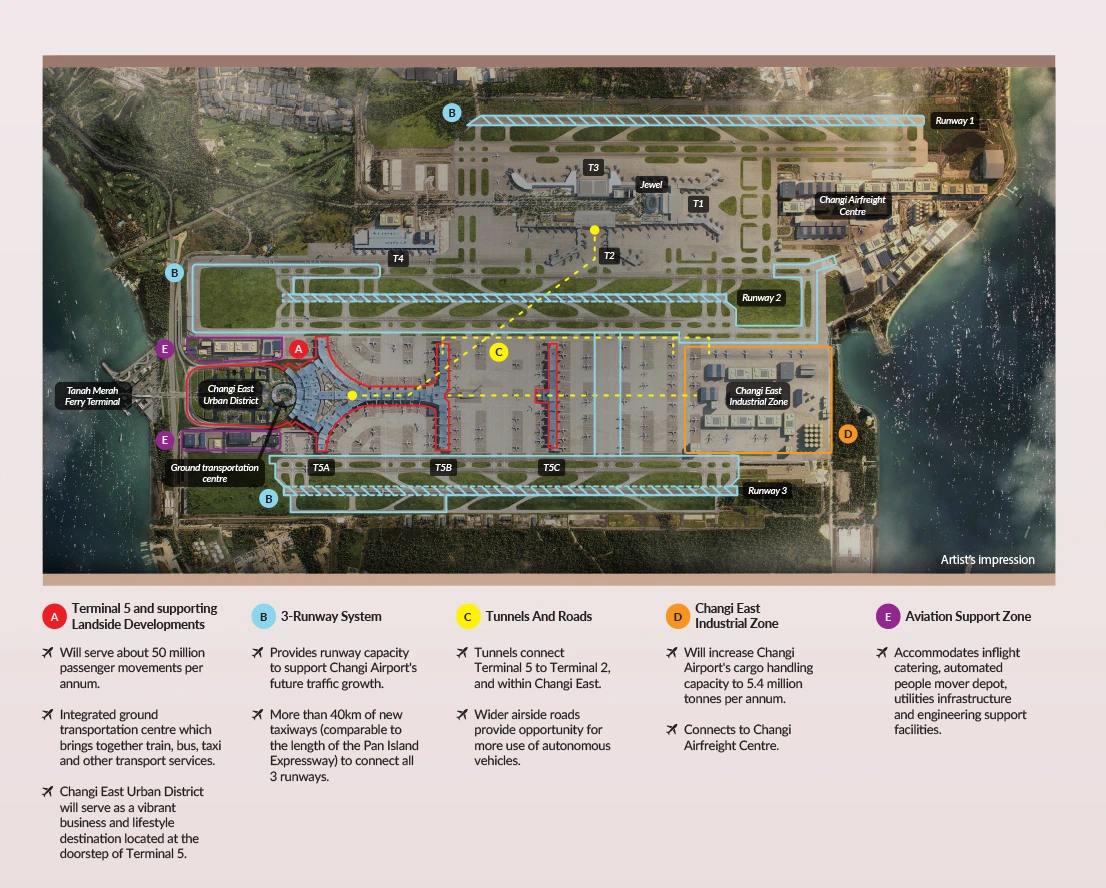
The expansion strategy comes as Changi prepares for Terminal 5 (T5), which is expected to significantly increase the airport’s passenger-handling capacity and support long-term international growth.
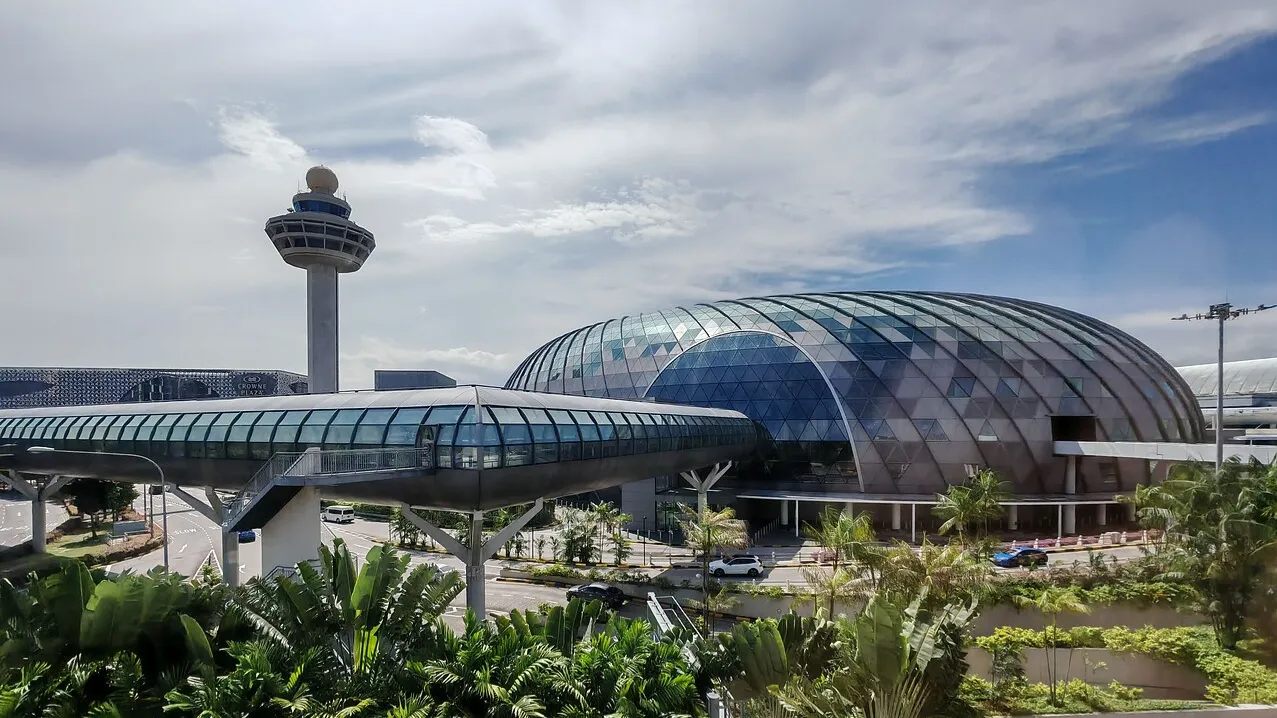

Changi Airport Identifies New Growth Markets Across Asia
Lim Ching Kiat, executive vice-president for air hub and cargo development at CAG, said the majority of potential new routes would focus on the Asia-Pacific region, where passenger demand is expected to remain strong over the coming decade, Straits Times reported.
According to Lim, many of the targeted destinations currently lack direct connectivity with Singapore despite having strong economic or tourism potential.
Among the possible additions to Changi’s route map are:
| Country | Potential New Destinations |
|---|---|
| Indonesia | Banda Aceh (BTJ), Banjarmasin (BDJ) |
| Vietnam | Hai Phong (HPH), Da Lat (DLI) |
| Kazakhstan | Almaty (ALA) |
| Uzbekistan | Tashkent (TAS) |
| China | Urumqi (URC), Hohhot (HET) |
| India | Lucknow (LKO), Jaipur (JAI) |
Lim noted that cities with large populations, rising incomes and growing business activity could generate demand from both leisure and corporate travellers.
Currently, around 85% of flights from Changi serve destinations within the Asia-Pacific region. However, CAG is also exploring opportunities in Central Asia, Eastern Europe and other emerging markets where direct links remain limited.
Changi Looks to Increase Frequencies on Existing Routes
Alongside launching new destinations, Changi Airport also wants to improve connectivity on routes that currently operate with limited frequencies.
Flights to destinations such as Nadi (NAN) in Fiji, Paro (PBH) in Bhutan and Noumea (NOU) in New Caledonia currently operate only a few times per week.
CAG aims to gradually increase these services toward daily operations, creating more reliable travel options for passengers.
Lim described this approach as achieving a “steady equilibrium,” where airlines can maintain sustainable operations while passengers benefit from improved connectivity.
Passenger Growth Faces Short-Term Challenges
Changi Airport recorded 17.6 million passengers during the first quarter of 2026, representing a 2.3% increase compared with the same period in 2025.
However, traffic growth slowed between April and June due to disruptions caused by the Middle East conflict, which affected air travel between Singapore and several international markets.
Passenger numbers reached 5.73 million in April, slightly lower than the previous year, while May traffic declined further to 5.68 million passengers.
Lim said the airport remains uncertain about the full-year impact but expects to continue working toward stronger passenger growth compared with 2025.

Changi Works With Airlines Amid Rising Fuel Costs
The aviation industry has faced higher fuel expenses following disruptions linked to the Middle East conflict and concerns surrounding energy supply routes.
Lim said airports and governments cannot fully absorb these additional costs but can help airlines reduce expenses in other areas.
Changi is working with carriers on operational improvements, including reducing aircraft turnaround times, supporting slot arrangements and assisting with marketing efforts for new services.

Middle East Airspace Disruptions Highlight Need for Diversification
Recent airspace restrictions in the Middle East also highlighted the importance of maintaining a diversified route network, according to CAG.
During the disruption period, airlines such as Ethiopian Airlines (ET) and Turkish Airlines (TK) provided alternative connections between Singapore and Europe through Addis Ababa (ADD) and Istanbul (IST).
Between March and June, airlines added more than 500 additional flights connecting Singapore with cities including London, Munich (MUC), Paris, Perth (PER) and Sydney (SYD).
These additional services helped compensate for reduced operations by Middle Eastern carriers during the disruption.

Terminal 5 Will Transform Changi’s Future Capacity
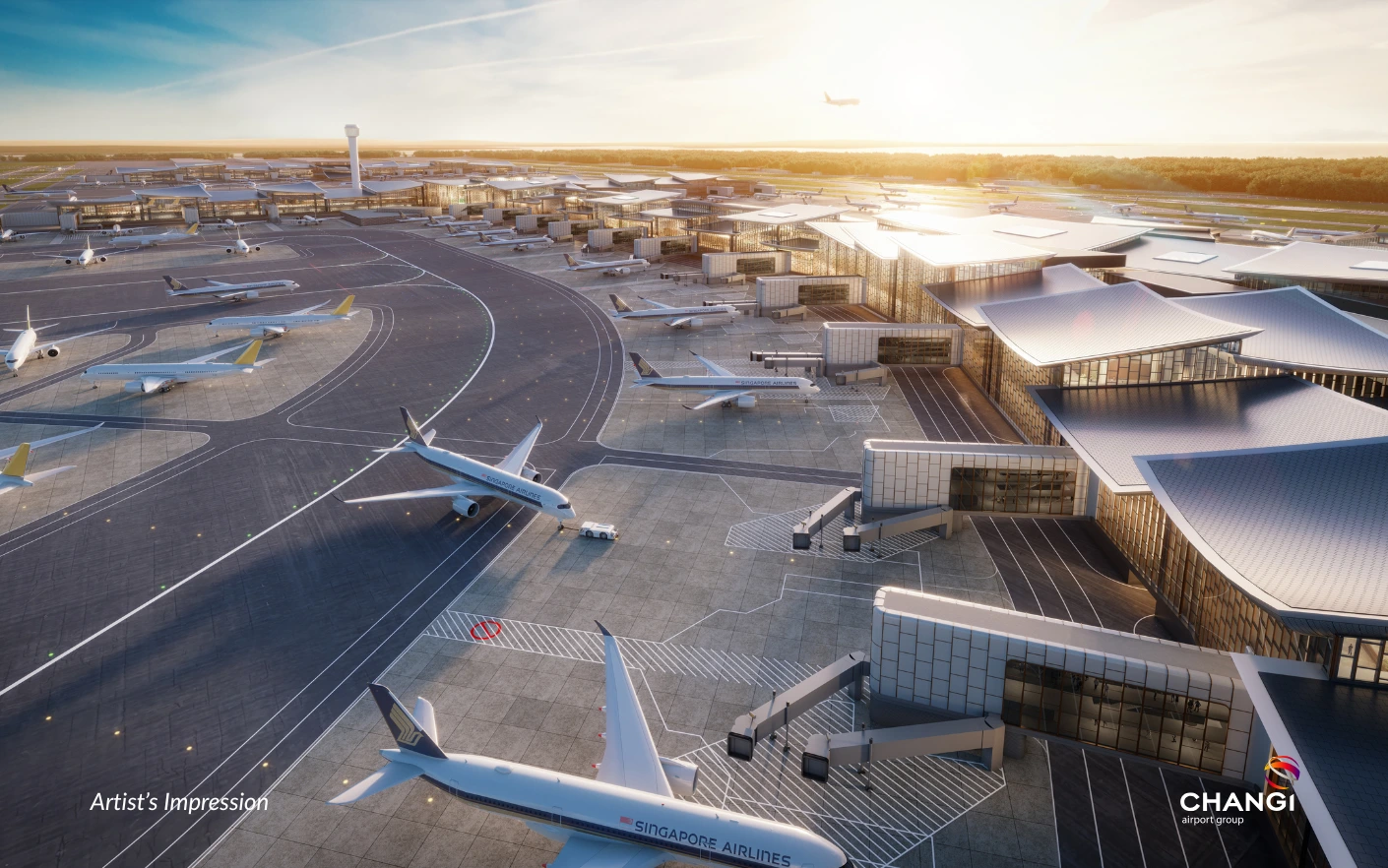
Terminal 5 remains the centrepiece of Changi’s long-term expansion strategy.
The new terminal is expected to open in the mid-2030s and increase Changi’s annual passenger capacity to around 140 million travellers.
That would represent a significant increase from the airport’s current capacity of approximately 90 million passengers.
Together with the broader Changi East development, Terminal 5 will nearly double the airport’s overall size and provide additional space for future airline growth.
Beyond Asia, CAG is also looking at expanding long-haul connectivity.
Lim highlighted growing markets in Africa and the Middle East, including Riyadh (RUH), as potential future opportunities.
The airport is also monitoring advancements in ultra-long-haul aircraft technology, which could eventually allow more direct services to destinations such as Boston (BOS), Chicago and Toronto (YYZ), followed by possible links to South America.

Longer Transit Times Change Changi’s Passenger Experience
Changi has also observed a shift in passenger behaviour, with longer layovers becoming more common.
More than half of transit passengers now spend at least three hours at the airport before their connecting flight.
The airport has expanded its free city tour programme to seven daily departures for travellers with layovers of 5.5 hours or more.
New attractions, including Sentosa, the Singapore River and Marina Bay, have been added to the programme. Since its relaunch in April 2023, more than 230,000 transit passengers have participated.
Analysts Expect Southeast Asia Routes to Arrive First
Mayur Patel, Asia-Pacific commercial and industry affairs leader at aviation data consultancy OAG, believes Southeast Asian routes are likely to become reality sooner than longer-distance markets.
Shorter routes can be operated efficiently using narrow-body aircraft, making them attractive to airlines such as Scoot (TR), AirAsia (AK) and Vietjet Air (VJ).
Patel expects routes linking Singapore with destinations such as Hai Phong, Da Lat, Lucknow and Jaipur could potentially launch within the next one to two years.
Banda Aceh and Banjarmasin may require two to three years before becoming viable, while Central Asian routes could take longer due to aircraft availability, bilateral agreements and airline network priorities.
Routes to Almaty and Tashkent could face additional challenges, while services to Chinese cities such as Urumqi and Hohhot would depend heavily on Chinese airlines, available slots and scheduling decisions.
With Terminal 5 approaching and global aviation demand continuing to recover, Changi Airport is positioning itself for another phase of international expansion by building deeper links across Asia and beyond.