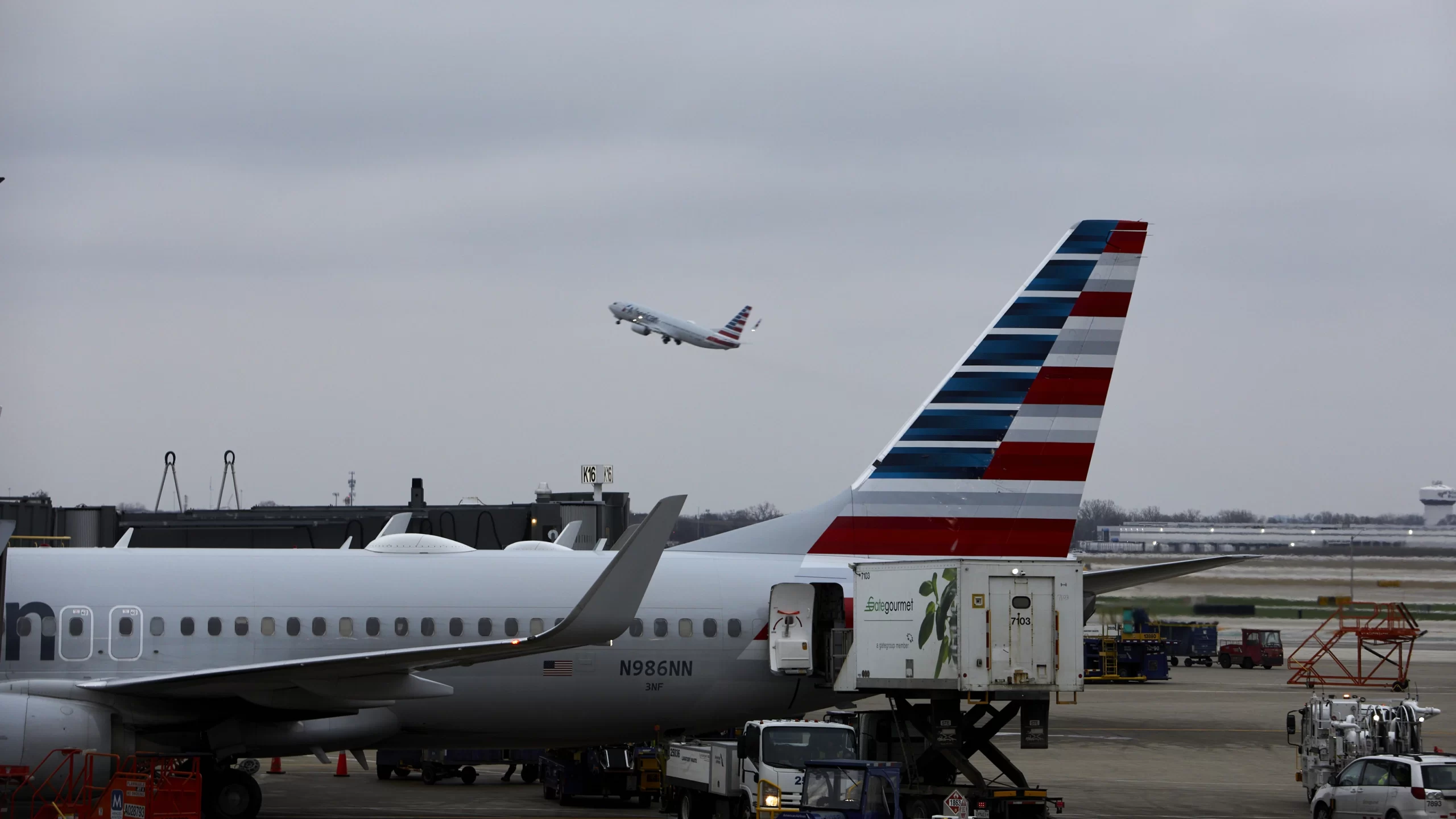
American Airlines (AA) plans to restore scheduled passenger service at Naples Airport (APF), Florida, for the first time in approximately 25 years. According to reports from aviation analyst Enilria, the proposed service is expected to begin on December 2 and connect Naples with Charlotte Douglas International Airport (CLT), one of American’s largest hubs. The proposal has drawn broad attention — not primarily because of the route itself, but because of an unusual aircraft weight constraint that calls the entire operation into question.
Unlike large commercial airports, Naples primarily functions as a general aviation facility and operates under unique infrastructure restrictions. The airport handled more than 113,000 annual aircraft operations in recent years and serves as one of Southwest Florida’s busiest private aviation gateways. However, Naples maintains a strict 75,000 lb (34,019 kg) aircraft weight limit, a rule that has historically complicated efforts to expand scheduled commercial service. That limit now sits at the very centre of this story.
The 75,000-Pound Weight Limit That Is Complicating Everything
The central challenge of this proposal is not demand, governance, or noise — it is weight. Aircraft exceeding 75,000 pounds maximum gross weight are prohibited from operating at APF. Rare exceptions may apply, such as aircraft operated by Federal or State government, law enforcement, or emergency services. That rule is published formally by the Naples Airport Authority itself.
Initial reports indicated the route could use CRJ900 aircraft, but that immediately raised questions because Naples Airport publishes a maximum allowable aircraft operating weight of approximately 75,000 lb (34,019 kg). By comparison, a Bombardier CRJ900 can exceed that threshold with a maximum takeoff weight of 84,500 lb (38,328 kg). However, Enilria later suggested that operational limitations could ultimately force American toward the smaller CRJ700 instead.
The Bombardier CRJ700 and the Embraer E175 are the two aircraft types now under discussion. Key specifications for each:
Bombardier CRJ700 (as proposed by PSA Airlines):
- Maximum takeoff weight: 75,000 lb — compliant with APF limit
- Seating capacity: 65 passengers
- Engine: General Electric CF34-8C1
- Range: approximately 2,400 miles
Embraer E175 (preferred by American Airlines):
- Standard maximum takeoff weight: up to 85,000 lb — exceeds APF limit
- However, a 74,957 lb type certificate data variant exists that could be compliant
- Seating capacity: up to 76 passengers
- Cabin: wider “double-bubble” cross-section with no middle seats
American Airlines strongly favors the Embraer E175, largely due to its superior passenger experience. Compared to the narrower CRJ family, the Embraer cabin features a wider “double-bubble” cross-section, allowing for broader seats, more shoulder room, and a no-middle-seat layout. This design, combined with significantly larger overhead bins that accommodate standard roller bags, has earned the aircraft a highly favorable reputation among passengers.
Naples Airport publishes a 75,000-pound operating limit. The airport states that aircraft exceeding 75,000 pounds maximum gross weight are prohibited, unless the aircraft’s paperwork is amended and a placard restricts it to 75,000 pounds as the maximum operating weight. That technical workaround is precisely what American may pursue for the E175.
PSA Airlines, The CRJ700, And the Scope Clause
The operator that American proposes for the Naples route is PSA Airlines, its wholly owned regional subsidiary. PSA Airlines would operate the flights for American on 65-seat Bombardier CRJ-700 regional jets. The aircraft’s 75,000-pound maximum takeoff weight is consistent with the airport’s existing fleet mix and within established limits.
The airline plans to operate the flights through its American Eagle brand and wholly owned subsidiary PSA Airlines. Vice Chair John Crees noted that the CRJ jets are quieter than the Gulfstream aircraft currently using the runway. That quieter noise profile matters significantly in a community where aircraft sound has long been a political flashpoint.
PSA Airlines itself is a carrier in transition. PSA is now the only Part 121 passenger carrier based in North Carolina. PSA President and CEO Dion Flannery said: “Because of what Charlotte offers, PSA has a stronger foundation for continued growth. And we believe the benefit will be mutual, as the region will continue having reliable aviation partners, a top employer, and a responsible corporate citizen headquartered in its backyard.” The Naples route, if approved, would operate directly from PSA’s home hub.
Community Opposition, A Voluntary Curfew, And The 80% Who Want Flights
Naples is an affluent Gulf Coast community where many residents actively oppose expanded commercial service. Naples Airport faces significant community resistance to expanded commercial activity. Local activists raise concerns about flight paths, soot, safety, traffic volume, and aircraft flying over schools and the downtown area. Many residents question whether an airport with growing commercial service is compatible with the area’s residential character. Some opponents have pushed to relocate the airport, since it cannot legally be closed. However, residents have not shown support for spending more than $1.5 billion to move it.
Noise sensitivity has also shaped airport policy for years. Naples Airport maintains a voluntary overnight curfew from 10:00 PM to 7:00 AM, and airport authorities have historically focused on limiting noise impacts in surrounding residential communities. 98.5% of operations reportedly comply with that voluntary restriction.
At the same time, survey data suggests a very different public mood among broader county residents. A survey commissioned by the Naples Airport Authority found 80.3% of registered voters polled in Collier County, Florida, support restoring daily airline service at Naples Airport. That figure gives the Naples Airport Authority a democratic basis to continue negotiations.
At the May 21, 2026, board meeting, American Airlines’ Director of Domestic Planning, Jordan Pack, addressed the Airport Authority directly. As reported by Gulf Shore Business, Pack was quoted as saying:
“We believe that there’s an unmet demand by the residents of Naples, and the visitors of Naples, who would prefer to use a direct airport, closer airport right here in the community. More importantly, I’m here to emphasize that American Airlines wants to be a collaborative, long-term and, most importantly, safe partner to the airport and community.”
How Florida’s New Governance Law Changes the Equation
A shift in Florida state law is now reshaping who decides the airport’s commercial future. Florida enacted legislation that took effect on April 6, 2026. The law changed the Naples Airport Authority board from a city-appointed body to one elected by Collier County voters. This shift is expected to make commercial service easier to introduce.
The old board drew its authority from the city of Naples, whose residents tend to live closest to the airport and have historically opposed expansion. The governance transition has generated political tension between city officials and the revised airport authority structure. Local leaders in Naples have formally objected to the changes, citing concerns over airport oversight and land-use control.
A digital and phone survey is being pushed out directly to registered voters countywide, aiming to harvest a representative sample of roughly 500 completed responses. The data will be delivered to the public just in time for the NAA Board of Commissioners’ next legislative session on June 18, 2026. That session is expected to determine whether negotiations with American Airlines formally advance.
June 18 Vote and the Road to December
It is important to stress that this is still a proposal, not a launch. The Naples Airport Authority has agreed to continue studying the idea. Questions about noise, terminal changes, security processing, and community acceptance remain unresolved.
The formal letter of intent from American Airlines was dated May 13, 2026, followed by a strategic presentation by Jordan Pack, American’s Director of Domestic Planning, during the board’s May 21 legislative session. The next key milestone is the NAA board meeting on June 18, 2026.
Pack said the airline plans to begin with two to three daily round trips scheduled outside the airport’s voluntary curfew hours of 10 p.m. to 7 a.m. That scheduling commitment directly addresses one of the community’s loudest concerns.
