Why pilots wear sunglasses? Five best pilot sunglasses

Pilots wear sunglasses for the same reason surgeons wear gloves: their working environment exposes a critical biological asset to an occupational hazard that ground-based workers simply do not face at equivalent intensity. At sea level, the Earth’s atmosphere filters a substantial proportion of the sun’s ultraviolet output before it reaches human eyes; the Hong Kong Observatory’s UV radiation at altitude research guide confirms that UV radiation increases by approximately 12 percent for every 1,000 metres of altitude gain, as the thinning atmosphere provides progressively less filtration.

The FAA’s own published guidance, cited in Metamaterial’s April 2023 UV protection analysis, places the increase at 5 percent per 1,000 feet of altitude — meaning a commercial pilot at cruising altitude of 35,000 feet operates in an environment where UV exposure is approximately 175 percent above the ground-level baseline before any atmospheric filtering through the aircraft’s windows is accounted for. Flying Eyes Optics’ May 2025 clinical review of high-altitude UV risks confirms that long-term UV exposure is linked to cataracts — a clouding of the eye’s lens that can lead to vision impairment or blindness — macular degeneration, pterygium, and photokeratitis, all conditions that disproportionately affect flight crews relative to the general population.

The most significant update to the pilot UV exposure picture since the source article was written in 2021 is the European Cockpit Association’s October 2025 position paper on protecting pilots against UV-A radiation — the first comprehensive European regulatory advocacy document specifically targeting UVA, the least energetic but most cockpit-penetrating form of UV radiation.

The ECA confirmed that while UVB and UVC are substantially filtered by both the upper atmosphere and conventional aircraft windscreens, UVA penetrates cockpit windows at significantly higher levels — and that long-term occupational UVA exposure “contributes to increased health risks, including skin cancer and cataracts,” with exposure increasing 10 to 15 percent per 1,000 metres of altitude. Research by Chorley between 2008 and 2015, cited by Iris Publishers’ aviation radiation review, established that UVA is “the most harmful to a pilot’s eyes and eyesight because a higher percentage of it penetrates the cockpit and cabin of an aircraft.”
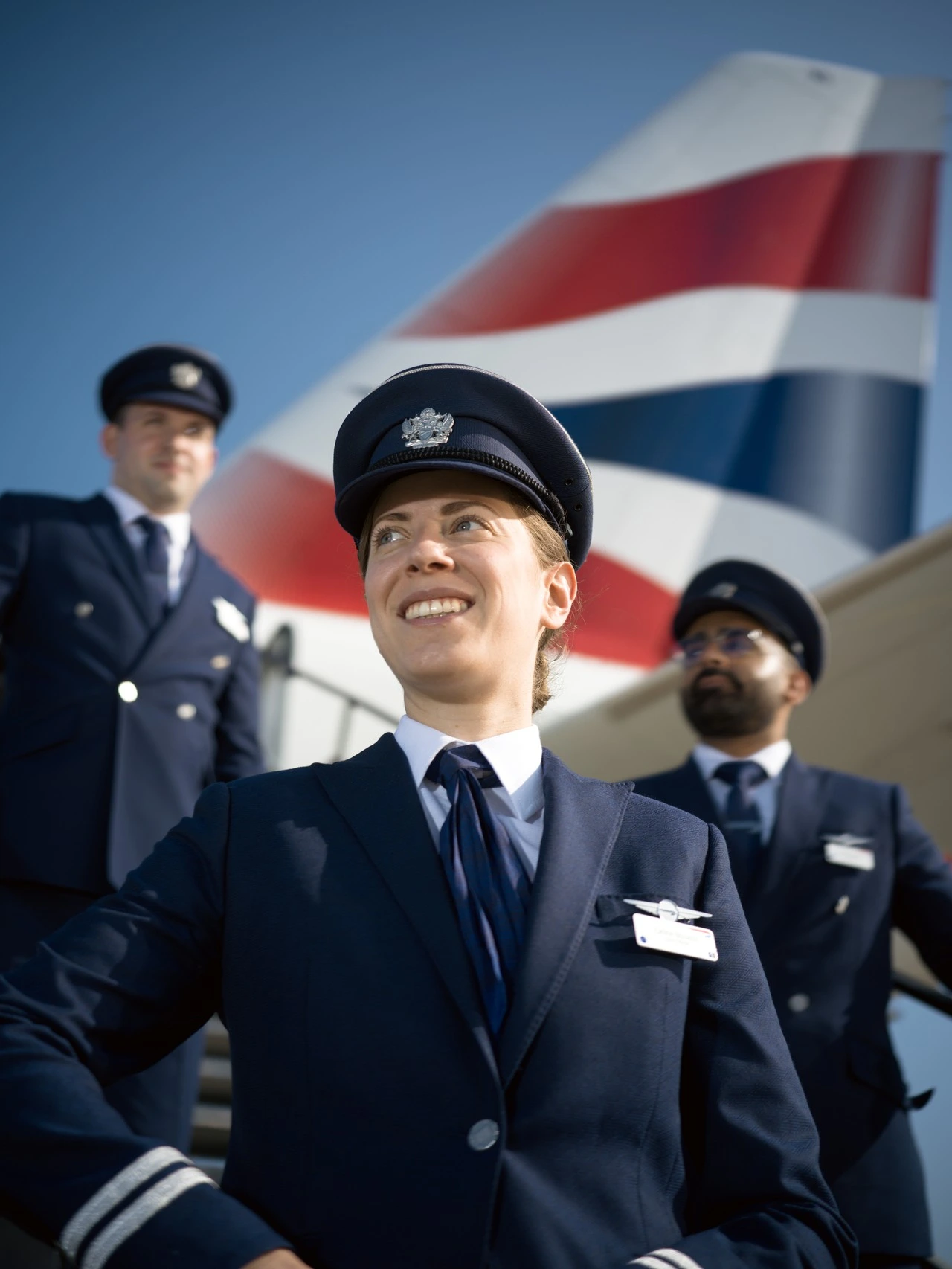
Photo: British Airways

What Happens to a Pilot’s Eyes After Years of High-Altitude UV Exposure

The cumulative nature of UV-induced eye damage is what makes the pilot occupational exposure problem structurally different from the experience of a passenger on occasional flights. The Piper Owner Society’s May 2025 cockpit UV analysis confirmed that UV radiation intensity in a cockpit increases logarithmically with altitude. A commercial captain who flies 900 hours per year for 30 years accumulates lifetime cockpit UV exposure that exceeds the occupational lifetime of virtually any ground-based worker.

The National Council on Radiation Protection and Measurements’ finding, cited in Iris Publishers’ review, places flight crews as receiving the largest annual effective radiation dose of any U.S. occupational category — a designation that encompasses not only UV exposure from the sun but also cosmic radiation at cruising altitude.

An FAA Civil Aerospace Medical Institute technical report on optical radiation transmittance of aircraft windscreens found that laminate windscreens ( of the kind thata re standard in commercial airliners) allowed higher levels of potentially damaging UVA radiation to pass through than plastic-acrylic windows, leading to the finding that “professional pilots who routinely fly at higher altitude for longer periods of time than private pilots should take special precautions to protect their eyes from UV exposure.

A doctoral thesis from Florida Institute of Technology, analysing UVA exposure in the Citation X cockpit at altitude, confirmed a statistically significant linear increase in UVA exposure with altitude. This is a finding that is directly relevant to all glass-windshield business and commercial aircraft. Cataracts, photokeratitis, and pterygium are the three most strongly evidence-linked consequences of long-term cockpit UV exposure: the Beaver Dam Eye Study and Maryland Watermen Survey both confirmed the UVB-cortical cataract association cited in the Federal Aviation Administration (FAA) technical report.

Dam Eye Study and Maryland Watermen Survey both confirmed the UVB-cortical cataract association cited in the FAA technical report.
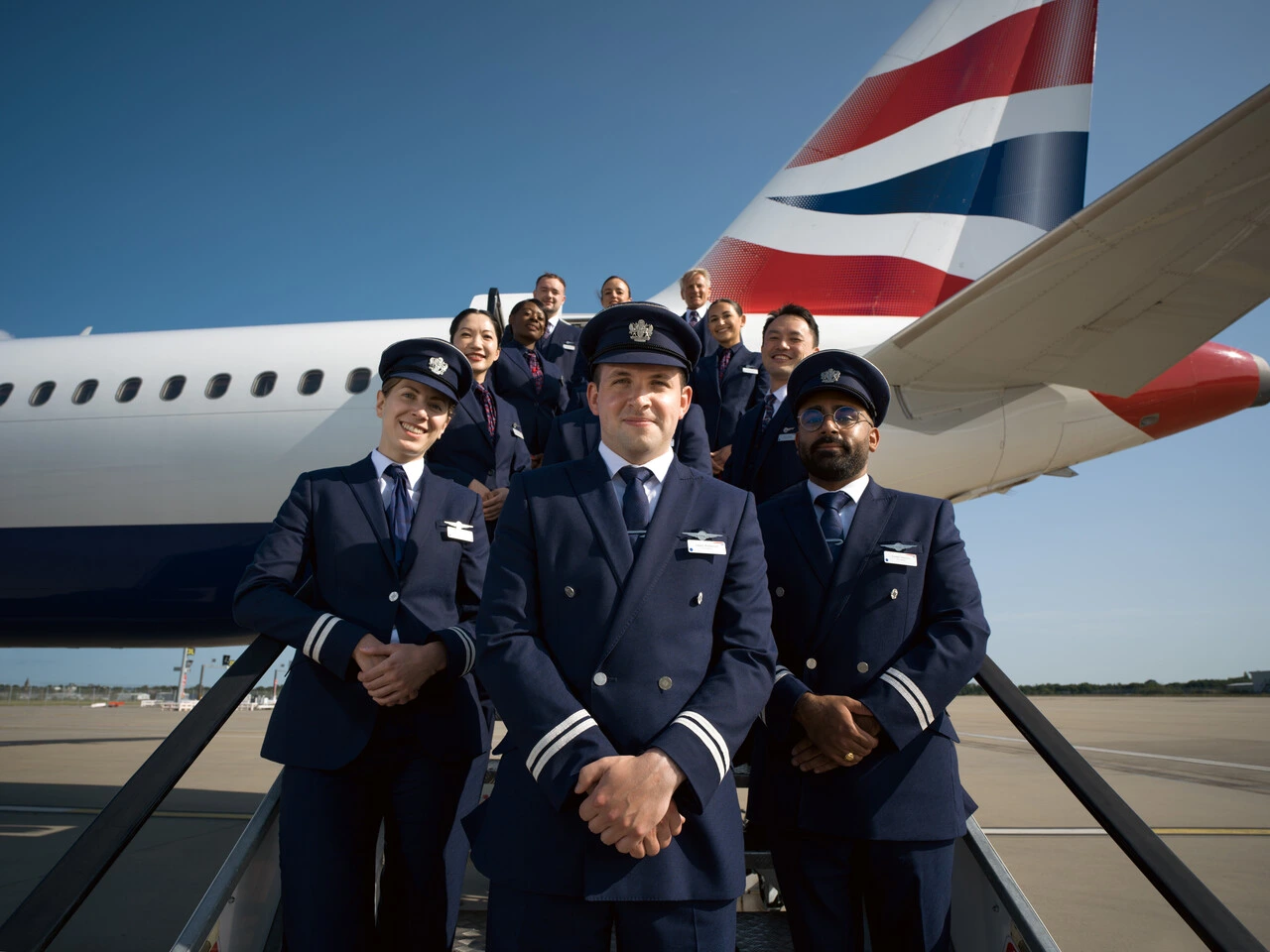
Photo: British Airways

Why Polarized Lenses Are Dangerous in the Cockpit and What Physics Explains it

The polarized-vs-non-polarized distinction is the single most important technical specification for pilot sunglasses — and the one most frequently misunderstood by pilots purchasing their first pair. Hangar.flights’ February 2026 comprehensive pilot sunglasses guide explains the physics directly: polarized lenses can make it “harder (even impossible) to read LCD screen-based instruments and often interfere with the view through polycarbonate or safety glass windshields such as those found in aircraft.”

Polarization works by blocking horizontally oriented light waves — the plane of polarisation in reflected glare from water, roads, and wet surfaces — through a filter aligned to transmit only vertically polarised light. The problem for pilots is that LCD displays emit plane-polarised light; when the plane of the display’s polarisation is perpendicular to the plane of the sunglass lens, the display becomes invisible — a scenario that in a glass cockpit can make an entire instrument panel unreadable at a random head angle.

There is an additional hazard of polarized lenses in aviation: reflected light from aircraft surfaces, windscreens, and surrounding terrain can be eliminated by polarisation, removing visual cues that help pilots maintain spatial orientation. AvWeb’s August 2025 pilot sunglasses selector confirms this operationally: “Pilots must specifically choose non-polarized lenses, as the standard option is polarized“. The practical consequence is that pilots purchasing any reputable sunglass brand must specifically verify and select the non-polarized variant at the time of purchase — a step that neither the packaging nor the retail sales staff will typically prompt.

Photo: Delta Air Lines

The Best Pilot Sunglasses In 2026 For Long Flights, Headset Comfort, And UV Protection

1. Ray-Ban RB3025 Aviator Classic

The Ray-Ban Aviator holds the foundational credential in pilot sunglasses: it was literally designed for U.S. military pilots in 1937 by Bausch & Lomb, commissioned by the U.S. Army Air Corps to protect pilots from high-altitude glare during World War II-era reconnaissance missions. Rotate Pilot’s March 2026 comprehensive buyer’s guide confirms that the G-15 lens tint remains one of the best available for natural colour rendering — transmitting green and grey wavelengths in proportions that preserve the natural appearance of ground features and cockpit instruments.

The critical caveat is that Ray-Ban sells polarised Aviators by default; pilots must specifically order the non-polarised version. Rotate Pilot notes the standard bayonet temple design is less headset-compatible than the Randolph or American Optical alternatives.

2. Randolph Engineering Aviator (USA-Made)

Randolph Engineering has supplied U.S. military pilots under contract since 1978 — a relationship that makes the Randolph Aviator one of the few sunglasses in the world whose military heritage extends to an active procurement contract rather than a historical design origin.

AeroCorner’s February 2026 review confirms the lens measures 55 mm wide and 44 mm tall, with adjustable silicone gel nose pads, skull or bayonet temple options (with the bayonet specifically recommended for cockpit headset compatibility), and 98 to 100 percent UV protection. AvWeb’s guide notes the brand’s “stellar customer service and replacement program” — and flags the same warning as the Ray-Ban: the standard consumer offering is polarised, so pilots must specifically select non-polarised.

3. American Optical Original Pilot Sunglasses

American Optical (AO) occupies a uniquely credentialed position in the pilot sunglasses market: its Original Pilot model was worn by the astronauts of Project Mercury and worn into space by John Glenn. Made in the United States with a bayonet temple specifically designed for secure fit under headsets and flight helmets, the AO Original provides 100 percent UV protection in polycarbonate lenses available in brown, grey, and green tints.

Executive Flyers’ comparative review confirms that U.S. military pilots have trusted the non-polarised AO Original for 50 years, with the frame meeting rigid military specifications for durability. Rotate Pilot’s 2026 guide identifies the AO Original as the lightest option in its category at 24 grams, noting the tradeoff is polycarbonate rather than mineral glass lenses.

Photo: Lufthansa

4. Randolph Concorde Aviator

Named after the BAC/Aérospatiale Concorde supersonic passenger jet — which entered service in 1976, four years after Randolph Engineering was founded — the Randolph Concorde introduces the large teardrop shape that maximises peripheral UV protection while meeting the same military-specification manufacturing standard as the standard Randolph Aviator.

Hangar.flights’ 2026 guide describes the Concorde as “built to meet the same military standards” as the Randolph Aviator, with “exceptional American craftsmanship with engineered tints and superior lens coating” and a trusted position among professional pilots worldwide.

5. Serengeti Summit Drivers / Serengeti Velocity

Serengeti occupies a distinct niche in the pilot sunglasses market through its gradient lens design — darker at the top to block overhead solar glare and lighter at the bottom to maintain a clear view of the instrument panel — a functional architecture specifically engineered for pilots and drivers rather than adapted from a consumer lifestyle product.

Hangar.flights’ February 2026 guide confirms the Summit Drivers are NOT polarised, with the gradient lens providing the cockpit-compatible solution to glare management. Rotate Pilot’s 2026 review confirms the Serengeti Velocity’s mineral glass lenses — producing higher optical clarity than polycarbonate at the cost of slightly greater weight — with titanium frames and silicone gel nose pads delivering a secure, lightweight fit for long flights.

6. Oakley Holbrook Non-Polarised

Oakley’s Holbrook with non-polarised Prizm Grey or standard grey lenses represents the modern durability-focused option in the pilot sunglasses market. Rotate Pilot’s 2026 guide confirms the Oakley Holbrook’s Plutonite lens material filters 100 percent of UV plus blue light up to 400 nm — the most comprehensive UV protection specification on this list — with ANSI Z87.1 impact-resistant certification.

AirlineGeeks’ September 2025 pilot gear guide identifies the Holbrook as ideal for stunt pilots and aerobatic aviators who need impact-resistant eyewear during high-g manoeuvres, where the sporty wraparound design provides both peripheral coverage and wind protection unavailable in traditional aviator frames.

7. Flying Eyes Optics Cooper Aviator (Headset-Specific)

Flying Eyes Optics targets the specific problem that most generic sunglasses reviews overlook: the incompatibility between conventional temple designs and aviation headsets. The Cooper Aviator uses a thin, straight bayonet-style temple engineered to slide cleanly under the headset ear cup rather than creating the pressure point that broad recreational sunglass temples produce after hours of wear.

AirlineGeeks’ 2025 guide specifically endorses the Cooper for pilots who require bifocal lenses and operate under headsets — a combination that virtually no mainstream sunglass brand addresses — and AvWeb’s guide confirms Flying Eyes as the brand of choice for pilots who discover that conventional sunglasses become uncomfortable within an hour of headset use.

Photo: KLM

The Problem with Photochromic Lenses In Aviation

Photochromic lenses. i.e., lenses which darken automatically when exposed to UV light and lighten in reduced UV conditions, represent an intuitive solution to the pilot’s need to transition between bright exterior conditions and dimmer cockpit instrument lighting.

Most photochromic materials require UV light to trigger the darkening reaction — which means they may not respond adequately inside aircraft cockpits where UV is substantially filtered by the windscreen, potentially leaving the pilot with inadequately tinted lenses in conditions where glare is significant.

The reversion from dark to light after exposure ends is also slow — Serengeti’s Summit Drivers product specification confirms that the photochromic mechanism requires “quite a long time to revert” — meaning a pilot transitioning from a bright exterior view to instrument focus during a rapid approach may be wearing lenses that remain darker than optimal for instrument reading.

The ECA’s October 2025 UV protection paper recommends that UV safety measures become “a standard component of cockpit design and crew safety culture” — specifically including UV-blocking window certification requirements, integration of UV protection awareness into crew training, and occupational health screening.

For individual pilots in 2026, the ECA’s most actionable recommendation is the one the source article also makes: wear a quality, non-polarised, UV-blocking sunglass on every flight, regardless of cockpit window specification.

Leave a Comment

Your email address will not be published. Required fields are marked *

Scroll to Top