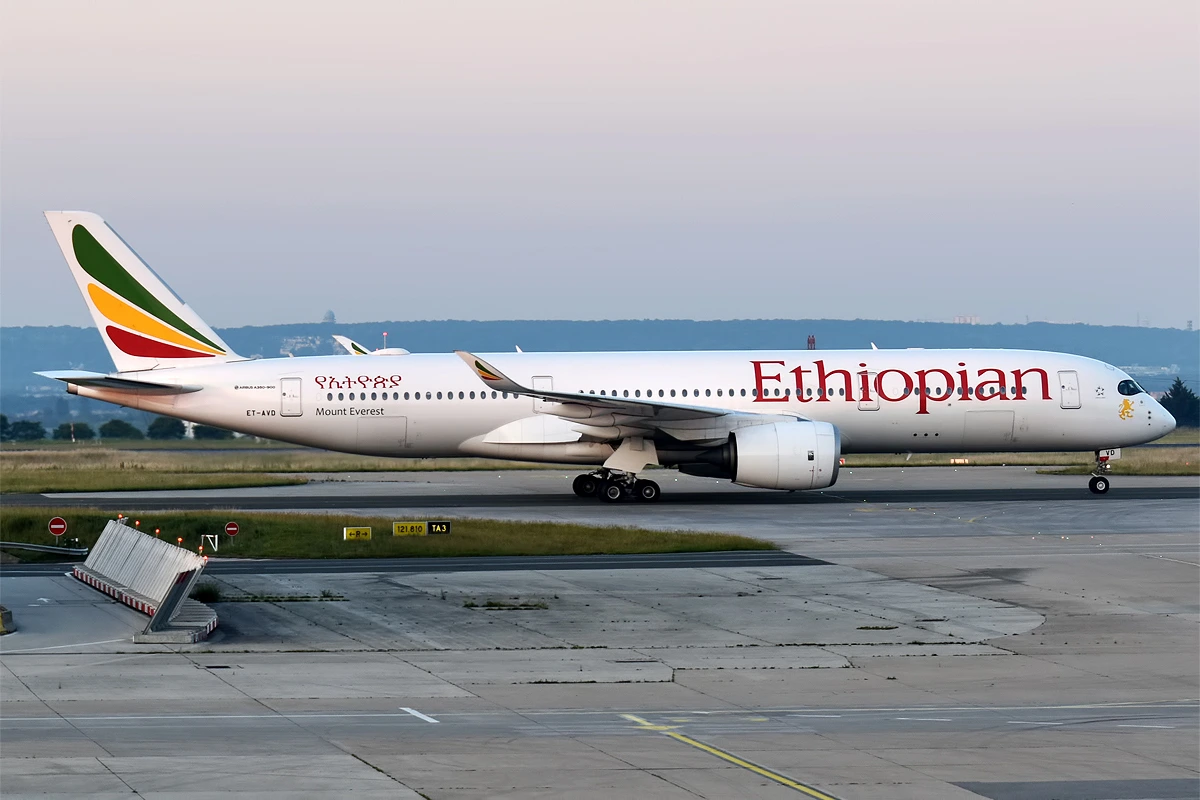
Ethiopian Airlines (ET) is in early-stage discussions with Airbus SE over a potential order for six Airbus A350 widebody jets and approximately 20 Airbus A220 regional aircraft, Bloomberg first reported. The talks are private, and people familiar with the matter cautioned that deliberations remain at an incipient stage with no certainty of a final agreement or confirmation of the quantities under consideration.
This news about the African flagship carrier comes across the backdrop of the fact that it broke ground on the Bishoftu International Airport — a $12.5 billion greenfield infrastructure project designed to become Africa’s largest aviation hub earlier this year. The carrier is prosecuting one of the most aggressive fleet-acquisition programmes on the continent, with approximately 120 aircraft currently on order spanning both Boeing and Airbus product lines. It is working towards the Vision 2035 strategic target of operating 271 aircraft and carrying 65 million passengers annually.
.jpg)
Ethiopian Airlines and Airbus Open Talks for Up To 26 Aircraft Across Two Families
Bloomberg’s reporting of the carrier’s wish to acquire 26 aircraft cited sources who requested anonymity given the private nature of the discussions. The two aircraft types serve fundamentally distinct roles within an airline’s network architecture:
- the A350 is a twin-aisle, long-haul platform designed for intercontinental trunk routes
- the A220 — originally developed by Bombardier as the C Series before Airbus acquired programme control in 2018 — is a single-aisle regional jet seating between 100 and 160 passengers and optimised for thin, point-to-point domestic and intra-continental routes.
Should the order proceed, the A220 acquisition would resolve a gap Ethiopian Airlines has been attempting to fill for several years. As recently as June 2025, CEO Mesfin Tasew Bekele told Reuters at the sidelines of the IATA annual meeting that the airline was evaluating three regional jet candidates: the Airbus A220, the Embraer E2, and the Boeing 737 MAX 7.
The CEO added at the time that the final quantity ordered would depend on the type selected, and noted that delivery delays from both Boeing and Airbus were constraining capacity across the network. The emergence of a narrowed focus on the A220 in the current talks suggests that evaluation may have advanced substantially in the intervening months.
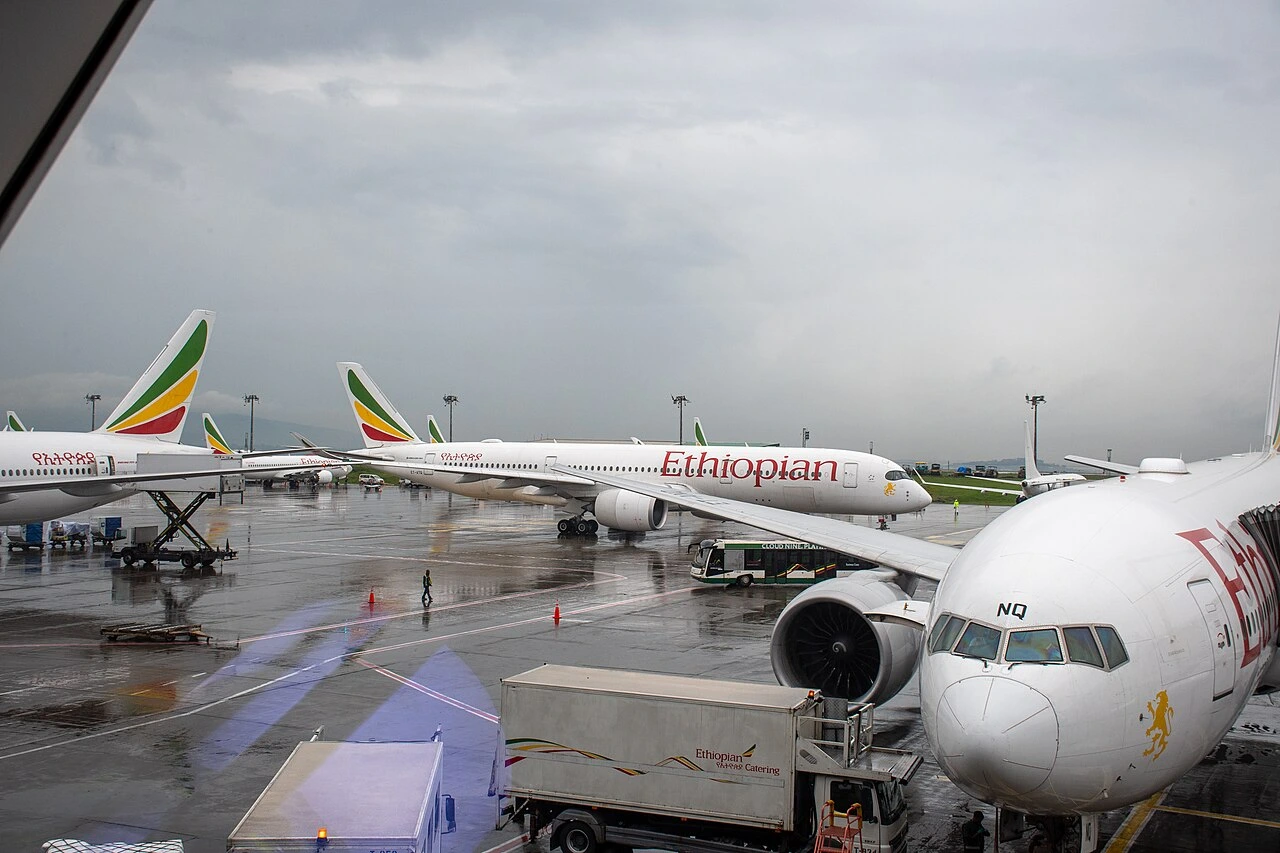

Ethiopian’s Boeing-Dominant Fleet Might Have More Airbus
According to data from planespotters.net, Ethiopian’s fleet includes Boeing 737s, 777s and 787 Dreamliners alongside Airbus A350s and 50 turboprops.
| Aircraft Type | In Service | Parked | Current Total | Avg. Age |
|---|---|---|---|---|
| ATR 42 / 72 | 2 | — | 2 | 0.9 Years |
| Airbus A350 XWB | 26 | — | 26 | 5.8 Years |
| Boeing 737 | 41 | 1 | 42 | 9.7 Years |
| Boeing 767 | 2 | 2 | 4 | 12.9 Years |
| Boeing 777 | 21 | 2 | 23 | 10.3 Years |
| Boeing 787 Dreamliner | 28 | 2 | 30 | 9.9 Years |
| De Havilland Canada DHC-8 Dash 8 | 30 | 1 | 31 | 10.5 Years |
| Total | 150 | 8 | 158 | 9.3 Years |
The airline maintains a substantial Boeing backlog: at the 2023 Dubai Airshow, Ethiopian committed to 67 Boeing aircraft comprising 737 MAX and 787 Dreamliner jets in what was described as the largest-ever purchase of Boeing aircraft by an African airline. Those orders were subsequently supplemented at the 2025 Dubai Airshow, where Ethiopian firmed options for an additional 11 Boeing 737 MAX 8 jets and placed a fresh commitment for nine Boeing 787-9 Dreamliners, the latter finalised in December 2025 and announced by Boeing on 20 January 2026.
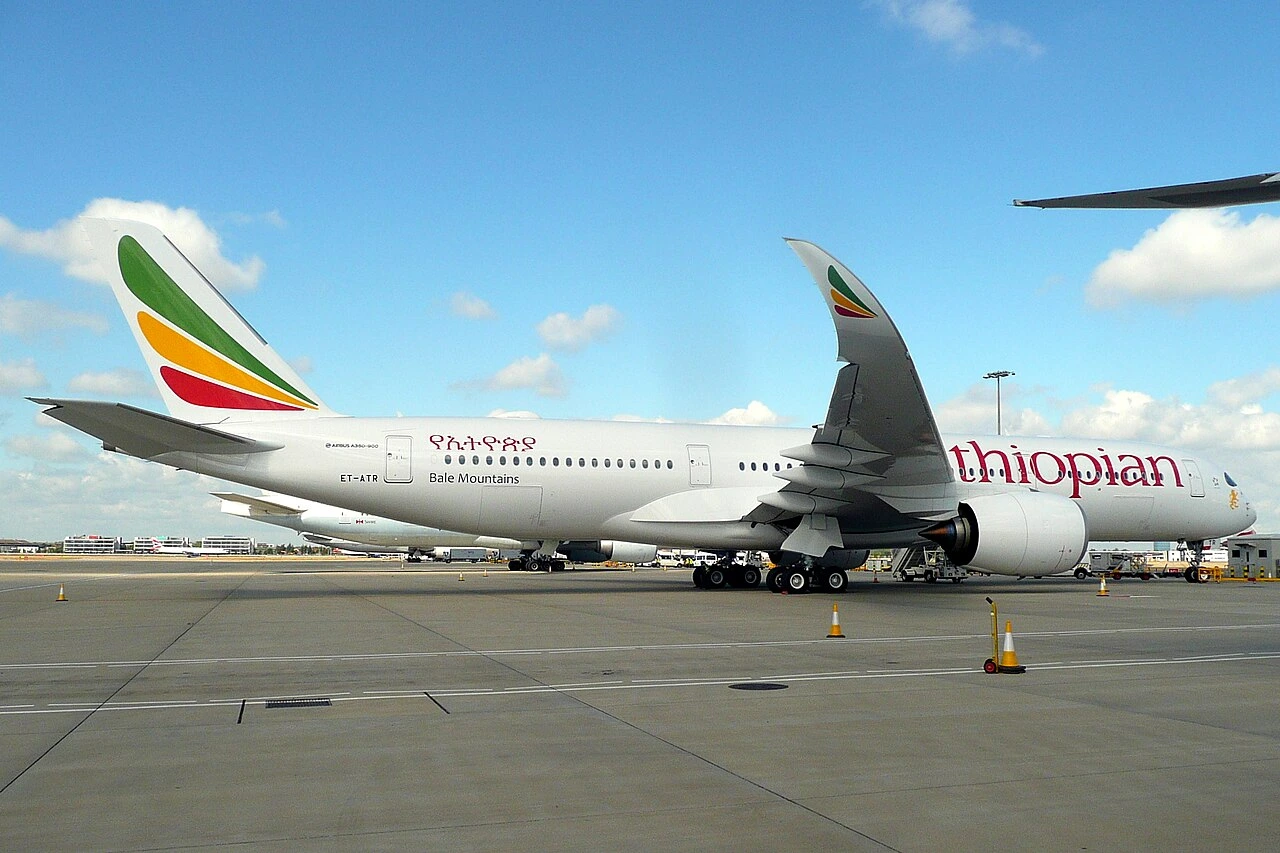
On the Airbus side, Ethiopian has been steadily deepening its commitment to the A350 family. At the 2025 Dubai Airshow on 18 November, Ethiopian signed a firm order for six Airbus A350-900s with Airbus EVP Sales Benoît de Saint-Exupéry. Separately, on 21 November 2025, Dubai-based lessor Novus Aviation Capital formalised an agreement to place two additional A350-900 aircraft with the carrier at the Airbus Chalet. The carrier said that the acquisition of the A350, which is deployed in the longest flights in the world, was to help the airline “grow sustainably while providing a world-class travel experience to our passengers and strengthening our position as the aviation leader in Africa”
Ethiopian is already the largest A350 operator in Africa, and the six aircraft ordered directly at the airshow — combined with April 2026’s conversion of six options into firm 787-9 orders — underscore a fleet strategy that is simultaneously intensifying at both manufacturers. Speaking at the Dubai Airshow signing ceremony, CEO Mesfin Tasew stated:
“As the continent’s leading airline and the largest operator of the A350, this milestone order further supports our vision to .”
.jpg)
What The A220 Would Give Ethiopian That The 737 MAX Cannot
The A220-100 seats between 100 and 135 passengers depending on configuration, while the A220-300 accommodates 130 to 160. Both variants are optimized for routes that generate insufficient demand for a 170-seat 737 MAX 8.
Ethiopian currently operates a De Havilland Q400 turboprop fleet for thinner domestic and regional African routes. The A220 would create a capacity tier between those aircraft and its narrowbody jet fleet, enabling the airline to open thinner city pairs with a jet-standard cabin experience.
Airbus has been aggressively promoting the A220 programme following a period of order attrition in 2024. The most conspicuous recent vindication of that campaign came when AirAsia placed the single largest-ever A220 order, comprising 150 aircraft. An Ethiopian A220 commitment would carry particular strategic significance for Airbus in Africa, a market where Boeing’s legacy relationships with the continent’s dominant carrier have historically constrained Airbus’s narrowbody penetration.
IBA Group’s Africa Aviation Market Update, published in late 2025, found that Boeing holds a 41% share of Africa’s regional order book against Airbus’s 35% — a gap that an Ethiopian A220 order would materially erode.
.jpg)
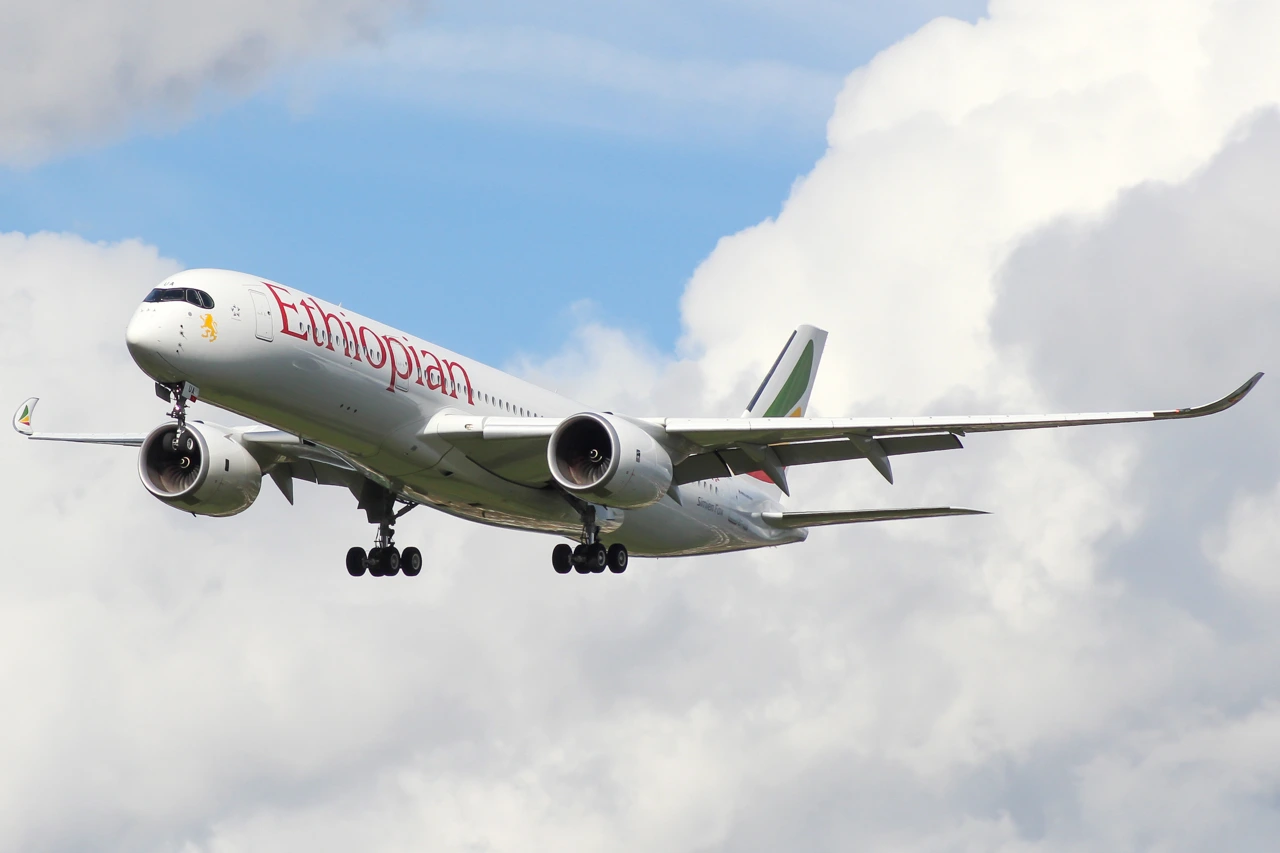
Ethiopian Versus Airbus’s April Sales Momentum
The Ethiopian talks come across the backdrop of Boeing’s April 2026 order surge, in which the American manufacturer booked 136 gross orders including 51 Boeing 787s and 57 Boeing 737 MAX jets. This was partially driven by Ethiopian’s April conversion of six 787 options into firm commitments.
Airbus’s year-to-date net orders through April 2026 stood at 405 aircraft — substantially ahead of Boeing’s 284 — and the European manufacturer has been particularly active in cultivating African airline relationships at major industry events.
At the 2025 Dubai Airshow, Airbus accumulated more than 230 aircraft commitments across direct orders, memoranda of understanding, and lessor placements; Ethiopian had an order of six-aircraft A350 aircraft.
Ethiopian’s A350s Will Fly to and From the Bishoftu Mega-Airport
On 10 January 2026, Ethiopian Airlines officially broke ground on Bishoftu International Airport (BIA), a greenfield development located approximately 40 kilometres southeast of Addis Ababa’s existing Bole International Airport (ADD), at an elevation of 1,910 metres.
The project — estimated at $12.5 billion, revised upward from an initial $10 billion as its scope expanded — will be delivered in phases. Let’s have a look into these phases and how the airport is expected to fare:
All in All
In October 2019, Bloomberg reported that then-CEO Tewolde GebreMariam had confirmed the carrier was in late-stage negotiations for as many as 20 A220s worth more than $1.6 billion, describing the discussions as close to completion by year-end. That deal never materialised though. Covid 19 then plagued the aviation industry and led to significant losses for airlines around the world.
However, Ethiopian’s recent financial (revenue of $7.6 billion in the 2024/25 fiscal year — an 8% increase year-on-year — with international passenger numbers growing 11% to 19.1 million travellers, comprising 15.2 million international and 3.9 million domestic passengers, per Rex Clarke Adventures’ March 2026 analysis) might mean that the A220 which they were’nt able to acquire in and around the pandemic might just come home.
Vision 2035, the airline’s formal strategic horizon formalised by current CEO Mesfin Tasew and built on the framework introduced by predecessor Tewolde GebreMariam in 2019, sets a target of $29 billion in revenue, 65 million annual passengers, and a top-20 global airline ranking by 2035. Maybe if the A350 and A220 talks with Airbus proceed to contract, the vision 2035 might be realized.