Nepal Airlines Corporation has announced an increase in the frequency of its scheduled service along the Nepalgunj–Surkhet–Simikot corridor. Effective May 9, 2025, the national flag carrier now operates four weekly flights on the route,increasing one weekly scheduled operations to the remote district of Humla, which is a district of roughly 56,000 residents who remain entirely dependent on air transport, as no functional road network connects Humla to the rest of the country.
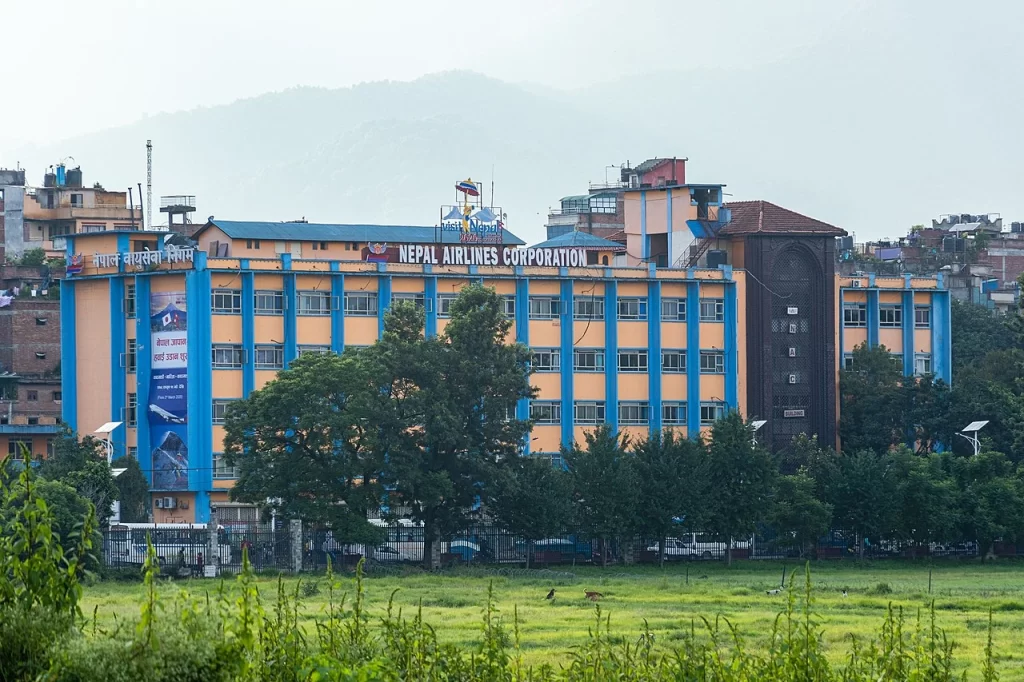
Alongside the frequency upgrade, Nepal Airlines announced a tiered fare structure for the route, pegging the standard ticket price at NPR 18,000 per passenger while extending discounted fares to senior citizens, persons with disabilities, children under 12, and students. The nation had earlier announced that senior citizens would get a discount of upto 80% on domestic routes.
Nepal Airlines’ New Humla Schedule: What Changed On May 9
Nepal Airlines Corporation operates its Humla service using de Havilland Canada DHC-6 Twin Otter turboprops. These are short take-off and landing (STOL) aircraft purpose-built for Nepal’s high-altitude, narrow-runway environments that are full of STOL airports such as Lukla Airport, which is dubbed to the most dangerous airport in the world; Rara Airport, which is considered to be more dangerous than Lukla, among others.
Simikot Airport (IMK), the district headquarters of Humla and the sole point of entry for the region, sits at an elevation of 2,971 metres (9,747 feet) above sea level, with a single 549-metre blacktop runway. The airport has been operational since March 18, 1977, and is one of the many aerodromes managed by the Civil Aviation Authority of Nepal (CAAN).

Under the revised schedule, outbound flights from Simikot to Surkhet Airport (SKH) and onward to Nepalgunj Airport (KEP) operate on Mondays, Wednesdays, and Fridays, while the fourth weekly frequency completes the inbound rotation from Nepalgunj Airport.
The fourth flight adds meaningful redundancy to a timetable that previously left passengers facing multi-day waits whenever weather, technical, or demand-related disruptions disrupted the standing three-flight rotation. Nepal Airlines made no public statement on whether further frequency additions are planned for the current operating season.
Why Humla’s Air Dependency Makes Every Additional Flight Count
Humla is one of Nepal’s most geographically and economically marginalised districts, bordered by Tibet to the north and reliant on aircraft for virtually all passenger movement, food imports, medicine, and construction materials. The absence of a road link — a deficit that persists decades after Nepal’s national road network began expanding into other remote hill districts — renders Simikot Airport not merely convenient but existential for the population.
As Rising Nepal Daily has previously reported, the resumption of regular flights after even brief disruptions brings immediate relief: goods begin moving, porters return to work, and patients regain access to referral care in urban centres.
Seat scarcity on the Humla corridor has historically provoked social tensions. In November 2025, local youth in Simikot staged protests over what they described as opaque and arbitrary ticket distribution practices by the four carriers serving the route — Nepal Airlines, Sita Air, Tara Air, and Summit Air. The Rising Nepal Daily reported that the Chief District Officer subsequently instituted a structured seat allocation system, reserving specific seats for patients, government officials, the general public through online booking, and residents of the wards adjacent to the airport. The frequency increase by Nepal Airlines arrives against that backdrop of demonstrated demand and community frustration.
The standard fare of NPR 18,000 is not inconsequential for households in a district where subsistence agriculture is the primary livelihood. Nepal Airlines’ decision to formalise discounts for students, persons with disabilities, senior citizens, and children under 12 acknowledges the social character of the route, one on which the commercial logic of high-yield tourism has never fully replaced the imperative of basic connectivity.
Simikot Airport is the Only Gateway to a Roadless District
Simikot Airport (IMK), categorised under ICAO as VNST, operates under Visual Flight Rules (VFR) and is restricted to aircraft types certified for short-field operations — principally the Dornier 228, Let L-410, DHC-6 Twin Otter, and the Chinese-built Harbin Y-12 (though the lattermost of these planes is almost defunct and serves as a headache for its operator Nepal Airlines. In our post, we have touched upon the three other aircraft that operate in the remote STOLports of Nepal).
The airport’s operating hours vary by season: from February 16 to November 15, it operates between 06:00 and 12:15 local time; from November 16 to February 15, between 06:30 and 12:15 local timer. Refuelling facilities are not available at Simikot, placing an operational premium on range and fuel planning for all carriers.