RTX’s Pratt & Whitney has secured certification from the European Union Aviation Safety Agency (EASA) for its GTF Advantage engine powering the Airbus A320neo family, the company announced on April 17, 2026.
The approval, following prior validation milestones in 2025, enables production deliveries and prepares the upgraded geared turbofan for entry into commercial service, positioning it as the program’s next baseline standard.
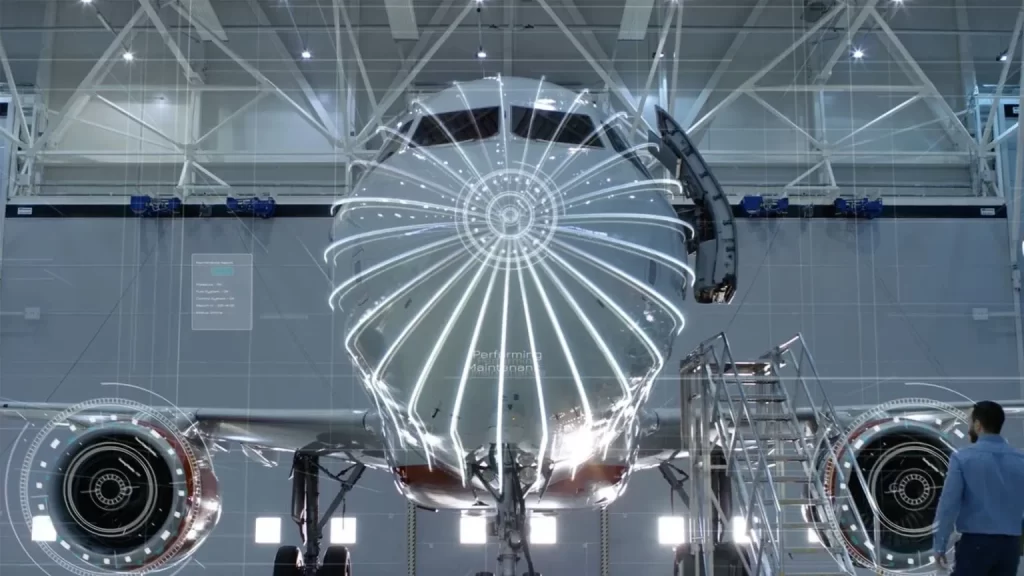
EASA Certification of Pratt & Whitney GTF Advantage for Airbus A320neo
The certification marks the final regulatory clearance required for aircraft-level integration, complementing the U.S. FAA approval secured in February 2025.
In a statement accompanying the release, Rick Deurloo, President of Commercial Engines at Pratt & Whitney, emphasized the program’s significance, noting that the milestone advances the engine toward imminent service entry while reinforcing its operational value proposition:
“The GTF engine delivers the lowest fuel consumption for single-aisle aircraft….The GTF Advantage engine extends that lead—offering up to double the time on wing and enhancing aircraft capability—providing even greater value to operators of A320neo family aircraft. This aircraft certification is a key milestone for the GTF Advantage program in advance of its entry into service.”
Reuters reported that the approval formally authorizes installation across the A320neo family, aligning with airline demand for more efficient narrowbody platforms capable of extended range and improved economics.
GTF Advantage Has Improved Thrust, Range, and Fuel Efficiency
The GTF Advantage introduces a measurable uplift in operational capability, delivering between 4% and 8% additional takeoff thrust depending on operating conditions.
This increase translates directly into higher payload capacity and extended range, allowing airlines to deploy narrowbody aircraft on longer or thinner routes that would otherwise require widebody economics.
Pratt & Whitney also maintains that the GTF architecture continues to offer the lowest fuel consumption in the single-aisle segment, with the Advantage variant further extending that efficiency margin.
It also improves fuel efficiency and reduces carbon emissions. Pratt & Whitney is aligning the engine with future requirements for 100% sustainable aviation fuel compatibility. Engineered to be fully interchangeable with existing GTF models, the Advantage variant is set to become the program’s production standard.
Durability Upgrades and GTF Hot Section Plus Retrofit Pathway
A central improvement lies in durability, with the GTF Advantage designed to deliver up to double the time on wing compared to earlier configurations.
To bridge the existing fleet, Pratt & Whitney will introduce the “Hot Section Plus” (HS+) upgrade for the PW1100G-JM engine, enabling operators to capture approximately 90–95% of the new engine’s durability benefits during scheduled maintenance cycles.
This retrofit pathway reflects a broader effort to stabilize in-service reliability following earlier manufacturing challenges that affected the global GTF fleet.
The following table gives us a greater glimpse into the engines:
| Category | Metric | Value |
|---|---|---|
| Test Program | Relative testing vs current GTF | More than 2× |
| Total engine & rig testing | 100,000+ hours | |
| In-service flight hours | 38 million hours | |
| Fleet & Customers | Aircraft delivered | 2,200+ |
| Customers served | 80+ | |
| Efficiency & Environmental Impact | Fuel efficiency improvement | Up to 20% |
| Fuel saved | 2+ billion gallons | |
| CO₂ emissions avoided | 20 million metric tons | |
| Market Demand | Total engine orders & commitments | 11,000+ |
GTF Advantage: Production Roadmap and Transition to New Baseline Standard
The GTF Advantage is fully interchangeable with current GTF variants, allowing seamless integration across mixed fleets without operational disruption. RTX expects the engine to become the production standard, with a complete transition away from earlier models targeted by 2028.
To support demand, Pratt & Whitney continues to scale industrial capacity, including significant investments in turbine airfoil manufacturing and forging infrastructure, aimed at alleviating supply constraints and accelerating output.
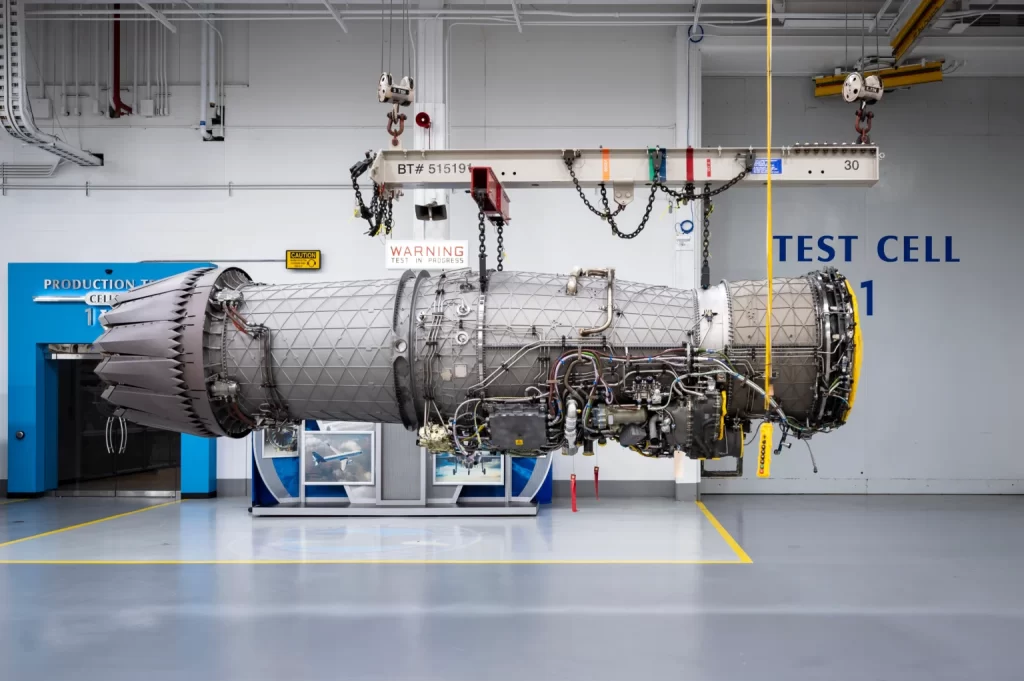
The GTF Advantage incorporates completely reengineered life-limited components along with performance upgrades across the engine’s gas path. It is inherently more durable, featuring increased core airflow to reduce operating temperatures and an advanced hot section designed to extend time on wing.
Within the high-pressure turbine (HPT), improvements include a refined airfoil design paired with enhanced coating technologies. The HPT and combustor also benefit from optimized cooling hole geometry—covering size, shape, and placement—alongside improved drilling methods that mitigate oxidation.
There is a Rising Demand for Efficient Narrowbody Propulsion
The certification arrives amid sustained airline demand for fuel-efficient propulsion systems capable of reducing both operating costs and emissions.
More than 2,700 GTF-powered aircraft have already been delivered globally, with over 13,000 engine orders and commitments across platforms, underscoring the scale of the installed base and forward demand pipeline.
The geared turbofan architecture, which decouples fan and turbine speeds for optimized efficiency, is expected to accumulate hundreds of millions of flight hours by the mid-2030s, reinforcing its role as a foundational technology for next-generation single-aisle aircraft.
What Does This Imply for RTX and Airbus A320neo Program
The GTF Advantage certification consolidates RTX’s position in the narrowbody propulsion market at a time when airlines are prioritizing range flexibility and cost discipline over sheer capacity growth.
For Airbus, the enhanced engine option strengthens the A320neo family’s competitive positioning, particularly on longer-range variants such as the A321neo and A321XLR, where incremental performance gains materially expand route economics.
While prior durability issues have weighed on operator confidence, the Advantage upgrade—paired with retrofit solutions—signals a concerted effort to restore reliability while advancing performance benchmarks.