The U.S. Department of the Air Force, which lost its A-10 and F-15 in the recent conflict in Iran, has invited artificial intelligence firms to develop up to 12 data centers across three military installations in Alaska, unveiling a major infrastructure initiative on April 10, 2026. The proposal targets approximately 4,700 acres of underutilized land and forms part of a broader federal push to strengthen national AI capabilities.
The planned developments will span Joint Base Elmendorf-Richardson, Eielson Air Force Base, and Clear Space Force Station, with private developers expected to finance, construct, and operate the facilities under long-term lease agreements.

U.S. Air Force AI data centers Alaska: project scope and locations
The Department of the Air Force (DAF) has formally issued a Request for Lease Proposal (RFLP) via the federal contracting platform SAM.gov, signaling the transition from preliminary industry consultation to active procurement.
The initiative covers three strategically positioned installations in Alaska:
| Base | Location Context | Strategic Role |
|---|---|---|
| Joint Base Elmendorf-Richardson | Near Anchorage | Joint operations hub |
| Eielson Air Force Base | Near Fairbanks | Arctic and Indo-Pacific operations |
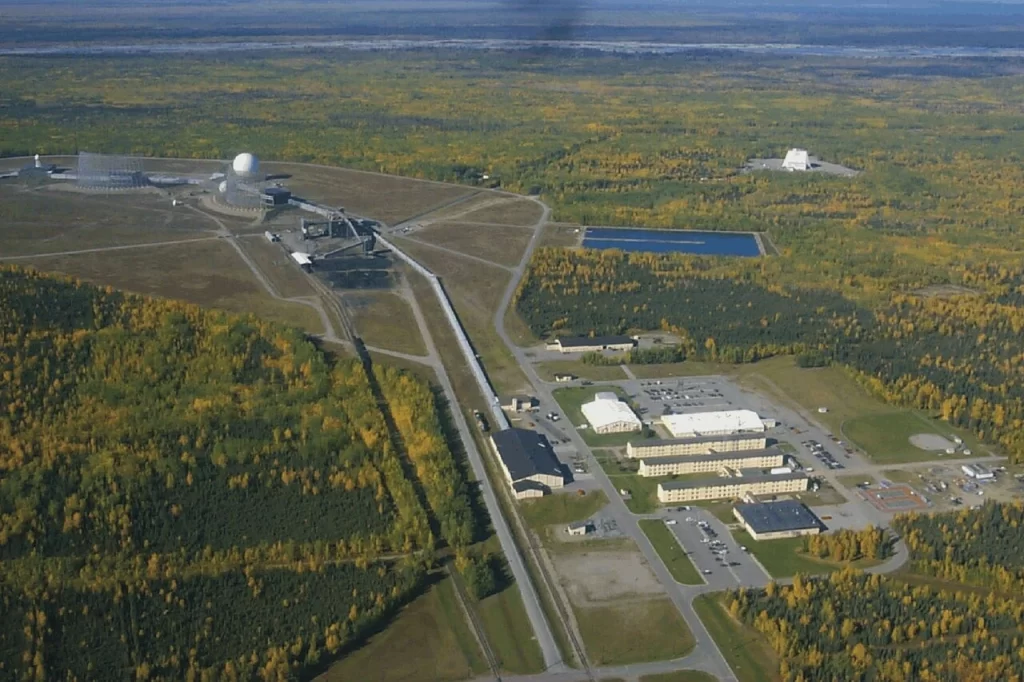
| Clear Space Force Station | Near Nenana | Missile warning and space surveillance |
Each site offers parcels of land suited for hyper-scale AI infrastructure, with up to 12 development zones identified for potential construction.
The Air Force has emphasized that selected partners will assume full lifecycle responsibility, including financing, permitting, construction, and long-term operations of the data centers.
Public-private partnership Model Drives AI infrastructure expansion
The Alaska initiative is explicitly structured as a public-private partnership, leveraging commercial expertise while preserving military oversight of strategic assets.
In an official statement, Robert Moriarty, Deputy Assistant Secretary of the Air Force for Installations, said:
“This is a unique opportunity for a true public-private partnership… By making this land available, we are supporting the growing demands of the AI industry while generating value that directly supports our missions and the readiness of our Airmen and Guardians.”
The DAF expects to receive fair market value compensation for leased land while simultaneously accelerating AI infrastructure deployment without direct federal capital expenditure.

US Air Force (USAF) F-16C Fighting Falcon, 120th Fighter Squadron (FS)
U.S. AI race and federal policy alignment
The initiative aligns with a broader U.S. government strategy to expand domestic AI capabilities and infrastructure resilience.
In October, the Air Force said it would make land available at five of its installations for private companies to develop AI data centers, inviting industry proposals to lease parcels for as long as 50 years. The sites include Arnold Air Force Base, Edwards Air Force Base, Joint Base McGuire-Dix-Lakehurst, Davis-Monthan Air Force Base, and Robins Air Force Base.
Separately, in January, tech firms OpenAI, Oracle, and SoftBank appeared with Trump at the White House to unveil a new venture called “Stargate,” which aims to invest up to $500 billion in AI infrastructure projects.
The Air Force’s actions also follow a presidential directive issued in January instructing the Department of Defense to identify suitable sites on military installations for AI-related infrastructure.
Additionally, the Alaska plan builds on earlier Air Force initiatives offering land at five other U.S. bases for similar developments, indicating a systematic, multi-site rollout strategy.
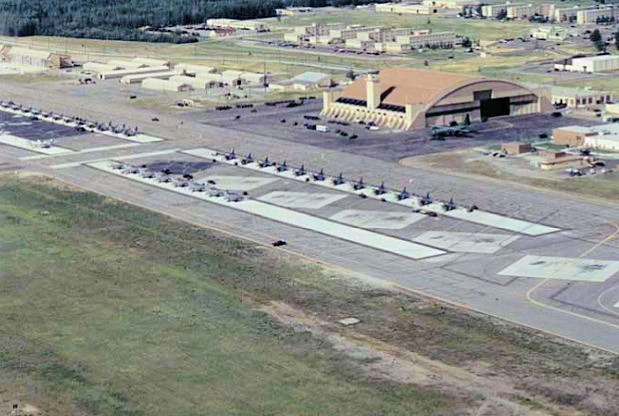
(USAF)[Eielson AFB]
Industry engagement timeline and proposal process
The Air Force has established a structured engagement process to attract qualified developers:
- April 23, 2026: Virtual industry day for prospective bidders
- April 28–30, 2026: On-site visits across the three Alaska bases
- May 29, 2026: Deadline for proposal submissions
Participation in site visits is encouraged but not mandatory for submission eligibility.
The phased approach allows the DAF to refine project requirements while ensuring transparency and competition among bidders.
Operational and Environmental Considerations of AI data centers
AI data centers represent critical infrastructure but are also resource-intensive, requiring substantial electricity and water for cooling and continuous operation.
The Air Force has acknowledged potential community concerns, particularly regarding:
- Energy consumption and grid impact
- Water usage and sustainability
- Local economic and environmental effects

To address these issues, the DAF stated it will prioritize proposals that:
- Minimize risks to military missions
- Ensure affordability and accessibility of utilities
- Mitigate impacts on surrounding communities
This reflects lessons from regions such as Virginia, where high data center concentration has raised concerns about rising household energy costs.
Broader Implications for Aviation and Defense Ecosystems
While primarily a digital infrastructure initiative, the Alaska data center program carries implications for the broader aerospace and defense ecosystem.
The integration of advanced AI computing capabilities within or adjacent to military installations could enhance real-time data processing, predictive maintenance, and autonomous systems development, all of which are increasingly central to modern airpower doctrine.
Moreover, Alaska’s geographic positioning—critical for Arctic operations and missile defense—adds strategic value, potentially transforming these installations into hybrid hubs of military readiness and computational power.
The initiative ultimately signals a structural shift in how defense agencies monetize land assets while embedding cutting-edge technology infrastructure within operational environments.
According to Air and Space Forces, AI data centers have been “a source of controversy in local communities, where residents have sometimes protested their construction over concerns about water and electricity consumption“.
The state of Virginia, which has the highest concentration of data centers globally, funded an independent study, which found that by 2040, residents’ energy bills could increase by $14 to $37 more per month, Task and Purpose reported.