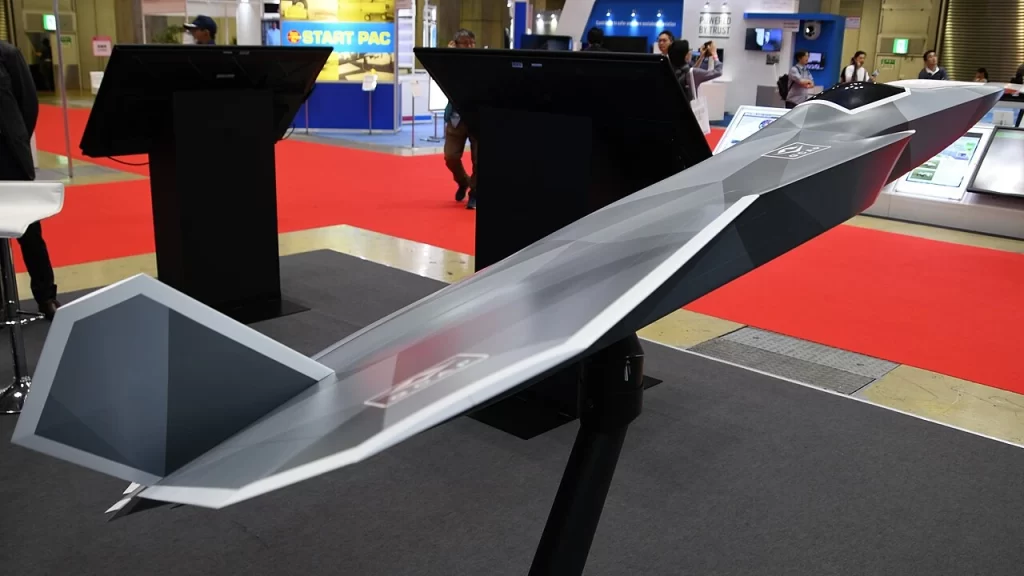
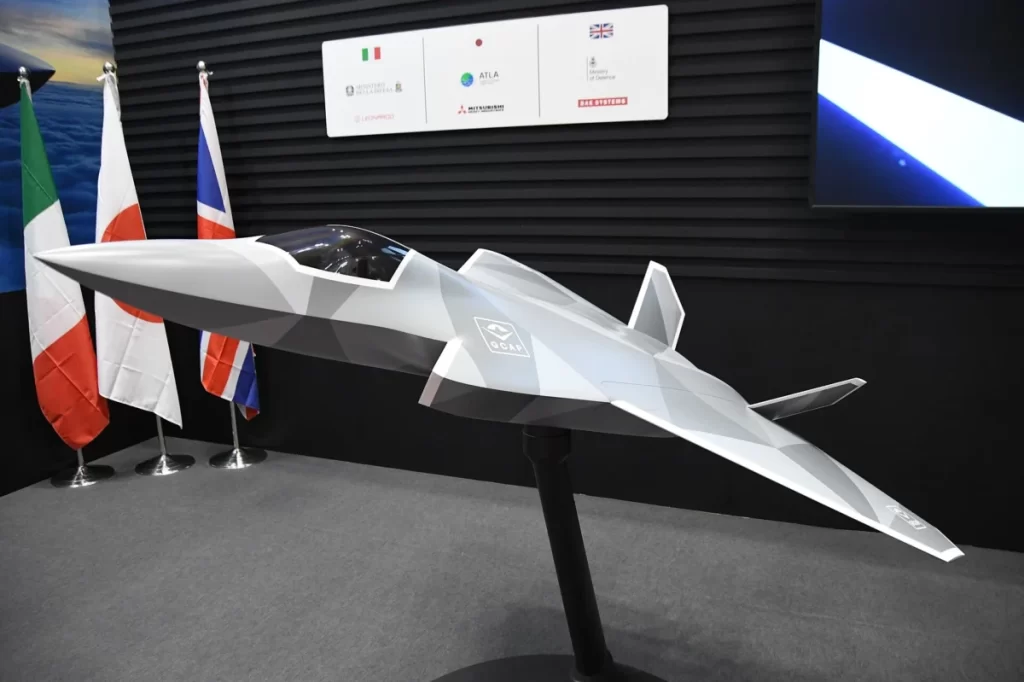
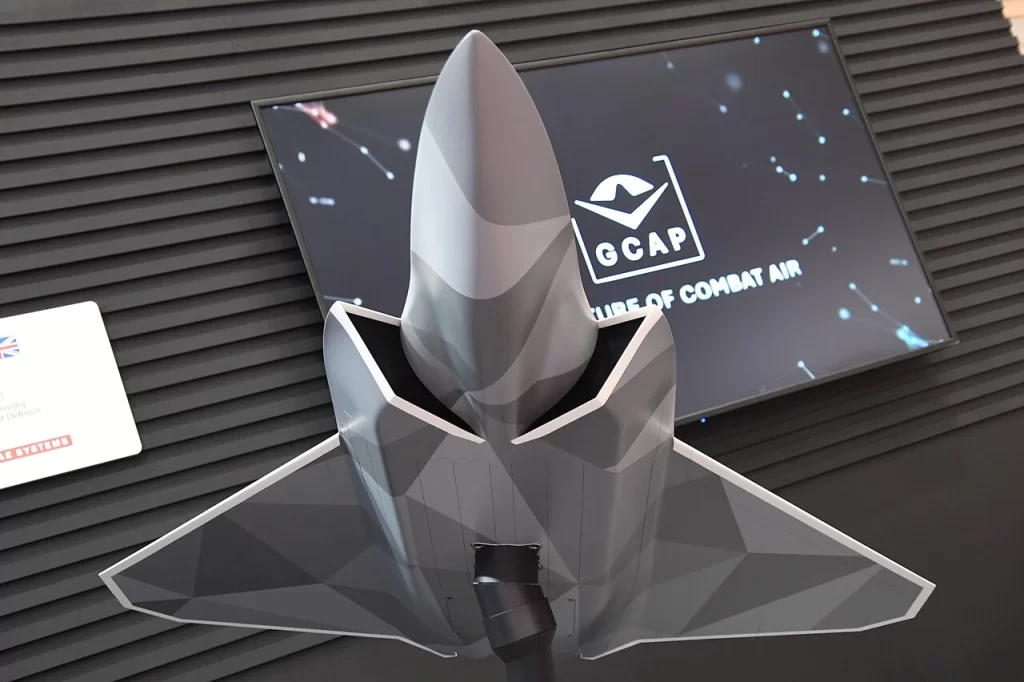
The United Kingdom (UK), Italy, and Japan have taken a significant step to stabilise the Global Combat Air Programme (GCAP) by signing a short-term funding agreement aimed at maintaining development momentum.
The deal ensures continued progress on the sixth-generation fighter project as the UK works to finalise its wider defence funding strategy. Industrial development remains led by Leonardo (LON), BAE Systems (BAE), and Japan Aircraft Industrial Enhancement Co., Ltd. through their joint venture, Edgewing. The programme is targeting the delivery of a next-generation combat aircraft by 2035.
The agreement reflects coordinated trilateral efforts to prevent disruption linked to budget uncertainty.
_right_rear_view_in_GCAP_booth_of_JA2024_at_Tokyo_Big_Sight_October_19,_2024.jpg)
UK Secures Bridge Funding for GCAP
According to Defense News, the GCAP joint programme office has awarded a £686 million ($906 million) development contract to Edgewing, intended to sustain engineering and design work over the next three months. This funding serves as a temporary measure while the UK prepares its Defence Investment Plan.
Officials from the trilateral agency said the contract reinforces cooperation among partner nations and supports continued progress toward key delivery targets. It ensures engineering teams remain active and that critical design milestones proceed without interruption during the transition period.
Notably, this is the first unified contract signed directly between the three governments and Edgewing, replacing earlier arrangements where funding was managed separately at the national level.
Funding Challenges for the GCAP Persist
The UK continues to face pressure to finalise its Defence Investment Plan, which has been delayed due to fiscal constraints and an estimated £28 billion gap in defence spending projections.
The absence of a confirmed plan has created uncertainty around long-term commitments to GCAP and other defence programmes.
Despite this, the UK government has taken steps to support aerospace manufacturing continuity. A separate £1 billion contract awarded to Leonardo for AW149 helicopter production reflects efforts to sustain domestic industrial capacity while broader funding decisions remain unresolved.
Stakeholders have raised concerns that delays in funding could affect programme timelines. Japan has previously emphasised the importance of keeping GCAP on track for its 2035 target.
_front_low-angle_view_in_GCAP_booth_of_JA2024_at_Tokyo_Big_Sight_October_19,_2024_02.jpg)
Expanding Role of Edgewing
Edgewing, the industrial lead for GCAP, is taking on an increasingly central role in overseeing technical development across the three partner nations. A spokesperson for GCAP was quoted in Defense News:
“With the signing of this international contract, Edgewing is now fully empowered to drive the program forward as its industrial lead. Our priority is to ensure that engineering work continues to meet planned milestones and the business continues to ramp-up according to our projections.”
The company stated that the new contract allows engineering work to continue without disruption and supports upcoming programme milestones.
The joint venture also highlighted that GCAP represents a distinctive model of global collaboration in combat aircraft development, with full technical responsibility placed under a single international prime contractor.
This approach integrates design and development efforts across all partner countries, marking a departure from previous structures.
Masami Oka, Chief Executive of the GCAP Agency, said the agreement signals a transition from separate national contracts to a unified international framework, aimed at improving coordination and streamlining execution across the programme.