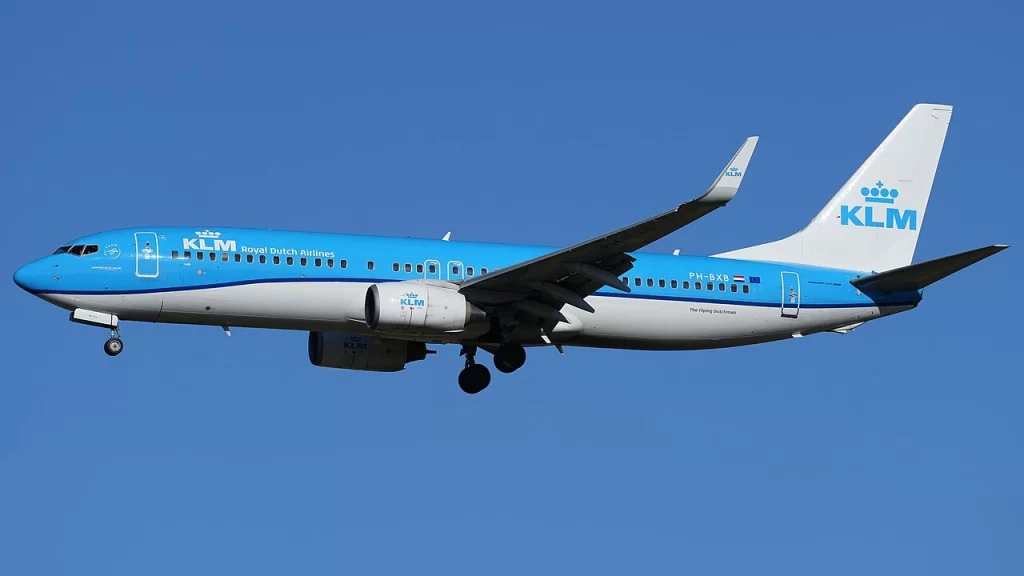
A KLM Royal Dutch Airlines (KL) flight was forced to return to Amsterdam Airport Schiphol (AMS) on April 11, 2026, after striking a heron shortly after takeoff. The incident was classified as a technical issue, and passengers were transferred to a replacement aircraft.
The flight departed Schiphol at approximately 14:30 local time and had been airborne for around 15 minutes when the bird strike occurred. Passengers later continued their journey to France on a replacement aircraft at about 18:00, nearly four hours after the original departure time.
_PH-BXB_(DSC07657).jpg)
KLM Flight Returns After Bird Strike
The aircraft had only recently taken off when the crew detected signs of a bird strike. The bird was identified as a heron, a relatively large species compared to those typically encountered near airports.
A KLM spokesperson stated that the bird may have entered one of the engines, although this had not been fully confirmed at the time, and was quoted in AD News:
“It could be that the heron ended up in the engine, but that is not yet entirely clear….In any case, we can speak of a technical incident. That’s why the plane had to return to Schiphol.”
Regardless of the exact impact point, the incident was deemed significant enough to prevent the flight from continuing.
The aircraft returned to Schiphol, where ground teams arranged for passengers to transfer to a standby aircraft. The airline did not confirm the condition of the heron following the collision.
.jpg)
Bird Strike Risks at Schiphol
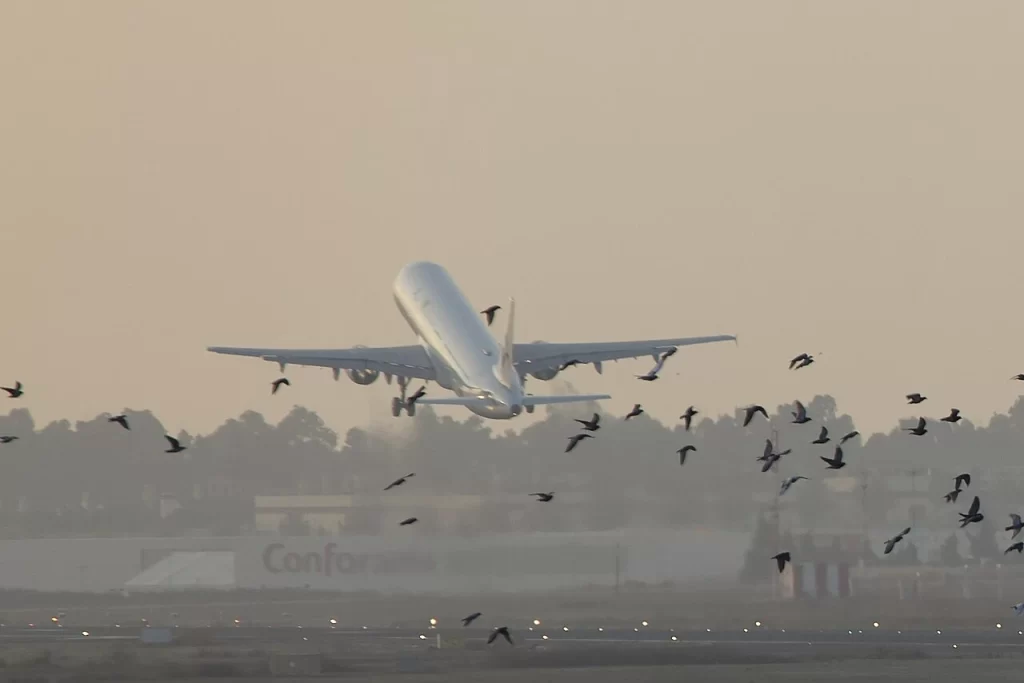
Bird strikes are a known and recurring challenge at Amsterdam Airport, largely due to bird populations in the surrounding area.
According to a KLM spokesperson, geese are the most commonly involved species, while starlings are also frequently encountered.
To manage this risk, Schiphol employs dedicated bird control teams that patrol the airfield and use deterrent methods to disperse birds. These teams also coordinate with air traffic control to redirect aircraft to alternative runways when necessary, Ad reported:
To prevent this as much as possible, so-called bird controllers work at Schiphol. They chase the birds away from the airport or allow planes to take off from another runway.
Despite these measures, bird strikes remain an inherent risk at major airports, particularly those located near wetlands, farmland, or migration routes, as is the case with Schiphol.
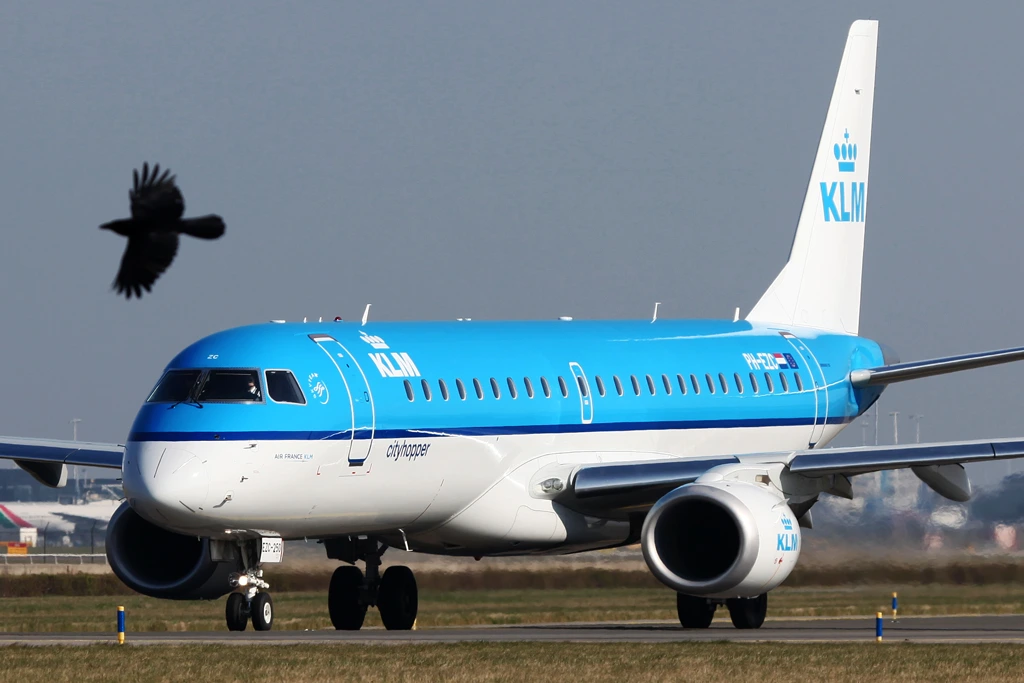
Herons, due to their size and weight, pose a greater hazard to aircraft engines than smaller birds. If ingested into a turbofan engine, they can cause damage to compressor blades, engine stall, or, in severe cases, complete engine failure.
_(2).jpg)
Passenger Impact and Flight Recovery
All passengers were safely disembarked after the aircraft returned to Schiphol.
KLM arranged a replacement aircraft, allowing passengers to depart for France at approximately 18:00 local time. The total delay was about three and a half hours from the originally scheduled departure.
No injuries were reported among passengers or crew, and the airline has not issued additional statements regarding compensation or broader operational impact.
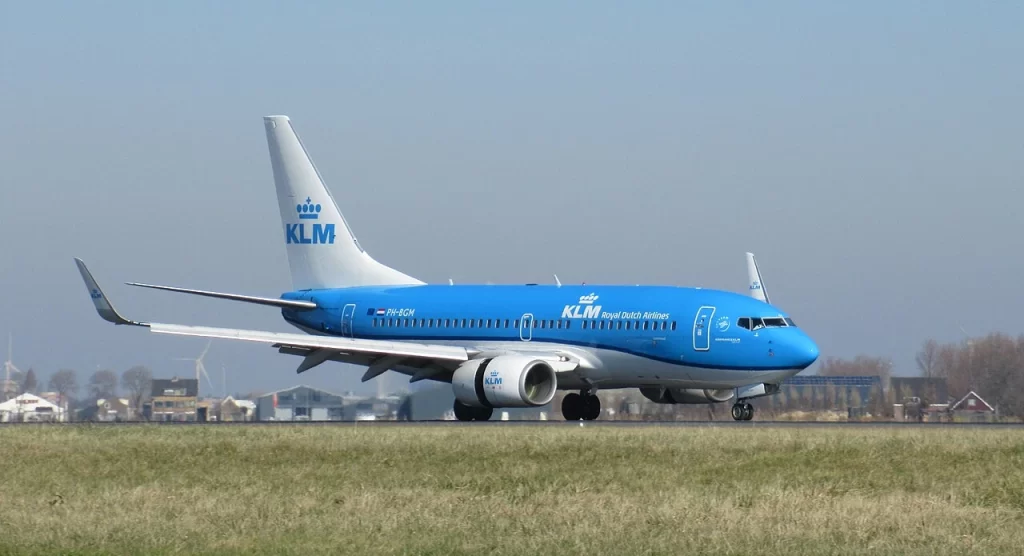

Airports such as Schiphol generally adopt the following methods to mitigate bird strikes:
Bird Strike Prevention Methods
| Method | How It Works | Key Features / Examples | Limitations |
|---|---|---|---|
| Bird Detection Radar | Uses radio frequency signals to track birds in real time (size, speed, direction, position) | 3D coverage, up to ~10 miles range; used at Seattle-Tacoma Airport; tracks even small birds | High cost; requires integration with ATC systems |
| Laser Deterrent Systems | Projects light patterns that mimic predator presence to scare birds away | Non-invasive; adjustable settings; works across different environments | Effectiveness may vary by species and conditions |
| Aircraft Paint Schemes | Uses visible colors to improve aircraft visibility to birds | White paint improves visibility and reduces camouflage | Limited impact; depends on bird perception |
| Infrared Detection Systems | Uses thermal imaging to detect birds via heat signatures | Works in all weather; detects hidden or camouflaged birds; used at Davison Army Airfield | Requires specialized equipment and monitoring |
| Long-Range Acoustic Devices (LRAD) | Emits loud sounds and predator calls to disperse birds | Effective up to ~3,000 meters; used at Singapore Changi Airport | Birds may adapt over time if patterns repeat |
| Predator Mimicking (RobotFalcon) | Uses robotic birds to imitate predators and scare flocks | Quickly clears areas; realistic movement; used in the Netherlands | Limited battery life; needs trained operators; less effective on large birds |
| Habitat Management | Alters environment to make it less attractive to birds | Includes water reduction, vegetation control, nets, and barriers | Requires continuous maintenance |
| Use of Natural Predators | Introduces or traps birds of prey to control populations | Used in some airports (e.g., falcons, hawks) | Logistical and ethical considerations |
| Aircraft Lighting Systems | Uses specialized lights to improve aircraft visibility to birds | Adjustable wavelengths and pulse rates tailored to bird species | Still under study; not widely implemented |
| Engine & Structural Testing | Tests aircraft resilience using simulated bird strikes | Includes “chicken gun” testing for engines and structures | Does not prevent strikes, only mitigates impact |