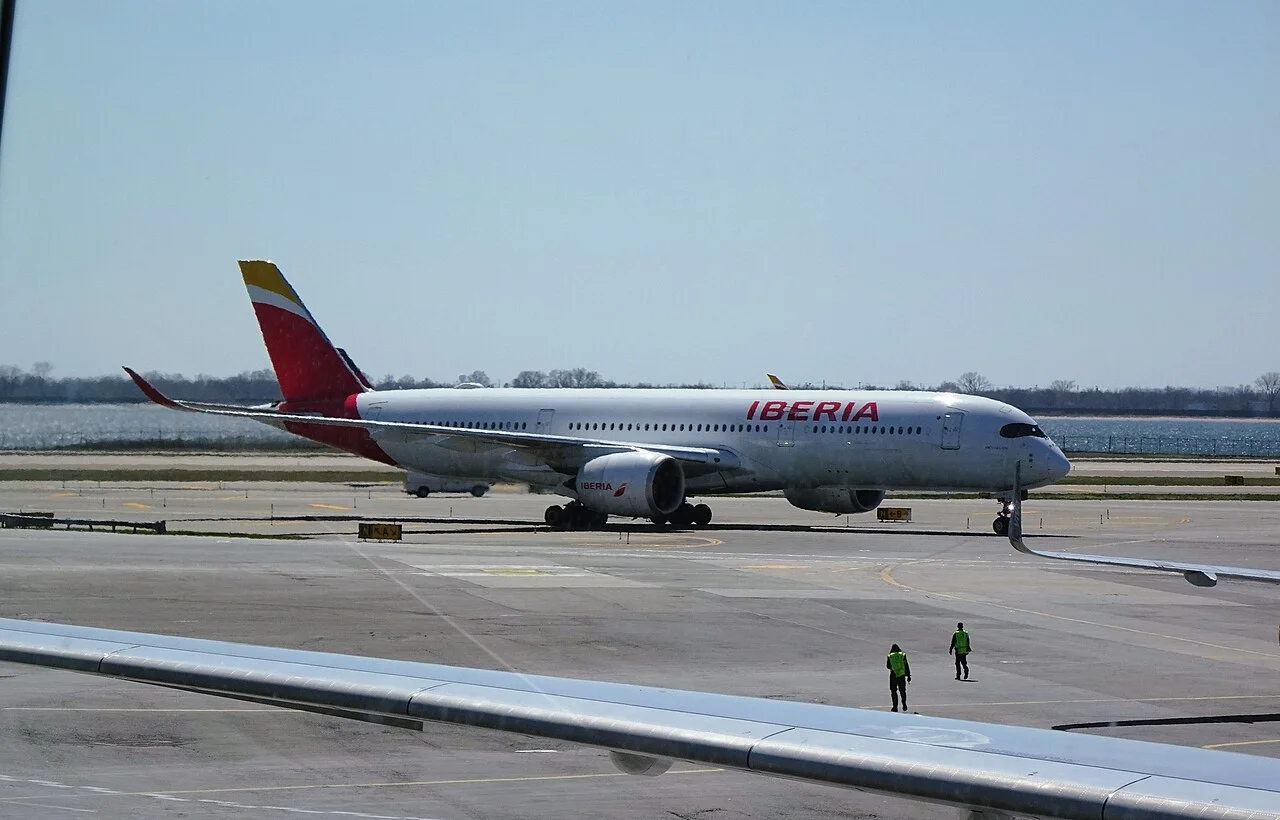
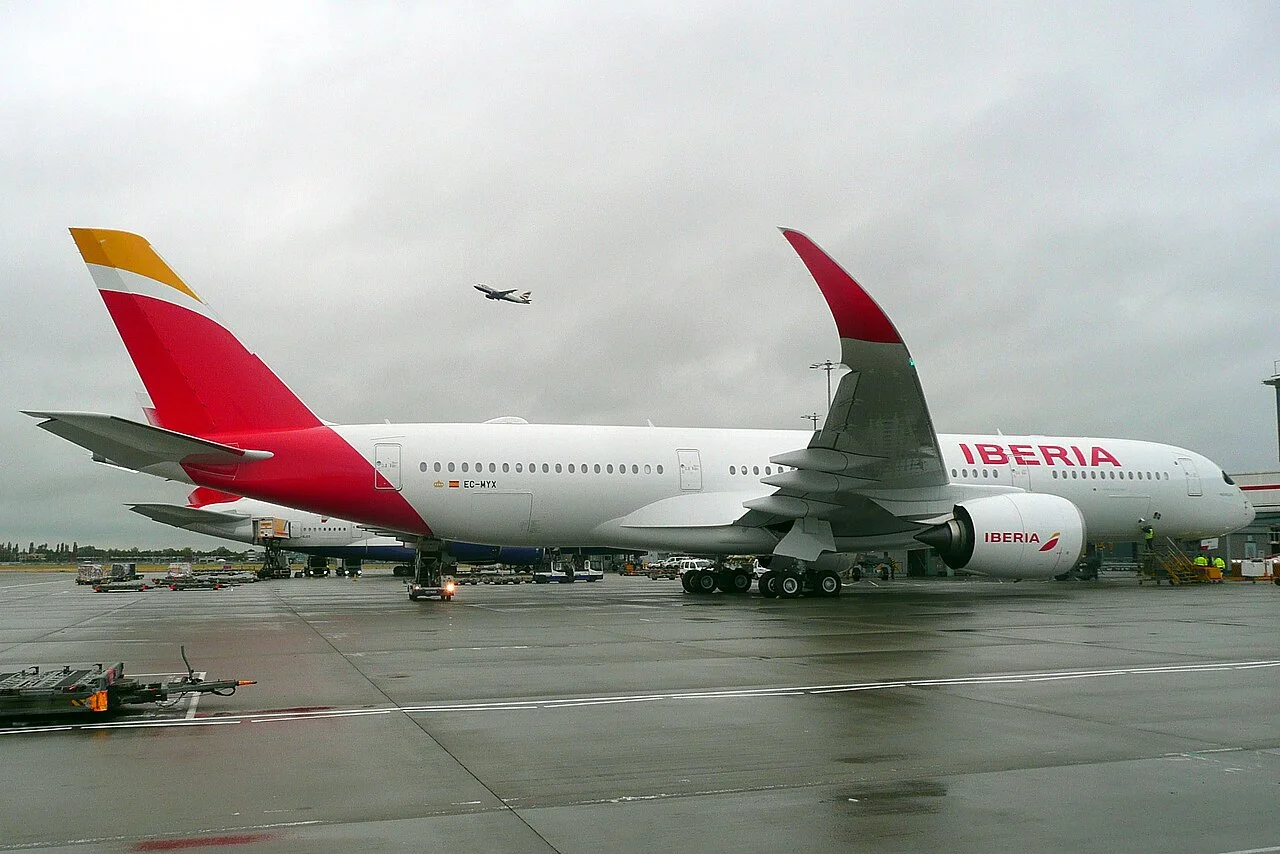
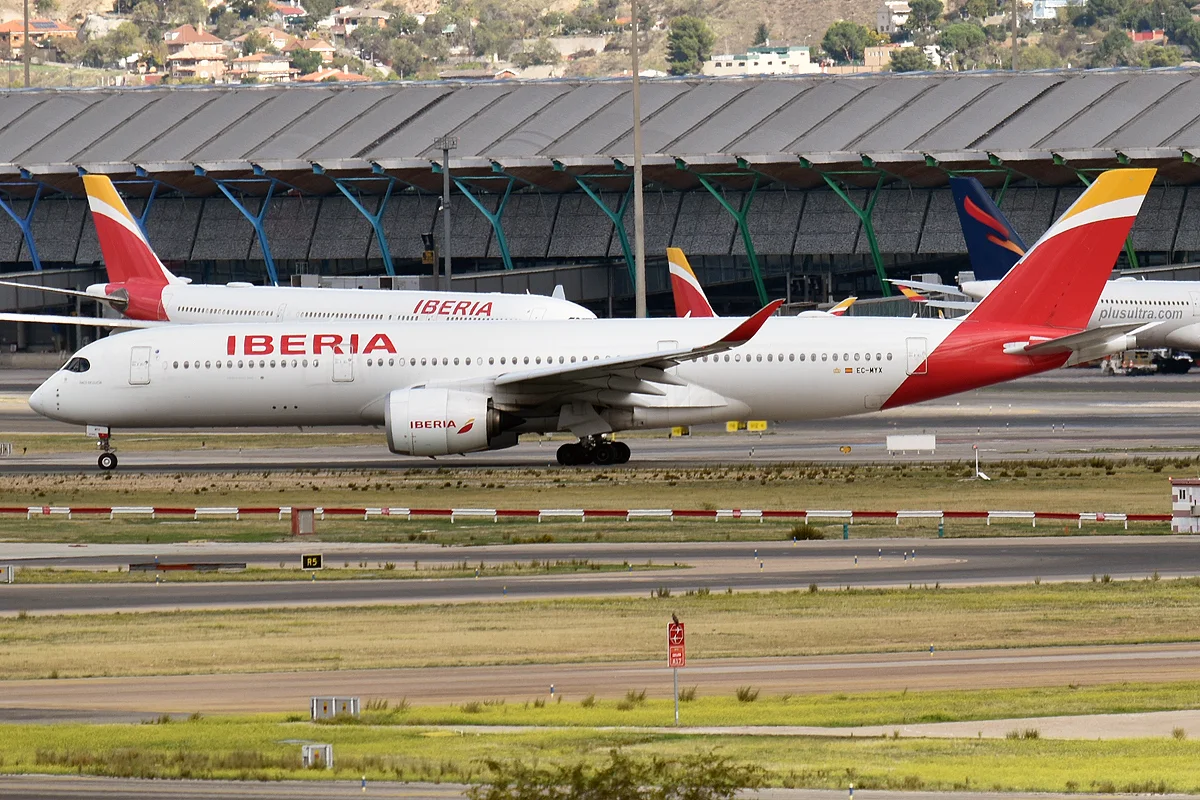
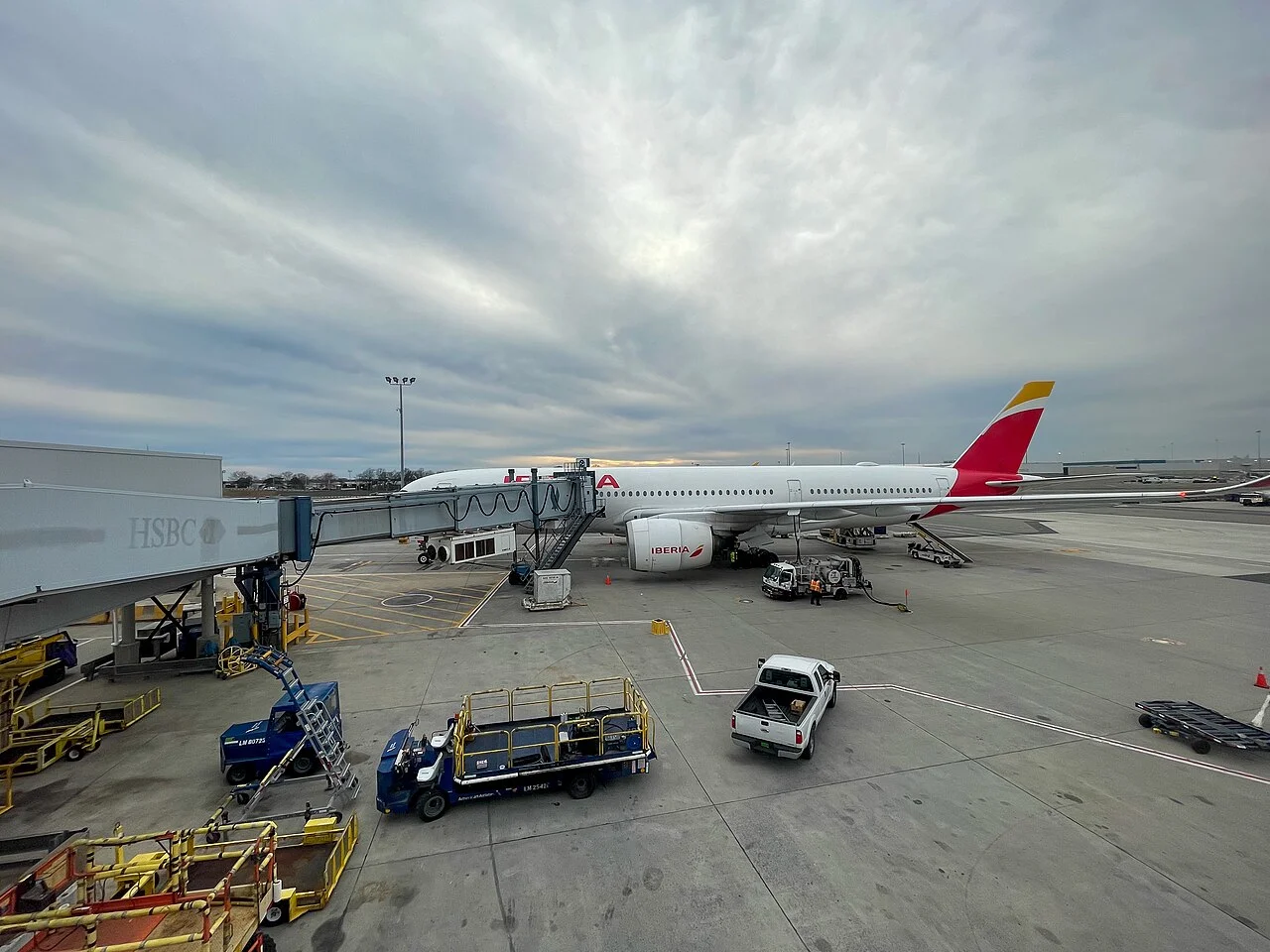
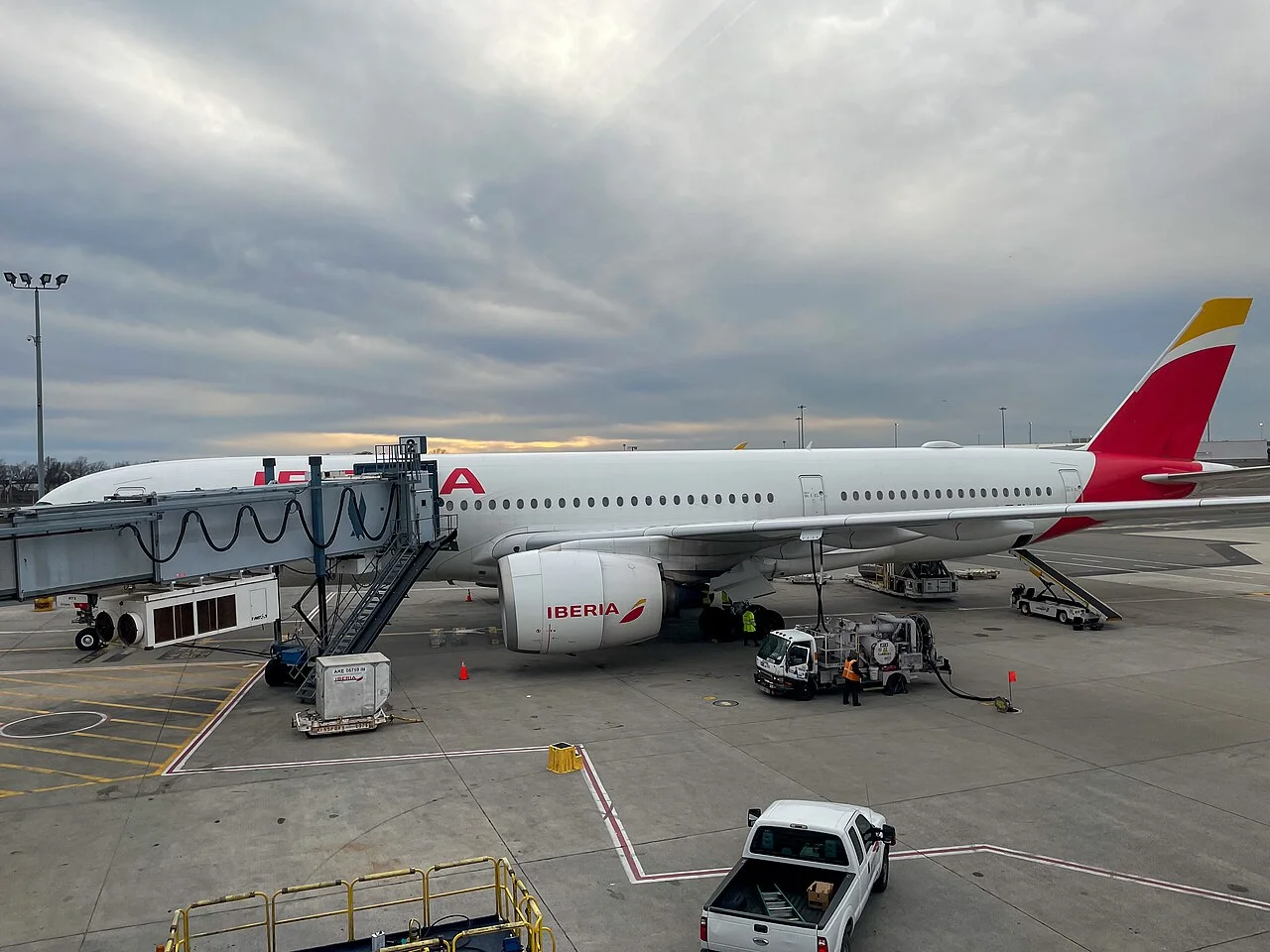
Spain’s national football team flew home to Madrid on Monday aboard a specially chartered Iberia Airbus A350-900. The team beat Argentina 1-0 in extra time at MetLife Stadium in New Jersey on Sunday to win the 2026 FIFA World Cup. The victory gave Spain its second men’s World Cup title, following its first win in 2010. The chartered aircraft, registered EC-MYX, carried the players, coaching staff, and the World Cup trophy nonstop from Newark to Adolfo Suárez Madrid-Barajas Airport (MAD).
Thousands of fans and hundreds of media personnel gathered at the Spanish capital’s main airport to welcome the squad home. Captain Rodri carried the trophy down the aircraft steps as supporters waved Spanish flags across the terminal. The team then joined King Felipe VI and Prime Minister Pedro Sánchez for official receptions before an open-top bus parade through central Madrid.
,_as_IB_6251_Madrid_(MAD)_-_New_York_(JFK),_Flight_time_7_43_(52898622809).jpg)
A Special Charter Flight from Newark to Madrid
Iberia, Spain‘s flag carrier, operated the return flight as IB1410. The service departed Newark Liberty International Airport (EWR) in the early hours of Monday, pushing back 18 minutes behind its original schedule. The Airbus A350-900 became airborne shortly afterward for the transatlantic crossing.
The aircraft flew nonstop to Madrid-Barajas, covering 3,605 miles (5,803 km) in six hours and 30 minutes. It touched down in the middle of the afternoon local time, according to Simple Flying. Flight-tracking site Flightradar24 recorded the journey live, and thousands of users followed the aircraft’s progress across the Atlantic Ocean.
The eight-year-old widebody carries the nickname Paco de Lucía, a tribute to the legendary Spanish flamenco guitarist Francisco Sánchez Gómez. Iberia took delivery of the jet in July 2018, and the plane now forms part of the airline’s transatlantic fleet.
.jpg)
Fans And Royalty Give Spain’s Champions A Hero’s Welcome
Hundreds of media personnel lined the airport apron to capture the team’s arrival, and the squad posed for photos in front of the aircraft while holding the World Cup trophy. Police and airport staff escorted the plane along the taxiway to its gate. Terminal signage read “enhorabuena campeones,” meaning “congratulations champions.”
A Spanish flag fluttered from the cockpit window as the aircraft taxied to the terminal under clear blue skies. Head coach Luis de la Fuente was the first to step off the plane, and tournament standout Rodri followed with the trophy held high. The squad then traveled to Zarzuela Palace to meet King Felipe VI before a reception with Sánchez at Moncloa Palace.
Prime Minister Sánchez celebrated the win publicly online. He wrote on X that “we are world champions” and thanked the national team for its performance. The players later boarded an open-top bus for a parade through central Madrid, ending with a ceremony at Cibeles Square, where Spanish teams traditionally celebrate national titles.
.jpg)
Aircraft Details: The Airbus A350-900 Registered EC-MYX
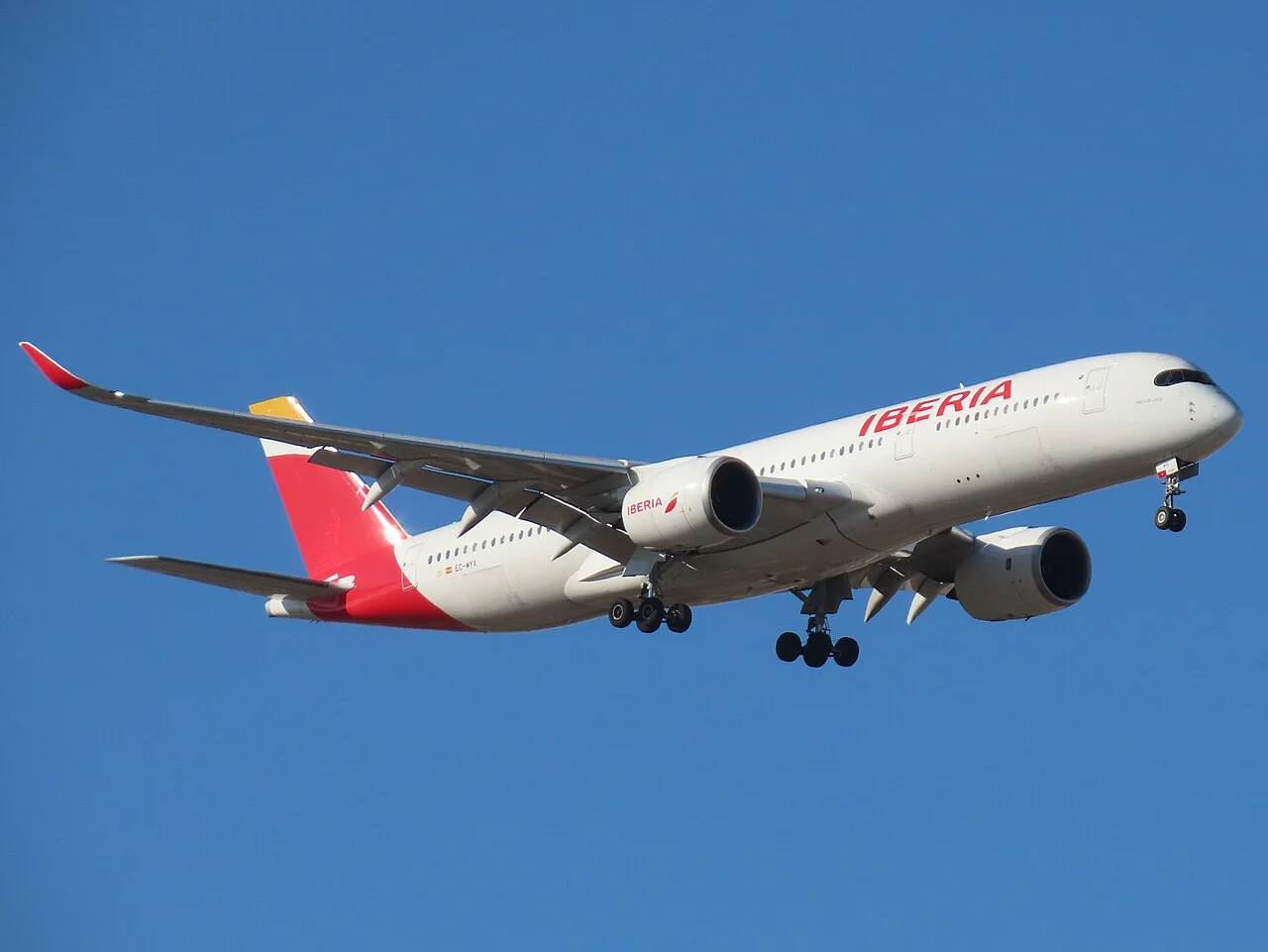
The chartered aircraft is an Airbus A350-941, according to fleet data reported by Simple Flying. It first flew as a test aircraft under the French registration F-WZHC on July 17, 2018, before Iberia took delivery ten days later. Key specifications include:
- Registration: EC-MYX
- Serial number (MSN): 227
- Engines: Two Rolls-Royce Trent XWB-84 turbofans
- Cabin configuration: 31 business class, 24 premium economy, and 293 economy seats, for 348 seats total
- Nickname: Paco de Lucía, honoring flamenco guitarist Francisco Sánchez Gómez
According to data from planespotters.net, the aircraft has manufacturer serial number (MSN) 227, was built in Toulouse (TLS) and first flew under the test registration F-WZHC. The aircraft is approximately 8 years old and remains in active service. It was delivered to Iberia as EC-MYX, featuring a three-class cabin configuration with 31 Business, 24 Premium Economy, and 293 Economy seats. Powered by two Rolls-Royce engines, the aircraft was ferried from Toulouse to Madrid (MAD) on July 27, 2018, before entering commercial service on August 23, 2018. During the COVID-19 pandemic, it was temporarily stored in Madrid from April 2 to June 1, 2020, and returned to service on June 1, 2020. Named “Paco de Lucía,” the aircraft was repainted in special FIFA World Cup 2026 livery in May 2026.
Iberia operates 23 A350-900 aircraft, which make up over half of its widebody fleet. The airline’s remaining long-haul jets include 13 Airbus A330-200s and eight A330-300s. Iberia uses the A350-900, together with the A321XLR, to serve transatlantic and other long-haul international routes.
Note that the Airbus A350-900 is an aircraft type that is deployed on the longest non-stop flights in the world.

Comparing Iberia’s World Cup Charter Flights Across the Years
Monday’s flight was not Iberia’s first World Cup charter. The airline flew Spain’s men’s team home from South Africa after their first World Cup win in 2010. A captain on that flight said the airline had “the privilege to bring home the cup from Africa.”
Iberia also flew Spain’s women’s national team home from Sydney in August 2023 after their Women’s World Cup win over England, according to a Simple Flying report. That flight used a different Airbus A350, registered EC-NIS and named Talento a Bordo, and included a stopover in Doha, Qatar. The captain on that service called the win “a historic moment” for the country.
Spain’s 2026 men’s title means the country now holds both the men’s and women’s World Cup trophies at the same time, a first for any nation. Other national federations also arranged special aircraft for the 2026 tournament, including custom liveries on chartered widebodies, reflecting a wider trend of airlines marking World Cup campaigns with dedicated flights.

A Tragic Note Amid the National Celebrations
The celebrations across Spain were not without tragedy. A 13-year-old boy died in the town of Rodrigo when a stone fountain pillar collapsed under the weight of people standing nearby. Two other people were injured in the same incident, according to reports cited by Yahoo Sports.
The town announced a three-day mourning period following the incident. The tragedy occurred separately from the official airport welcome and city center festivities in Madrid.

What Comes Next for Spain’s World Champions
Spain’s economy and political landscape look different from the country that won its first World Cup in 2010. Spain’s economy is now expanding, its unemployment rate has roughly halved since then, and nationalist and separatist tensions have cooled considerably. The 2026 win adds to a period of relative stability in the country.
The squad’s parade and Cibeles Square ceremony marked the formal close of the World Cup campaign. Iberia’s role in flying both the men’s and women’s champions home over the past two title runs cements the airline’s association with the national team’s biggest moments.