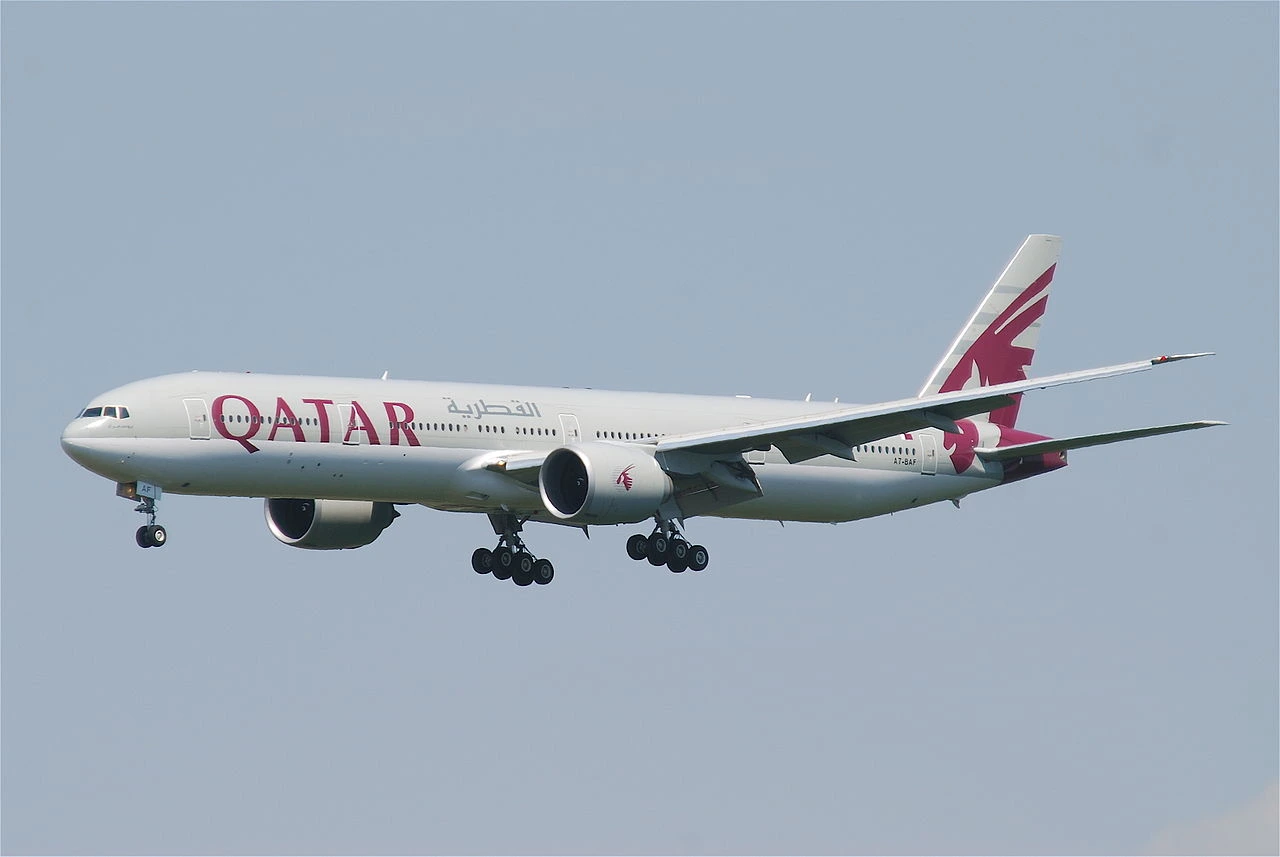
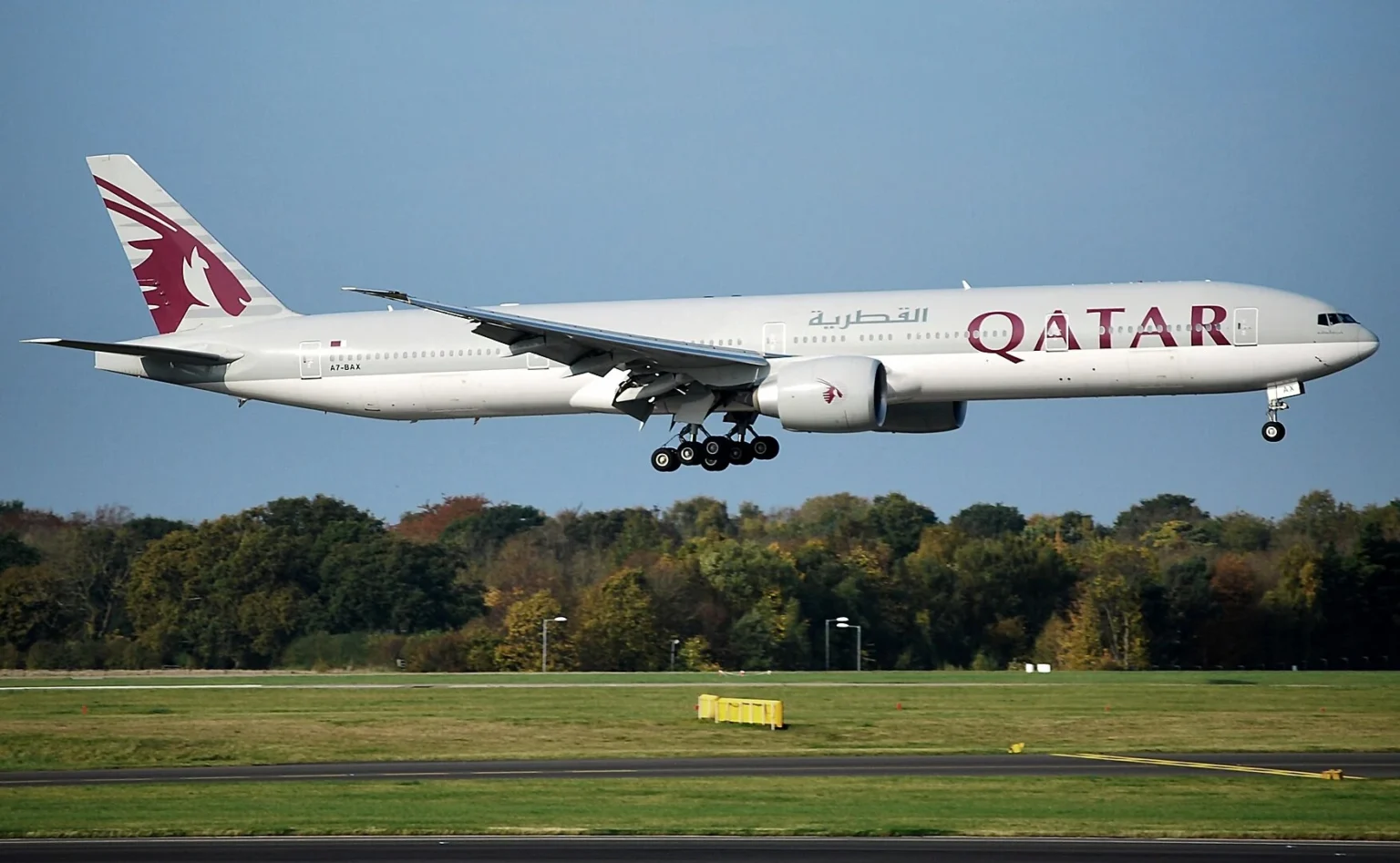
Starting 9 July 2026, Qatar Airways is introducing regular Boeing 777-300ER service between Hamad International Airport (DOH) and Damascus International Airport (DAM), according to schedule data reported by AeroRoutes. The 777-200LR had already begun flying the route from 1 July 2026, so the two widebody variants — each seating between 354 and 358 passengers — will now work the corridor together, replacing the A320s that previously covered it.
That’s a sizeable jump in capacity for a route that, until recently, relied on a 150-to-190-seat narrowbody.
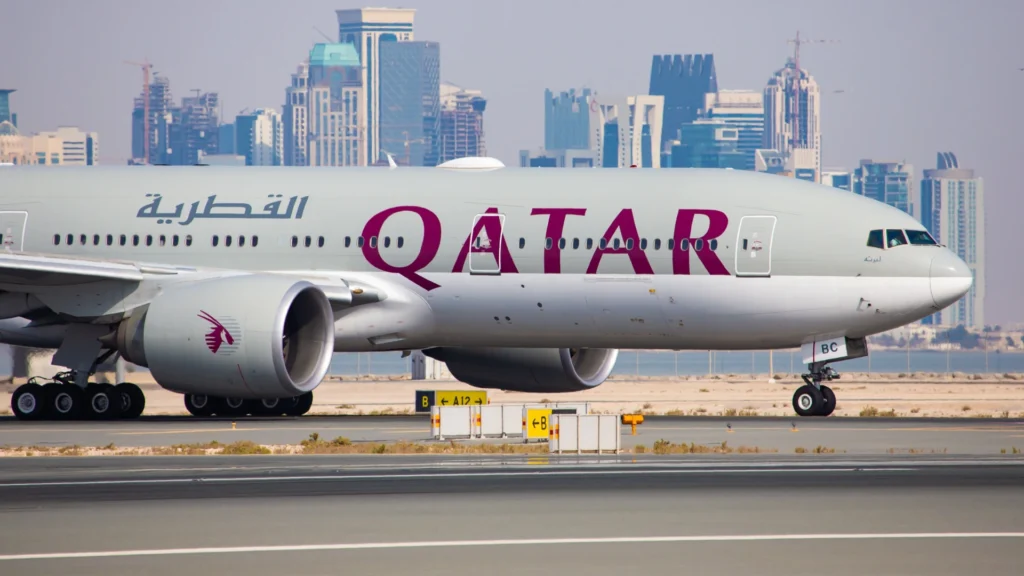
A Gradual Ramp-Up Through Early 2027
Rather than launching at full frequency, Qatar Airways is phasing in the widebody service over several months. Per the AeroRoutes schedule:
- Q3 2026: 1–2 weekly flights
- From 19 September 2026: 3–4 weekly flights
- First half of December 2026: 5 weekly flights
- By March 2027: 6 weekly flights
By March 2027, the route reaches its full six-times-weekly rotation, split evenly between the two 777 variants:
| Flight | Route | Times | Aircraft |
|---|---|---|---|
| QR410 | Doha → Damascus | 08:30–11:30 | 777-300ER (3x/week) & 777-200LR (3x/week) |
| QR411 | Damascus → Doha | 13:45–16:25 | 777-200LR (3x/week) & 777-300ER (3x/week) |
The staggered rollout gives Qatar Airways room to match seat supply to actual demand before committing to a full six-day widebody schedule — a sensible approach for a market still finding its footing.
.jpg)
Why the Route Matters — and Why It’s Complicated
Pairing two long-haul-capable 777 variants on a regional sector isn’t just about passenger seats. It also adds meaningful belly cargo capacity, and gives Qatar Airways flexibility to scale the route up or down as conditions in Syria evolve through 2027.
That evolution is the real story here. Syria remains one of the most dangerous countries for travelers anywhere in the world. The UK Foreign, Commonwealth and Development Office advises against all travel to the country, citing unpredictable security conditions and a persistent threat of terrorist attacks. Consular support isn’t available to British nationals inside Syria at all.

_-_Boeing_777-3DZER_-_43215_-_VGHS.jpg)
A Fragile Security Situation
The fall of the Assad regime in December 2024 ended one chapter of Syria’s conflict, but it didn’t bring stability. Large parts of the country, including areas in the northeast and Suwayda province in the south, remain outside government control, and fighting can flare up with little warning.
Terrorism remains a serious and active threat. Islamic State continues to carry out attacks, particularly around northeast Syria and Damascus. The most stark recent example: on 22 June 2025, a suicide bomber opened fire and detonated an explosive device inside the Mar Elias Greek Orthodox Church in Damascus during Sunday worship, killing at least 22 people and wounding dozens more, according to reporting from PBS News. It was the first attack of its kind in Damascus since Assad’s fall, and it underscored how fragile the country’s security remains for both residents and visitors.
Kidnapping is also a very real risk. Armed groups, including Al-Qaeda-affiliated factions and Islamic State, have used abduction for financial and political leverage, and foreign nationals — tourists, aid workers, journalists, and business travelers alike — are considered potential targets.
Basic Services Remain Strained
Beyond the security risks, Syria is grappling with a genuine humanitarian crisis. Years of conflict have left water, sanitation, and healthcare infrastructure badly damaged. Electricity and connectivity are unreliable in many areas, and basic goods and fuel can be difficult and expensive to source.
Road travel carries its own dangers, from poor infrastructure and unpredictable checkpoints to landmines left over from the conflict in rural areas. Air travel has occasionally been disrupted too — commercial flights have been suspended in the past when fighting intensified, though Damascus and Aleppo airports currently operate limited international services.
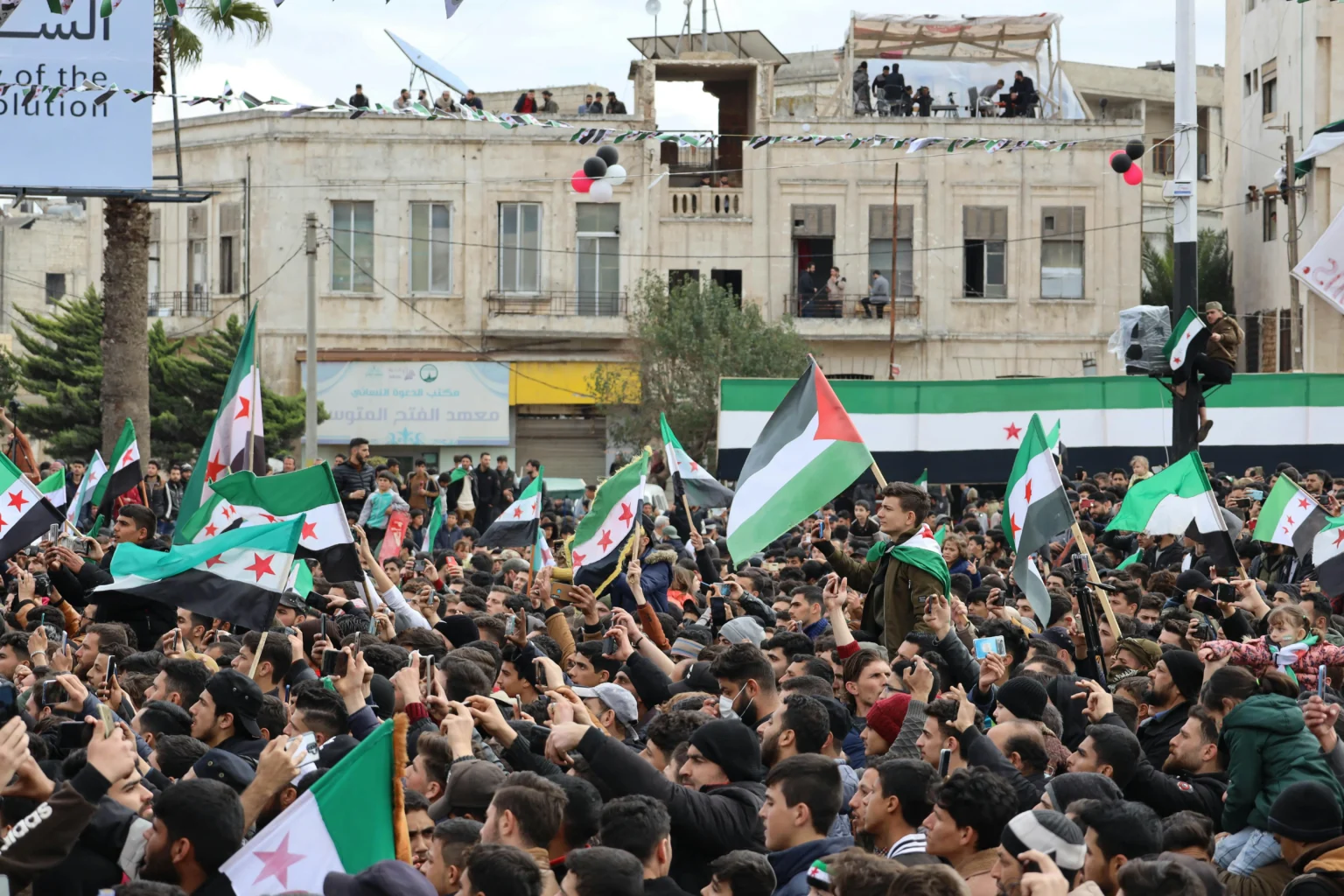
The Bigger Picture
Qatar Airways’ decision to commit two widebody 777 variants to Damascus — rather than simply keeping a narrowbody in place — signals real confidence that demand on this corridor will keep growing through 2027. It also reflects the broader reopening of Syria’s aviation links since the Assad regime’s collapse, even as the security and humanitarian picture on the ground remains genuinely difficult.
For now, the schedule speaks to opportunity: more seats, more cargo space, and a carrier willing to bet on a market in transition. Whether that bet pays off will depend heavily on developments well beyond the airline’s control.