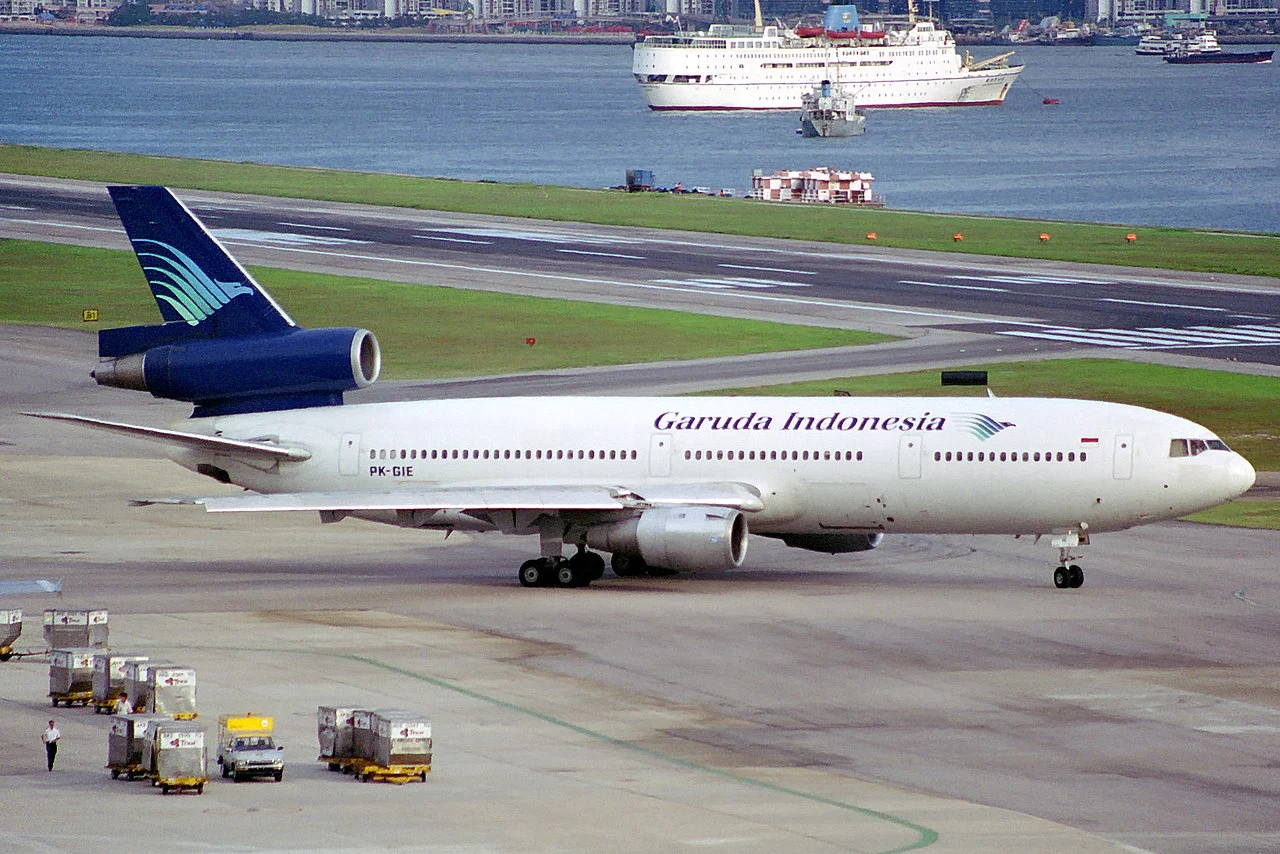
Hong Kong International Airport, Kai Tak (HKG), operated in the Kowloon City District of Hong Kong from 25 January 1925 until 6 July 1998. For 73 years, the airport served as the city’s only international gateway, connecting Hong Kong to the world from a single runway that jutted into Victoria Harbour. It closed because the airport had far outgrown its capacity and its urban location created noise, safety, and expansion challenges that could no longer be managed. The government replaced it with the new Hong Kong International Airport (HKG) on the island of Chek Lap Kok, 30 kilometres to the west.
Kai Tak was not simply a piece of transport infrastructure. By 1996, it handled 29.5 million international passengers and 1.56 million tonnes of cargo, making it the third-busiest airport in the world for passenger traffic and the busiest for international cargo throughput. Its single Runway 13/31 — rated by the History Channel as the sixth most dangerous airport in the world — demanded a level of pilot skill found at no other major commercial airport. Today, the site has been redeveloped into a mixed-use urban district, and the airport’s codes have been transferred to Chek Lap Kok. Yet the memory of Kai Tak remains vivid in the aviation world and in the hearts of those who once flew through its gates.
How Kai Tak Airport Grew from A Grass Strip to A Global Hub
The story of Kai Tak begins with two Hong Kong entrepreneurs. The name “Kai Tak” originated in 1910 when Legislative Council member Ho Kai and businessman Au Tak established the Kai Tak Business Company Limited to develop the Kowloon Bay waterfront as a residential area. The project failed financially and the government acquired the land. In 1924, pilot Harry Abbott opened the Abbott School of Aviation on the reclaimed ground. On 25 January 1925 — the first day of the Chinese New Year — Abbott piloted a Curtiss JN-4C Jenny biplane, marking the beginning of Hong Kong’s aviation history.
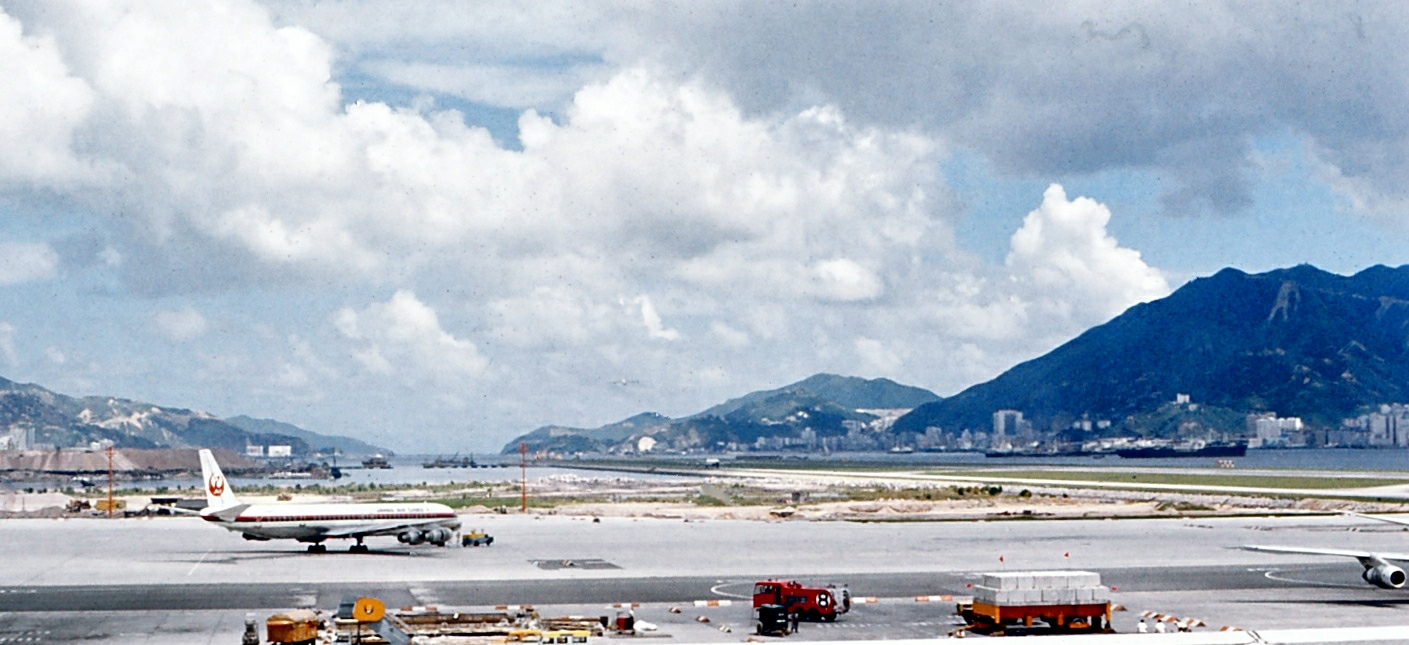
Commercial civil aviation followed a decade later. The first civil aircraft landed at Kai Tak on 24 March 1936, opening a new era of scheduled services. The airport then fell under Japanese control during World War II, during which the occupying forces expanded it using Allied prisoner-of-war labour, building concrete runways. After the war, Kai Tak was severely damaged and required full reconstruction. The Hong Kong government approved the Airport Development Master Plan in June 1954, and a new 2,529-metre runway was completed in 1958, extending into Kowloon Bay on reclaimed land. A new passenger terminal opened in 1962, and in 1975 the runway was extended to 3,390 metres to meet long-haul demands from the 31 airlines then serving Hong Kong.
The Runway 13 Approach: Why It Was Called The “Kai Tak Heart Attack”
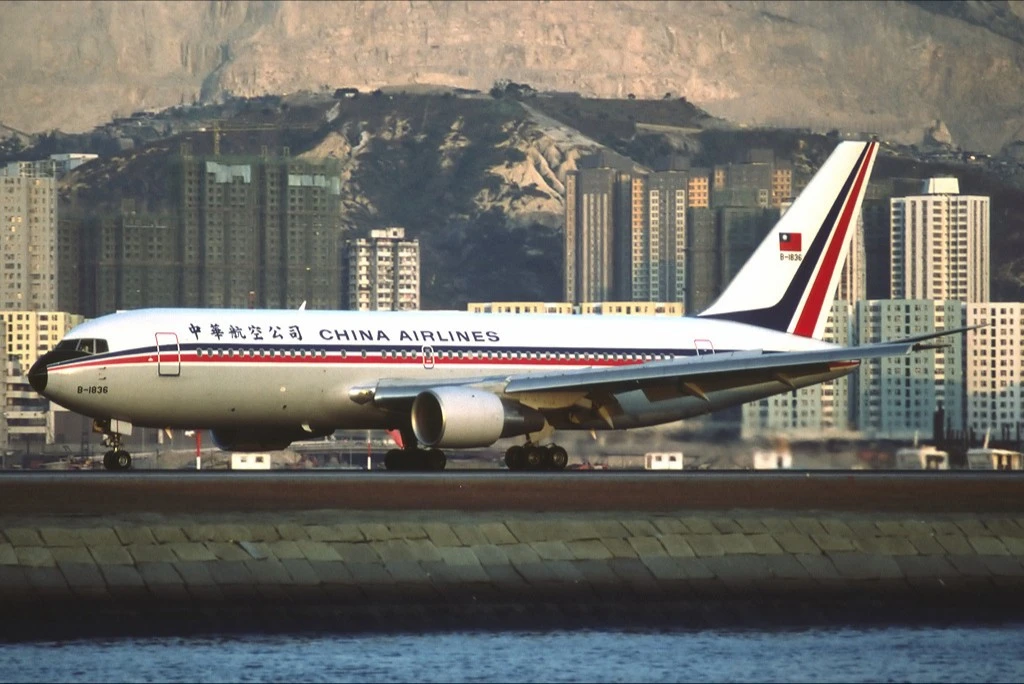
No feature of Kai Tak is more discussed in aviation history than the approach to Runway 13. The Runway 13 approach required pilots to fly toward a hill marked with a giant red-and-white checkerboard pattern, then execute a sharp visual turn toward the runway at low altitude. This procedure became known worldwide as the “Checkerboard Approach” or “Hong Kong Turn.”
Here is how the approach worked, step by step:
- Aircraft began the approach to the southwest of the airport, flying westbound at a minimum altitude of 6,500 feet above Cheung Chau island.
- They then intercepted the Instrument Guidance System (IGS) — an offset radio guidance system aligned 47 degrees away from the runway centreline — above what is now the Chek Lap Kok airport site.
- The IGS guided aircraft toward Checkerboard Hill, a 98-metre hill in the Kowloon peninsula marked with an orange-and-white checkerboard pattern.
- At approximately 675 feet, pilots visually acquired the checkerboard marker.
- They then executed a 47-degree right-hand visual turn, entirely without instrument assistance.
- Aircraft lined up with the runway only seconds before touchdown, flying below 600 feet over the densely populated Kowloon district.
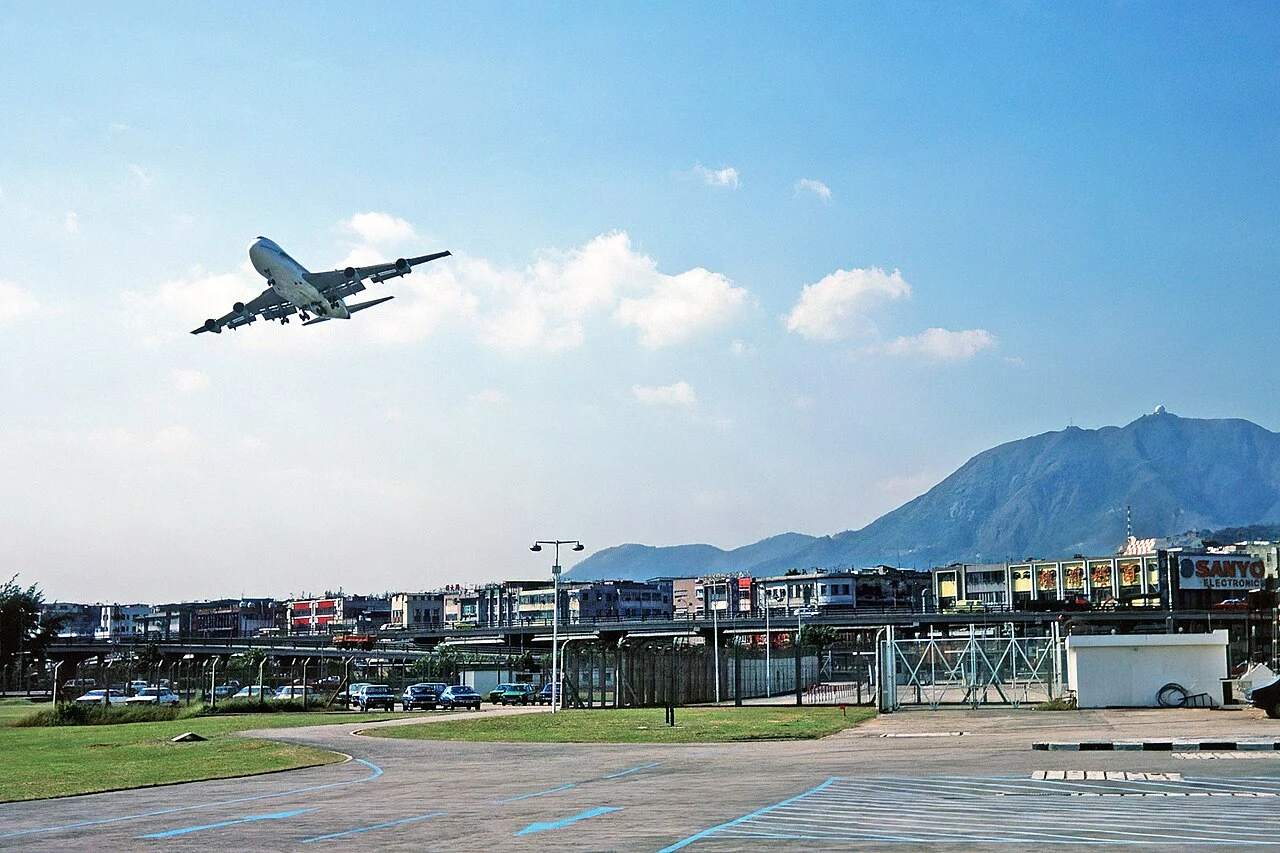
The turn was so low that passengers on the right side of the aircraft could see television sets running inside residential apartments near the airport. This closeness to the ground, combined with the sudden banking manoeuvre, gave the procedure its most famous nickname: the “Kai Tak Heart Attack.” The Instrument Guidance System was installed in 1974 to assist pilots, replacing earlier purely visual approaches using non-directional beacons and a sequence of approach lights. Even with this system, the final turn remained entirely manual and visual.
Kai Tak also required special pilot certification. Pilots had to be specifically approved to land there. Speaking to CNN Travel, former Cathay Pacific (CX) general manager of operations and pilot instructor Russell Davie recalled the experience:
“As a pilot, it was totally unique. It was the only major airport in the world that required a 45-degree turn below 500 feet to line up with the runway, literally flying between the high-rise buildings, passing close to the famous orange and white Checkerboard Hill as you made that final turn toward the runway.”
He added:
“I have very fond memories of Kai Tak. The approach looked really amazing from the ground, and also as a passenger, especially if you were seated on the right-hand side of the aircraft.”
The approach was especially demanding for wide-body aircraft, which had limited manoeuvrability at low speeds. Large jets including the Boeing 747 regularly executed the turn while flying just a few hundred feet above homes and shops. Before Runway 13 was fully served by the IGS, the approach was described by a veteran pilot as requiring the crew to track via Stonecutters NDB toward the checkerboard, wait eight additional seconds past what felt natural, then execute the turn while referencing the VASI/PAPI glidepath lights to descend to the runway.
Runway 13/31 was the world’s most hectic single runway before closure, accommodating 36 landings and takeoffs per hour. The Autoland automatic landing system found limited use at Kai Tak because of the mandatory visual turn, meaning every landing was a fully manual demonstration of pilot skill. Airlines worldwide sent pilots to Kai Tak specifically because it was recognised as the best test of pilot competence.
Key Airlines and Aircraft at Kai Tak
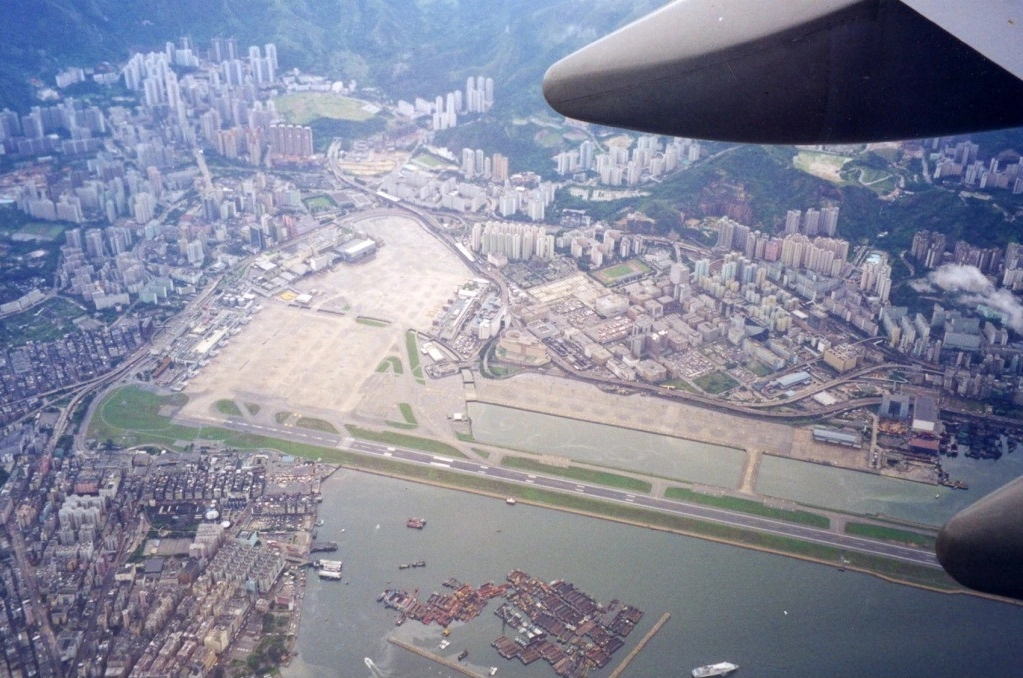
Kai Tak was the home base of several Hong Kong carriers and attracted the world’s major airlines.
The airport was the primary hub of Cathay Pacific Airways (CX), which had been Hong Kong’s flag carrier since 1946. Cathay operated a widebody-only fleet from Kai Tak, including Boeing 747s and later the Airbus A340. Regional carrier Dragonair (KA), launched in 1985, complemented Cathay by focusing on shorter-haul routes to secondary Asian markets such as Kota Kinabalu, Manila, and mainland Chinese cities including Chongqing. Dragonair later became Cathay Dragon in 2016.
Given the limited apron and runway capacity, airlines used predominantly wide-body aircraft at Kai Tak to carry as many passengers per movement as possible. The airport also hosted:
- Qantas (QF) — providing direct Australia links
- United Airlines (UA) — operating transpacific services from US West Coast gateways
- British Airways (BA) — offering transcontinental routes
- Lufthansa (LH) — connecting Europe to Hong Kong
- Japan Airlines (JL) and Singapore Airlines (SQ) — supporting intra-regional density
- Air Hong Kong (LD) — operating as a dedicated freighter airline based at Kai Tak
The airport’s progressive air rights policies, including liberalisation measures in the 1990s, enabled a high degree of international airline competition. Pan American World Airways had also run its Clipper flying boat service between Hong Kong and San Francisco in the pre-war era, one of the earliest international services through the airport.
Capacity Pressures and Why Hong Kong Needed a New Airport
By the late 1980s, Kai Tak faced an insurmountable set of challenges. The airport was designed to handle 24 million passengers per year, but by 1996 it was processing 29.5 million passengers and 1.56 million tonnes of cargo, far beyond its intended capacity. One in every three flights at Kai Tak experienced delays, largely due to a lack of space for aircraft, gates, and a second runway.
Noise was a severe and growing problem. Noise pollution in Kowloon City exceeded 105 dB(A) and adversely affected an estimated 340,000 people. Night flight curfews restricted the airport to daytime-only operations, preventing 24-hour commercial activity. Height restrictions on buildings in Kowloon — required to keep aircraft approach paths clear — also constrained the city’s urban development.
Safety was the overriding concern. The airport had no room to add a second runway. Expansion into the harbour through land reclamation was considered but cost-benefit studies in the 1980s concluded that building a new airport at Chek Lap Kok was more cost-effective and scalable to 80 million passengers and beyond. A planning study as early as 1974 had identified Chek Lap Kok island, off Lantau Island, as the most suitable future airport site because its flight paths could be routed over the South China Sea rather than densely populated urban areas.
The Hong Kong Government formally began work on the new airport in 1989, targeting a completion date of 1997. The construction of the new Hong Kong International Airport (HKG) at Chek Lap Kok required flattening two islands and reclaiming 9.38 square kilometres of land from the sea. It was one of the largest infrastructure projects in history and formed part of Hong Kong’s ten-programme Airport Core Programme.
How Kai Tak Compared to Other Urban Airport Closures
Kai Tak’s closure stands as one of the most significant airport relocations in modern aviation history. Several other major airports have faced similar transitions from urban sites to purpose-built replacements, though few matched Kai Tak’s combination of traffic volume, physical constraint, and iconic difficulty.
Reports comparing airport relocations have noted common themes: Kai Tak, as one of the few international airports in the world located within a densely populated urban area, became a case study for urban policy researchers examining how relocating an airport affects surrounding socioeconomic conditions and building structures. One researcher at George Washington University specifically studied Kai Tak’s closure as an example of what happens when a city centre airport exits, noting the lessons it offers for other cities with airports in dense urban locations.
In reporting on Kai Tak’s transition, the South China Morning Post noted that a 1998 redevelopment plan proposed a HK$36 billion project to house 320,000 people, create 90,000 jobs, and build the city’s largest urban park on the 579-hectare site. The ambition was to build “a city within a city.” The development was envisaged to take 18 years and include 118,000 flats, schools, a stadium, a transport museum, and an aviation academy to mark Kai Tak’s past. The reality proved slower and more modest than originally planned.
The new Hong Kong International Airport at Chek Lap Kok has since received consistent top rankings globally and is the world’s busiest cargo airport every year since 2010, except 2020. It has been a repeat winner of Skytrax’s World’s Best Airport Dining award. The contrast with Kai Tak’s constrained, noisy, and dangerous single runway could hardly be sharper.
The Final Flights And The Closing Of Kai Tak
The closure of Kai Tak was planned to coincide exactly with the opening of the new airport. The final night of operations on 5–6 July 1998 attracted aviation enthusiasts from around the world. Hundreds of Hong Kong residents gathered on the airport’s rooftop car park in the weeks before closure to photograph aircraft on approach.
The last flights recorded in the Kai Tak control tower log were:
- Last arrival: Dragonair flight KA841 from Chongqing Jiangbei International Airport (Airbus A320) landed on Runway 13 at 23:38 on 5 July 1998.
- Last scheduled commercial departure: Cathay Pacific flight CX251 to London Heathrow (Boeing 747-400) took off from Runway 13 at 00:02 on 6 July 1998.
- Last departure of all: Cathay Pacific ferry flight CX3340 (Airbus A340-300) to the new Chek Lap Kok airport, departing at approximately 01:05.
A small ceremony was held inside the control tower after the last aircraft departed. Richard Siegel, then Director of Civil Aviation, gave a brief speech and ended with the words “Goodbye Kai Tak, and thank you,” before turning off the runway lights. The IATA code HKG and ICAO code VHHH were then transferred to the new airport at Chek Lap Kok. Kai Tak’s own code in flight simulation environments is VHHX, with the “X” denoting its decommissioned status.
The overnight move of essential airport supplies and vehicles from Kai Tak to Chek Lap Kok involved approximately 1,200 vehicles using both a northern and a southern route, escorted by the Hong Kong Police Force. The new airport opened to commercial flights at 06:00 on 6 July 1998, with Cathay Pacific flight CX889 from New York John F. Kennedy Airport (JFK) as the first arrival.
What Became Of The Kai Tak Site After 1998
The 810-acre former airport site underwent years of redevelopment under what became known as the Kai Tak Development (KTD). The plan called for a multi-purpose sports complex, a metro park, a cruise terminal, hotels, housing, and commercial and entertainment construction.
The most prominent development on the former runway is the Kai Tak Cruise Terminal, designed by Foster + Partners — the same firm that designed the new Hong Kong International Airport. Construction of the terminal began in December 2009 and was completed in June 2013. The terminal can berth two large 360-metre cruise vessels simultaneously, each carrying more than 4,000 passengers and over 2,000 crew.
Other completed features of the Kai Tak Development include:
- Kai Tak Runway Park — a public park opened in 2014 on the former runway, featuring preserved runway markings, the number “13” shaped into leisure seats, and a retired Jetstream 41 aircraft on public display.
- Kai Tak Sky Garden — an elevated garden approximately 1.4 kilometres long, opened May 2021, built on top of wave noise barriers along the former runway.
- MTR Kai Tak Station — part of the Tuen Ma Line, completed in 2020, connecting the site to central Kowloon.
- Hong Kong Children’s Hospital — completed in 2017.
- Kai Tak Sports Park — a major multi-purpose sports complex expected to be completed by 2025.
When fully developed, the area is planned to house approximately 86,000 to 90,000 people in around 30,000 housing units, with over 270 acres of open space. A district-wide seawater cooling system will serve the residential flats, and more than 13 kilometres of cycle tracks will thread through the area.
How Kai Tak Lives on in Aviation Culture and Memory
Kai Tak closed a quarter of a century ago, yet it remains one of the most referenced airports in aviation culture. Flight simulation programmes including Microsoft Flight Simulator and Infinite Flight deliberately added Kai Tak so that players can experience the Runway 13 approach. Thousands of cockpit videos of the Kai Tak approach continue to circulate online.
In March 2025, Cathay Pacific flight CX8100, an Airbus A350-1000 (XWB), flew over Victoria Harbour to commemorate the airport’s 100th anniversary. The flight was a tribute from the airline that called Kai Tak home for over five decades.
Checkerboard Hill itself has been partially restored during COVID-19 pandemic restrictions in 2020–2021, though the famous red-and-white checkerboard pattern on its side was not repainted. Authorities chose not to restore the full pattern, as it might cause confusion for pilots approaching the new Chek Lap Kok airport.
The name “Kai Tak” was also used as a tropical cyclone name in the northwest Pacific Ocean until its retirement in 2018, the name having been submitted by Hong Kong and used four times. In aviation training, the Kai Tak approach remains a reference point for instruction on visual approaches, crosswind landings, and manual flying skills.
The airport’s airspace legacy also partially survives. Research published by AirportHistory.org shows that some navaids once used for Kai Tak approach procedures remain active in Hong Kong’s airspace today, serving both the new Chek Lap Kok airport and general enroute traffic. The Tung Lung VOR-DME navaid, which served as an alternative initial approach fix for Kai Tak, continues to define arrival routes and approach procedures at HKIA in 2026.
The Foundation Kai Tak Laid for Hong Kong Aviation
Hong Kong’s current aviation infrastructure owes a substantial debt to the groundwork laid at Kai Tak. Secretary for Transport and Logistics Paul Chan, writing in February 2025 to mark the 100th anniversary of the first flight from Kai Tak, stated:
“Kai Tak Airport managed to achieve the world’s highest cargo volume and ranked high in passenger volume with only one runway. Now, with the improved conditions of the three-runway system, I am confident that our colleagues will fully utilise its capacity.”
The new Hong Kong International Airport at Chek Lap Kok has grown to three runways and has been the world’s busiest cargo airport every year since 2010 except 2020. It regularly ranks among the top five airports globally in passenger experience surveys. The foundation for that reputation was built at Kai Tak, through decades of handling more passengers and cargo than any single runway should have been asked to carry.
The site of Kai Tak now stands as one of the last large parcels of land to be developed in central Hong Kong. The transformation of a former runway into a cruise terminal, parks, schools, hospitals, and homes reflects the arc of Hong Kong’s development — from a fishing village to a colonial port, from an international hub to a modern financial city. Kai Tak was present and essential at every stage of that journey.