Israel’s Ministry of Defense announced on 15 May 2026 the signing of a contract valued at over $34 million (NIS 100 million) with Cyclone, a wholly owned subsidiary of Haifa-based Elbit Systems, to develop an extended-range capability for the Lockheed Martin F-35I “Adir” fighter jet.
The Defence Procurement Directorate (DPD) of the Israeli Ministry of Defense (IMOD) executed the agreement, tasking Cyclone with the development and integration of external fuel tanks derived from an existing design the company originally built for the F-16 Fighting Falcon. The contract forms part of the IMOD’s broader force-buildup strategy to strengthen Israel’s readiness for what officials have described as an intense security decade ahead while maintaining the country’s aerial and strategic superiority in the region.
According to The Jerusalem Post, this would be the first time F-35s of any nation are equipped with external fuel tanks. According to Elbit Systems’ official statement, “the new capability is expected to extend the aircraft’s operational range, reduce reliance on aerial refuelling, and enhance operational flexibility across long-range missions.” The announcement arrives against the backdrop of Operation Rising Lion — Israel’s June 2025 air campaign against Iran.
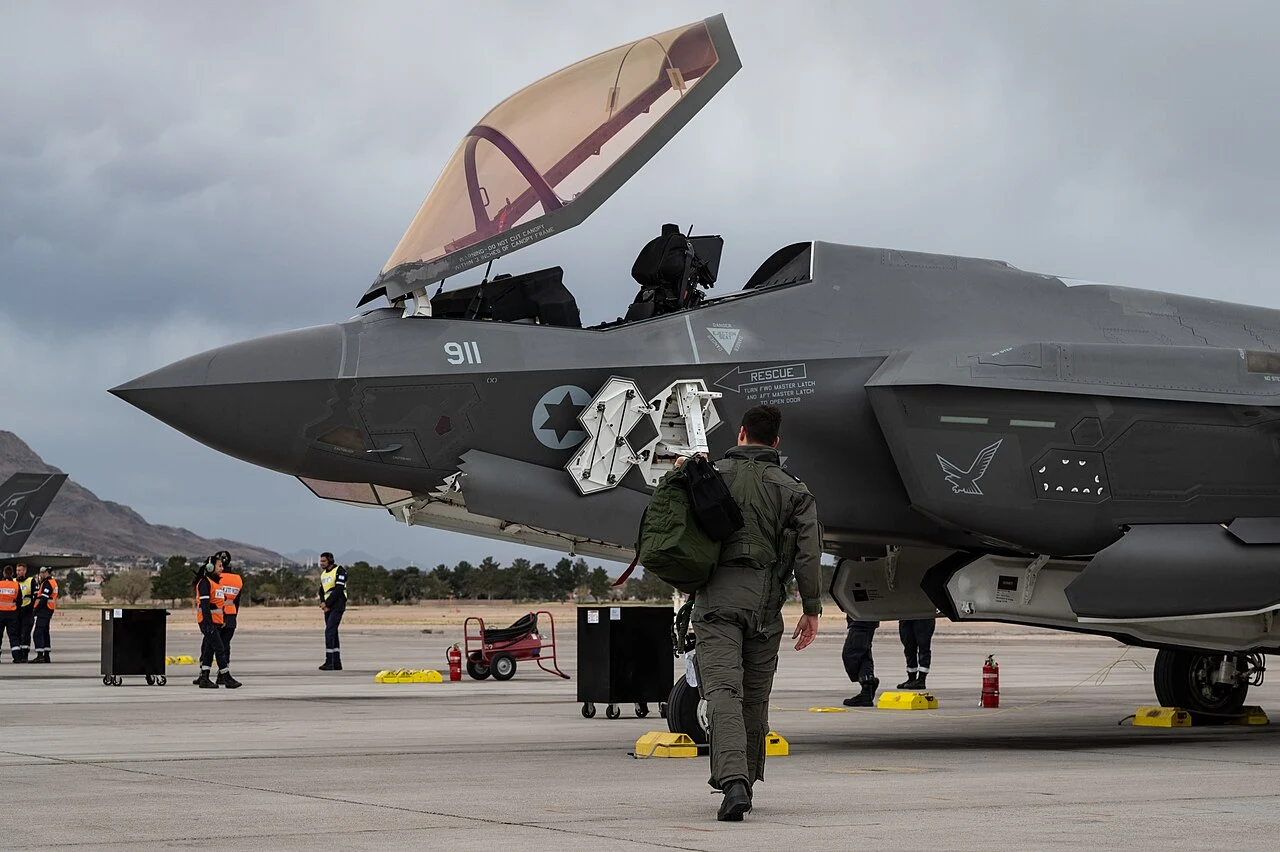
What the $34 Million Elbit Systems Contract Covers
Cyclone, which is set to develop an extended-range capability for the Lockheed Martin F-35 “Adir”, manufactures several types of external fuel tanks, including conformal fuel tanks for combat aircraft, and Israeli-developed aviation solutions are certified through cooperation with major U.S. aerospace manufacturers, including Boeing and Lockheed Martin.
The deal, estimated at more than NIS 100 million (approximately $34 million), includes the development and adaptation of external fuel tanks based on an existing Cyclone design for F-16 aircraft. The capability is expected to:
- extend flight ranges
- reduce the need for aerial refueling
- improve operational flexibility on long-range missions
The ministry stated that the initiative forms part of a broader Israeli force-buildup strategy designed to strengthen Israel’s readiness for what officials described as an intense security decade ahead while maintaining the country’s aerial and strategic superiority in the region.
After the aircraft is equipped with external fuel tanks, it will subsequently undergo rigorous testing to determine whether the additional tanks affect the aircraft’s stealth capabilities. The outcome of that testing will carry implications that extend far beyond Israel, as the United States Air Force (USAF) has separately sought funds to explore the same class of modification for its own F-35A fleet.
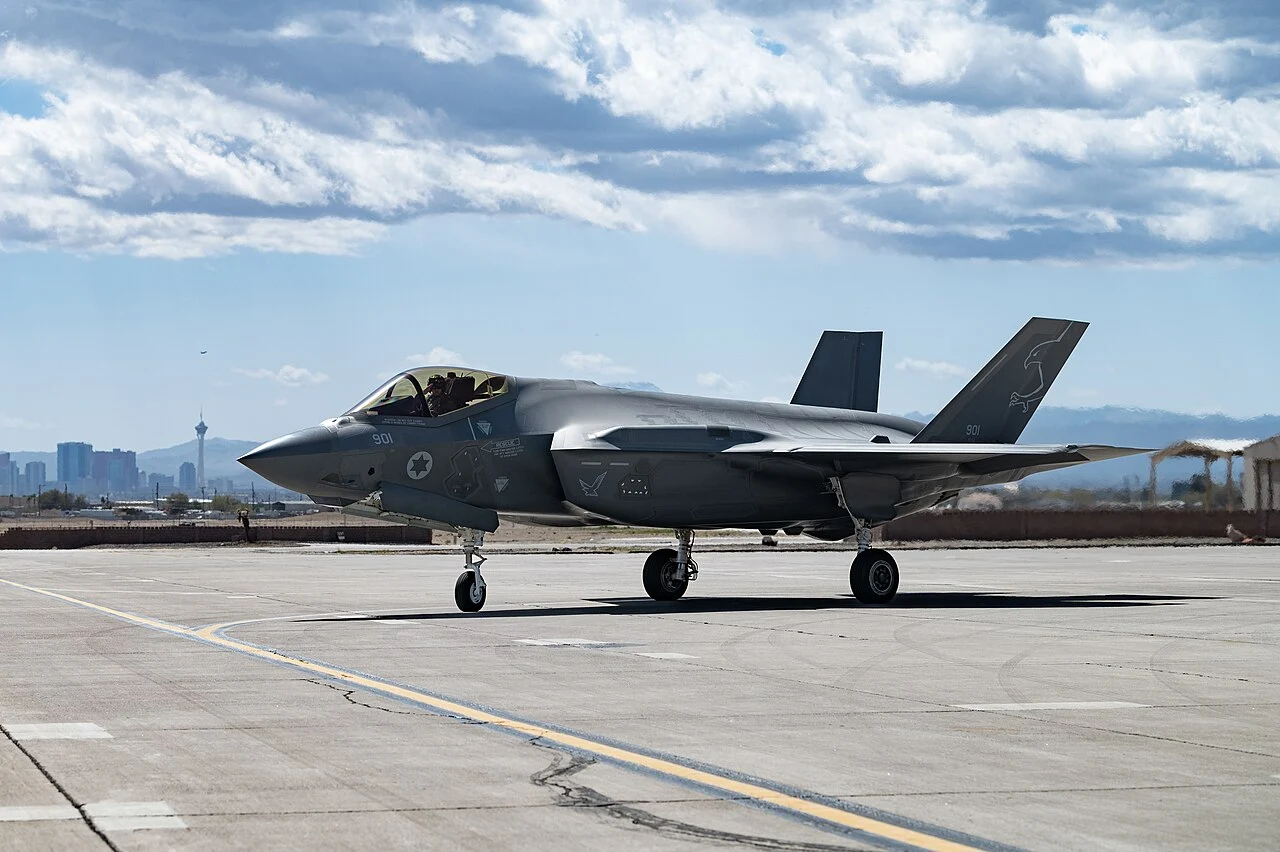
Israel is Adapting F-16 Technology for a Fifth-Generation Airframe
Israel designed compliant external fuel tanks with a low radar signature, which are integrated into the fuselage and covered with radar-absorbent materials, so they do not significantly alter the aircraft’s radar profile. These tanks are attached using pylons designed specifically to preserve the jet’s aerodynamics and electromagnetic signature and enable a cruise-flight range exceeding 2,200 km, which means that the aircraft can afford a round trip to Iran without aerial refueling.
The new fuel tanks will be based on existing Cyclone designs already proven on F-16 aircraft, though adapting them to the F-35 presents significant engineering challenges.
External fuel tanks would increase the F-35I’s radar signature and reduce stealth. One solution to get around this problem would be to have tanks that can be jettisoned before entering enemy airspace, but this limits the aircraft’s operational flexibility.
During some of the approximately 1,500 sorties that F-35I aircraft flew over Iran, they utilized two types of fuel tanks:
- a 425-gallon external tank made by Elbit Systems, suspended under the wings and dropped before entering Iranian territory
- an 800-gallon conformal tank developed in collaboration with Israel Aerospace Industries and Lockheed Martin.
| Specification | Details |
|---|---|
| Aircraft | Lockheed Martin F-35I Adir |
| Year Introduced | 2016 |
| Aircrew | 1 |
| Engines | One Pratt & Whitney F135 engine |
| Top Speed | ~1,200 mph (1,930 km/h) / Mach 1.6+ |
| Range | ~1,380 miles (2,220 km) |
| Service Ceiling | 50,000+ ft (15,240 m) |
| Length | 51.4 ft (15.7 m) |
| Wingspan | 35 ft (10.7 m) |
| Maximum Takeoff Weight (MTOW) | ~70,000 lbs (31,751 kg) |
| Payload Capacity | Up to 18,000 lbs (8,165 kg) internally and externally |
| Internal Gun | One 25mm GAU-22/A rotary cannon |
| Number Built | ~48 in service, with around 50 expected soon |
Data: The National Interest
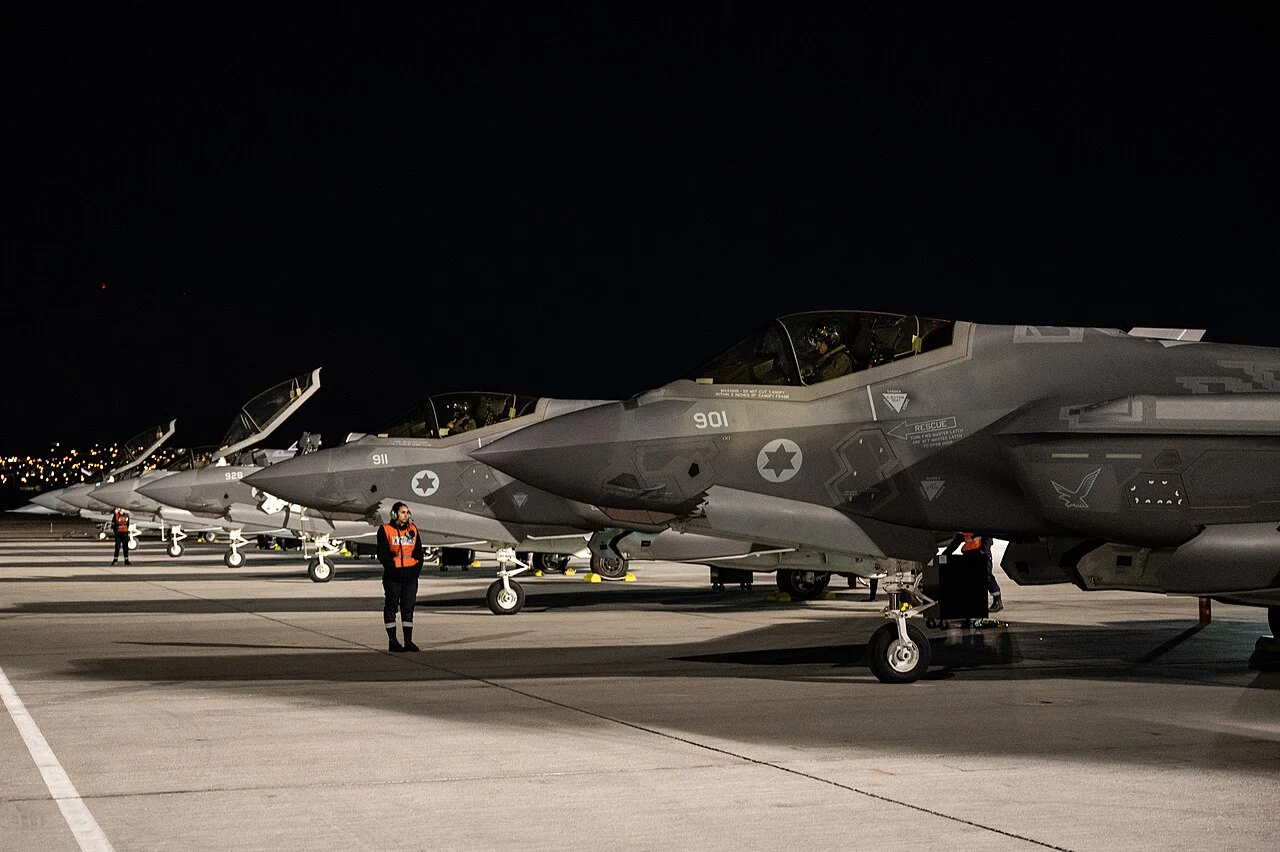
Operation Rising Lion and the Combat Lessons That Drove This Contract
The Adir proved especially formidable during Operation Rising Lion — the 12-day Israeli military campaign launched against Iran targeting the Islamic Republic’s nuclear and ballistic missile programmes — with the strikes aiding in disabling Tehran’s nuclear programme and killing several high-ranking military officials and atomic scientists.
In a separate engagement dubbed Operation Lion’s Roar on 4 March, one of Israel’s F-35Is shot down an Iranian air force Yakovlev Yak-130 trainer near the Iranian capital, marking the first time a crewed aircraft was downed in aerial combat by a stealth fighter.
Open-source reporting had repeatedly suggested that the Israeli Air Force was pursuing custom external or conformal tanks for the F-35I to enable deep-strike missions to targets such as central Iran without relying entirely on aerial refueling. Israel’s ambassador to the United States, Yechiel Leiter, stated that “we developed fuel tanks that extend the aircraft’s range without compromising stealth, and we added four missiles on the wings“. This was one of the most explicit public confirmations that Israel had moved from experimental concepts to operational use of extended-range Adirs.
The Israeli Ministry of Defense indicated that efforts to increase the operational range of the F-35I Adir may reflect operational lessons learned from combat activities involving Iran, where Israel has used the aircraft extensively. The formal contract with Cyclone now institutionalizes those lessons within the Israeli Air Force’s fleet-wide upgrade architecture.