Senior leadership from Singapore Airlines (SQ) held discussions with Tata Group executives at Bombay House in Mumbai (BOM), as Air India (AI) enters one of the most financially and operationally complex phases in its post-privatization transition.
The meeting, involving Singapore Airlines CEO Goh Choon Phong and Tata Sons Chairman N Chandrasekaran, comes at a time when Air India is reporting losses of approximately $2.4 billion for FY2026, intensifying concerns across its ownership structure and governance framework.
Rather than a routine stakeholder interaction, the visit highlights growing pressure on Air India’s transformation model, which is being tested simultaneously by financial losses, operational disruption, and comes against the backdrop of the Campbell Wilson exiting as the CEO.
The fiscal year ending March 31 reflected a much deeper financial setback for the airline, shaped by a series of major operational shocks over the period. These included the fatal crash involving a Boeing 787 Dreamliner (AI171), the continued shutdown of Pakistani airspace for Indian carriers, and escalating instability linked to tensions in the Middle East.
The final reported loss also came in higher than earlier internal projections, which Bloomberg News had placed at roughly $1.6 billion in January.


$2.4 billion Losses Reshape Ownership Dynamics
Air India’s financial results have shifted the conversation from growth strategy to capital sustainability, as both major stakeholders reassess exposure levels.
The $2.4 billion loss represents one of the airline’s weakest financial performances since its acquisition by Tata Group in 2022. Singapore Airlines’ 25.1% stake, acquired through the Vistara merger integration completed in 2024, was initially positioned as a strategic partnership to strengthen India’s long-haul full-service aviation segment.
However, the scale of losses has introduced financial drag concerns for Singapore Airlines as well, bringing its India investment under closer scrutiny at the group level. Within Tata Group, the situation has accelerated internal emphasis on cost discipline, portfolio prioritisation, and operational restructuring across aviation-linked businesses.
External Pressures Amplify Air India’s Internal Stress
Beyond financial performance, Air India is operating in an environment shaped by sustained external constraints that have materially increased operating complexity.
A key challenge remains the closure of Pakistani airspace for Indian carriers, which has forced long-haul international flights to Europe and North America into extended rerouting patterns. [The tensions rose during Operation Sindoor when there was a real threat of escalation of tensions]. These detours significantly increase block time, fuel consumption, and operational cost intensity across wide-body operations.
At the same time, instability across parts of West Asia continues to create intermittent disruptions in key aviation corridors, further limiting routing flexibility for long-haul services. Although Etihad announced today that it would be operating to Ben Gurion Airport, much of Middle East is still mired in a scuffle and the Air India’s recovery depends heavily on long-haul performance.


Air India’s Leadership Uncertainty at a Critical Stage
The strategic discussions also take place amid a leadership transition at Air India following the resignation of CEO Campbell Wilson. Wilson’s tenure focused on integrating multiple airline entities under Tata ownership, modernizing fleet strategy, and stabilizing operations after privatization. Despite these efforts, the airline continued to post substantial losses, reflecting deeper structural challenges.
The airline group’s revenue increased by 13% to $7.7 billion in 2025, but it still continued to report significant losses. Overall, the combined operations posted losses exceeding $1 billion despite the rise in revenue.
His exit leaves Air India at a sensitive point in its transformation cycle, where leadership continuity is directly linked to investor confidence, operational execution, and fleet expansion planning. The search for a successor is now expected to become a central agenda item for Tata Sons and the Air India board.
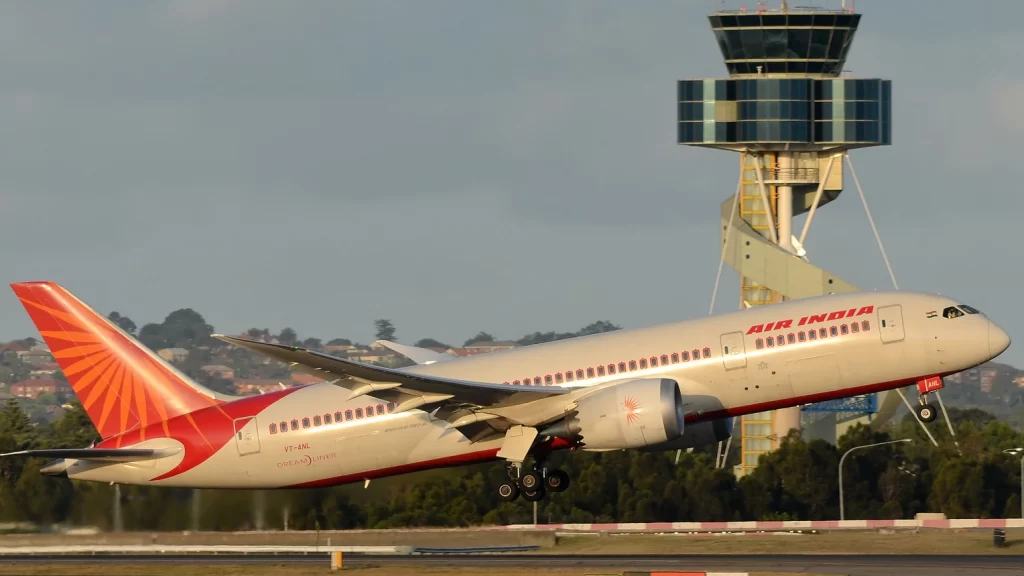

And the Crash of AI171 Didn’t Help
Air India’s current trajectory is also influenced by the aftermath of the AI171 crash in June 2025, involving a Boeing 787-8 aircraft operating from Ahmedabad (AMD) to London Gatwick (LGW). The accident resulted in 241 fatalities onboard and additional ground casualties, making it one of the most severe aviation incidents in recent global history.
Following the crash, Air India undertook precautionary fleet groundings and safety inspections across its wide-body operations, temporarily reducing capacity and placing additional strain on international schedules.
The operational impact extended beyond immediate disruption, affecting network stability during a period when the airline was already undergoing structural restructuring.

_@_DXB,_June_2019.jpg)
All in All
The Bombay House meeting underscores a broader recalibration of expectations between Tata Group and Singapore Airlines regarding Air India’s future trajectory.
As minority shareholders, both parties are now closely aligned in evaluating capital requirements, governance decisions, and execution timelines for the airline’s turnaround strategy.
Singapore Airlines’ board-level involvement in Air India adds further weight to its participation in strategic discussions, particularly as financial losses continue to accumulate.
The focus is increasingly shifting from expansion-led growth to financial stabilisation, operational efficiency, and leadership restructuring.