Mammoth Freighters has secured supplemental type certification (STC) from the Federal Aviation Administration (FAA) for its Boeing 777‑200LRMF (Long Range Mammoth Freighter) converted widebody freighter, marking a pivotal advancement in the passenger‑to‑freighter (P2F) conversion sector.
This certification, announced on 8 April 2026, authorizes the aircraft for commercial cargo operations following rigorous validation of its structural, systems, and performance standards. The first aircraft delivery, destined for Qatar Airways Cargo (QR) via leasing partner Jetran, is imminent, underscoring the programme’s transition from development to operational deployment.
Jordan Jaffe, CEO, of Jetran was buoyed with the news of the certification and said that the company had “strong confidence in the Mammoth engineering team and their vision for the program” from the start of the program:
“The aircraft’s quality and technical execution have met our high expectations and reflect the strength of the underlying design. We believe the Mammoth conversion will be a competitive and compelling option in the long-haul freighter market and will deliver solid value…”
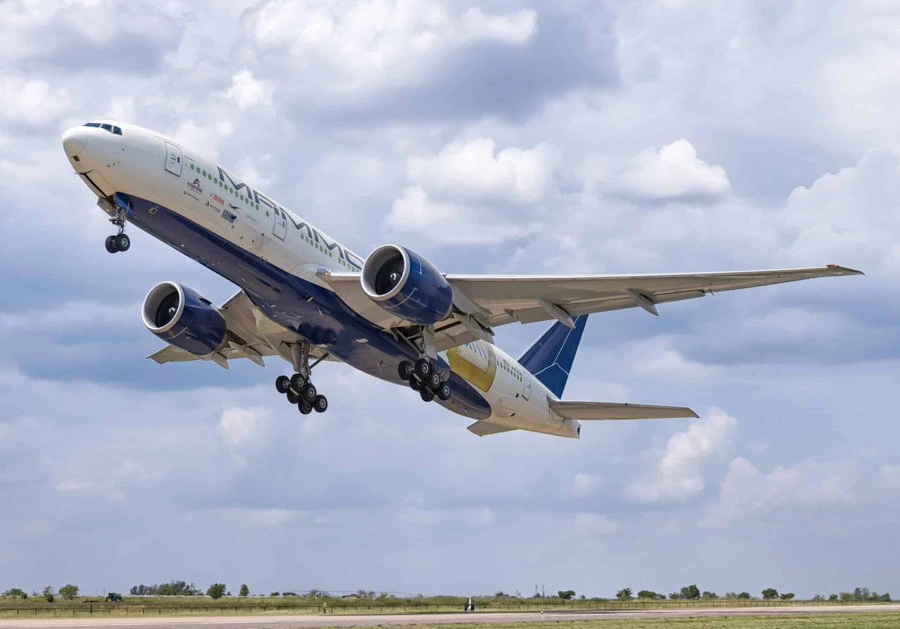
Boeing 777‑200LRMF: FAA Certification and Aircraft Capabilities
The FAA’s issuance of a supplemental type certificate affirms that the 777‑200LRMF meets stringent airworthiness criteria required for commercial cargo operations. This milestone is central to Mammoth’s strategy of establishing a scalable pipeline of certified freighters derived from earlier airliner models.
Key attributes of the 777‑200LRMF include:
- A reinforced floor structure engineered to support high‑density freight operations.
- A large main‑deck cargo door and advanced handling systems tailored to intercontinental logistics.
- A payload capacity near 231,000 lb with an operational range of approximately 4,800 nm, aligning it with heavy‑lift, long‑haul freighter requirements.
Industry analysts note that these characteristics position the conversion competitively against new‑build freighters such as Boeing’s production 777F, which has long been a cornerstone of global cargo fleets due to its efficiency and versatility.
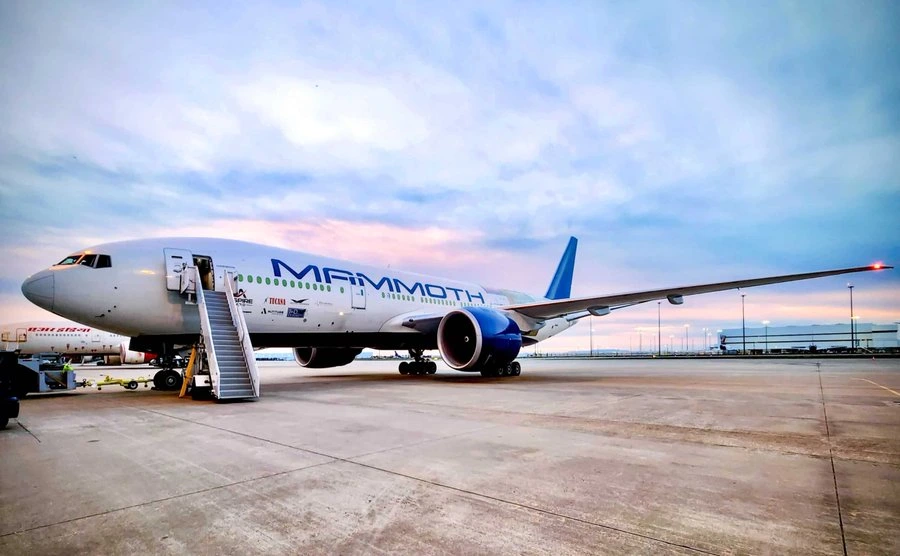
Jetran, as launch customer, will serve as the conduit for aircraft placement with major integrators. The company has confirmed placements planned for Qatar Airways Cargo, as well as airlines such as DHL and Ethiopian Airlines (ET), reflecting broad market interest in the 777‑200LRMF’s operational value proposition.
| Specification | Imperial | Metric |
|---|---|---|
| Maximum Takeoff Weight (MTOW) | 766,000 lb | 347,452 kg |
| Maximum Landing Weight (MLW) | 570,000 lb | 258,548 kg |
| Max Design Zero Fuel Weight (MZFW) | 543,000 lb | 246,301 kg |
| Operating Empty Weight (OEW) | 312,000 lb | 141,521 kg |
| Max Gross Payload | 231,000 lb | 104,779 kg |
| Total Volume | 22,971 ft³ | 650 m³ |
| Max Packing Density | 10.14 lbs/ft³ | 162.60 kg/m³ |
| Maximum Range at Max Payload | 4,900 NM | 4,900 NM |
| Maximum Fuel Capacity | 47,890 US Gal | 181,283 L |
Data: Boeing
When the aircraft was approved by the FAA, Bill Tarpley, Chief Executive Officer of Mammoth Freighters, said that the certification reflected “years of disciplined engineering, close collaboration with the FAA, and the dedication of our entire team and partner“, adding (quoted in Fortress):
“Approval of the 777-200LRMF underscores the strength of our technical approach and our ability to deliver a high-performance freighter that meets the evolving demands of cargo operators worldwide.”

Mammoth’s Global Expansion and Chinese Partner Strategy
With FAA certification secured, Mammoth has articulated intentions to broaden its production and support ecosystem beyond its U.S. base at Aspire MRO, Fort Worth, Texas (AFW).
As quoted in Flight Global, the company leadership is actively evaluating partnerships with a “group of” Chinese maintenance, repair, and overhaul (MRO) organisations to establish local capacities for conversion work or support functions. Such alliances could accelerate entry into Asia‑Pacific markets where demand for widebody freighters continues to strengthen amid e‑commerce growth and supply chain diversification.
Mammoth’s conversion infrastructure already includes multiple production lines, including facilities operated by STS Aviation Services in the United Kingdom and Aspire’s lines in Texas, each capable of completing several conversions annually. These strategic assets underpin the company’s capacity to increase throughput as orders grow.
Beyond new partnerships, Mammoth anticipates that the certification of its 777‑200LRMF will expedite approval processes for the parallel 777‑300ERMF programme. That variant, which offers greater cargo volume while preserving long‑range performance, is targeted for FAA certification later in 2026.
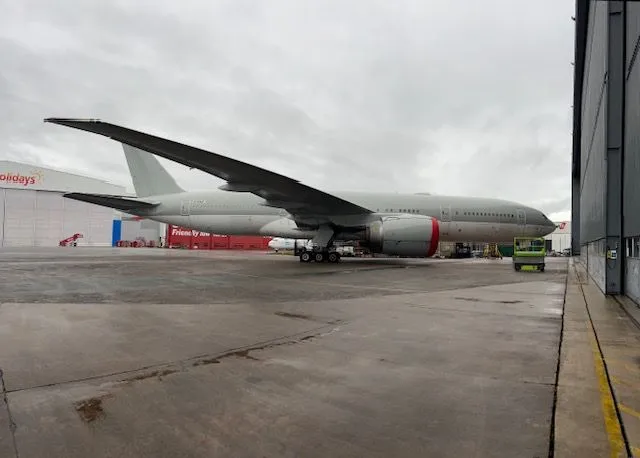
According to Brian McCarthy, vice-president of marketing and sales at Mammoth, the company is close to achieving certification for its 777-300ERMF:
“That prototype will be finished in late May and start ground- and flight-testing at that time…..The -200LR was pacing the -300ER’s certification..A lot of the testing for the -300 is going to be very academic because the FAA has recognised [the types’ similarities].”
Industry Context and Market Trends
The P2F segment has expanded as airlines and freight integrators seek cost‑effective solutions to modernise ageing freighter fleets and meet rising air cargo demand.
Converted freighters allow operators access to large‑capacity platforms without the capital outlay associated with new production models.
In this context, Mammoth’s STC achievement may catalyse wider adoption of converted widebodies, particularly given the diminishing availability of factory‑built freighters and rising requirements for flexible, long‑haul cargo aircraft.
The company’s approach demonstrates how aftermarket engineering expertise, combined with regulatory rigour, can extend the utility of legacy airframes in global logistics networks.
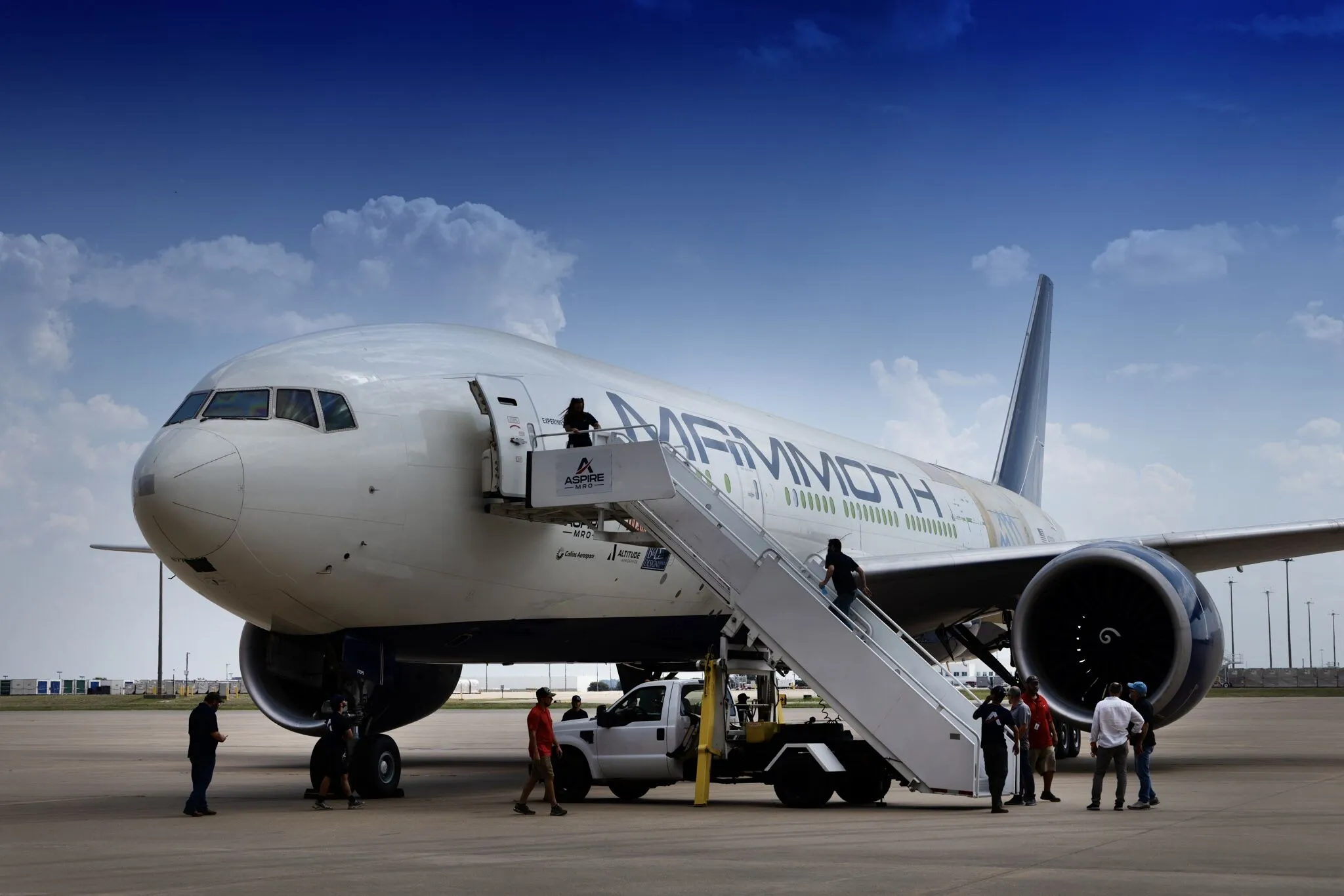
All in All
The STC achievement emanates from sustained engineering collaboration between Mammoth and FAA regulators, culminating in a platform that marries range, payload efficiency, and cargo handling performance. The following table gives us a glimpse of its capabilities:
| Deck / Section | Layout Type | Configuration / Quantity | Dimensions (inches) | Volume (ft³) | Notes |
|---|---|---|---|---|---|
| Main Deck | Side by Side (Standard) | 22 | 96 x 125 x 118 | 690 | Contoured pallets or containers |
| 4 | 96 x 125 x 116 | 627 | Contoured pallets or containers | ||
| 1 | 96 x 125 x 96 | 613 | Contoured pallets or containers | ||
| Main Deck | 88 x 108 Option | 30 | 88 x 108 x 96 | 528 | Pallets or containers |
| Main Deck | Size Code G Side by Side (Standard) | 2 | 96 x 238.5 x 108-R | 1,054 | Contoured pallets |
| 2 | 96 x 238.5 x 116-L | 1,400 | Contoured pallets | ||
| 4 | 96 x 238.5 x 118-R | 1,283 | Contoured pallets | ||
| 3 | 96 x 238.5 x 118-L | 1,419 | Contoured pallets | ||
| 4 | 96 x 125 x 118 | 690 | Contoured pallets or containers | ||
| 1 | 96 x 125 x 96 | 613 | Contoured pallets or containers | ||
| Main Deck | Size Code G Centerline (Option) | 2 | 96 x 238.5 x 108 | 1,054 | Contoured pallets |
| 2 | 96 x 238.5 x 116 | 1,400 | Contoured pallets | ||
| 1 | 96 x 238.5 x 118-R | 1,283 | Contoured pallets | ||
| 4 | 96 x 238.5 x 118-L & Centerline | 1,419 | Contoured pallets | ||
| 2 | 96 x 125 x 118 | 690 | Contoured pallets or containers | ||
| 1 | 96 x 125 x 96 | 613 | Contoured pallets or containers | ||
| Lower Hold | Pallets | 10 | 96-inch | N/A | 6 Forward, 4 Aft* (*requires large aft lower hold door) |
| Lower Hold | LD3 Containers | 32 | LD3 Standard | N/A | 18 Forward, 14 Aft |
At the same time, Mammoth is progressing its 777‑300ERMF conversion programme, with certification anticipated by the end of 2026, signalling the company’s broader ambition to expand its global P2F footprint.