

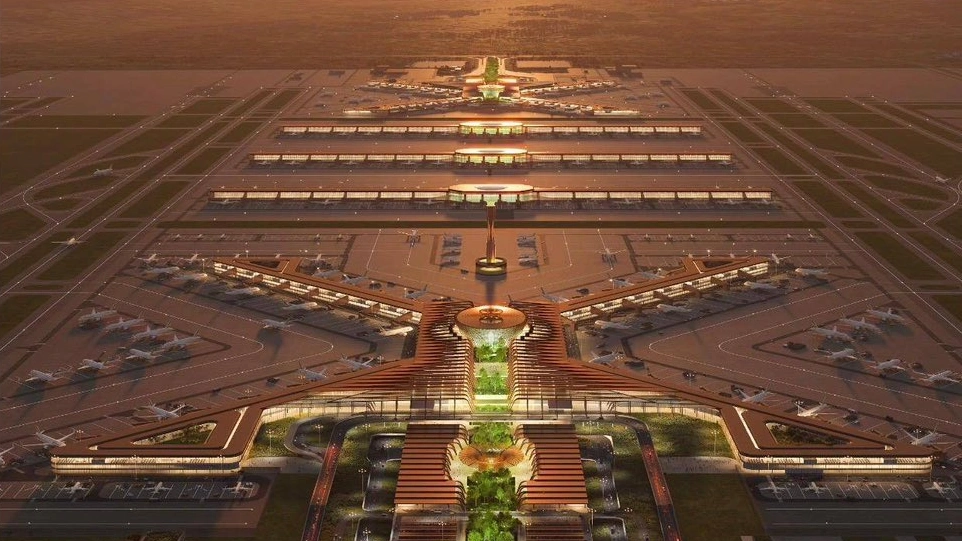
Ethiopian Airlines (ET), Africa’s largest airline by fleet, traffic and network scope, has officially commenced construction of a $12.5 billion airport project poised to become Africa’s largest aviation facility when completed in 2030, reported Reuters. (Some reports have cited a slightly higher figure of $12.7 billion, reflecting the project’s cost estimate rising from an original $10 billion projection.)
The ground-breaking ceremony took place on Saturday in Bishoftu (TBA), a town approximately 45 kilometers southeast of the Ethiopian capital, Addis Ababa (ADD), with government and airline officials present to unveil the multi-runway mega-hub plan.
The airport—designated Bishoftu International Airport (TBA) in planning documents—will feature four parallel runways, capacity for 110 million passengers annually and parking for up to 270 aircraft at full development. Officials describe it as a transformational infrastructure investment that will relieve capacity constraints at Addis Ababa Bole International Airport (ADD) and reposition Ethiopia as a central aviation hub for Africa and intercontinental markets.
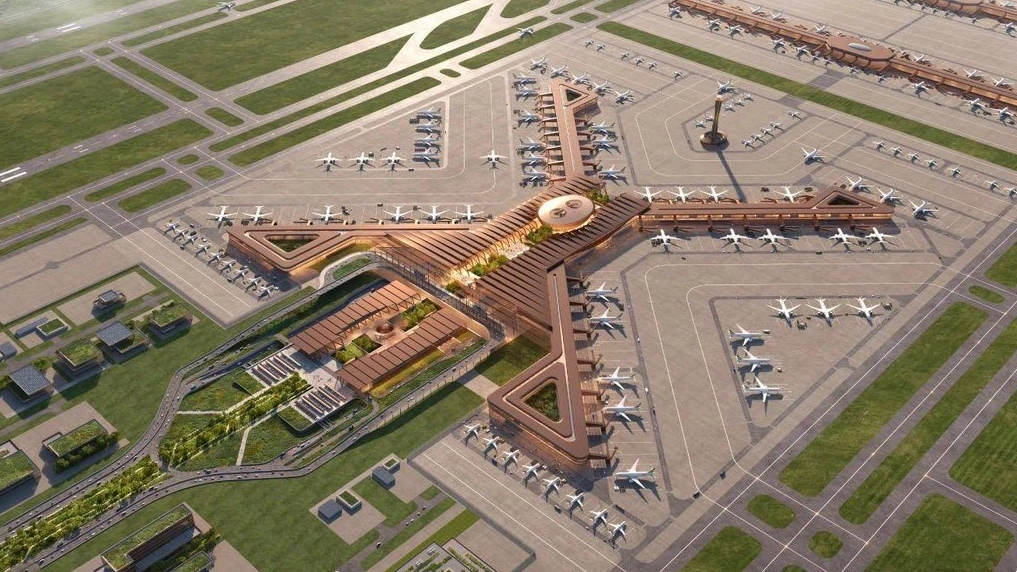
Bishoftu International Airport: Project Details
| Attribute | Detail |
|---|---|
| Name | Bishoftu International Airport |
| Location | Bishoftu, Oromia Region, Ethiopia |
| Owner/Developer | Ethiopian Airlines Group |
| Estimated Cost | $12.5 billion |
| Runways Planned | Four parallel runways |
| Annual Passenger Capacity | 110 million |
| Aircraft Parking Stands | 270+ |
| Projected Completion | 2030 |
| Primary Purpose | Relieve overcapacity at ADD; regional & global hub |
This planned aerodrome is expected to surpass all existing African airport facilities in scale and passenger throughput once operational.
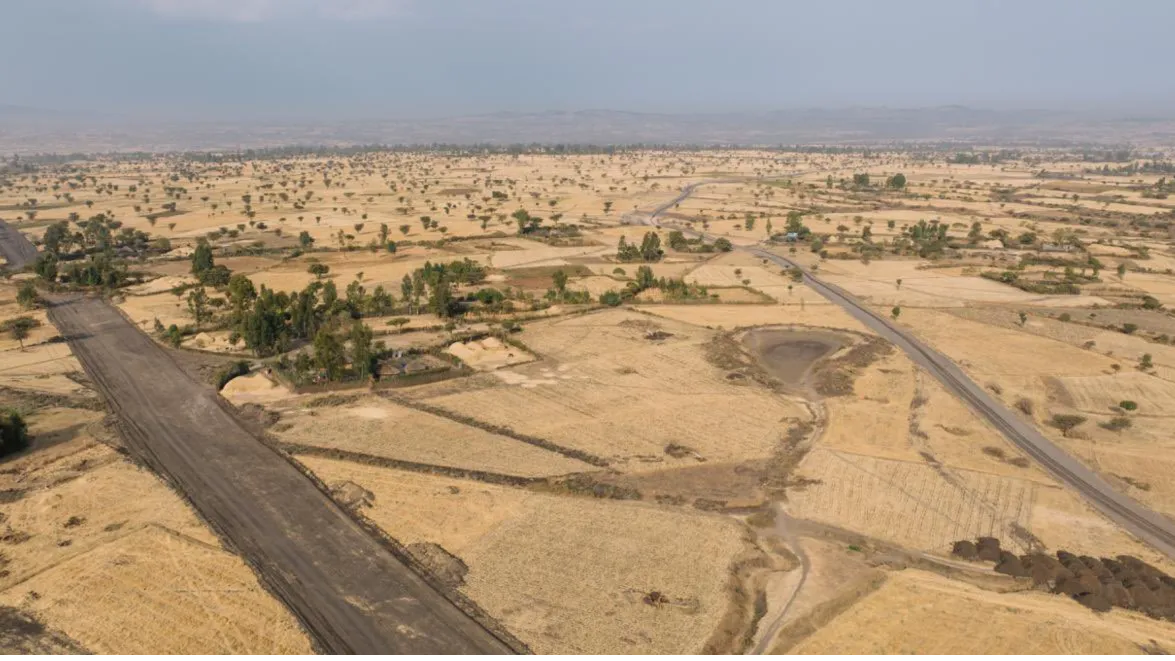
Bishoftu International Airport: Financing and Construction Timeline
Ethiopian Airlines has committed to funding 30 percent of the airport’s cost from its internal resources, while the balance will be raised through a syndicate of international lenders.
Abraham Tesfaye, Director of Infrastructure Development & Planning at the airline, stated that the carriers’ own capital would support earthworks, with $610 million already allocated and due for completion within one year. The main civil contractors are scheduled to begin full-scale construction no later than August 2026.
In 2025, International Trade Organization said that “U.S. firms specializing in airport infrastructure, engineering, aviation systems, cargo logistics, energy, security, or smart terminal technologies are encouraged to explore opportunities to engage with this landmark project“:
“Both DFC and EXIM are interested in financing the project. DFC has indicated potential support of $1 billion in financing and $1 billion in political risk insurance (assuming no Chinese involvement), while EXIM has no financing cap but requires at least 51% U.S. content. Ethiopian officials have signaled a preference for “trusted” U.S. technologies and expertise to help realize EAG’s vision of an iconic, world-class airport”.
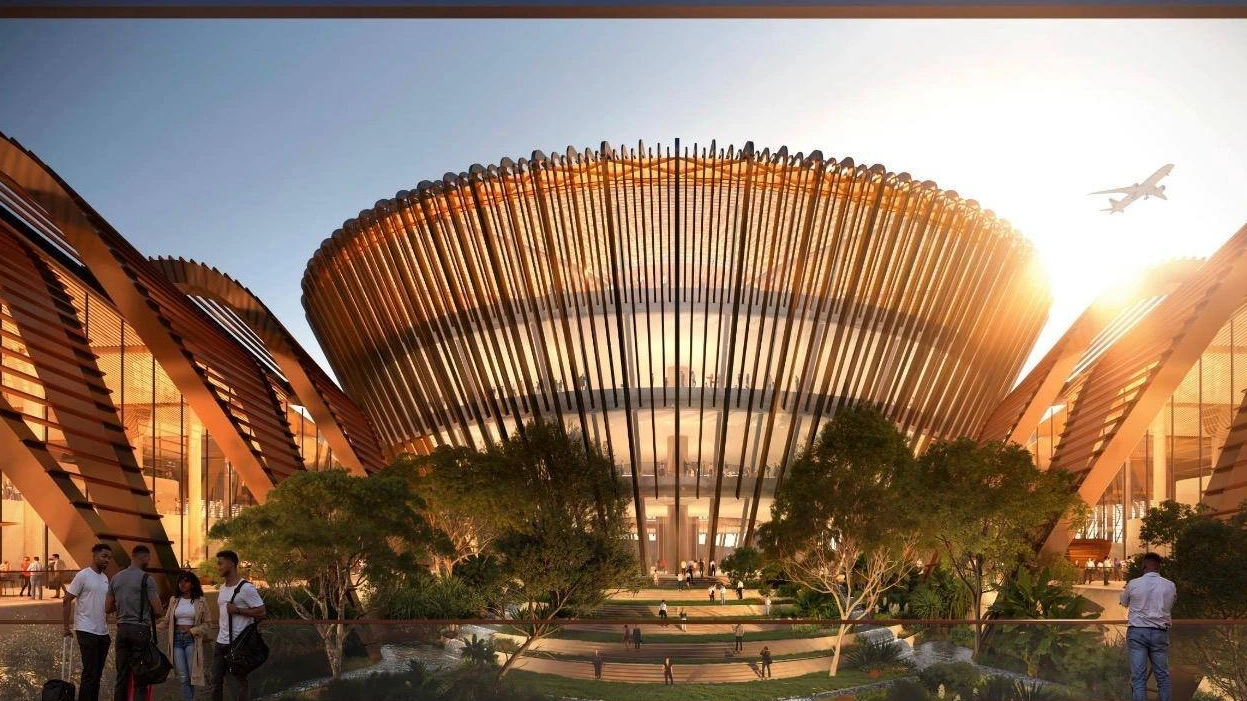
The African Development Bank (AfDB) pledged $500 million last August and will act as mandated lead arranger to help raise a further $8.7 billion from institutional investors across the Middle East, Europe, the United States and China.
In a statement quoted in eNCA, the airport was described as a “transformational regional integration project” that would enhance “continental integration and connectivity“.
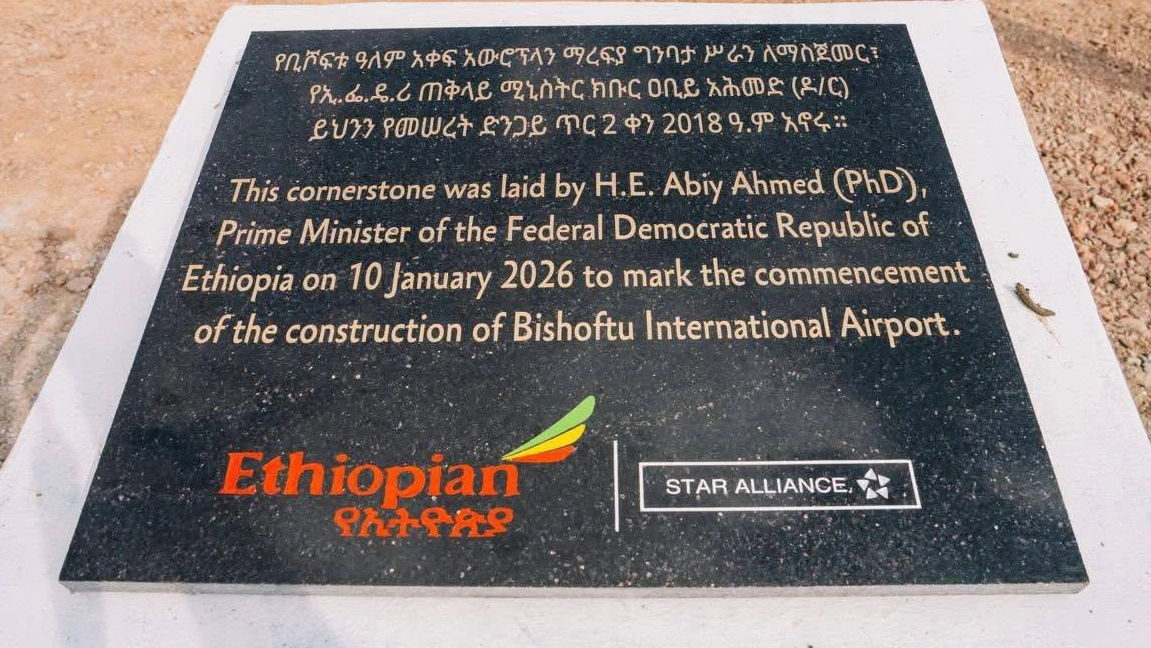
Breaking Grounds for the Airport’s Construction
The airport is set to cover 3,500 hectares of land and its construction will proceed in two phases:
| Category | Phase I | Phase II |
|---|---|---|
| Terminal & Facilities | 1.1 million sq m passenger terminal; over 100,000 sq m of cargo facilities | Further expansion of terminal and supporting infrastructure |
| Passenger Capacity | 60 million passengers annually | Full designed capacity (not specified) |
| Runways | Two parallel Code 4E runways | Two additional runways planned |
| Expected Completion | By 2029 | Post-2029 |
| Strategic Impact | Intended to manage up to 95% of Ethiopia’s international air traffic | Finalizes the airport’s long-term development and scalability plan |
In early 2024, Ethiopian Airlines Group CEO Mesfin Tasew confirmed that ‘around 2,500 farming households near Bishoftu (Debre Zeit) will be relocated to make way for the project.’ Tasew said the relocation reportedly cost around $350 million.
He stated that residential homes, agro-processing, and trading facilities are being built to support the displaced communities.

Strategic Rationale for the Airport
Beyond addressing immediate airport capacity constraints, Ethiopian officials assert that Bishoftu will reconfigure Africa’s aviation landscape by establishing Ethiopia as a premier air transport nexus.
The new facility is expected to integrate passenger traffic flows from Europe, Asia, the Middle East and the Americas through enhanced connectivity and modern logistics infrastructure. Beyond the airport, the plan includes:
“a multi-lane highway linking the new facility to the capital and a 38-kilometer high-speed rail line expected to reach speeds of up to 200 kilometers per hour. These links are intended to support faster passenger and freight movement across the region”.
In addition to passenger services, long-haul cargo operations are planned as part of the broader facility rollout, potentially boosting Ethiopia’s export-oriented sectors and trade corridors.
Analysts note that competition among African aviation hubs—such as O.R. Tambo International Airport (JNB) and Cairo International Airport (CAI)—creates incentives for Ethiopia to secure strategic advantage through this substantial investment.

Leave a Reply